INCODER Observation Archive

A Hand-Drawn Line
Becomes Proof a Human Made This

In 2026, AI-generated images stuffed brand feeds so thoroughly that people gave the flood a name: AI slop. Inside that flood, luxury houses spent in the opposite direction—Hermès handed its entire website to illustrators to draw frame by frame, Chanel announced a collection with hand-drawn animation, GAP x Sandy Liang's animated short got passed around endlessly, and Gucci got dragged for a set of AI ads. This entry wants to sit on a strange pivot: when did a line you can see a person drew become the most expensive, most sought-after proof the whole industry has to offer?

Filed By
Report
0019
Encoded
A4-H7-K2
// recurring focus: human–machine relation, digital identity, synthetic behavior, the line between made-by-human and made-by-machine
Filed: 2026-08-15 Sources: Highsnobiety / Fast Company / CNN / City AM / Digiday Signal Score: 8/10
Observation Log · Entry Open

This is one page of the INCODER Observer archive. Observer 2020 keeps watch on the line between human and machine—the one that never stops moving. What gets counted as "made by a person," what gets filed under "produced by a machine," and, as machines get better at faking the human hand, who redraws that line and how.

The starting point this time was a short clip on Instagram. Early in the year, an animation artist Annie Choi made for GAP x Sandy Liang tore through feeds, and someone commented that seeing a brand use real animation "when so many are using gen AI is such a breath of fresh air." Around the same stretch, Gucci dropped a set of ads for Milan Fashion Week stamped "created with AI" and got mocked as the poster child for AI slop. One side written off as cheap, the other treated as a breath of clean air—put the two together and the line suddenly looks vivid.

Over a few months this stopped being scattered taste. Hermès handed an entire website redesign to illustrators, drawn frame by frame over months; Chanel, Tekla, Diptyque and Porsche rolled out hand-drawn animations one after another. Artists say brand inquiries have jumped. What's worth pausing on is the shape of the pivot: once "the human hand" itself becomes a selling point, a luxury, a thing to be shown off, "a person made this" seems to shift from a plain fact into a posture that has to be proven and displayed.

— OBSERVER 2020 · Observation Archive
00Why This Topic Today

Why now: an anti-slop reaction that finally has a name

Across 2026, fashion grew a reaction that runs head-on into AI. Early in the year, Highsnobiety writer Viv Chen filed a line that keeps getting quoted: "Forget AI. 2026 is the year of the fashion illustrator." Her observation was concrete—as AI-generated images flood feeds, an "equal and opposite reaction to slopification" is brewing. She kept a running list in her Notes app: GAP x Sandy Liang's animation, Chanel's hand-drawn announcement for Matthieu Blazy's first Métiers d'art collection, Tekla's animated short, Diptyque's illustrated advent calendar, Porsche's end-of-year ad.

Why it matters today has to do with the way it's pulling toward two extremes at once. At one end, Gucci dropped a set of "created with AI" ads in February for Demna's Milan debut and got branded a case study in AI slop—people noted a house whose cheapest bag runs $850 was trying to shave production costs with AI, and it looked bleak. At the other end, Hermès handed its whole website redesign to illustrators Sarah Martinon, Armand Béraud and Linda Merad, drawn by hand over months, which Fast Company called the ultimate luxury of the era. CNN went further and named 2026 the year of anti-AI marketing. When one industry has some players straining to look "best at AI" and others straining to look "totally untouched by AI," a hand-drawn line stops being a plain aesthetic choice and turns into a side, a statement of identity.

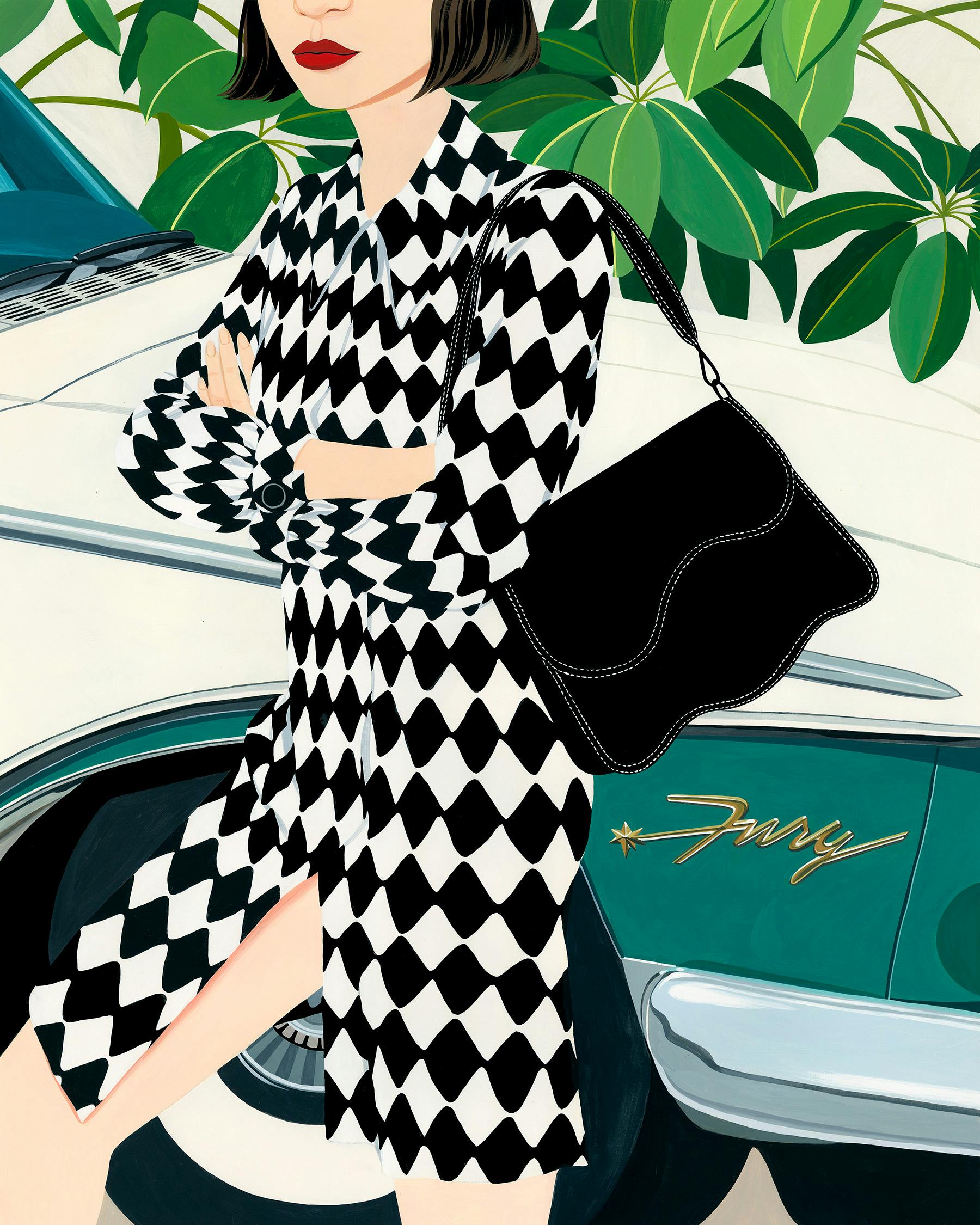
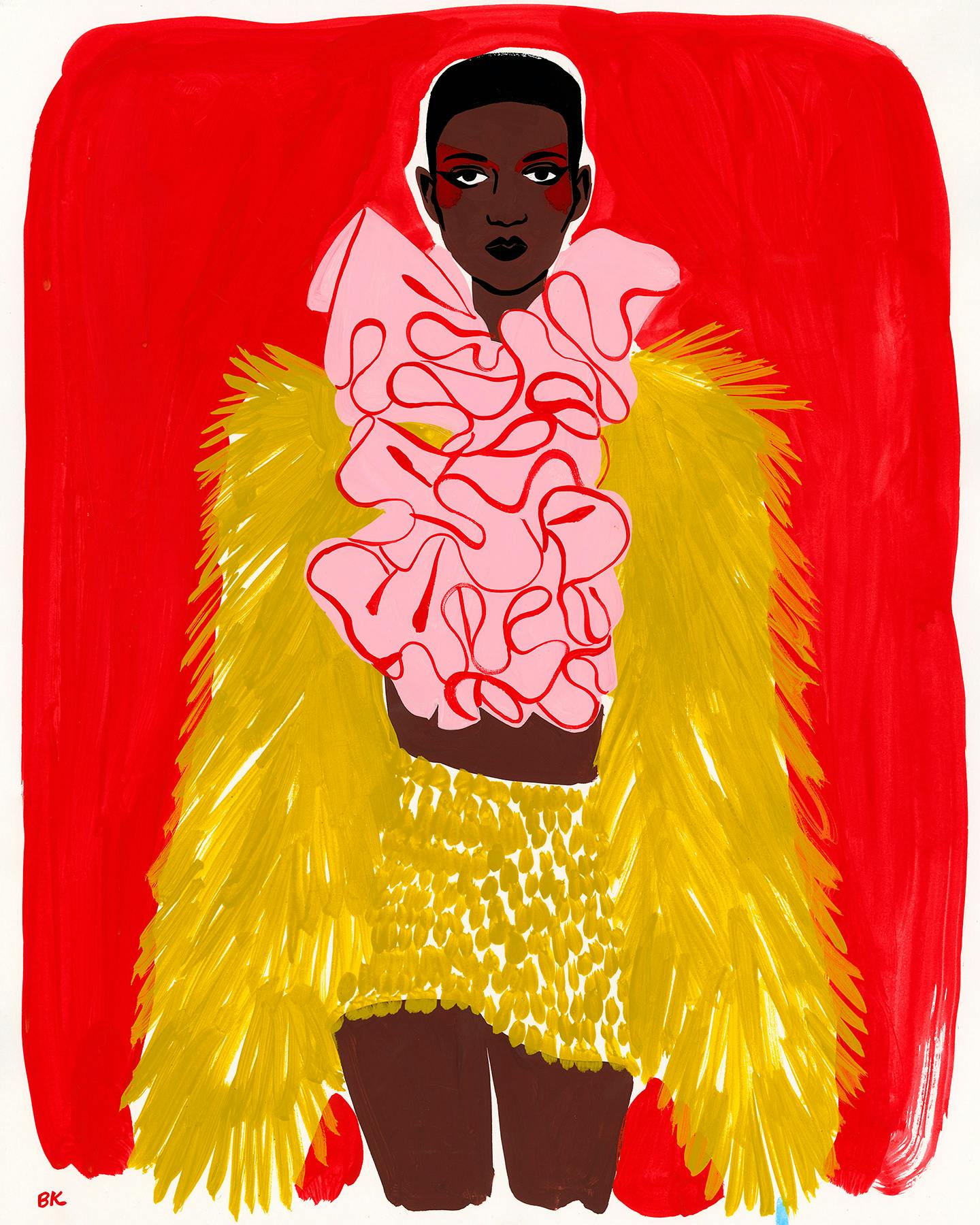
Fashion illustrator Bijou Karman artwork
"Forget AI. 2026 Is the Year of the Fashion Illustrator." In a year defined by AI slop, luxury reached back for hand illustration and animation as an anti-slop strategy. Image: Highsnobiety, "2026 Is the Year of the Fashion Illustrator," artwork by Bijou Karman.
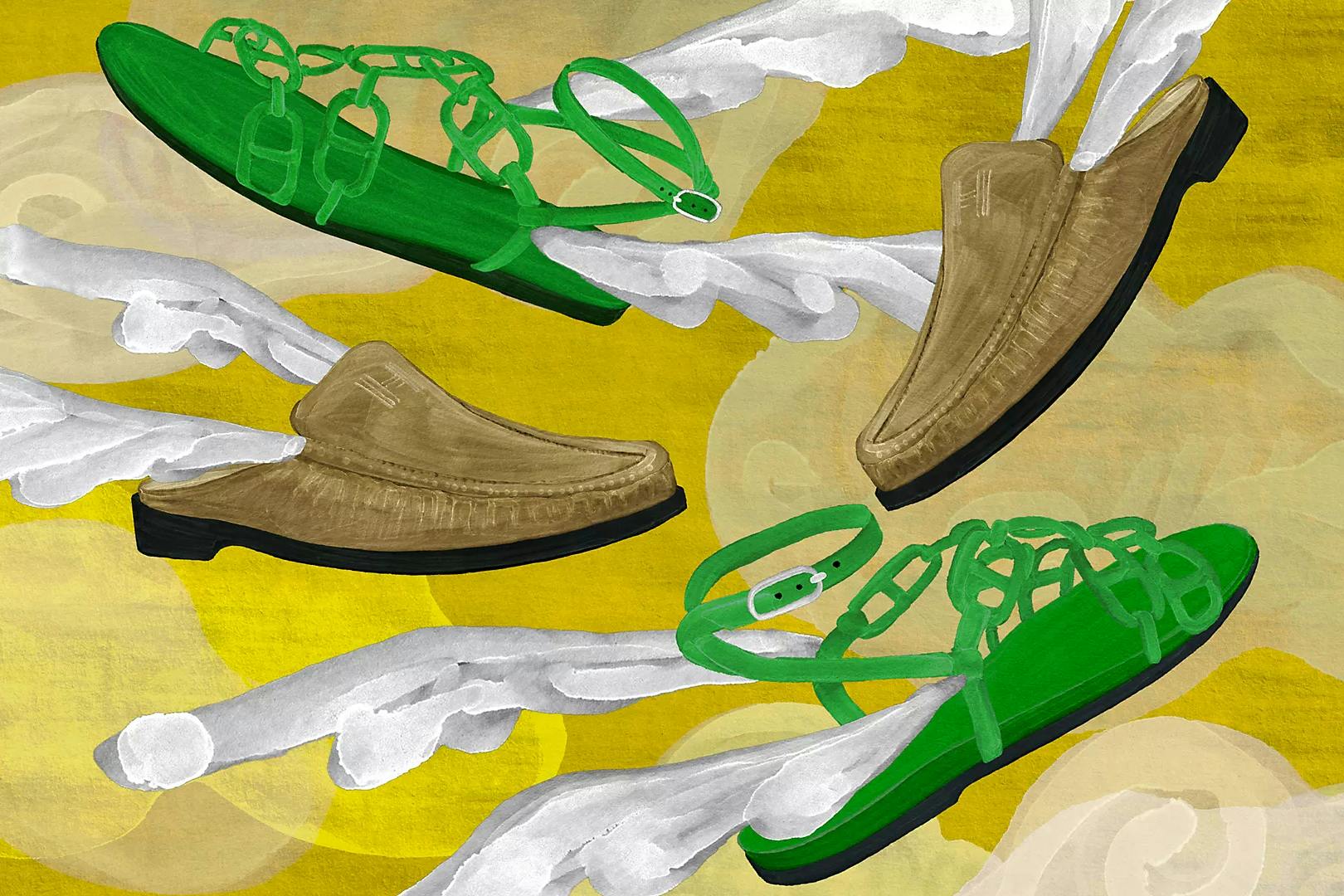
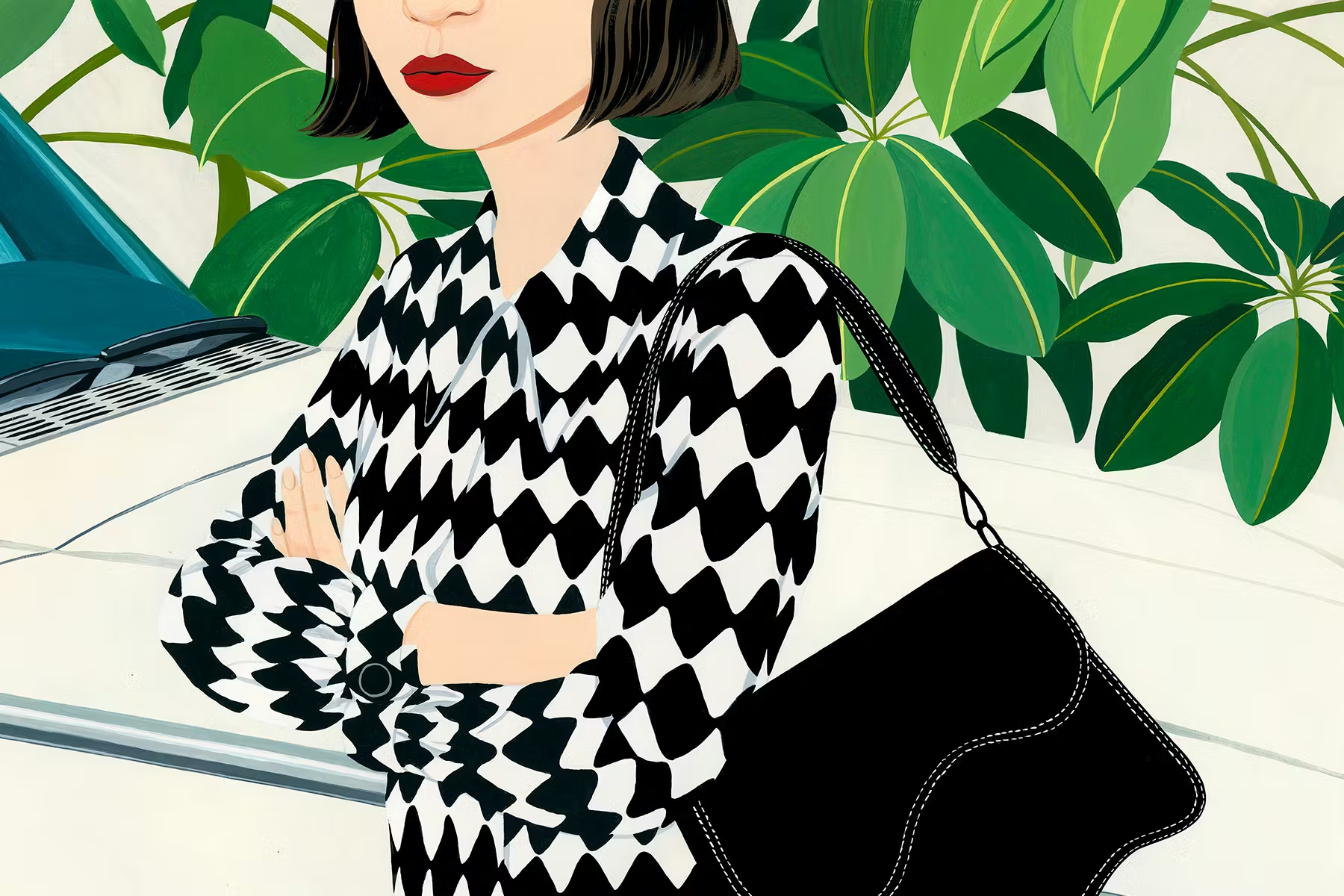
Left to right: Bijou Karman's retro-chic illustration (once seen in Refinery29); another from the same body of work; Hermès website visuals hand-drawn by Sarah Martinon and animated by Armand Béraud. (Images via Highsnobiety feature.)
2024–2025
Generative AI images pour into brand feeds; "AI slop" becomes a term you can point at and reject
Late 2025
Richard Haines draws gift wrap, window displays and a store mural for Todd Snyder; brands lean analog
2026.01
Highsnobiety, "2026 Is the Year of the Fashion Illustrator"; GAP x Sandy Liang animation (Annie Choi) goes viral
2026.02
Gucci's AI ads for Demna's Milan debut get mocked as AI slop; "is this still luxury?" floods timelines
H1 2026
Hermès hands its whole website to hand illustrators; Chanel, Tekla, Diptyque, Porsche roll out hand-drawn animations
Mid-2026
Illustrators report a clear jump in inquiries; "100% human" gets forecast as the year's marketing position
01Community Voices

In their words: how they describe the human hand

These lines run across social comments, artist interviews and cultural criticism, dated 2025 to 2026. They circle one question: once "drawn by a person" starts getting singled out and treasured, is that visibly human line guarding something a machine can't do, or has it been picked up by brands and turned into a pricier selling point?

Instagram commentIG user
Seeing a brand use animation when so many are using gen AI is such a breath of fresh air.
Instagram commentIG user
real art will NEVER be replaced.
Highsnobiety interviewBijou Karman
Being an artist carries a lot of cachet. People think it's a really cool job. Brands want to be associated with artists because it feels interesting, or the handmade quality of the work elevates their brand.
Highsnobiety interviewAlexandra Yvette
When you've made something by hand and there's a spirit behind it, people crave that realness.
Highsnobiety interviewRichard Haines
The real heyday was in the early 20th century, when almost every fashion magazine cover was an illustration. Now you don't really see that anymore.
Highsnobiety columnViv Chen
Who will shamelessly post the sloppiest slop? Conversely, who will pull off the analog-iest stunt?
X (Twitter)X user
Any luxury brands that used AI slop should not be [considered] luxury anymore.
X (Twitter)X user
Bleak days when Gucci can't find a real human Milanese grandmother to wear an outfit from 1976.

Context: these eight lines sit at different points on one spectrum. The first two Instagram comments are the plainest reaction—inside a wall of AI images, spotting "an actual person drew this" feels like relief, and someone flatly declares that real art will never be replaced. The middle three are people who live off that line. Bijou Karman is candid that what brands really want to borrow is the halo of the word "artist"; Alexandra Yvette says what people crave is the "spirit" behind handmade work; Richard Haines, half a century into the trade, points out that illustration once had the lead role and was simply pushed aside by photography. Columnist Viv Chen compresses the whole tug-of-war into a sharp forecast—brands will be shoved to two extremes, one racing to post the sloppiest slop, the other to pull the most analog stunt. At the far end sit two jabs at Gucci, putting the "used AI, no longer luxury" feeling as bluntly as it gets. What's worth noting: almost nobody is arguing about whether hand-drawn work looks good. They're arguing about how much the "human" behind the line is still worth.

02Consensus Mapping

Four narratives: official, community, emerging, contrarian

Official Narrative

Brands and trend reports are strikingly aligned: 2026 is the year of the hand's return. Hermès turned its website redesign into a months-long hand-drawn undertaking, hailed by Fast Company as the ultimate luxury; CNN named the year outright as anti-AI marketing. This narrative frames illustration as kin to craftsmanship—luxury already tells you its bags are stitched by hand, and now that story extends to the visual: hiring a living artist draws a line between the house and AI's "cheap, clumsy" connotations. It's happy to take up the mood, because the human hand can be packaged, priced, and worn as a visible mark of the high end.

Community Narrative

Down at the community level the reaction is more instinctive. Spotting hand-drawn animation in a sea of AI images, many people's first line is that it's a "breath of fresh air," or simply that real art will never be replaced. Artists who live off the trade confirm inquiries are up—Alexandra Yvette went full-time in 2024 on the back of it. What they endorse is the sense of "spirit," of a person being there behind the work. But a finer question is surfacing too: if every brand piles onto illustrators at once, is this wave respecting people, or just another round of mining them for a selling point?

Emerging Narrative

A set of culture writers place this inside a bigger shift: authenticity is becoming mass-producible. Once AI can endlessly copy any style, "made by a person" holds scarcity value for the first time. Viv Chen's read is that brands get pushed toward two extremes—one competing to post slop, the other to pull the most analog stunt—and that fork will likely spawn a whole new category of consumer aesthetics. On this view, the hand-drawn line, the visible brushstroke, the deliberately kept "imperfection" all point at one thing: finding a legible mark for "a human made this" in an age when anything can be generated.

Contrarian Narrative

The sharpest pushback: this "human touch" may just be marketing in new skin. Critics note 2026 is forecast as the year of "100% human" marketing, and once "made by a person" becomes a claim you can position around, it risks becoming the mirror image of AI washing—an equally cheap PR line, borrowing an illustrator's name to lend a multinational the glow of small and independent. The colder cut: the hand is, in the end, a visual effect, and AI is fast learning to imitate "hand-drawn imperfection." Once "looks like a person drew it" can be generated, does the line still hold, or are we chasing a mark that can be copied at any moment?

03Cultural Signal Extraction

Signal breakdown: six angles

What Changed?

For years, illustration was crowded out by photography and 3D, treated as a stand-in for when the budget ran short. This time it flipped: hand-drawing became something luxury will spend months and real money on. The visibly human line reads, for the first time, as premium, scarce, worth showing off—rather than dated or cheap.

Why Are People Reacting?

Because it hits a fatigue with slop. As feeds fill with mass-generated AI images—slick but hollow—people start craving a trace of "someone was here." The imperfection of a hand instead becomes a scarce, reassuring signal: proof this wasn't spat out by a machine.

What Assumptions Are Challenged?

"Faster, cheaper, more" is good—that efficiency-first assumption loosens. When every brand can generate a hundred images in seconds, slow, expensive and labor-heavy turn into value. Spending months hand-drawing a website is itself a question: has efficiency been over-produced?

What Desires Are Visible?

What shows is a wish to confirm there's really a person on the other side of the screen. In an environment where anything might be generated, people want more than something that looks good—they want evidence that someone spent time and care on it. The hand becomes the most direct vessel for that wish.

What Social Behavior Is Changing?

From "use the newest tech to prove I'm advanced" to deliberately "use the handmade to prove I'm real." Brands start treating "we didn't use AI" as a line worth saying out loud, pushing artists' names to the front. People seem to be learning to perform a "a human made this" posture.

Future Human Behavior?

If "made by a person" becomes a luxury mark, then once AI learns to imitate the hand's stroke and imperfection, can the line still be drawn? Might we one day have to invent a certification for "actually drawn by a human," just to tell who's behind it?

04INCODER's Eye

The lenses we read this through: six recurring themes

These six themes are the framework INCODER checks every cultural signal against—more like a pair of glasses. Put them on, and the same trend grows different meanings.

Symbolic Systems

A hand-drawn line is being used as a set of symbols. What it points to usually overshoots the image itself and lands on "there's a person behind this, who spent time, who cared." The deliberately kept stroke, the visible imperfection, become punctuation for the sentence "a human made this." When a culture starts using the hand as a language, does a fresh gap open between the sign and the "human" it's trying to prove?

Information Culture

In an information environment where "mass generation" is the default, slow and labor-heavy become signals in themselves. AI slop crushes the signal-to-noise ratio, so "you can tell at a glance a person made this" reads as high signal. Once "not using AI" carries social meaning, information culture hits an odd node—even the method of production gets read as part of the content.

Perception and Attention

Our eyes are being retrained to spot what's "made by a person." After scrolling past too many slick AI images, a little hand-drawn wobble is what stops the thumb. Perception seems re-priced: what earns two extra seconds is no longer perfection, but the trace of "someone was behind this." Is that a new taste that slop has forced into being?

Digital Identity

"We didn't use AI" is turning into a statement of identity. Brands push artists' names to the front to borrow a warmer, more principled image. Curiously, that "human touch" can be managed, designed, arranged as a position. Once "made by a person" becomes an image you can deliberately cultivate, does the "real" part of a digital identity turn into another performance?

Dark Vitality

The most alive part of this return may be that a long-marginalized group—illustrators—is suddenly needed again. A trade that watched magazines fold one by one and commissions thin out year after year came back to life through AI's backlash. The question is: once that vitality gets absorbed wholesale by big brands and turned into marketing material, does it keep the feral edge that let it survive at the margin, or has it just put on a more respectable coat?

Networked Society

This wave actually grew out of the network. Artists got seen on IG and TikTok, got tagged with labels like "Shoe Diva," got found by brands along that trail; even the anti-AI mood gathered, fermented and turned into volume on the same platforms. A move meant to prove "a human is more precious than a machine" still has to travel through the algorithm to be seen—and that tension hasn't been resolved.

05Signal Score

Signal strength

8/10

The weight of this signal is that it shows up on several lines at once and is backed by real commercial moves—not just critics shouting. Hermès handed its whole website to the hand, Chanel/Tekla/Diptyque/Porsche rolled out hand-drawn animations, Gucci got dragged for AI ads, illustrators report more inquiries: all tilting toward "the human hand as a selling point." It runs past aesthetic preference into a renegotiation of what counts as real, what's worth money, and what place a person still holds in production—and it's grown quotable phrases (fashion illustrator revival, 100% human). Points come off because the phenomenon carries an unresolved contradiction—"made by a person" is being absorbed by commerce on one side and rapidly imitated by AI on the other, so it may just be marketing in a more likable wrapper; once "looks like a person drew it" can be generated, the line can slip at any time. If hand-drawing gets fully commodified into an applicable "filter," or the mood proves to be another fast-fading nostalgia wave, this score will need adjusting—up or down are both on the table.

06Final Question

The deepest hidden assumption

?
When "made by a person" only counts once it's seen—needing an artist's name, a hand-drawn animation, a line that says "we didn't use AI"—have we quietly conceded that the human hand is no longer the default, but an exception that has to be labeled and displayed before anyone will believe it?

On the surface this is a light story about taste swinging back: people got sick of AI images and started missing hand-drawing. But set inside the year generative AI fully matured, its shape changes. Once a machine can generate any style, any "imperfection," in seconds, "drawn by a person" gets pulled for the first time from a background-level given into something that has to be pointed at, proven, tagged. Brands smelled the scarcity, so they enlarged the artist's name and filmed the drawing process as content—what you take home isn't just an image, but a guarantee that "there's really a person behind this."

The trouble is the escape route isn't clean. The artist's name, the visible stroke, a "100% human" line—all of it can be displayed, admired, tallied into status; and AI is fast learning to imitate the hand's wobble and its flaws. Once the "human touch" itself becomes a selling point to be shown off, the very marks we use today to prove "a human made this" might become exactly what the next wave of slop most wants, and most easily manages, to imitate. This record holds no answer for now, only a loose end—if even the human hand must be witnessed and certified before it counts as real, then the little bit of "a person is more precious than a machine" we're straining to keep, is it still inside that line, or does it start getting copied the moment it's spoken and tagged?

Observation remains incomplete.

This report records the state of observation at this moment.

The fashion illustrator revival and the anti-AI-slop mood are both still unfolding. Whether it settles into a lasting renegotiation of what counts as "made by a person," or turns out to be another nostalgia wave that commerce absorbs and burns through fast, is undecided. The reading that "a hand-drawn line is proof a human made this" may well be overturned once AI learns to imitate the hand.

Observation continues.

Observer 2020 · Report 0019 · Archive Index Open
This report was researched and written by AI, reviewed by a human before archiving.