
What Changed?
The book goes from something read to something carried through the door. Guests hand it over and hand over a taste that can be photographed.
Valentino showed SS27 at Paris’s Bibliothèque Sainte-Geneviève, with an invitation asking guests to bring a book to donate. This page records how people outside the frame read an unread book and an unworn garment placed in the same box.
This is one page of the Observer reports. I usually track the containers knowledge travels in. A book is one, and a fashion show is another. This time the two stack: guests held books while clothes nobody has worn yet came down the runway. I wanted to see which container gets read first.
The main document is Dazed’s on-site report of 4 October. I added BuzzFeed’s book list and a critique from Italy’s exlibris20. The three documents read the same glass box in three ways. This record has no answer yet.
The main document is Dazed’s on-site report of 4 October, by Hannah Bertolino. Valentino showed SS27 “Antibiblioteca” at Paris’s Bibliothèque Sainte-Geneviève, emptied of readers and lit with strobes, with Troye Sivan’s “Party” on loop. The invitation asked each guest to bring a book to donate, new or from their own shelf. Michele’s show notes compared garments nobody has worn to books nobody has read.
The control group runs on two lines. One is the concept’s lineage: per exlibris20, Umberto Eco spoke of a “negative library”, and Nassim Taleb borrowed it in The Black Swan to coin “antilibrary”. The other is the book list. BuzzFeed logged fifteen celebrity picks on 5 October: Cynthia Erivo brought Baldwin, Anna Wintour brought Pride and Prejudice, Joe Alwyn brought Roald Dahl’s James and the Giant Peach.
Why today: six days on, the book list and the critiques are all in, so three readings can sit on the table together. Business Today says the books go out through Bibliothèques Sans Frontières and Fauvettes City Club. On 7 October Acierno wrote the glass box up as a performance, and Salamone said the clothes could not be worn out. One box: some see a donation, others a prop. A week later, the next season will probably bury these readings.
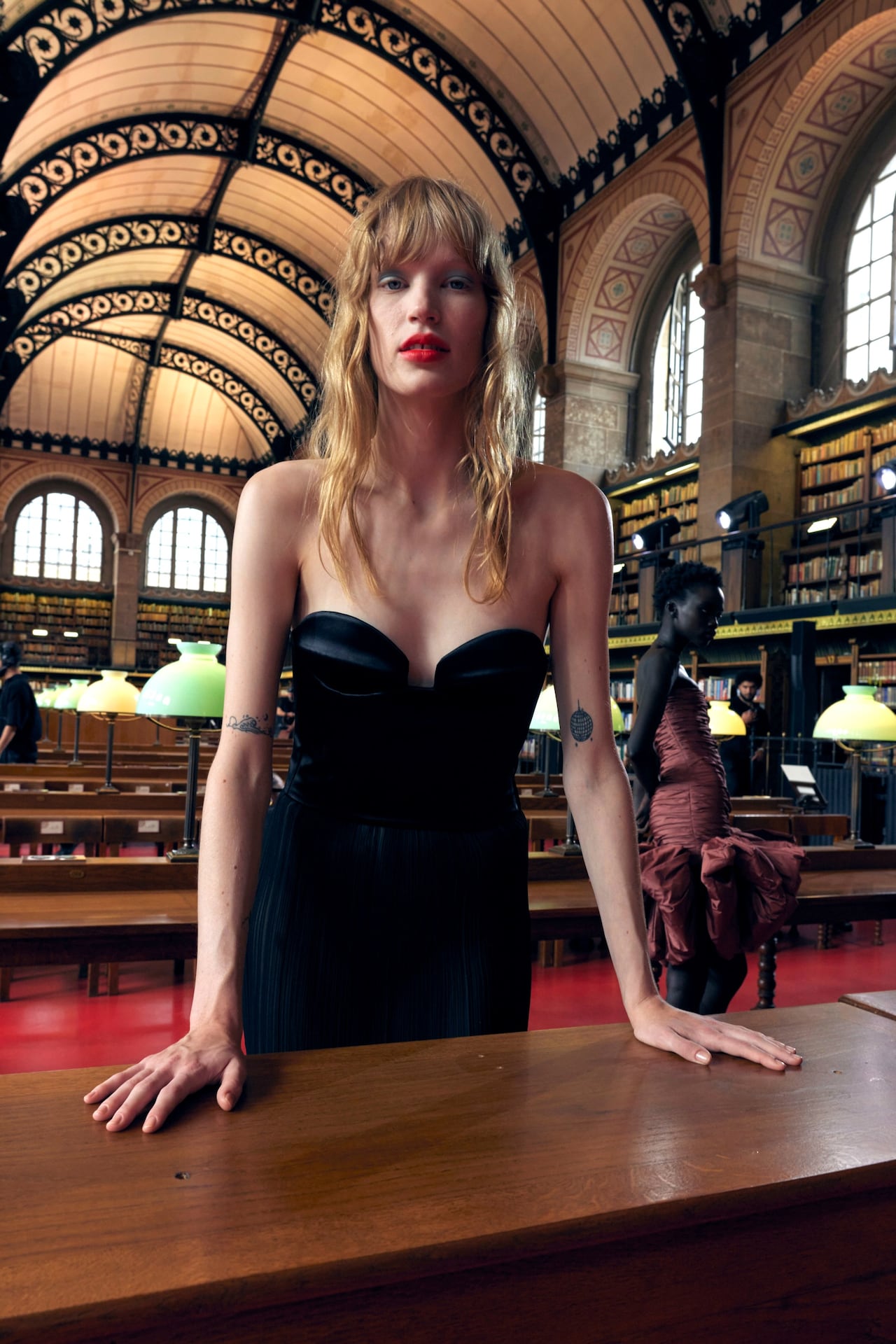
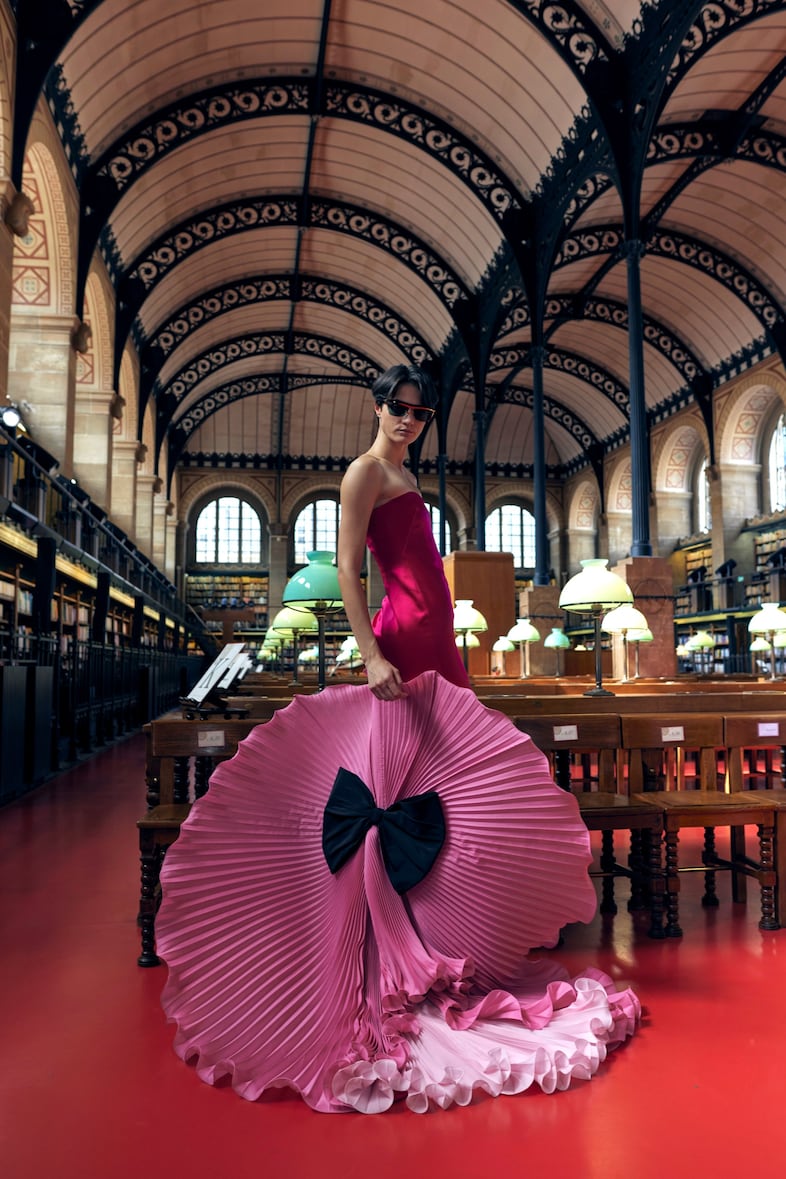
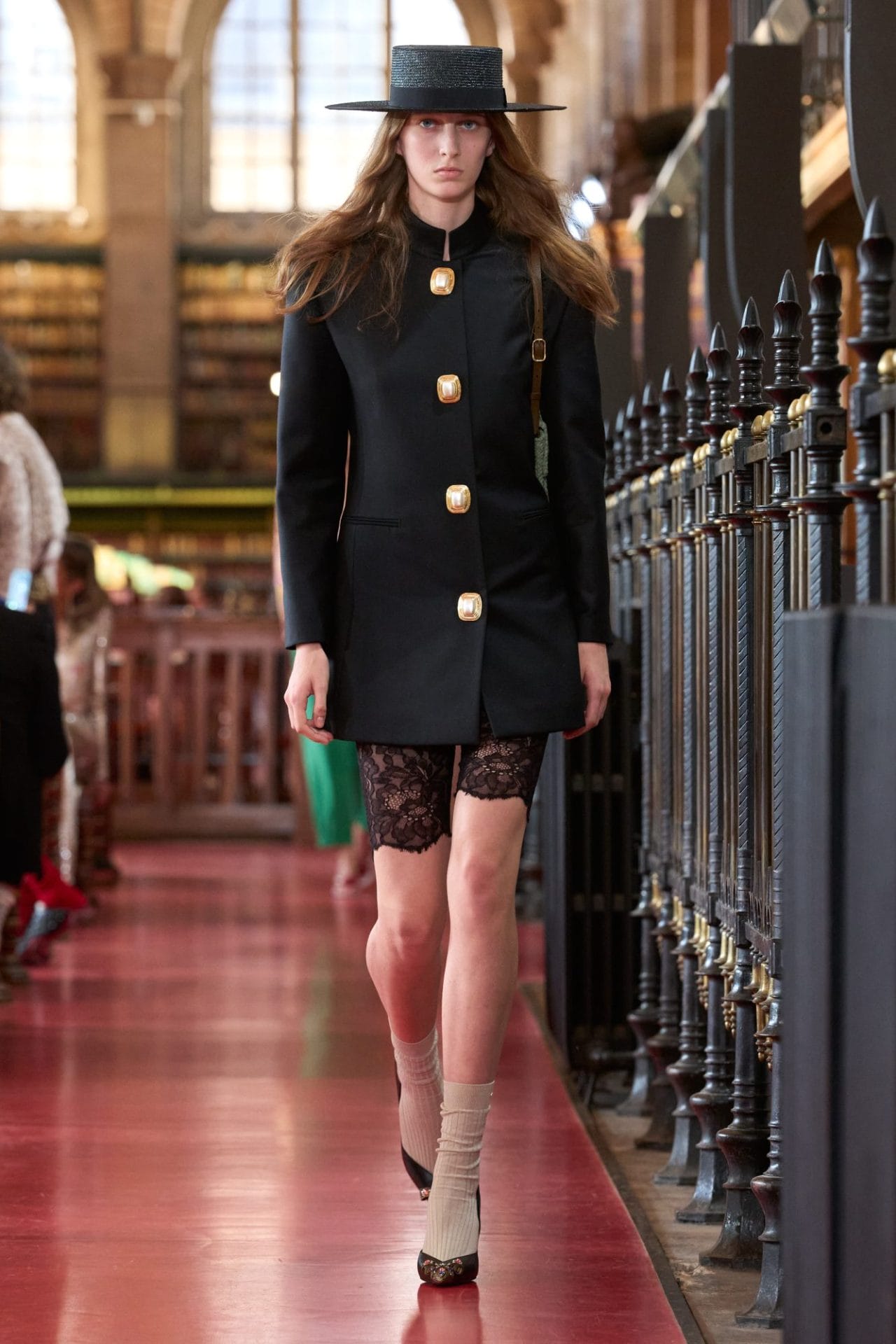
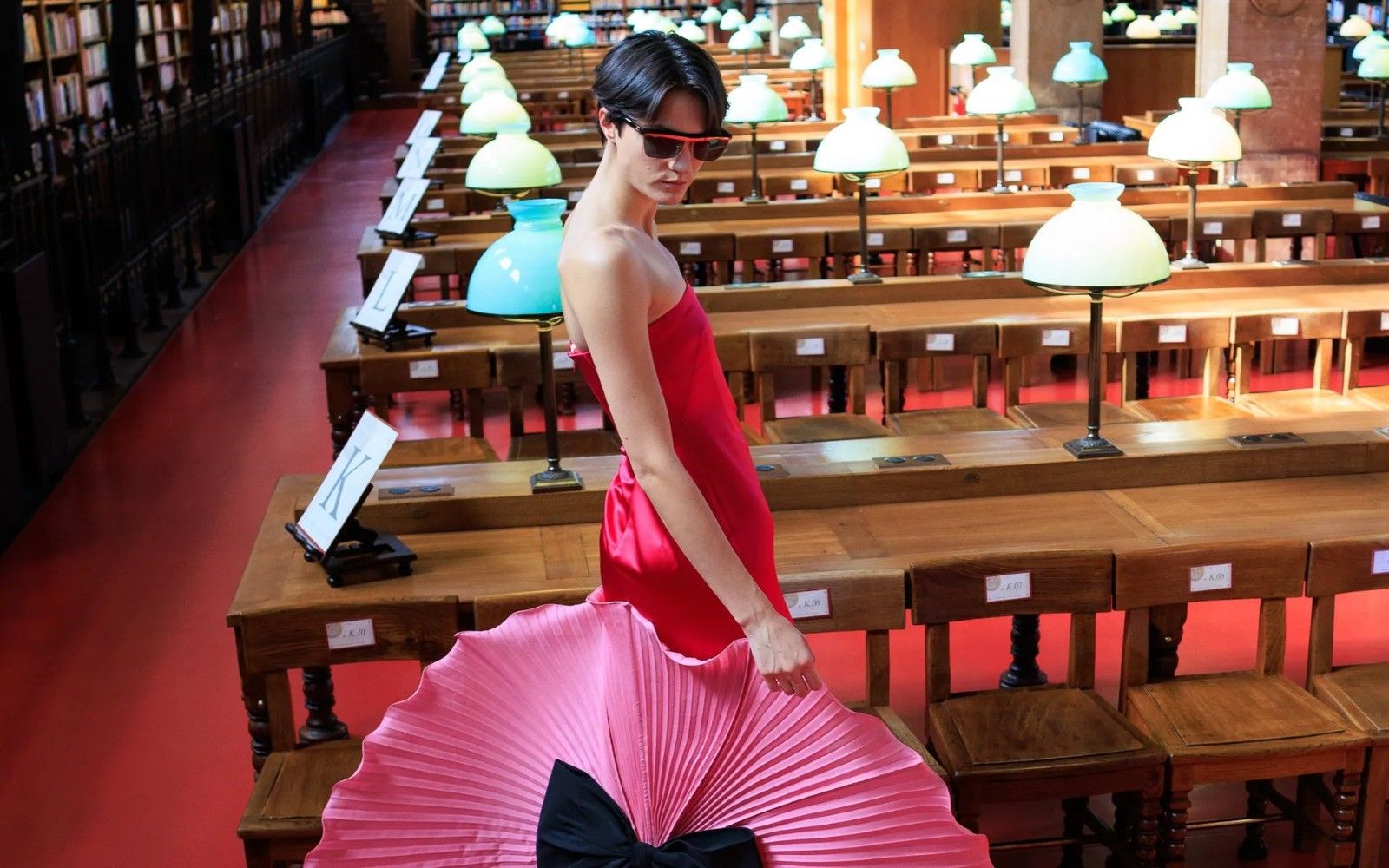
Even the garments that we will never wear
Because their sheer presence as a possibility makes the world wider, richer, more livable.
a tangible presence of what we do not yet know
new or from your own library
a purely performative nonconformism
the show notes themselves are an elaborate begging of the question
Sì, il libro è un prop.
E la lettura non può sfilare, nonostante tutte le sottigliezze e le citazioni e i rimandi
The eight statements come from five media documents: Dazed, The Zoe Report, BuzzFeed, nss magazine and exlibris20. The show notes and invitation are relayed through media and were not checked against Valentino’s own text. This column has no social-platform comments. Searches of Reddit and X found no original discussion of the book donation in these days.
The gaps sit here too. No guest speaks about the donation, Michele has not answered the criticism, and only Business Today says where the books go. The two Italian lines are recorded verbatim, with glosses added by me. Critical quotes dominate, which does not stand for most readers.
Valentino’s line: unworn clothes are like unread books, and their mere presence makes the world wider. The invitation asks for a book, to be distributed via Bibliothèques Sans Frontières and Fauvettes City Club.
No social-platform original is on file for this side yet. BuzzFeed’s list leaves a trace: fifteen celebrities, fifteen books, arranged as a list that can be compared.
New reading: the book in hand becomes proof of attendance. Dazed and BuzzFeed print titles beside names like garment labels, to be photographed, listed and used to read the person.
Acierno’s critique cuts hardest: the book is merchandise and a prop, and reading cannot walk a runway. She describes stars tossing books in, some staged, some casual, some like rubbish.
The book goes from something read to something carried through the door. Guests hand it over and hand over a taste that can be photographed.
One box reads as donation or as prop. The invitation says donate, Acierno says performance, and neither reading yields.
“Only a read book has value” gets turned upside down. Unread books count as assets, and so do garments nobody wears. Value sits in what has not happened.
Guests want to be seen reading, the brand wants a literary air, the library wants books. Three wishes queue at one box, with the photo seemingly first.
Reading the book list becomes part of watching the show. Readers compare who brought Baldwin and who a children’s book, treating titles as biographies.
If entry now means bringing a book, will next season ask for something else? The container changes, and the guest’s taste is still what gets inspected.
These six themes are the frame INCODER checks against every day’s cultural signals. Think of them as a pair of glasses: the same event grows different meanings once you put them on.
A title printed beside a name becomes a very short piece of information. How deeply a book gets read depends on who stops at the box. Will the person who photographs the title be the last to open it?
Online, the book list assembles a second face for each guest. Erivo’s Baldwin and Alwyn’s Dahl are each a self-introduction. Could the book you bring become an avatar chosen in advance?
Books and clothes share a state of being unused. The show notes call it possibility, and Acierno calls it a prop. When a symbol goes unused, what does it point to?
A library emptied for a party, books gathered into a glass box. Quiet reading is lent a venue and a name. Once it is borrowed, what remains where it came from?
Acierno cites online book clubs and bookraves, noting reading communities long predate them. When recommendations are ranked by algorithm, where do the relations between readers sit?
The show’s sensory order runs strobes, music, clothes, then the glass box. How much time is left for a book once attention reaches the last stop?
The question assumes reading used to be private. The show notes write the unread book as possibility, and Acierno says reading cannot walk a runway. Both agree a book can be displayed. Nobody asks what is on display: the book, or the person holding it? The box takes books, and never the time it takes to read them.
One layer down: does donation count as a form of reading? A book leaves the guest’s hand and enters a library, and someone may open it one day. That reader will probably never meet the guest. This record has no answer yet, only a question: in the second the book is photographed, where is the person who reads it?
This report records the state of observation at this moment.
What is on file so far is a handful of media reports and two critiques. Social comments and the libraries’ own records have not come in. The reading may be reinforced, or overturned.
Observation continues.