
What Changed?
Fashion week’s location became a field one can joke with. The invitation said Paris, the show ran in Brooklyn, and Paris was left with a screen. The calendar stands, but it no longer promises where the room is.
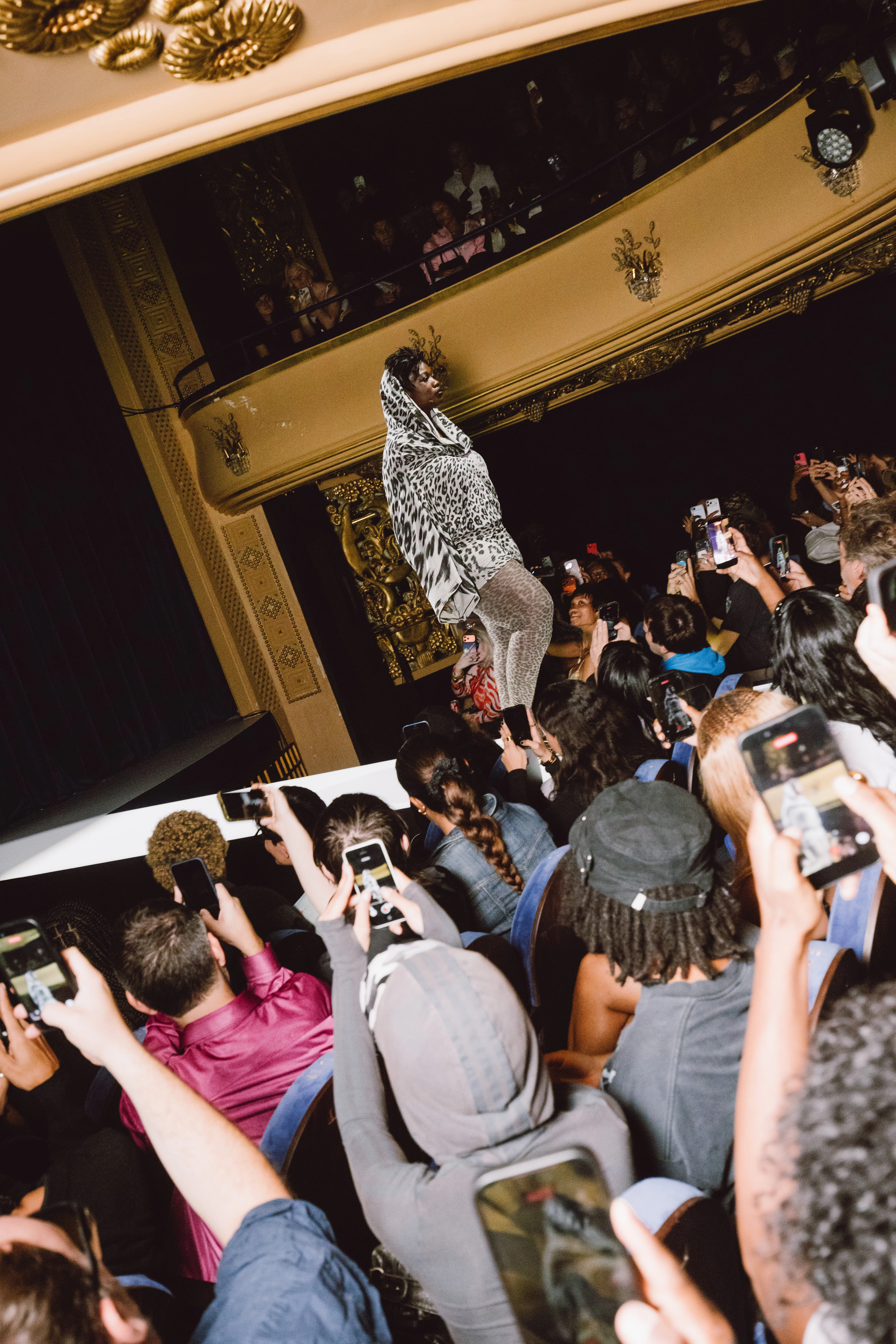
On 6 October about 300 guests waited in a Paris theatre for a Telfar show, and the screen showed Brooklyn. This page records who the show is for once fashion week’s location can be moved.
This is one page of the Observer Reports. I usually log where the fashion show has moved to: the high street, the keynote, the resale platform. This time it went to an old bank hall. Even the thing being waited for changed address.
On 6 October Telfar sent out a Paris invitation and held a Brooklyn sample sale, and the two met on a screen. I read seven media records and found no independent audience or guest posts, so most voices here belong to the designer. Where a column is empty, I have left it empty. This record has no answer yet.
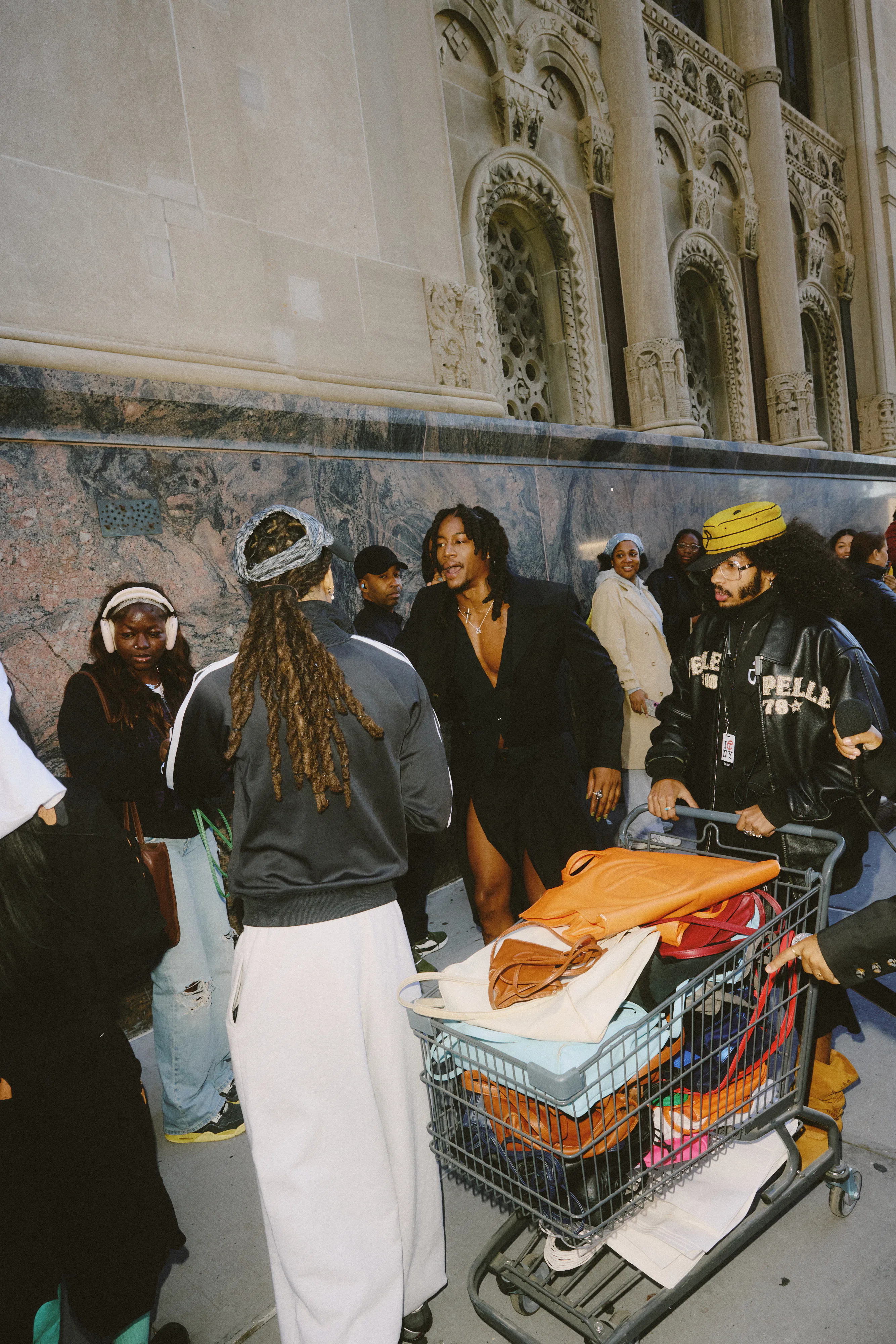
The main document is the run of Telfar SS27 coverage published around 7 October. On the 6th, about 300 guests entered the Daunou Theatre in Paris for a show seven years in the making. The lights dropped, a model answered a phone, and Clemens appeared on a screen to say the show was in New York. At One Hanson Place in Brooklyn the sample sale queue had formed at sunrise. Guests watched a stream in Paris. Customers watched the real thing in Brooklyn.
The comparison is the brand’s usual posture. Telfar last sat on the official Paris calendar in 2019, has staged few formal shows since, and held its twentieth-anniversary show only this June. Per Harper’s Bazaar, as French houses push prices higher, Clemens has been asking who fashion welcomes and who it shuts out. The invitation itself carried an ironic line that played with Paris’s status as fashion’s capital.
Why today: two lines met this week. One is fashion week ranking guests by who gets a seat. The other is Telfar’s habit of serving the people who buy first. On 6 October a phone call joined them. The sample sale runs to 11 October and Bag Redemption has only just begun. Wait another week and the event may shrink to the word “prank”, with the room itself painted over.

I've been lying for days, and I don't lie
Paris is the home of fashion, at least by exclusion of all the other places
We took a break from so much of the fashion weeks and things like that because it's all performative
It's really for Brooklyn; it's great that Paris got to see it too
If you can’t determine value, you are determined by it
Is it a luxury brand, an internet phenomenon, a social experiment, a genderless fashion project, or something else entirely?
Oh my god, T, where are you?
I'm in Paris!
So, you know the first two letters of sample sale are S and S, but at Telfar, we're always ahead so right now you're getting Telfar SS27
The nine statements come from four reports (Harper’s Bazaar via Yahoo, WWD, The Fader, TheGrio) plus the brand’s own printed show notes. Most are Clemens’s own words as relayed by the press; none was checked against original video. The phone dialogue is TheGrio’s record, and another outlet describes it slightly differently.
This column has a gap. I looked for audience reaction on Reddit and in the coverage and found no independent audience or industry post that could be quoted word for word. No Paris guest has said what they thought. So these nine lines stand almost entirely on the brand’s side. They do not speak for the three hundred in the room or the customers in the line.
The brand’s account: customers come first. Sample sale, runway and Bag Redemption share one venue. Per WWD, the sale holds over 30,000 pieces at up to 90 percent off.
Media reaction leans admiring. PAUSE wrote “Paris got the invitation. Brooklyn got the show.” No independent audience post was retrieved this time.
A new framing: fashion week becomes a place one can pass through. The invitation sits in Paris and the content elsewhere, leaving the calendar as an entrance. An old bag traded for credit also reads like a ticket.
No named critic found. Read from the event’s shape: 300 guests with seat cards became the audience for the joke, and a runway fused with a sale can be read as a sales event. This is my reading. No one said it.
Fashion week’s location became a field one can joke with. The invitation said Paris, the show ran in Brooklyn, and Paris was left with a screen. The calendar stands, but it no longer promises where the room is.
The joke lands on the industry. Three hundred guests held seat cards and watched a stream, while queuing customers were in the room. The press words were prank and gagged, and the laugh sits on who was invited where.
A show must happen in the room where the invited sit. That assumption has loosened. Part of Paris’s authority comes from other places not being counted. If elsewhere can stage a show, what holds that authority up?
Customers want a position from which to be seen. The line began at sunrise, and inside, one hall held both runway and sale. The brand wants freedom from the industry’s definitions. Both bets sit on being in the room.
Audiences split in two: those with seats watch a screen, those without watch the real thing. The seat card has been turned over once. Queuing became a way of attending, and one the brand formally hosts.
If next season everyone first assumes the room may be elsewhere, what is left for an invitation to do? Will guests also start asking whether they are watching the show or a broadcast of it?
These six themes are the frame INCODER checks against every day’s cultural signals. Think of them as a pair of glasses: the same event grows different meanings once you put them on.
The invitation is information. Its address was accurate and incomplete, and one missing field rewrote the whole show. How complete must an invitation be to count as honest?
Clemens appeared on screen as a caller, in Brooklyn with his name hung in Paris. Identity split into presence and display. Does a designer on a screen count as having arrived?
Seat cards, a theatre, a stream: all signs of fashion week, all still standing, with what they pointed to moved away. How long can a sign keep its authority once its referent has left?
A brand built on surprise and guerrilla moves left an empty seat on the establishment’s calendar. Does a survival strategy at the edge always need a centre to be set against?
One show, two cities, lived differently by two crowds. Clips from the floor were reposted on TikTok and Instagram. If a community has a centre, who decides where it sits?
Guests held phones up for a show, and a ringtone came first. Attention is trained toward the stage, and this time the stage was a phone call. Will people next look first at the caller on the screen?
This question assumes the room has one correct location, usually where power sits down. Telfar gave the seats to people far away and the real thing to the people in line. Both sides had someone present and someone absent, only the absent changed.
One layer down: who decides who is absent? The Paris guests received invitations and seats yet knew less than the customers in the queue. If the next show’s room is inside one’s own phone, is that person a guest or a customer? This record has no answer. It keeps one open thread: will those left on the screen side show up on time next time?
This report records the state of observation at this moment.
What has been gathered is several media reports and words the brand printed itself. The accounts of independent audiences and Paris guests have not come in. The reading may be reinforced or overturned.
Observation continues.