
What Changed?
Surveillance used to be the thing designers criticised. This time it was the venue, the cast and the sponsor. The audience bought a ticket to the warden’s seat; the models took the cells.
8pm, 18 September 2026, Collins Music Hall, Islington. Natasha Zinko put the audience on the floor of the atrium and lit 42 looks one box at a time around them: Katie Price posing, Kelly Osbourne holding a bat, a man in a pink cleaner’s uniform singing opera. The show was called Pay Per View; the partner was OnlyFans. This page records a show about being watched, and who ended up being watched.
This is one page of the Observer Report. What I keep returning to is who watches, who is watched, and who sets the rules. Surveillance usually stays behind the camera. This week it bought a ticket and sat in the middle of the room.
A designer built her show as a circular prison. The audience took the warden’s seat; the models stepped into the cells. The poster said Pay Per View, and the sponsor makes its money from paid looking. What I want to record is that window, and what the people outside it looked at afterwards.
The document first. On 18 September, Natasha Zinko showed SS27 at Collins Music Hall under the title Pay Per View. There was no runway. The audience sat at the bottom of the atrium while models stood in the square openings on the floors above. Boxes lit up one at a time: Katie Price posed, Kelly Osbourne held a bat pendant, Drea de Matteo smoked. The press release cited Foucault’s panopticon.
The counterpart. The show’s partner was OnlyFans, making its London Fashion Week debut with an 18-piece capsule; a distressed tee is priced at £130. Zinko also announced she is joining the platform as a creator, selling behind-the-scenes access to her studio. A show about paid viewing put itself on the paid-viewing shelf the same night.
Why today. Two days on, a reposted clip of Katie Price’s walk passed a thousand comments on Instagram. The two most-liked read “Are we going to pretend nothing wrong is happening?” and “why is this popular and acceptable?” The subject moved from the prison to her body and her state. Zinko said the models watch the audience too. Nobody has recorded that returning look. The signal converges here.
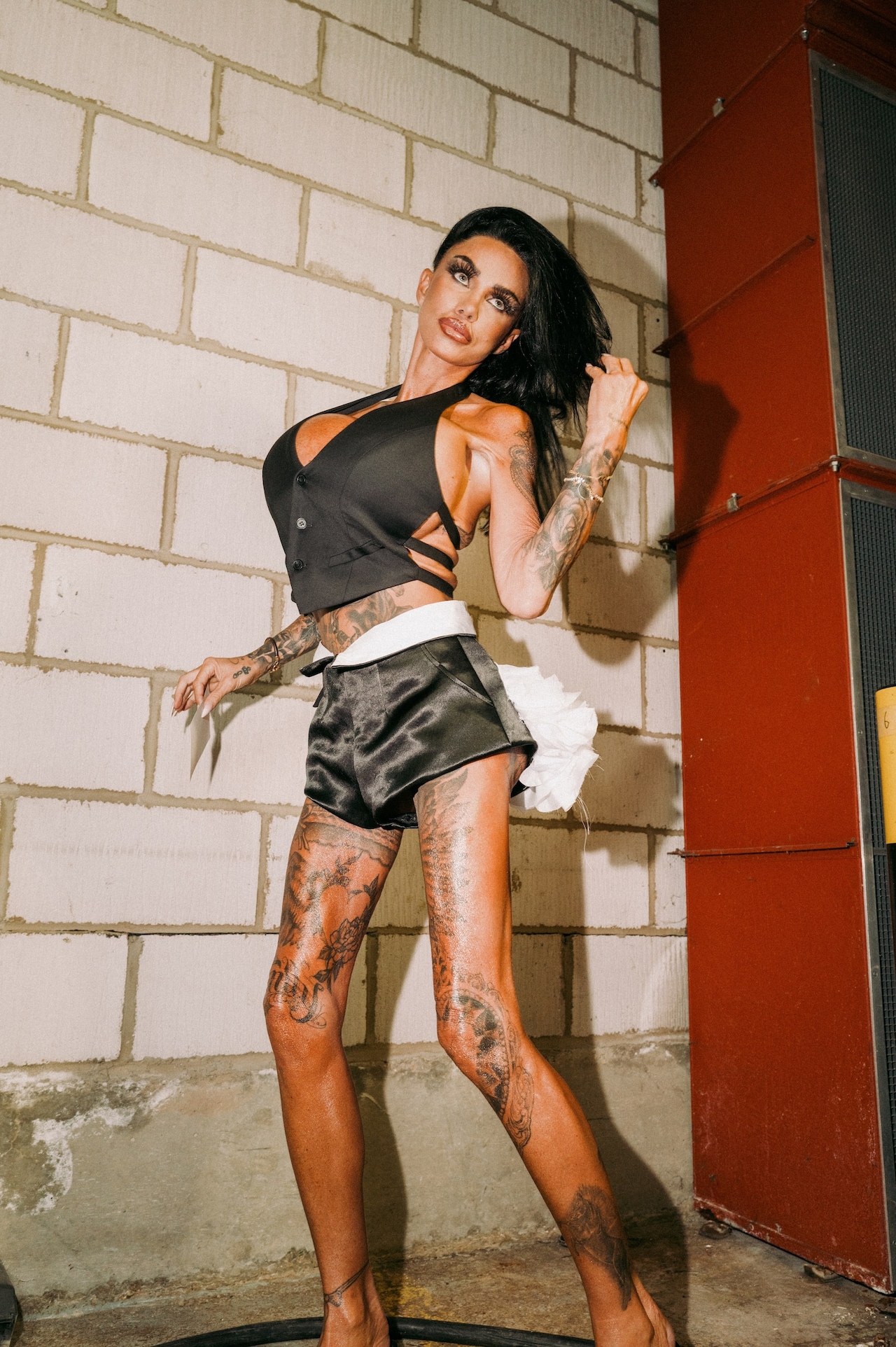
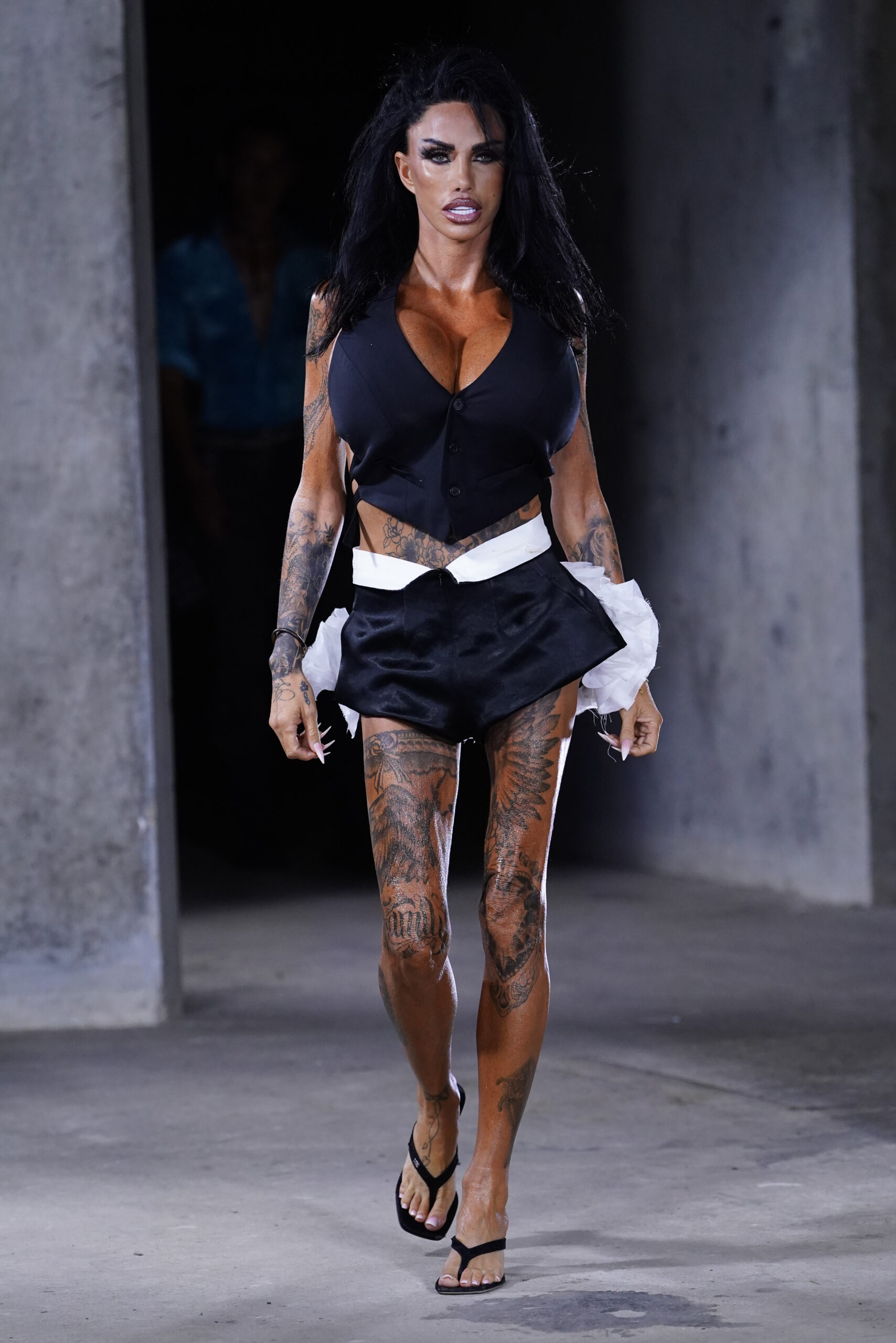
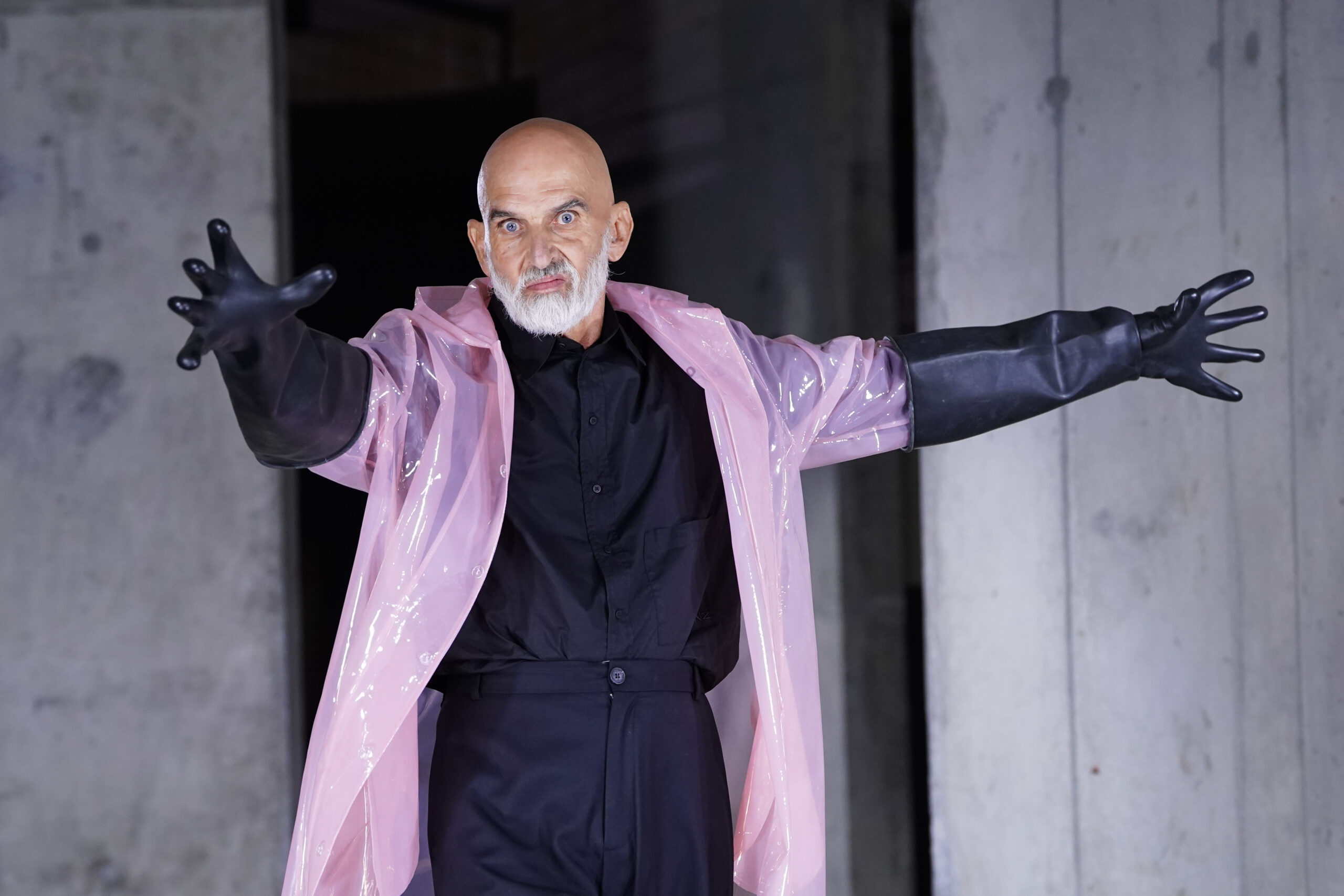
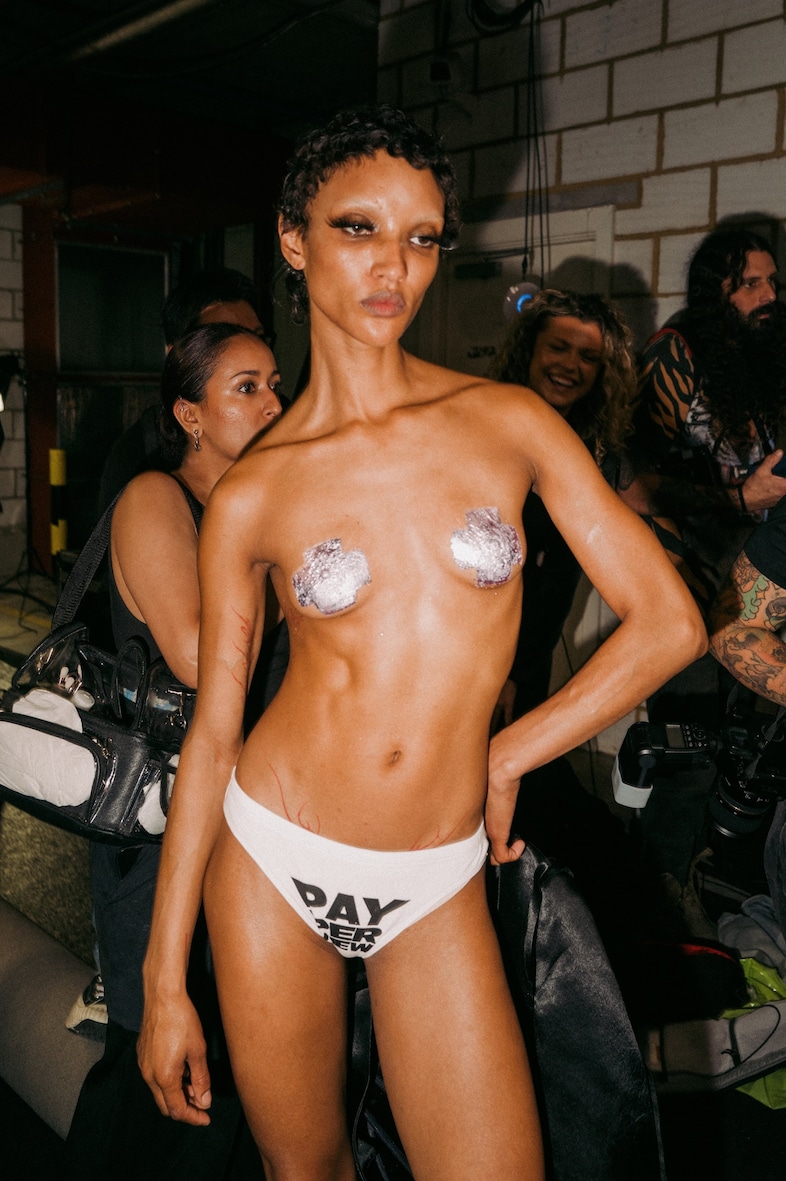
All nine below are verbatim. Two come from backstage interviews recorded by the Press Association, one from a critic, and six from Instagram comment threads: two under the official posts, four under a reposted clip of Katie Price’s walk.
People behave differently when somebody watches them. So the audience is part of the game. They also watch our models.
In the little window that I’m in, I just have to be me. It’s just like being on a photo shoot, just standing there and posing. Something I do best.
The joke is that the paywall was never the fabric. It was the frame, the box, the little window you have to be admitted to.
This show was actually mind blowing 🔥😍
Natasha you are a genius
Are we going to pretend nothing wrong is happening?
Once again… why is this popular and acceptable?
Y’all just hating her cause you’re a bunch of basic, no life, lonely flops who can’t take her fiercely CAMP supermodel perfection🫦
How to ruin your clothing brand
Look at who is speaking. The first three voices come from inside the show: the designer, a performer, a critic, all discussing the idea of being watched. The other six come from comment threads. Two sit under official posts and read as celebration. Four sit under a reposted clip and are about Katie Price herself. Both groups saw the same show.
Then look at the likes. The most-liked comment anywhere asks whether we are going to pretend nothing is wrong. It carries over two thousand likes, more than every comment under the official posts combined. The show’s premise was that the models would look back at the audience. The thread does not appear to have received that look. This record does not yet judge who saw correctly.
Zinko’s line is clear: everyone performs, some more authentically, some as if playing another character. The prison comes from Foucault. OnlyFans is the partner, and her next account.
The dominant tone in the threads is worry and mockery, aimed at Katie Price. “The woman is not well” drew over three hundred likes. The surveillance the show set out to discuss got a second demonstration in the comments.
What is surfacing is the window as a unit. Podnos writes that the paywall was always the frame. Price says that in her little window she only has to be herself. The window seems to be replacing the runway.
The sharpest dissent is one line in the thread: “How to ruin your clothing brand.” On the other side, fans call the critics “lonely flops”. Neither side mentions the clothes.
Surveillance used to be the thing designers criticised. This time it was the venue, the cast and the sponsor. The audience bought a ticket to the warden’s seat; the models took the cells.
A woman who has lived on camera for thirty years stepped into a small window and the light came on. People reacted to her, and to her body. The show’s concept came a long way behind.
The assumption that the watched person is the victim. Price says she is in her element. Zinko says these women own their window. Being watched, here, is a skill.
The wish to be seen, and the wish to look back. Zinko says the models watch the audience too. The thread wanted someone to judge. Both wishes were met.
Brands are moving their own process behind a paywall. Zinko’s OnlyFans account will sell the studio. The designer moves from being filmed to opening her own window.
If everyone assumes they are already in a window, does a technique for staying unlit appear? Could going unilluminated, for a while, become the new luxury?
These six themes are the fixed frame INCODER holds every cultural signal against, closer to a pair of glasses than a checklist. Put them on and the same event grows a different meaning.
Forty-two boxes lit in turn, and the audience had to choose which to watch. Dazed compared it to a social feed made live. Does attention cut into cells in a room get harder to spend than on a phone?
Price says that in her window she only has to be herself. After thirty years in public, “herself” and “the performance” seem to be one thing. Is that the most complete form a digital identity can take?
Underwear worn outside; what sits behind the paywall walks the street for free. Podnos writes that what is sold is the ticket. Once content stops being scarce, is the frame the only product left?
A man in a pink cleaner’s uniform sang opera from his cell. Zinko said that was authentically him. At the edge of a surveillance system, is talent the last available exit?
The audience in the room saw a concept. The audience under the reposted clip saw a person. One show grew into two things on two networks. Which of them counts as having seen it?
The stools were placed so close that knees nearly touched. Dazed read the crowding as the claustrophobia of surveillance. When the body is arranged into the concept, is perception still voluntary?
Lay the assumption out. Critiques of surveillance rest on one premise: the watched did not consent. Foucault’s prisoner never knows when the eye is on him, so he behaves at all times. Zinko’s show inverts that. The prisoner knows she is watched, chose the outfit, and says she is in her element. The warden bought a ticket.
The comment thread remains on the other side. Over two thousand people liked a question about whether to pretend nothing is wrong. That is the kind of looking nobody bought a ticket for. On one night, both kinds existed: one under contract, one without. Will the next show, the next glasses, the next stream keep rewriting the second kind into the first? This record has no answer yet.
This report records the state of observation at this moment.
Sales figures for the OnlyFans capsule are not yet public; Zinko’s OnlyFans account has not yet posted; the Reddit threads have not yet entered this record. What is written here may be strengthened, or overturned.
Observation continues.