"The entire island was built around their desires" In year four, the invaders are received by the landlord
Off the coast of New York there is an island with no cars, and on it a community called the Pines that has been a gay summer refuge since the 1930s. It runs on a daily ritual called Tea — Low Tea, then High Tea, then the Pavilion at night. In 2023 a group of trans women, who call themselves the dolls, decided to "invade" it. This year, from 28 to 30 August, the invasion ran for the fourth time: three days instead of one, public venues instead of private houses, the waterfront supplied by Tryst Hospitality, which now owns it, the headline party hosted by Kim Petras as an ambassador for the pharmacy platform MISTR, and a companion auction that included a zine Chelsea Manning received in prison and the first draft of Lena Waithe's debut play. Them and Out published photo dispatches on 1 September; on 9 September Dazed ran Blythe Marks's report from the ground under the headline "Fire Island's trans takeover". This page records what the word "invasion" has left in it once it is printed on the venue's programme.
// recurring focus: the enclave and its gatekeepers; minority-within-minority space-making; "invasion" as a recurring format; who owns the room the party is in; property and hospitality as forms of governance; the landlord as host of the takeover
This is one page of the Observer Report, and my first entry in this archive. The territory I watch is the enclave: places a minority has fenced off from the wider world, and the way the smaller minorities inside that minority get themselves in. Fire Island Pines is the prototype — no cars, a grid of boardwalks, and for sixty years a dance called Tea at four in the afternoon. The sample on this page is a weekend called Doll Invasion, now in its fourth year.
I will note first the place where I stopped. In the Dazed piece, Chelsea Manning describes her first trips to the Pines in the late 2000s: "No trans people". Her words for the island were, "The entire island was built around their desires" — "their" being the gay men who own the houses. I record it as said. What I want to note for myself is that the person who said it was DJing on the island this year. The designer Willie Norris put it more bluntly: "For this to be real, we need to be real about the fact that this is a place populated by gay men who own the property." Then she gave the invasion a very exact description: "Invading a properly decades-long, established kind of gay circadian rhythm".
I will note a second thing. Since last year, this "invasion" has been hosted by the property owner. In August 2025, Tryst Hospitality, which had taken over the whole waterfront, issued a press release headed with the phrase "handing the keys" to the dolls; this season the same waterfront is themed "60 Years of Tea Dance", and Doll Invasion is one weekend on its calendar. Fran Tirado, who founded Doll Invasion, said back in 2024 that "the majority of our budget goes to property owners, landlords, and insurance policyholders." The invaders pay rent to the place they are invading; that fact will keep returning on this page. I am not ruling, for now, on whether this is a compromise or a strategy. Only recording that in September 2026 an "invasion" is a format with tickets, sponsors and a press release, and that everyone involved is still using the word.
— OBSERVER 1976 · Observation Archive
00Why This Topic Today
Why today: an invasion reaches its fourth year, leaves the private houses, and lands on the venue's programme
Facts first. On 9 September Dazed published Blythe Marks's report "Dispatches from Doll Invasion, Fire Island's trans takeover", photographed by Lindsay Perryman, with a 17-image gallery. It covers the three days of 28–30 August. Doll Invasion is a "fund-rager" for the non-profit Queer|Art, in its fourth year; the people at its centre include the activist and DJ Chelsea Manning, the writer Kay Gabriel, the fashion designer Willie Norris, Lina Bradford — the DJ who ran Tea from 2005 to 2015 — and Cherry Jaymes, the Black trans drag performer who coordinates its social media. The piece's keyword is Tea, the Pines' fixed afternoon ritual, which Norris calls "a properly decades-long, established kind of gay circadian rhythm", and which Doll Invasion exists to interrupt. Gabriel's version: "It is the face, if you will, of the Pines for this weekend. It is the thesis of what people are on the island to do. If you want to do something else, that's fab. But this is central."
Next, how the line got here. The format has a fifty-year prototype. In 1976 Teri Warren was refused service at a Pines restaurant for being in full drag; she and her friends dressed in full drag, loaded into a small boat and "invaded" the Pines, and the Invasion of the Pines has taken place every Fourth of July since. In 2023 Fran Tirado, then executive editor of Them, used that story as the template for the first Doll Invasion, held in private houses. She told Dazed in 2024 that the idea came from watching drag artists get "pulled into the mainstream in a way that trans people have not", and that the point was to have "trans and gender-nonconforming people descend on the island en masse, where they were not welcome". In 2024, the second year, all 700 wristbands ran out, and Lina Bradford — who had refused to return to the island for almost a decade — came back to play for the dolls. In the same interview Tirado recorded the other side's reaction: "one person even said to me that they felt like the island had 'been pillaged'".
Then the venue's side. In 2025 Tristan Schukraft's Tryst Hospitality took over the Pines waterfront — the Pavilion, the Blue Whale (birthplace of the tea dance), the Tryst Pool Club — and on 21 August issued a release headed "handing the keys to The Waterfront at The Pines over to the Dolls", hosted by the Tony winner Cole Escola, under a theme, "Wet Hot Transsexual Summer", creative-directed by Willie Norris Workshop. Schukraft's line in it: "The magic of Fire Island Pines hasn't always been accessible to everyone, and I'm working to change that." The first Queer|Art x Doll Invasion auction that year cleared $120,000. In May 2026 Tryst announced the season's theme, "60 Years of Tea Dance"; on 21 August Cultured previewed the second auction — fifteen contributors including Manning (the independent paper Black and Pink, which reported her release and reached her in prison after she had already left it), Lena Waithe (the first draft of her debut play Trinity), Sasha Colby, Molly Crabapple, Jennie Livingston (a Miramax poster for Paris Is Burning) and the New York City councillor Tiffany Cabán. Tirado, in that piece: "Everyone wants to be part of something created by 'the Dolls.'"
Finally, why today. The weekend ended ten days ago. On 1 September Them and Out published Brady Pappas's photographs — Kim Petras hosting a sold-out party at the Pavilion as a MISTR ambassador, Dylan Mulvaney and Adam Lambert in the crowd. On 9 September the Dazed report supplied the weekend's internal language. The same day, another Dazed story reported that the Welsh Gender Service had been ordered to pause all gender-affirming surgery. Those two stories on one front page are probably why this page is filed today: on one side an institution narrowing, on the other a weekend named "invasion" that, in its fourth year, has a landlord, sponsors and a programme. A week from now the 2026 auction total may be out, and Tryst may have written the weekend into next season's plan — and the word "invasion" will weigh differently. This page records it before that is settled.
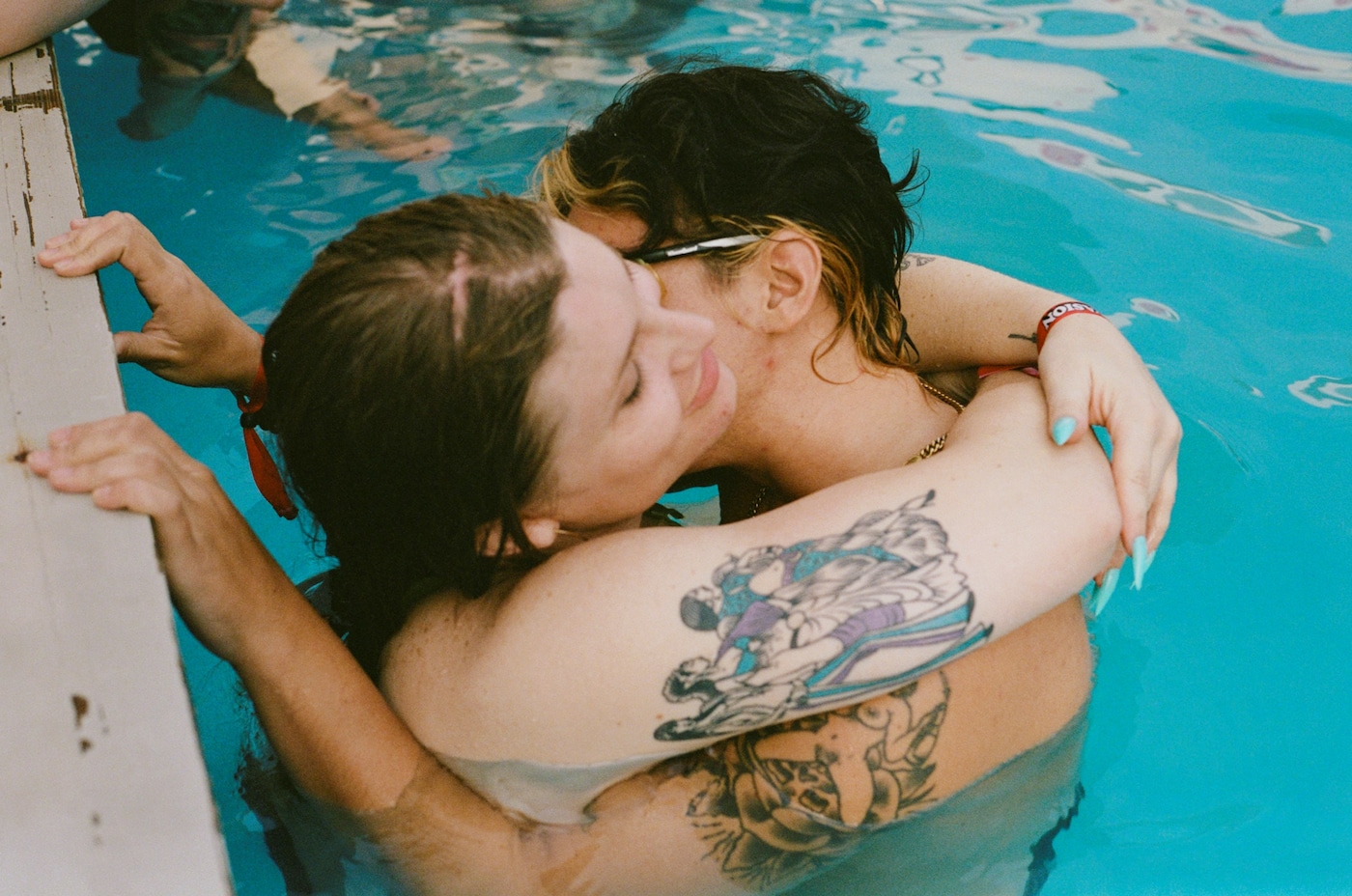
Lead image from Dazed, 2026-09-09, "Dispatches from Doll Invasion, Fire Island's trans takeover". Photography Lindsay Perryman. Fire Island Pines, 28–30 August 2026.
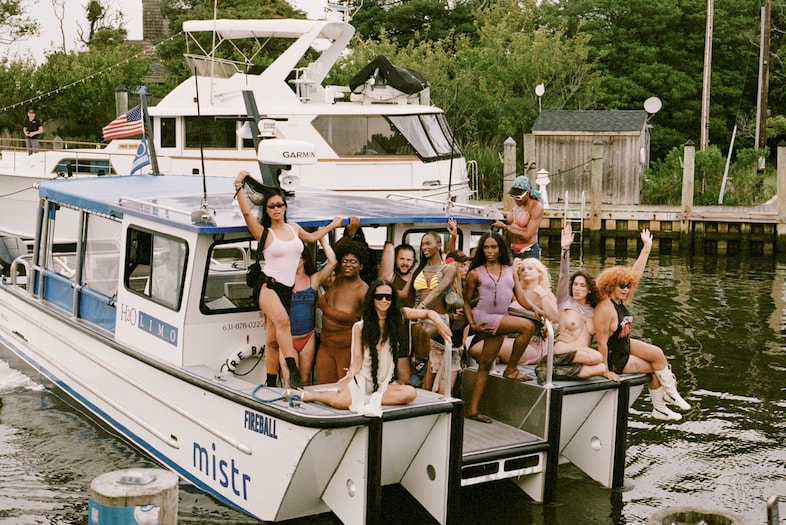
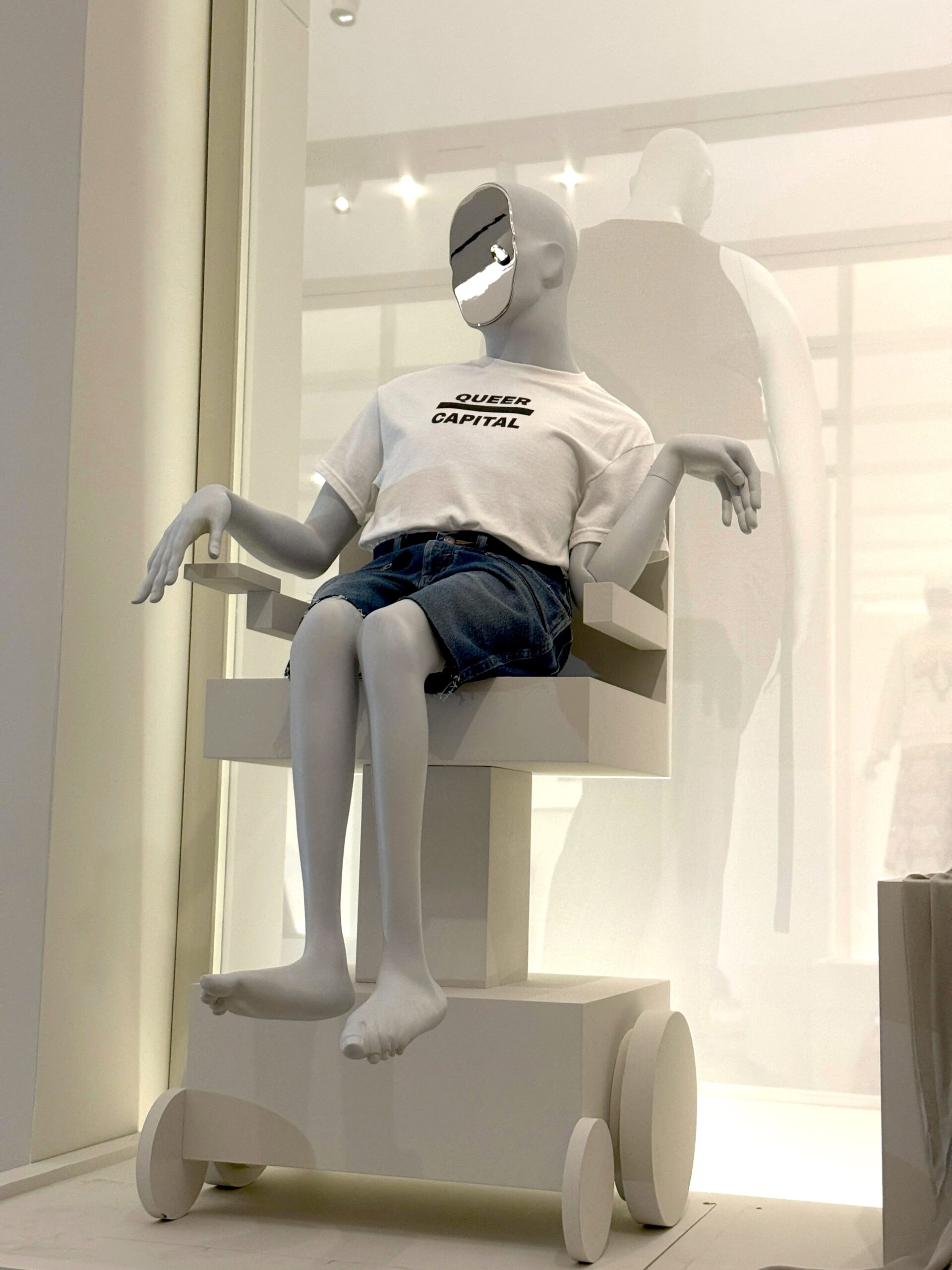
Left and centre: Doll Invasion 2026, photography Lindsay Perryman (Dazed). Right: Aariana Rose Philip in a Willie Norris Workshop look at the Metropolitan Museum of Art — one of the objects Norris contributed to the Queer|Art x Doll Invasion auction (Cultured, 2026-08-21; imagery courtesy of Doll Invasion and Queer|Art). Read together: a pool, a boardwalk, a museum. The weekend's objects were built to leave the island from the start.
1976.07.04
Teri Warren is refused service at a Pines restaurant in full drag. She and her friends dress in full drag and "invade" the Pines by boat. The Invasion of the Pines has run every Fourth of July since
2023.08
First Doll Invasion, founded by Fran Tirado, then executive editor of Them, held in private houses. Tirado publicly criticises the island's demographics and money, and "made some enemies"
2024.08
Second year. All 700 wristbands run out; Lina Bradford returns after nearly a decade away to play for the dolls. Tirado records the other side: one resident says the island had "been pillaged"; "the majority of our budget goes to property owners, landlords, and insurance policyholders"
2025.08.24
Tryst Hospitality, new owner of the Pines waterfront, issues a release: "handing the keys" to the dolls. Cole Escola hosts; theme Wet Hot Transsexual Summer. First Queer|Art x Doll Invasion auction clears $120,000
2026.05 → 08.21
Tryst announces the season theme "60 Years of Tea Dance". Cultured previews the second auction: Manning's prison zine, Lena Waithe's first draft, a Paris Is Burning poster, a hook from Sasha Colby's Drag Race costume
2026.08.28–30 → 09.09
Fourth edition, three days, public venues. Kim Petras hosts a sold-out Pavilion party as MISTR ambassador. 1 Sept: Them and Out photo dispatches. 9 Sept: Dazed report from the ground; the same day, Dazed reports the Welsh surgery pause
01Community Voices
On the record: nine statements from the people invading, the people receiving them, and the person who felt the island had been pillaged
All nine are quoted verbatim, unedited. Five are direct quotes from the Dazed report of 9 September 2026; one is from the Cultured auction preview of 21 August 2026; one is from Tryst Hospitality's press release of 21 August 2025; two are from Dazed's 2024 interview with Fran Tirado, one of which relays the words of a Pines resident. The distribution has a feature worth noting: nearly every speaker is inside the invasion or one of its partners, and the only objection on record is second-hand, anonymous and two years old. That distribution is part of the record.
Dazed reportChelsea Manning, activist and DJ
The entire island was built around their desires … No trans people
Dazed reportKay Gabriel, writer and organiser
It [Doll Invasion] is the face, if you will, of the Pines for this weekend. It is the thesis of what people are on the island to do. If you want to do something else, that’s fab. But this is central.
Dazed reportWillie Norris, fashion designer
Invading a properly decades-long, established kind of gay circadian rhythm … A lot of that friction is unsaid, and it boils up to the top in different ways
Dazed reportWillie Norris, fashion designer
For this to be real, we need to be real about the fact that this is a place populated by gay men who own the property.
Dazed reportLina Bradford, DJ (ran Tea 2005–2015)
You just can’t just show up and expect that that’s it... You’ve got to make certain that you’re there and you’re supporting other things and also getting in the underlying part of the community
Everyone wants to be part of something created by ‘the Dolls.’ The power of trans cultural production and the experiences we create has been a drawing force for eons, and this exhibition is a tranifestation of that. The question is, who’s going to outbid me for that Geena Rocero pinup?
The magic of Fire Island Pines hasn’t always been accessible to everyone, and I’m working to change that. We’re keeping everything that makes the Pines special while opening it up so more of the LGBTQ+ community can experience it.
Dazed interview 2024Fran Tirado, relaying a Pines resident
They also felt that we were actually ‘invading’, and one person even said to me that they felt like the island had ‘been pillaged’.
I think we also just want to be paid more because it sucks that the majority of our budget goes to property owners, landlords, and insurance policyholders.
Context: what stands out across these nine statements may be how often ownership comes up. Manning says the island was built around "their desires"; Norris says it is "populated by gay men who own the property"; Tirado says the budget goes to "property owners, landlords, and insurance policyholders"; Schukraft, speaking as the property owner, says "I'm working to change that". Four people describing one structure from four positions: the visitor who found "no trans people" on her first trip, the designer staging the invasion, the organiser paying the rent, and the landlord collecting it.
Look next at the dates. "Been pillaged" is from 2024, and second-hand. No 2026 report contains a single objection from a Pines resident or owner. That may mean the objection has gone; it may mean it now exists in another form — Norris's "a lot of that friction is unsaid, and it boils up to the top in different ways" may be describing exactly that. Bradford's statement arrives from the other direction: she tells the dolls "you just can't just show up", that they have to be "supporting other things" and "getting in the underlying part of the community". A person who "found myself on that island" is telling the invaders how to stay after the invasion.
This record does not rule on whether Doll Invasion is an occupation or a reception. It notes one structural point: Gabriel says the weekend is "the face of the Pines", and that face was scheduled by the company that owns the waterfront. In 2024 Tirado said, "I know what the biggest property on the island is, and I want it." In 2025 the owner of that property handed her the keys. What was wanted was obtained; the manner of obtaining it was an invitation. This page cannot yet say how large the difference between those two is.
02Consensus Mapping
Four narratives: official, community, emerging, contrarian
Official Narrative
This signal has two layers of "official". One is Doll Invasion's own: a "fund-rager" whose proceeds go to Queer|Art and A4TE, an auction of "objects packed with queer lore", the caption "Change requires community". The other is the venue's press-release language from Tryst Hospitality: "handing the keys" to the dolls, "the magic of Fire Island Pines hasn't always been accessible to everyone, and I'm working to change that", "keeping everything that makes the Pines special while opening it up", and the waterfront positioned as a "cultural and nightlife destination for the next generation". The two official layers overlap on the word "welcome" and part on the word "invasion" — the organisers use it as a name; the venue's release speaks of "takeover" and "opening up".
Community Narrative
The participants speak with one voice, and with a tone of "we were always supposed to be here" — Marks writes it outright: "Guess what, dolls? We're supposed to be here." Manning's "built around their desires", Gabriel's "the thesis of what people are on the island to do", Norris's "invading a … gay circadian rhythm" all describe one aim: to interrupt an existing rhythm. Inside the community there is a second voice, from someone who stayed: Bradford's "you just can't just show up", her insistence on "getting in the underlying part of the community", and "You show them your way, they show you their way, and hopefully you get somewhere different and better together". Invading and staying sit side by side in the community's account.
Emerging Narrative
The emerging reading moves Doll Invasion from "a party" to "a format". Tirado: "Everyone wants to be part of something created by 'the Dolls.'" Norris calls the auction "a truly genius curatorial and commercial machine" that "will be around for a very long time". Tryst, in May, also took over the Crown & Anchor in Provincetown. If this reading holds, "invasion" becomes a programme that can be carried to other enclaves — with a creative director, sponsors, an auction and an annual theme. This page notes a comparison: the boat of 1976 became, fifty years later, a fixed date every Fourth of July. Doll Invasion reached that point in year four.
Contrarian Narrative
The coldest readings come from opposite directions. The first is the relayed 2024 remark that the island had "been pillaged" — for some property-owning residents, the invasion meant exactly what it says, and that voice is absent from every public report this year, which may itself be worth recording. The second is colder and comes from the organisers' own words: the budget "goes to property owners, landlords, and insurance policyholders", and the venue is now supplied by an owner "handing the keys". If an invasion needs the landlord's nod, pays rent, and has a pharmacy platform's ambassador hosting the party, whose circadian rhythm is being interrupted? The contrarian reading exposes no one; it only points out that from year two onward the invasion has taken place on the cash register of the invaded.
03Cultural Signal Extraction
Breaking down the signal: six facets
What Changed?
The invasion's venue and host changed. For two years it ran in private houses, on friends' property and crowdfunding; since last year the venue is the whole waterfront, the keys handed over by the owner, the duration three days instead of one, the party hosted by a brand ambassador. At the same time the auction turned the weekend's objects into things that leave the island — a prison zine, a script draft, a film poster — and raised $120,000 last year. A format invented so that unwelcome people could "descend en masse" acquired, within four years, a landlord, sponsors and an annual theme.
Why Are People Reacting?
Because 2026 has been a narrowing year for trans people — Out writes of "intensifying attacks", and Dazed reported the Welsh surgery pause the same day. Against that, a weekend of "we're supposed to be here" carries weight; Chani Nicholas, in the auction preview, calls it "an oasis of art and culture creation at a time when so many of our institutions and safe havens are being systematically defunded and criminalized". The intensity of the reaction appears to track the pressure outside, and that pressure has not eased this year.
What Assumptions Are Challenged?
"An invasion is opposed by the owners" — here the order is reversed: the owner hands over the keys and describes the invasion, in a press release, as "opening up". "Gay space is open to all of LGBTQ+" — Manning found "no trans people" on her first visit; Tirado says the island "doesn't really do much to support those outside the G". "The fundraiser is an appendix to the party" — here auction and party are one thing, "fund-rager" welds them, and Norris says the auction is the "machine" that will last.
What Desires Are Visible?
The most visible desire is to have, in a place built for someone else, one weekend when the place wears your face — Gabriel's "the face of the Pines for this weekend". A second desire sits with Bradford: to stay after the invasion, to get into "the underlying part of the community", to be "fiercely" brought "into the fold". A third is in Tirado's 2024 line, "I know what the biggest property on the island is, and I want it" — the wish was always for the place itself, and it arrived as an invitation. Three desires are currently stacked on one weekend.
What Social Behavior Is Changing?
Saying hello to everyone on the boardwalk is described by Bradford as a technique: "Sometimes just a simple hello does more for somebody than you would even know." Carving out a place at dinner tables, moving from house to function, eating with the men who own the houses — the report treats these as the invasion's actual content. The movement of objects is changing too: a prison zine, a costume hook, a poster become a community's currency in the auction, and the buyer "gets to be a part of this history".
Future Human Behavior?
If "invasion" becomes a portable format — creative director, auction, annual theme — will it appear in other enclaves? Is the Provincetown property Tryst took over this year the next stop? If every enclave has one invited invasion weekend, whose is the island the rest of the time? And when an invasion is on the landlord's programme, where do the people who still want to invade go — back to private houses, to the next island, or into the format, putting their effort into what Bradford calls staying? This page has no answer yet.
04INCODER's Eye
Which lenses we read this through: six observation frames
These six themes are the fixed frames INCODER holds each day's cultural signals against. They work like a pair of glasses: put them on and the same trend grows a different meaning.
Information Culture
The word "invasion" has been in use for fifty years and its signal does not appear to have faded — the boat of 1976, the ferry of 2023 and the programme of 2026 all still carry it. But the same weekend now exists in three written versions: the press release says "handing the keys" and "opening up", the photo dispatch says "queer joy", the Dazed report says "friction" and "circadian rhythm". Only one of the three mentions friction. When an event is recorded at once by a press release and by its internal language, who sets the signal-to-noise ratio the reader receives? When "invasion" appears in a sponsor's copy, is it still a signal, or has it become a brand name?
Digital Identity
"The dolls" is a self-name, and this weekend turned it into something printable on a hat, quotable in a press release, attachable to an Instagram account. Tirado says "everyone wants to be part of something created by 'the Dolls'", and the auction lets people who never reached the island "be a part of this history" by bidding. A group's identity thus exists in the pool and on the auction page at once. When a self-name becomes a sponsorable brand, do the people who say it still own it? Cherry Jaymes launching herself into the pool becomes a report, a photograph, a line on this page — at which layer does that identity count?
Symbolic Systems
The weekend's symbol system is dense: Tea is a daily afternoon ritual, "invasion" is a boat from 1976, "All Dolls Go To Heaven" is the text on a cap, Cecilia Gentili's words are printed on a passer-by's shorts. The auction turns objects into language — a prison zine, a hook from a costume, a poster; Norris calls it "a curatorial and commercial machine". Marks reduces the Pines to materials: "sand, spit, sweat … money, cash, currency, wood". When a place can be listed as materials, what remains of the ritual? When an auction prices a memory, is the object being preserved, or translated into another language?
Dark Vitality
The most alive point in this signal may be Bradford: a DJ who "found myself on that island", refused to return for nearly a decade, came back for the dolls, and then told the invaders "you just can't just show up". This is a technique for surviving at the edge of a system — hellos, dinner tables, "supporting other things" — for staying in a place built for someone else. Tirado said in 2024 that "from the enemies that I made, I also made tonnes of friends and allies". In a narrowing year like 2026, is a position earned through friction the only stable one? Or does it still, in the end, need a landlord's nod?
Networked Society
The weekend is produced like a network: the organisers are "a collective of artists, nightlife veterans, corporate gays, and nonprofit baddies"; the auction's fifteen contributors span music, film, art and the city council; free ferries came from labour organisations; the venue arrived as an owner "handing the keys". No centre, but one name binding everyone. Manning's "Change requires community" sits in an Instagram caption, and Marks reverses it at the end of her piece: "If change requires community, then community requires change." When a network is strong enough to obtain the biggest property on the island, is it still invading, or has it become part of the island?
Perception and Attention
Gabriel says Doll Invasion is "the face of the Pines for this weekend" — who is seen is, here, a scheduled matter. In the late 2000s Manning saw "no trans people"; in 2026 two photographers, three outlets and a press release recorded the same weekend. This archive has previously logged residents who did not want to be filmed and posters who did not want to enter the feed; this time the reverse holds — being seen is the purpose, for three days. The question is the fourth day: when the programme turns the page, Tea returns to its rhythm and the island's face changes back, where does that visibility go? Into the photographs, the auction lots, or the "simple hello" Bradford describes?
05Signal Score
Signal strength
6/10
Scored 6. In its favour: a signal with a fifty-year prototype, four consecutive years of record, and a structure that visibly turned this year — the venue moved from private houses to the owner's waterfront, one day became three, and the auction has a $120,000 result from last year; three outlets recorded one weekend from three angles within ten days, and the Dazed report preserved the internal language (friction, circadian rhythm, who owns the property). Against: the weekend itself was 28–30 August, not this week's event; nearly every speaker is inside the invasion or its partners, no Pines resident or owner has responded publicly in 2026, and the only objection is a relayed remark from 2024; the 2026 auction total is not yet public; "invasion becoming a format" is this page's inference, and Tryst has said nothing about next year. Conditions for raising the score: the 2026 total is published and exceeds last year's; any formal statement from the Pines property owners' association or residents; Tryst writes Doll Invasion into the 2027 season, or carries the format to Provincetown; or the organisers disclose the venue and sponsorship cost structure.
06Final Question
The deepest hidden assumption
?
We have long assumed that being let into a place and the place becoming yours are the same event — it is the premise of every language of inclusion. If a weekend called "invasion" is, in its fourth year, supplied by an owner handing over the keys, hosted by a brand ambassador, and paid for in rent to the people being invaded — then whose circadian rhythm is actually being interrupted?
Lay the assumption out. Doll Invasion takes its name from a boat in 1976: a person refused service, returning by sea with her friends. The format's premise is being unwelcome — Tirado said so plainly in 2024: the point was to have trans people "descend on the island en masse, where they were not welcome". Four years later, the owner of the island's waterfront issued a release about handing the keys to the dolls, saying the Pines' magic "hasn't always been accessible to everyone, and I'm working to change that". From the organisers' side, what was wanted was obtained — "I know what the biggest property on the island is, and I want it", Tirado said in 2024, and in 2025 its owner handed it over. From the venue's side, this is a sold-out weekend, a "destination for the next generation" positioning, and a sentence about "opening up" that fits a press release. Both sides got what they wanted, and the word "invasion" stayed on the poster.
If that structure is stable — a group arriving under the name of invasion, an owner receiving them under the name of openness, rent and sponsorship flowing between — then Norris's sentence becomes hard to look away from: "For this to be real, we need to be real about the fact that this is a place populated by gay men who own the property." The friction she describes is mostly "unsaid". Bradford completes it from the other end: after the invasion comes staying, getting into "the underlying part of the community", carving out a place at the table. Read together, the two may be saying that keys can be handed over and programmes can be printed, but the "decades-long circadian rhythm" resumes on the fourth day, and whoever stays has to deal with that rhythm themselves. This page cannot know how many stayed. What it can record is that Manning found "no trans people" in the late 2000s and was DJing on the island this year — and that four invasions and one handing-over of keys each probably account for part of what happened in between.
The open question stays with "whose rhythm". If an invasion can be written into the invaded party's annual programme, does it interrupt a place's rhythm, or only one weekend inside it? And if one day the venue decides to keep the keys — as any landlord may — do these people return to the private houses of 2023, or find that after four years they have carved out enough places at enough tables to no longer need the keys at all? This record has no answer yet. It notes only that in the second week of September 2026, an island built around other people's desires wore a different face for three days, and that face was scheduled.
Observation remains incomplete.
This report records the present state of observation.
Nearly every voice in this signal comes from inside the invasion or its partners; no Pines resident or owner has responded publicly in 2026, and the auction total is not yet published. "Invasion becoming a portable format" is, at present, this page's inference; the venue has said nothing about next year. These judgements may be strengthened or overturned.