
What Changed?
A designer leaving isn't news. Staging the exit as a bigger spectacle than any regular show is. Two hundred performers outnumbered the models on the runway.
On 22 September 2026, at Milan Fashion Week, Glenn Martens delivered his final report card at Diesel: two hundred performers planted in the audience, escalating from quiet to kissing, headbanging, moaning to a reworked Donna Summer track. The room stood to applaud. The same day, Diesel founder Renzo Rosso issued a thank-you statement, and OTB said a successor would be announced "in due course." Martens hasn't left the group — he stays at another house: Maison Margiela. This page records how one man turned an exit into an entire show.
This is one page of the Observer Report. What I keep recording is handover: how a seat changes hands, and what fills the nameless gap in between. This time it was filled by two hundred people hidden in the audience, and one old song remixed for the occasion.
Glenn Martens didn't write a farewell letter. He staged a show. Six years ago he took over a house that needed saving; six years later he hands it to someone whose name hasn't been said yet, and stays in another house himself. What I want to record is the line "let's take one last spin together" — and who, exactly, it was said to.
The document first. 22 September, Milan, Diesel's Spring 2027 show. Two hundred performers from Marseille's (LA)HORDE were seated among the audience, unrecognised. Midway through, they began kissing, moaning, to a remixed Donna Summer track. This was Glenn Martens's sixth year at Diesel, and his last.
Then the counterpoint. As the show ended, Renzo Rosso issued a statement saying Martens had "transformed the way the brand is perceived." OTB said the next creative director would be announced "in due course." Martens hasn't disappeared; he stays at another house in the group: Maison Margiela, a post he's held since January 2025, the same month Y/Project, the label that made his name, closed for good.
Why today. On the day this report is filed, Milan Fashion Week is still running; two days from now it's Demna's second season at Gucci. Nobody yet knows who succeeds Martens at Diesel. The signal converges here: an exit staged louder than any official show, that leaves without handing a name to anyone.
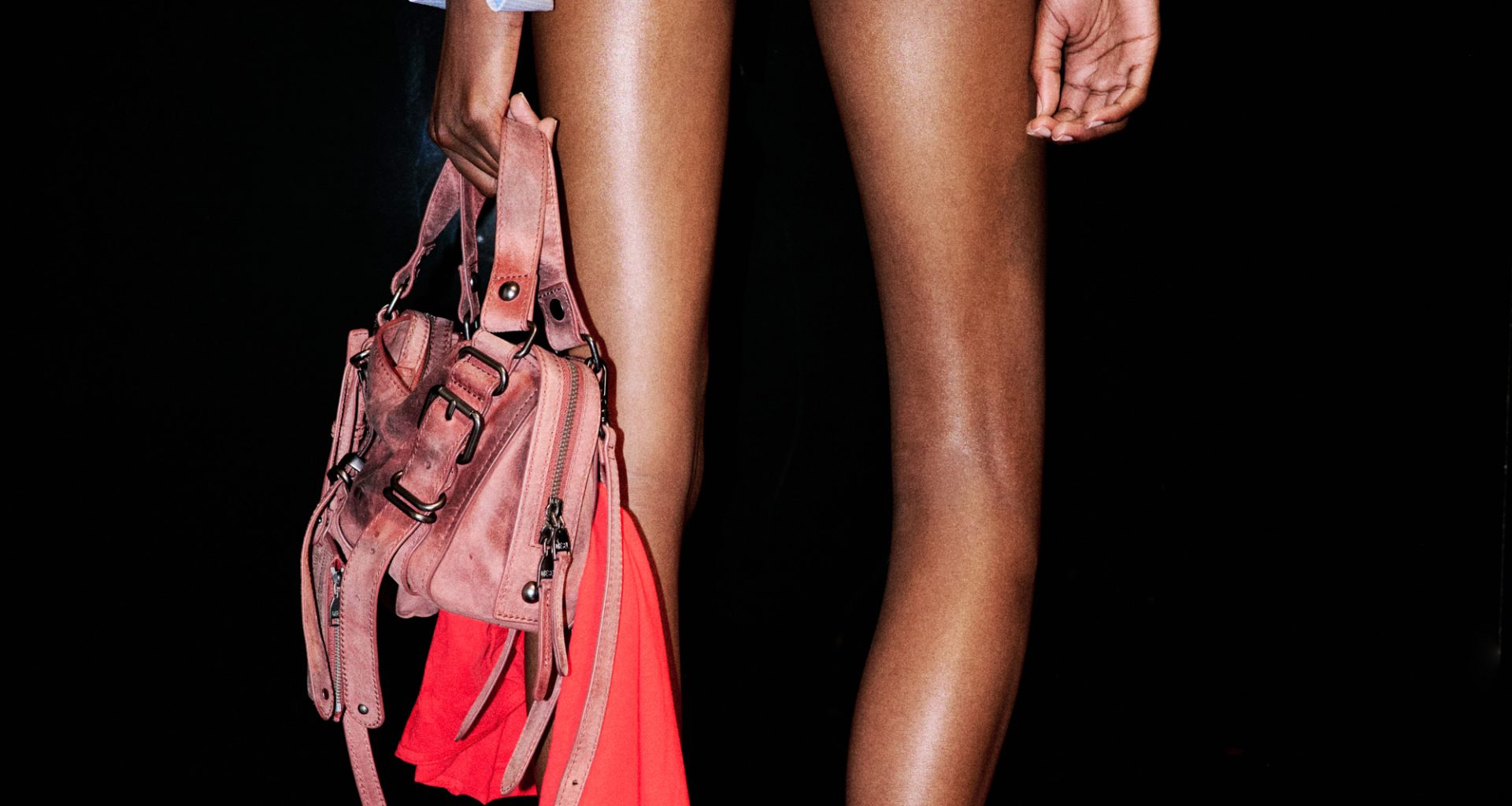
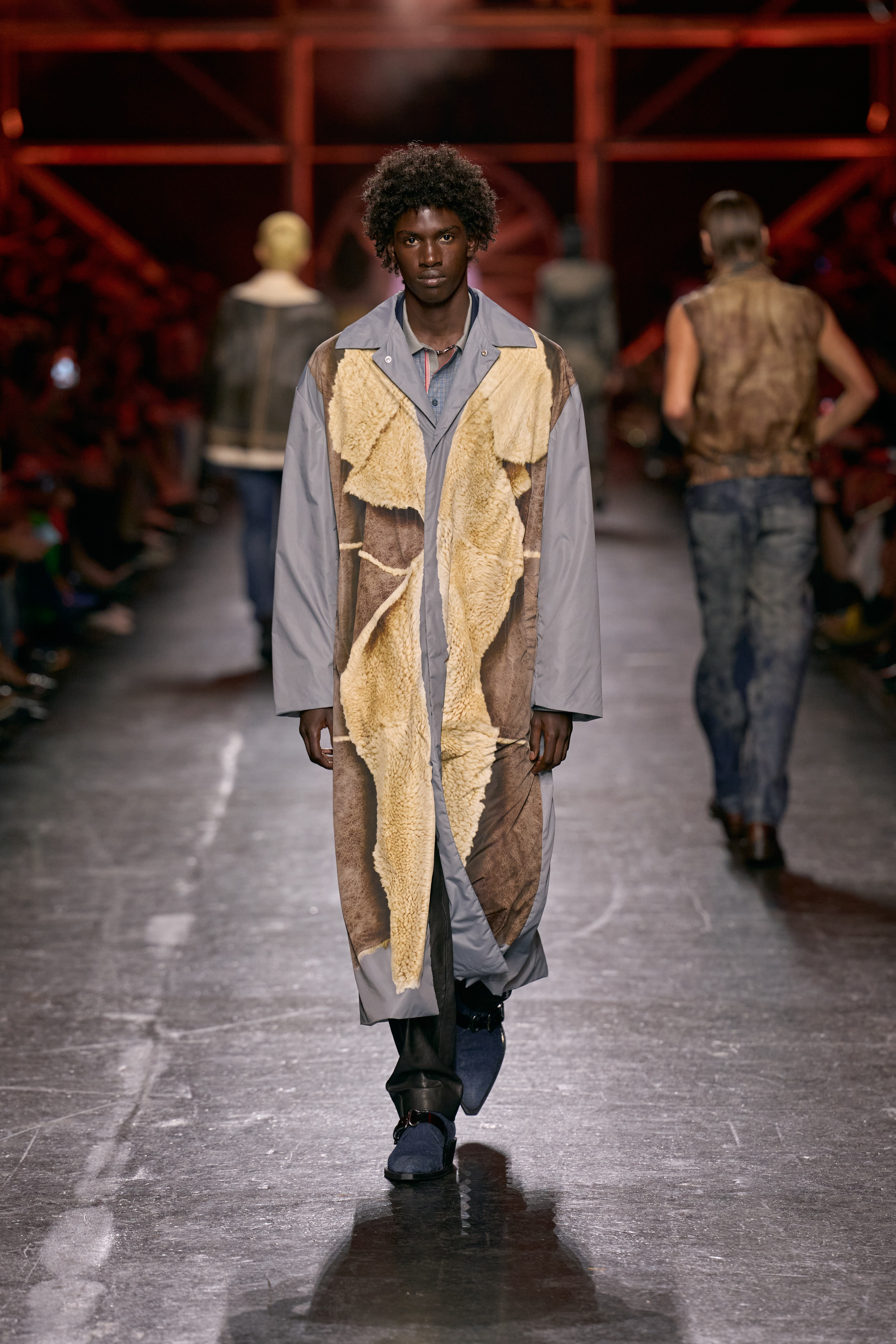
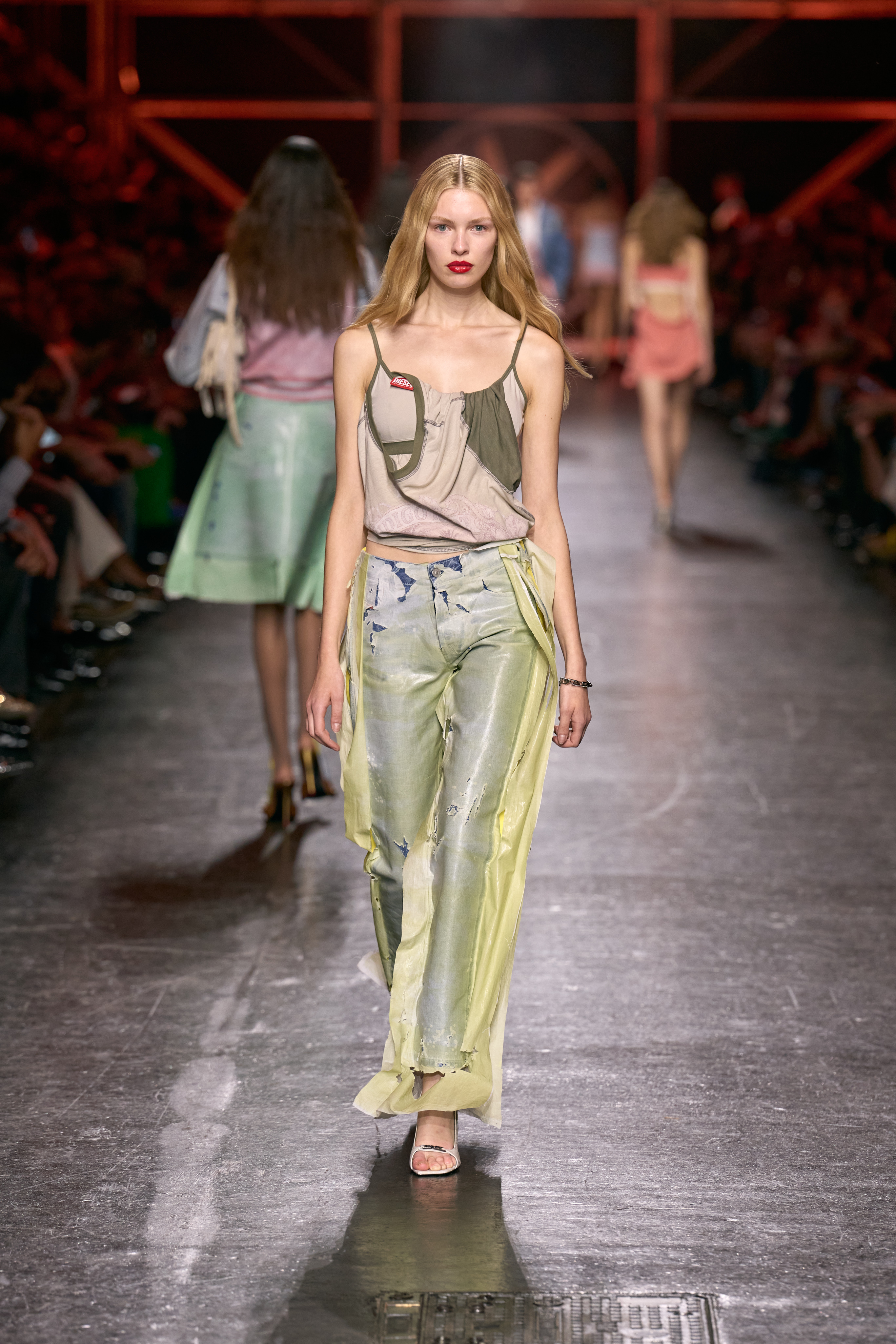
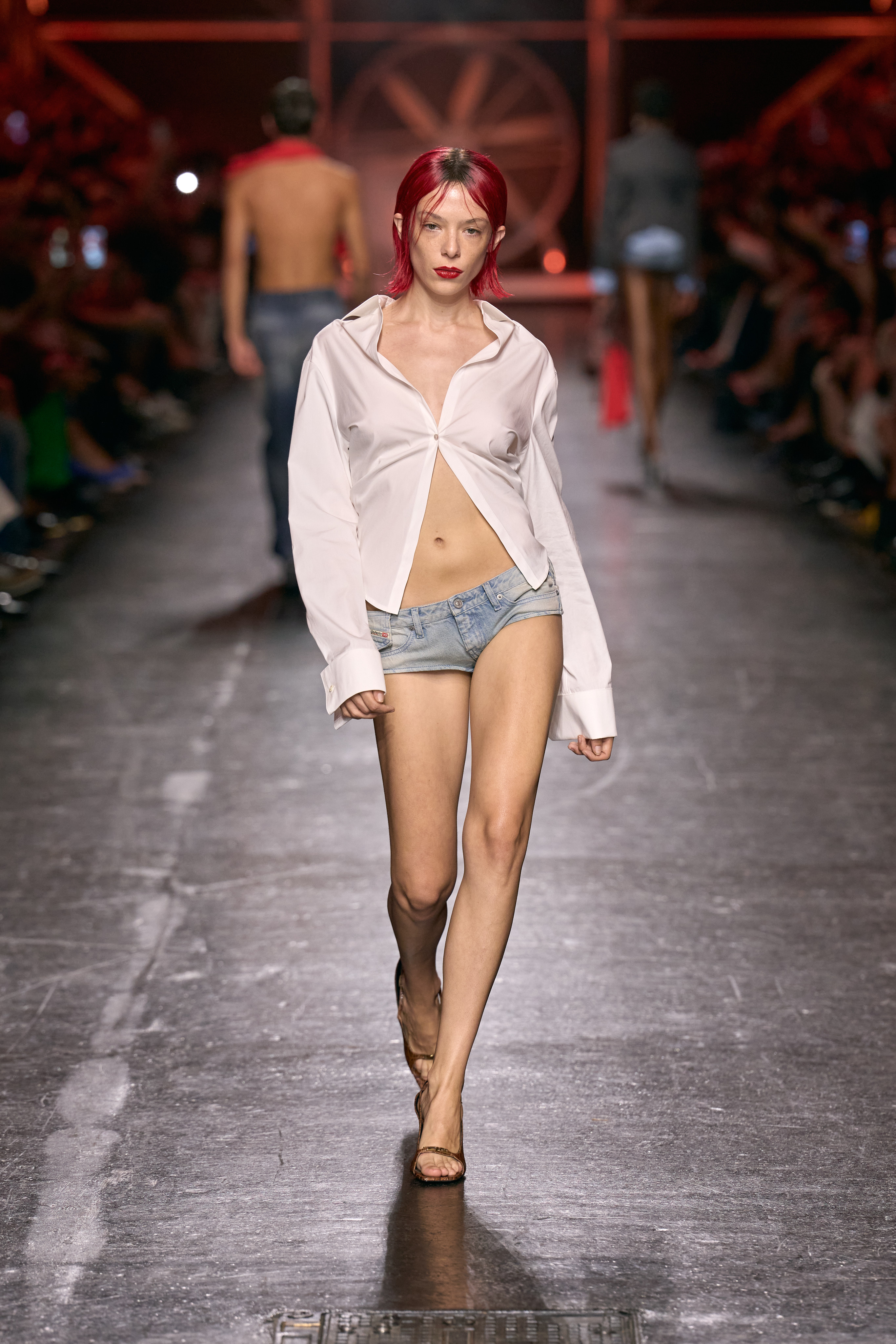
All seven below are verbatim. Four are Glenn Martens speaking to the AP and Italian press, two are Renzo Rosso's statement issued through the brand, and one is from X.
mIlan fashion week turned into orgy
Every season we try to do something unexpected. This one was a bit more … experimental.
We also wanted to do more alternative things, and think about the community.
Da Diesel la festa viene sempre prima di tutto. È inclusività, espressione di sé, piacere e democrazia dell'esperienza.
Siamo tutti parte della stessa cosa: facciamo un ultimo giro insieme.
Through his vision, talent and commitment, he has transformed the way the brand is perceived, forging a strong connection with younger generations and creating a solid foundation for its future.
brought Diesel back to the center of the global fashion conversation while preserving the openness, energy and accessibility
Look at who's speaking first. Three positions: the man leaving, the boss who keeps him, and the one public reaction on record. Martens speaks in party and democracy; Rosso speaks in vision and connection; the tweet runs one line: "milan fashion week turned into orgy." None of the three describe the same show.
Then weigh the public share of it. At the moment this report is written, exactly one piece of public text can be found, attributed and time-matched. The other six lines all come from statements and interviews the brand itself put out. For now, this farewell is telling its own story.
Rosso says Martens "transformed the way the brand is perceived"; Martens closes with one line of Italian farewell of his own. Both turn six years into a finished story, and neither says why it ends now.
The one reaction on record is surprised in tone, fixed on the two hundred bodies and how sudden the gesture was. It's the only attributed public text found so far.
What's surfacing is a question of scale. Martens took over a house that needed saving six years ago and hands it to someone unnamed. The next director's first job is absorbing a farewell everyone will remember.
The sharpest question sits in the timeline. Y/Project closed in January 2025; Margiela signed Martens the same month. His résumé now holds one house. Is this party celebrating a choice, or a narrowing?
A designer leaving isn't news. Staging the exit as a bigger spectacle than any regular show is. Two hundred performers outnumbered the models on the runway.
Moaning and kissing need no denim history to read. People are reacting to the image itself; what six years of design actually did sits second, for now.
"A farewell should be quiet." Martens answered by making his exit the loudest show of his tenure, louder than any product launch.
Martens wants to be remembered through celebration, not sentiment. Rosso wants a graceful handover on record. Both wishes come true in the same show.
The audience becomes part of the performance; the line disappears mid-show. Next time, will anyone still tell who was invited to watch from who was planted to perform?
If every farewell now needs staging to count as leaving well, does quitting quietly become the exception that needs explaining?
These six themes are the fixed frames INCODER holds up to every cultural signal it screens, closer to a pair of glasses than a checklist. Put them on, and the same event grows different meanings.
Two hundred hired bodies in one show travel faster and stick harder than six years of design record. Can one instant outrun an entire résumé?
Same farewell, two selves: Martens told the AP "experimental," told Italian press "a party." One man, two languages, two versions of himself, each aimed at a different reader.
Denim dressed as leather, shorts cut shorter by the look. With the body doing the talking, design recedes. Is the silent body more honest than any press release?
(LA)HORDE is an underground Marseille collective, hired here two hundred bodies deep to perform as a luxury show's audience. When an underground crew gets absorbed wholesale into the mainstream stage, is that a new way to survive?
The only public text found so far is one tweet. The farewell's story is being told almost entirely by the brand itself. Might who's speaking matter more than what's said?
The audience gets written into the performance; attention has nowhere left to drift. When the designer walks off, is it the clothes that stay in memory, or the two hundred bodies?
The assumption first. Fashion's premise is that a creative director's importance is written into the designs and numbers they leave behind — how red a bag got, how many people a show drew. Martens's six-year record genuinely holds that. But the image this show leaves behind is two hundred people hidden in the audience, and one old song cut into pieces.
Whoever takes over Diesel next inherits, as their first task, a farewell everyone remembers. Can a person define how they're remembered through the act of leaving more clearly than through the work they leave behind? This record has no answer yet.
This report records the state of observation at this moment.
Diesel's next creative director has not been named; the fuller public reaction to this show is still accumulating; paid reviews at WWD and Vogue Runway have not yet been read in full. What is written here may be strengthened, or overturned.
Observation continues.