
What Changed?
Three companies removed fashion week’s delay in the same week. The show used to be followed by a six-month wait; now the model passes and the garment is in the basket. The runway is wired to a checkout for the first time.
17 and 18 September 2026, the first two days of London Fashion Week. eBay puts second-hand clothes on a runway you can buy from in real time. H&M lets the public apply for seats and sells the collection the same night. Marks & Spencer stages its first show from a hundred-year archive, half of it under £50. The same week, Highsnobiety calls Apple’s keynote “fashion week for tech people”. This page records who is borrowing the runway.
This is one page of the observer report. What I follow is the show as a format: who it is for, who is allowed to stage one, and where the things go afterwards. Fashion week began as a schedule for buyers and editors, with the clothes arriving in shops six months later. That gap has always been the centre of the format.
This week, in London, three companies removed the gap at once. eBay, H&M and M&S each staged a show where the model passes and the item can be bought. The same week, a streetwear magazine filed Apple’s keynote as fashion week. What I want to record is what remains of a runway once fashion has stepped off it.
First, the document. On 18 September, Marks & Spencer staged its first show on the official London Fashion Week schedule, at the Design Museum. Fifty-seven looks, half under £50, all on sale as the models walked. Womenswear director Maddy Evans told the Guardian the message was fashion with a small f, not a capital F. In the front row: Joan Collins, and Conservative leader Kemi Badenoch.
Then the day before. On 17 September, H&M showed at Olympia under the direction of photographer Nick Knight. Of roughly 700 guests, some had applied for tickets on social media; the collection went on sale that night. The same day, eBay’s pre-loved runway returned to London for a third year, each look buyable on eBay Live as it passed. Three shows, three checkout pages.
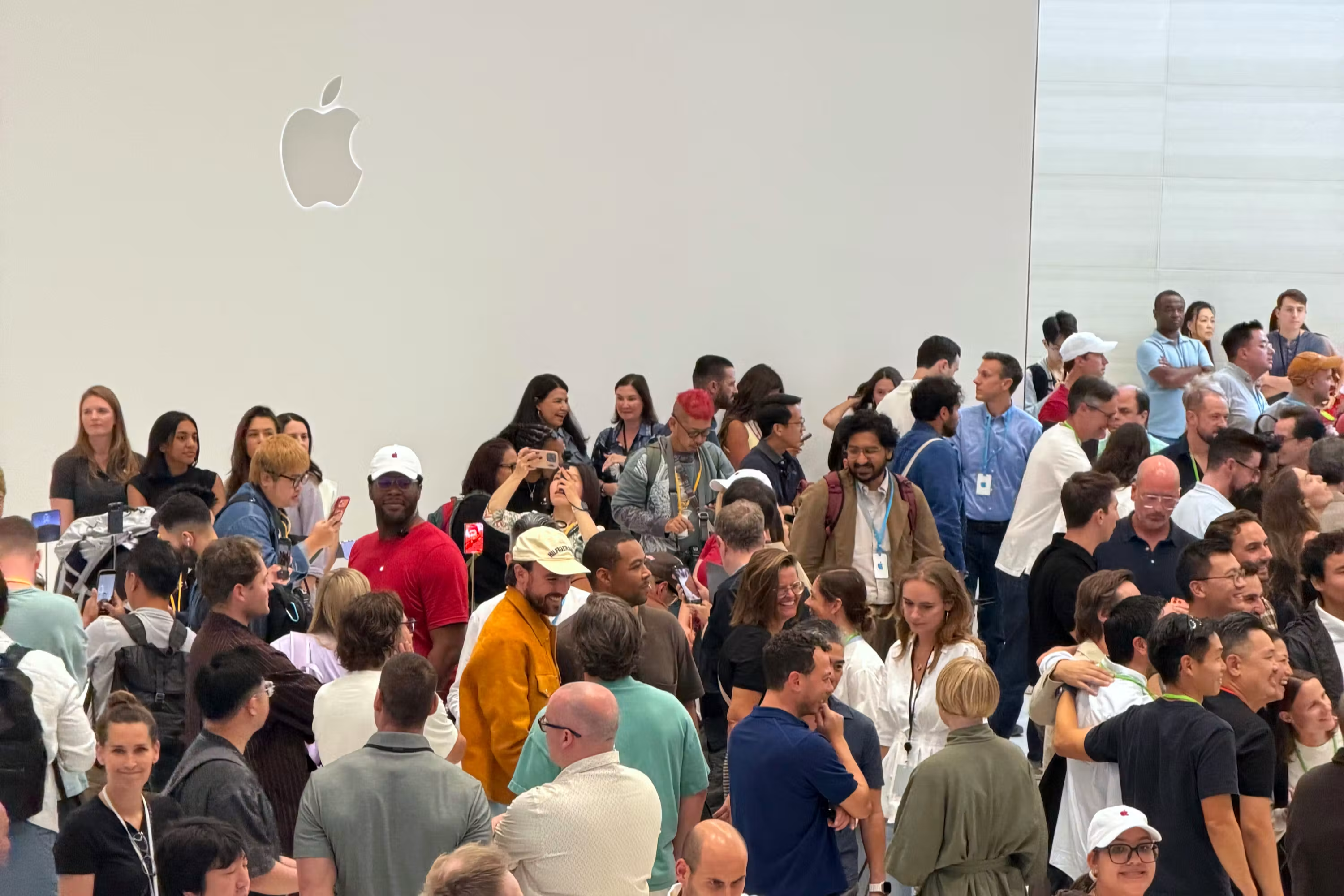
Why today. On the 17th, Highsnobiety described Apple’s keynote as “fashion week for tech people”: after the presentation, the lobby became an Apple Store where you could touch what you had just seen. The next day its shopping editor Max Migowski wrote that the fashion industry seems not to care about clothes. On Sunday McQueen returns to London, with clothes that arrive next year. A week from now this contrast dissolves.

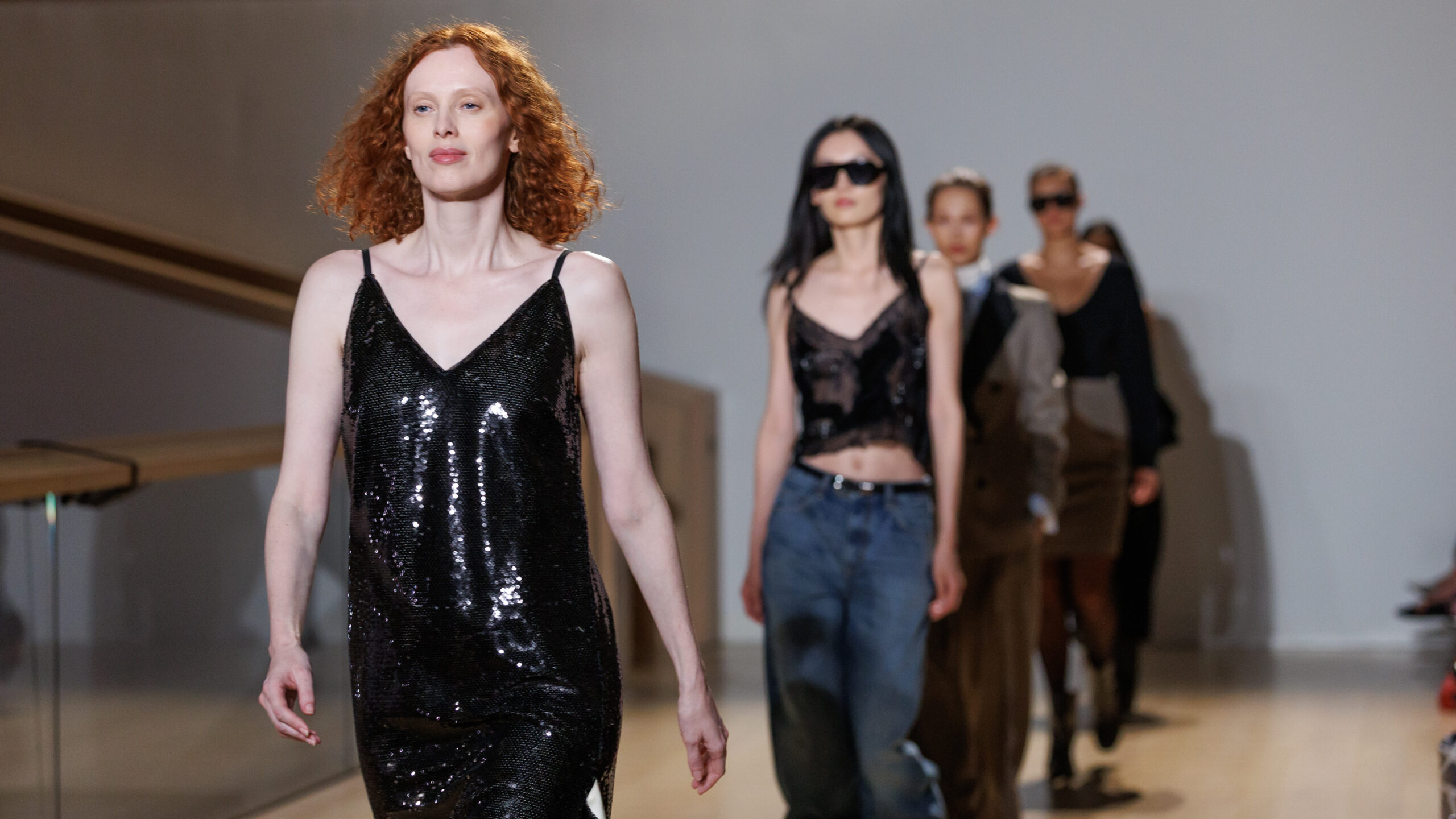
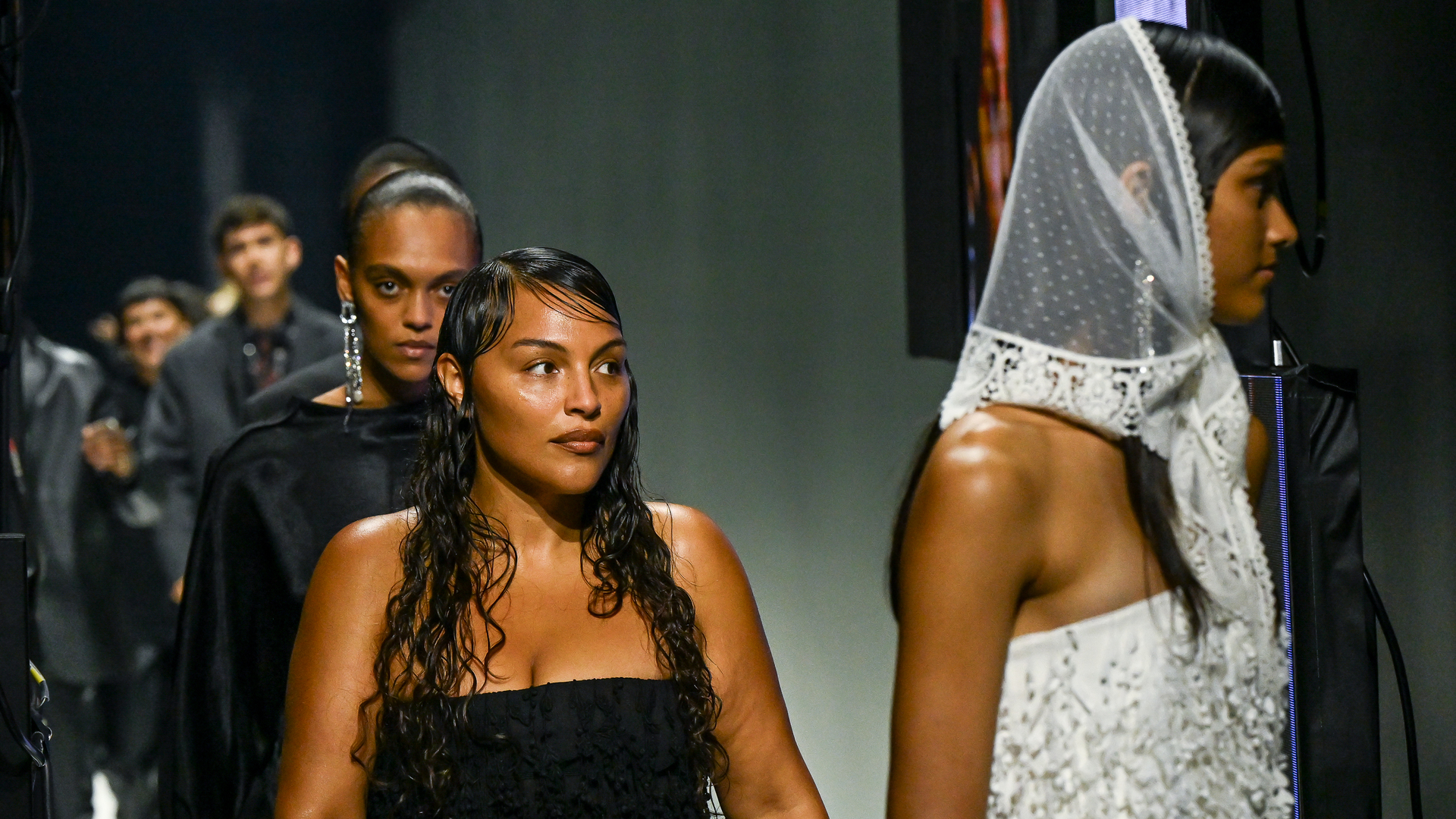
All nine are quoted verbatim. Two come from an interview with M&S’s womenswear director, one from the Guardian’s review, one from the British Fashion Council, one from the director of the H&M show. One is from a brand that waited thirteen years before its first runway, two are from Highsnobiety editors. The last is the sign carried onto H&M’s runway.
fashion with a small f, not a capital F
That’s exactly where we want to be. Zara are the cutting edge of fashion, and we are fashion for everybody.
Would snobby fashionistas be traumatised by elasticated waistbands and practical rainwear? Would M&S customers be alienated by a world of £2,000 handbags and shoes you can’t walk in?
how heritage, innovation and accessibility can come together to connect exceptional British design with consumers in new and relevant ways.
Together, we are exploring fresh ways of liberating fashion, and asking questions of what a runway show could be.
Can we do it at the budget of a glorified lookbook? Turns out: yes. And the other question I had was, Well, if you do this once, will it be expected that you do it every season? That’s scary.
Another moment normally exclusive to the fashion elites? The moment where a fashion show ends and you go backstage to touch the product you just saw. In Cupertino after the keynote, the lobby was set up like an Apple store with all the shiny new products we just saw.
What do A24, the artist Tom Sachs, and Starbucks share in common? They are all closely concerned with fashion now, whereas the fashion industry itself seems like it couldn’t care less about clothing.
H&M: Wool is bloody cruel. Drop it!
First, who is speaking. None of the nine is a designer. The voices belong to a retailer’s womenswear director, a fashion council chief, a photographer, a showroom owner, a tech editor, a shopping editor, and a protest sign. What happened on the runway this week was defined by people standing beside it.
Then the vocabulary. Evans says “small f”, Ishii says “glorified lookbook”, Dickenson says “touch the product”. Three people describing one thing: the centre of the show has moved from the clothes to the action that follows the show. This record does not yet decide whether that is decline or candour.
The keyword from M&S and the fashion council is accessibility. Stuart Machin says “protect the magic, modernise the rest”; Weir says heritage, innovation and accessibility are converging. The under-£50 garment is the protagonist.
Front row and press are close to unanimous. Joan Collins called the coats “very chic”; the Guardian said the gamble paid off. The criticism sits in one other line: M&S is not trying to define the next shift.
The reading now surfacing comes from Highsnobiety: the runway as a format is being borrowed by tech companies, resale platforms and department stores, each for its own purpose. In Migowski’s phrase, fashion has become the supporting act of fashion week.
The hardest counter-voice came from three people on the runway itself. PETA walked into H&M’s show with a sign reading “Wool is bloody cruel”. Once a show opens to the public, the number of people who can walk onto it also grows.
Three companies removed fashion week’s delay in the same week. The show used to be followed by a six-month wait; now the model passes and the garment is in the basket. The runway is wired to a checkout for the first time.
Because the M&S name usually appears on a supermarket bag. It walked the Design Museum runway with a party leader in the front row, and the image itself asks who fashion week is for.
The assumption that the show is for the trade. H&M let the public apply for seats; eBay let viewers buy as they watched. The audience of a show has shifted from buyers and editors to customers.
The wish to have it as soon as you have seen it. Dickenson writes that the best part of Apple’s keynote was touching the product in the lobby afterwards. Waiting, it seems, is something few people still want.
Staging a show becomes something any brand can do. 6397 went thirteen years without one, then did it this year on the budget of a “glorified lookbook”. The threshold has moved from credentials to cost.
If every show can be bought from directly, will audiences start reading the runway through the basket? Might watching a show slowly turn into a form of shopping?
These six themes are the fixed frame INCODER holds cultural signals against each day, something like a pair of glasses. Put them on, and the same event grows different meanings.
This week’s shows were mostly reported as “five pieces to buy”. The show became raw material for a list. If a show’s signal travels mainly as a shopping list, does the show still need to be watched to the end?
H&M turned public applications into tickets, and the front row moved from a guest list to a draw. Once presence no longer marks status, does sitting in the front row lose the language it used to carry?
The same strip of floor held second-hand clothes, a department-store archive and an iPhone this week. One walkway, three uses. When a symbol is borrowed often enough, does anyone still remember what it first pointed to?
PETA’s three were the only people this week who neither bought a ticket nor received an invitation, and still walked the runway. Once shows open to the public, might protest become a fixed part of the programme?
Three companies did the same thing in the same week without consulting each other. Might this synchronisation without a centre say more about the format having changed than any single show could?
Knight left a slight delay in the interactive imagery on purpose, saying imperfection is what makes us human. Now that show technology can be flawless, might the deliberate flaw become the new luxury?
Lay the assumption out first. Fashion week has always run on a wait: the show is seen by a few, the clothes reach shops six months later. That wait gave the show its value and gave the people in the room their status. This week, three companies removed the wait, leaving a walkway and a basket. Who sat in front, who saw it first, suddenly mattered less.
On the other side, McQueen returns to London on Sunday with clothes that cannot be bought until next spring. One fashion week, two clocks running at once. Which one survives, this record cannot yet say. Perhaps the wait itself is what gets repriced next.
This report records the state of observation at this moment.
M&S and H&M have not published post-show sales; McQueen’s London show has not yet taken place; ordinary audience reactions have not entered this record. The judgments here may be reinforced, or reversed.
Observation continues.