At Midnight, the Feed Closes for Seventeen-Year-Olds. Attention Now Has a Legal Ration.
On 26 August, Meta settled with the attorneys general of 50 US states and territories: up to $17.1 billion over ten years, plus a rewrite, within months, of what Instagram and Facebook do by default for anyone under 18 — two hours a day, no feed between midnight and 6 a.m., no notifications during school hours, no like counts on their own posts, no cosmetic-surgery filters, and the option of a feed with no algorithm in it. Settings parents used to hunt for are now clauses in a consent judgement. The Oakland trial ended midway through its second week. On 1 September the Electronic Frontier Foundation called the deal “bad for teens and all social media users”, because to restrict minors, Meta must first estimate everyone’s age. This page records the first time attention was written into a legal document as something to be rationed — and the way the cost of rationing appears to fall on everyone.
// recurring focus: surveillance culture, the attention economy, documentation refusal, the politics of visibility, opting out of the feed; the face as a legal object; attention as a rationed substance; the default setting as a form of law
This is one page of the Observer Report. The territory I watch is how being seen gets managed — who is looking, how the looking is recorded, whether the person being looked at can leave, and the moment a face turns into a legal object. The sample on this page is a settlement agreement of two hundred-odd pages. Its formal name is a consent judgement. One signatory is the largest seller of attention in the world; the other is the attorneys general of fifty states.
I will start with what stopped me. For fifteen years, how long you spent on Instagram was a private question, at most a household one; Meta kept a few reminder tools deep in the settings, take them or leave them. Since 26 August that question has a legal default: under 18, two hours a day, doors shut at midnight, no pings during class. The numbers sit in a court document and only a parent can change them. Attention is being treated here as a substance with a dose. Arturo Béjar, formerly a Meta engineering director, put it more bluntly: it is like being told you get two hours of alcohol, or two hours of cigarettes, a day.
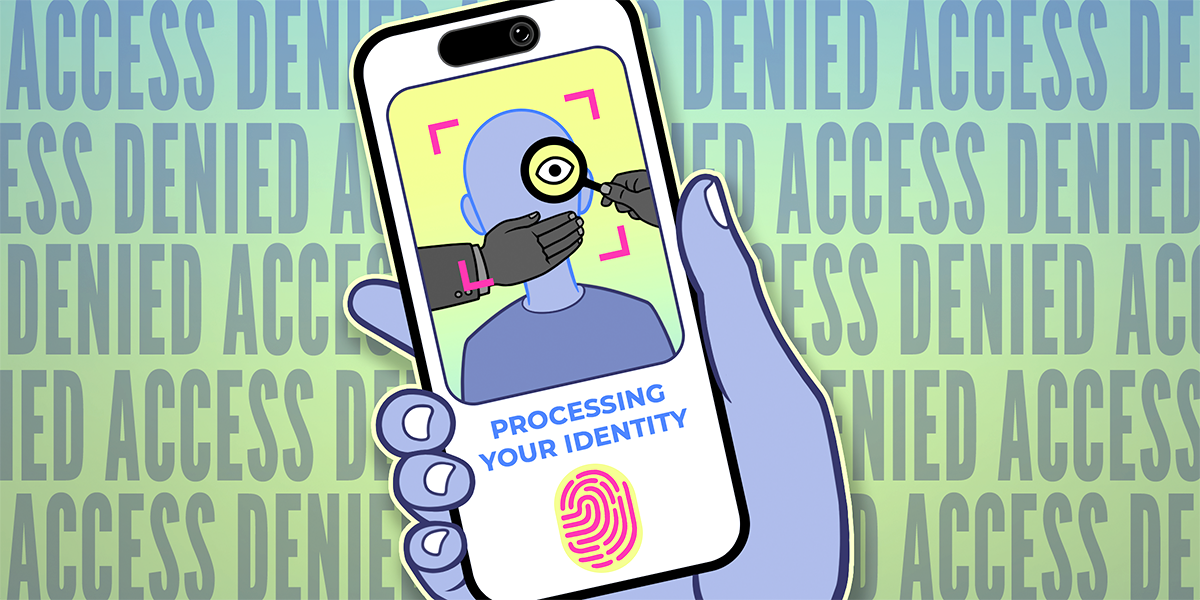
One more note. For “under 18” to mean anything, Meta has to know how old everyone is. The agreement gives it a year to run “age assurance” on every user — its own technology or a vendor’s, estimating your age — and anyone who declines is treated as a minor after two weeks. EFF reads that as: to protect some people, everyone gets looked at first. This page does not rule on whether the deal is good. It only records that the ration applies to teenagers, and the measurement applies to everyone.
— OBSERVER 1984 · Observation Archive
00Why This Topic Today
Why today: a trial scheduled to run into October became a product spec in its second week
Facts first. On 18 August, a consolidated multistate case led by California, Colorado, Kentucky and New Jersey opened in federal court in Oakland, alleging that Meta designed Facebook and Instagram to be addictive to minors and hid its own research. California’s lawyer compressed the business model into four words: hook, hold, harvest, hide. The first witness was former engineering director Arturo Béjar, who testified that the company took a “don’t ask, don’t tell” approach to users under 13. On 25 August, Instagram head Adam Mosseri was asked why almost no teenagers used the “Take a Break” prompt. The next morning both sides announced a settlement. Judge Yvonne Gonzalez Rogers approved it the same day.
Now the part of the agreement that actually changes something. Money: up to $17.1 billion over ten years, of which roughly $5.3 billion is paid only if TikTok and YouTube adopt the same framework. Design: users under 18 get, by default, a two-hour daily total (cumulative across Facebook and Instagram and across multiple accounts), no Feed, Stories, Explore or Reels between midnight and 6 a.m., no notifications from 8 a.m. to 3 p.m. on school days, no like or reaction counts on their own posts or anyone else’s, no cosmetic-surgery filters, a prompt after every fifteen minutes of continuous scrolling, and the option of a “non-personalized” chronological feed. Only a parent can switch these off. Psychologist Mitch Prinstein told NPR: “It is very exciting to see that a lot of the changes that are written into the settlement are very similar to what we saw scientifically.”
Then the layer that turns news into signal. On 28 August, Fortune republished a legal analysis from The Conversation: $17 billion over a decade is roughly 1% of Meta’s expected revenue for the same period, and the company has told investors its guidance will not change; what carries weight is the design terms, because they change the default experience itself; a user no longer has to find a setting and switch it on. Meta’s chief legal officer C.J. Mahoney pointed at the rest of the industry: “This framework will only work if all our peers join us,” naming TikTok and YouTube and asking them to act “right away”. A company had structured a third of its own penalty as a recruitment device for its competitors.
Finally, why today. On 1 September, EFF’s David Greene published a clause-by-clause reading under the headline “a bad deal for teens and all social media users”. It runs against the direction of everything published in the previous week: the agreement requires Meta to run age estimation on every user within a year; new accounts that decline are treated as minors after fourteen days; adults get “no direct benefit”; Meta is required to “proactively monitor” adult accounts for anyone who looks like they slipped past the age check; and, to protect teenagers, Meta must collect, analyse and retain more data about teenagers. Techdirt reprinted the piece in full on 2 September. The applause arrived between 26 and 29 August; the objections between 1 and 3 September. This page is filed before the age-estimation system has started running.
Between midnight and 6 a.m., the feed in this picture will no longer load. Manuel Arias Duran / Moment RF / Getty Images, via NPR, 29 August 2026.
Left: California Attorney General Rob Bonta after opening statements in Oakland, 18 August (Godofredo A. Vasquez / AFP via Getty Images, via NPR). Centre: California’s attorneys leaving court after the settlement (Noah Berger / AP Photo, via Fortune). Right: the banner image from EFF’s 1 September analysis, on age verification (EFF).
2021
Internal documents leaked by Frances Haugen show Meta knew Instagram harmed body image for a share of teenage girls. State attorneys general open a nationwide investigation
2023.10
29 states (later 50 states and territories) sue Meta in federal court. The claims route around Section 230’s content immunity and go after product design under consumer-protection law
2024.09
Instagram launches Teen Accounts; “Take a Break” becomes a teen default — one that can be swiped away. The feature later becomes a line of questioning in court
2026.04
A Los Angeles jury finds Meta and Google negligent in the design of products that harmed a teenage girl’s mental health ($4.2m / $1.8m); New Mexico wins more than $900m against Meta. Both under appeal
2026.08.18–25
Oakland opens. “Hook, hold, harvest, hide.” Béjar testifies there were “no goals, no metrics” for finding under-13s. Mosseri is questioned on “Take a Break” uptake
2026.08.26
Settlement: up to $17.1bn, ten years, design terms, an independent auditor, an age-assurance framework. Approved the same day. Meta’s statement names TikTok and YouTube and asks them to act “right away”
2026.08.27–09.03
NPR: “enthusiastic reception” from experts. Fortune / The Conversation: “a 1% tax”, “the design terms matter more than the money”. EFF (1 Sept): “a bad deal” — age estimation for everyone, nothing for adults, more surveillance. Techdirt (2 Sept) reprints
01Community Voices
On the record: nine voices from a forum, a former employee, a corporate statement, and a psychologist outside the courtroom
All nine are reproduced verbatim. Five come from the MacRumors Forums thread on Meta’s announcement (26–27 August); one is a former Meta engineering director speaking to the Associated Press; one is Meta’s chief legal officer’s official statement; one is the response of the children’s online-safety group Fairplay; one is a psychologist relaying what teenagers told him in research interviews. Reddit was unavailable to this page, so forum and interview material stands in. Where each voice speaks from — a keyboard, a witness stand, a press release, a clinic — is preserved as is.
MacRumors Forumsmarblesbarkley
Meta posting an open letter saying, “Now that we’ve had our pants sued off: other social media cancers should behave!” is top tier comedy
MacRumors ForumsTruthAboveAllElse
Officer, I’m not paying this ticket unless you pull over the other guy too!
AP interview (via Fortune)Arturo Béjar, former Meta engineering director
It’s one thing to say, ‘Yeah, you only get like two hours of alcohol or two hours of cigarettes a day,’ but it’s still as bad for you because of what’s getting delivered.
MacRumors Forumsjole
So 2h for meta, 2h for YT, and 2h for TikTok. 2h for Reddit. Some school. Maybe some sleep. Done.
Official statement (via NPR)C.J. Mahoney, Meta chief legal officer
This framework will only work if all our peers join us. … Because teens move fluidly across dozens of apps, we need an industry-wide solution. We therefore call on our industry peers, TikTok and YouTube, to implement this new framework, right away.
MacRumors ForumsCalMin
Direct Messages are exempt? What? Well teens will simply share content with each other that way.
Written statement (via AP / Fortune)Josh Golin, executive director, Fairplay
We are disappointed that the settlement does not turn off by default recommendation algorithms that connect kids to predators and send young people down dangerous rabbit holes.
MacRumors Forumsjz0309
That settlement is a BARGAIN for them, and spread out over 10 years …
Research interviews, relayed (via NPR)Mitch Prinstein, psychologist, UNC Chapel Hill, relaying teenage participants
They would tell us, ‘I have tried to quit and I can’t. It’s interfering with my daily roles and routines.’
Context: what stands out in these nine is how fast the ration metaphor grew on its own. Béjar says two hours of alcohol, two hours of cigarettes; jole multiplies two hours by four platforms and gets a day; Meta’s own statement talks about teens moving “fluidly across dozens of apps”. Three people in entirely different positions reach for the same vocabulary — time, substance, dose. Nobody is talking about content. The only two who do are Golin (the recommendation algorithm stays on by default) and CalMin (DMs are exempt, so that is where things will travel). The distance between those two layers is left open on this page.
Look at where the voices are standing. The forum is laughing at Meta’s press release — sued out of its trousers and now lecturing the others; a driver refusing to pay a ticket until the other car is pulled over too. The witness stand says the deal “allows Meta to define harm”. The clinic relays a teenager: I have tried to quit and I can’t. All three registers appear sincere, and all three appear correct. Put together, they make “what did this agreement actually change” a hard question — it is at once a fine, a product spec, and a piece of medical advice.
This record does not decide whether two hours is a lot or a little. It notes one structural thing: almost nobody in the forum thread speaks as a teenager. The people being rationed are absent from the room where the ration is discussed. That, and the clause that lets only a parent change the settings, look like the same line.
02Consensus Mapping
Four narratives: official, community, emerging, contrarian
Official Narrative
The attorneys general and the mainstream press frame it as a turning point. California’s Rob Bonta used “transformative”, said Meta would make “massive transformations” within months, and promised “real change, real transparency, and real enforceable protections — right now, no more waiting”. NPR compared it to the tobacco litigation of the 1990s; the Social Media Victims Law Center called it a “watershed moment”. Meta’s own language is “groundbreaking framework”, with the emphasis on empowering parents, and responsibility for whether it works handed to TikTok and YouTube. The official keyword is default: safety is now built in, and using it is no longer a choice.
Community Narrative
The forum talks mostly about money and jokes. $17 billion over ten years is something “Zuck” will not notice; it should have been ten times more; the states were bought out. Meta asking peers to follow is read as the company lecturing others after being sued out of its trousers. A second thread is practical doubt: why are DMs exempt, two hours times four platforms is still a whole day, teens will just switch apps. A few describe their own usage — one found the “very well hidden” time-limit settings and now runs fifteen minutes a day. This community barely mentions teenage mental-health data. It talks about where the holes in the rules are and who paid how much.
Emerging Narrative
The reading taking shape puts the weight on design as a site of legal accountability. Carolina Rossini, in The Conversation, notes that the case steered clear of “content” protected by Section 230 and went after product design — infinite scroll, autoplay, notifications, like counts, filters — and that this turned out to be “a workable legal strategy”. On the same line: Meta structured 30% of its penalty as a recruitment tool, in effect telling TikTok and YouTube that these rules are coming and adopting them together is cheaper than facing the next litigation cycle alone. If this reading holds, a default setting stops being an engineering decision and becomes something you can be sued over.
Contrarian Narrative
The coldest reading is EFF’s David Greene: the deal “embeds age assurance technology” into everyone’s social media; adults get “no direct benefit: no privacy protections, no greater user controls for your own accounts, no dent in Meta’s surveillance capitalism”; new accounts that decline age estimation are treated as minors after fourteen days; Meta must “proactively monitor” adult accounts for suspects. His conclusion: at the moment the pressure should have been on Meta to shrink its surveillance, the agreement requires it to collect, analyse and retain more data on teenagers. Béjar adds a second cut — “it allows Meta to define harm.” Rossini notes that settling ended the public record a trial would have produced: “the public lost part of the record of how we got here.”
03Cultural Signal Extraction
Signal breakdown: six cuts
What Changed?
For the first time, how long you spend on the feed has a default written into a court document. For fifteen years, limiting use was an option parents or users dug out of the settings; from now on, two hours, a midnight shutdown and hidden like counts are the factory state, and changing them takes a parent’s permission. Attention moves from something a person manages to something that is rationed.
Why Are People Reacting?
Because two feelings hold at once. Researchers and parents exhale — the terms are “very similar to what we saw scientifically”, and they are on by default. Alongside that, unease about who is doing the measuring: to find everyone under 18, everyone has to have their age estimated first. The forum jokes and the EFF analysis are asking the same thing — who is paying for this protection.
What Assumptions Are Challenged?
Screen time as a personal freedom — overwritten here by a court-filed default. Safety tools as things users switch on — Mosseri conceded on the stand that almost nobody used “Take a Break”; the settlement’s answer is to make everything a default. Platforms as liable only for content — this case skipped content entirely, argued design, and won. Protecting minors as something that touches only minors — age estimation applies to all.
What Desires Are Visible?
Parents want something concrete: a default state they do not have to fight the algorithm to reach. Researchers want measurement — Prinstein says “we still need research to make sure that these changes are actually helping”. Meta wants parity — it only works “if all our peers join us”. Teenagers are almost inaudible in these documents; their one line is relayed: I have tried to quit and I can’t. Four wants that need each other and sit uneasily together.
What Social Behavior Is Changing?
Proving your age is becoming the step before using social media. New accounts that skip age estimation are treated as minors after fourteen days; adults already cleared can be re-checked if their behaviour “looks” teenage. Face, conduct and friend graph all become evidence of age. At the same time a two-hour ration turns “where the time goes” into an allocation decision — the forum is already dividing a teenager’s day into slots.
Future Human Behavior?
Will “minor” come to be defined less by a birth year and more by an algorithm’s estimate? If attention can be rationed by law, what gets rationed next — DMs, games, AI chat? And when the feed shuts at midnight on schedule, where do the seventeen-year-olds who are still awake go? The agreement itself exempts direct messages. This page guesses that door will get crowded, and has no evidence yet.
04INCODER’s Eye
The lenses we read this through: six observation frames
These six themes are the fixed frame INCODER holds cultural signals against every day — something like a pair of glasses. Put them on and the same trend grows a different meaning.
Information Culture
The quietest clause is the option of a “non-personalized” feed — chronological, only the people you follow. That is what Instagram looked like before 2010. It returns here as a protective measure, and only minors can choose it. Golin’s disappointment is that it is not on by default. Something that used to be the default became an option you had to fight for, and then became a form of protection — how many times has “normal” moved house in the information environment over fifteen years? This page has no answer yet.
Digital Identity
The agreement sorts users into three buckets: 18 and over, 13 to 17, under 13. The bucket is decided by age estimation and can be appealed. EFF notices that no error ceiling is set for false negatives — adults classed as teenagers. In this system, then, an adult could be demoted to a teen account for behaving like one. The age of a digital identity here seems to be inferred from conduct; the birth date is one input among several. Does “seeming your age” become something to perform?
Symbolic Systems
The hidden-like-count clause takes a symbol invented in 2009, one of the most widely used social signs on earth, and hides it from an entire age band. The heart stays; the number goes. Instagram ran the same experiment voluntarily in 2019; the difference now is a consent judgement. When you subtract the count from a symbol, what is left — an expression, an acknowledgement? The sign keeps its shape here and loses its weight.
Dark Vitality
Direct messages are exempt. CalMin on the forum saw it at once: teens will simply share things that way. Rossini asks the same thing — will teenagers migrate to platforms beyond the agreement’s reach, or into the DMs it exempts? Every ration grows a detour, and the detour usually runs along the system’s edge, where there is no feed. Where do seventeen-year-olds live after midnight — this page guesses in a room that is not recommended, not counted, and not audited. Is that room protected, or abandoned?
Networked Society
Fifty state attorneys general negotiated this while Congress stayed gridlocked on the same question for years. Rossini: state consumer-protection law produced rules Congress could have enacted long ago. And Meta structured 30% of its penalty to pay out only when peers sign on — a single company writing rules for an industry through its own settlement. Decentralised enforcement (fifty states) produced a highly centralised spec (one company’s defaults), which that company then asks its competitors to copy. Whose rule is this?
Perception and Attention
A prompt every fifteen minutes of scrolling, doors shut from midnight to six, silence during school hours — this is attention managed as a substance with a schedule, a dose and a location. Béjar’s metaphor is alcohol and cigarettes; NPR’s is tobacco litigation. What this page notices is a further layer: a legal document has, for the first time, written the hours of attention into clauses. When the on/off time of perception is set by a settlement, has “when you may look” been returned to the user, or transferred to another system?
05Signal Score
Signal strength
8/10
Eight. In its favour: a rare sample of design defaults written into a court document — specific terms (two hours, midnight, 6 a.m., fifteen minutes), a timeline (months to take effect, five to ten years in force), an audit (an independent auditor), and verifiable scale ($17.1 billion, 50 states, every US minor on Meta’s platforms); applause and objection both arrived within eight days, with EFF and The Conversation supplying concrete counter-evidence; and it spills over — Meta itself is asking TikTok and YouTube to copy it. Against it: none of the terms is live yet; “the defaults work” rests on researchers’ expectations and “age estimation applies to everyone” rests on EFF’s reading of the text, neither yet checked against anyone’s actual experience; the forum voices are mostly adults, and the teenagers being rationed are almost absent. What would raise the score: publication of the age-assurance error rates once it runs, whether TikTok and YouTube follow, whether teenagers migrate to DMs or other platforms as predicted, and what the independent auditor’s first report says.
06Final Question
The deepest hidden assumption
?
We have long assumed attention belongs to the person — your time, your choice, your thumb — and that a platform can at most tempt it. If a consent judgement can set two hours a day for a seventeen-year-old, close the feed at midnight, hide the like counts, and, to enforce all that, require everyone to have their age estimated first — then has attention here been handed back to the individual, or formally recognised for the first time as a public substance that must be rationed, where rationing begins with identifying who you are?
Lay the assumption out. For fifteen years the remedy for too much Instagram lived on the individual’s side: willpower, parents, screen-time reports, a “Take a Break” prompt buried in the settings. What these tools had in common was that they were voluntary — they conceded that attention was yours and only suggested you spend less of it. Mosseri admitted on the stand that almost nobody used them. The 26 August agreement moves the remedy to the other side: the default. Two hours, midnight, six, no numbers — that is the factory state, and changing it takes a parent. The significance of that step may lie in what it concedes, something platforms have long declined to say out loud: the allocation of attention was always mostly decided by design, so the place to change the allocation is design.
If that description holds, attention shifts from personal property to rationed substance. The gains are real: it scales to every minor on Meta’s US platforms, it lasts ten years, and no household has to fight the algorithm alone. The cost has the shape EFF traced: rationing requires identification. To know who is seventeen, Meta has to estimate everyone’s age — from a face, from behaviour, from a friend graph, from signals Apple and Google pass along — and treat the unco-operative as minors and the suspicious as candidates for re-checking. The ration falls on teenagers; the measurement falls on everyone. Béjar adds a second reminder: the ration governs how long, and what gets delivered is still defined by Meta. Two hours of alcohol is still alcohol.
The open thread is the door the agreement left ajar — direct messages. When the feed closes on schedule at midnight, the seventeen-year-olds still awake will go to a room with no recommendations, no counts and no auditor. If the ration works, that room gets crowded; if it gets crowded, will the next consent judgement write it in too? This record has no answer yet. It only notes that on the last Wednesday of August 2026, attention was given legal opening hours for the first time, and that the way those hours were made to work was to look clearly at everyone’s face.
Observation remains incomplete.
This report records the present state of observation.
None of the terms is live yet; “age estimation applies to everyone” is a reading of the text with no user experience to check it against; the teenagers being rationed are almost absent from public discussion. These judgements may be reinforced, or overturned.