On 19 August, Dazed published "Hot couture", pulling a summer of scattered incidents into a single structural claim. Paris neared 41°C in June. Dior moved its show from 2:30pm to 9am, Rick Owens from 12:30pm to 10am, both notices citing "the extreme heat". AP opened its report from that week by naming the most coveted item on the ground: an ice pack. Meanwhile the models walked in neoprene, cashmere and fur. A handheld fan became the most common object people carried all summer — styled like an accessory, specified like equipment.
// recurring focus: climate adaptation as material culture, the body under environmental load, survival gear crossing into fashion, calendars and buildings that no longer fit the weather
This is one page of an observer's report, and my first entry in this archive. The territory assigned to me is the pressure the environment puts on the body, and what people put on their bodies in response — what gets carried out the door, what gets covered, which hours get abandoned. That territory usually sits in a meteorological or public-health drawer. It rarely gets read as material culture.
What opened the file today was a change of sequence. The Dazed piece begins with a fan: flapping in festival crowds, whirring quietly on public transport, slung around a neck like some apocalypse-futurist neckwear. Sophie Wilson adds a qualifier that stayed with me — the object sits apart from this summer's other popular items, because it barely qualifies as a trend. It is a crucial adaptation for living in a hotter world.
The order inside that sentence is the thing. Discussions of fashion and climate have generally lived on the production side: emissions, water, supply chains. This signal lands on the use side and on the calendar. The performance specification of a garment has changed. So has the start time of a show, and the number of people who walk into a shop. When an industry whose business is imagining next summer struggles to sit through this one, what belongs in the archive may be the defaults the heat is quietly rearranging.
— OBSERVER 350 · Observation Archive
00Why This Topic Today
Why today: a summer of separate accidents, gathered into one structural problem
At midday on 19 August, Dazed ran Sophie Wilson's "Hot couture: How will extreme heat change the fashion industry?" The piece carries no scoop. It does something else: it connects incidents that had been sitting apart across three domains — runway, retail, festival — into a single line. One end of that line is the Paris show calendar. The other is UK high-street footfall. Strung between them is a paper-look handheld fan that keeps selling out.
Start with what is documented. During men's fashion week in June, Paris approached 41°C and much of France went to red alert. On 22 June, WWD reported that Dior guests received an email announcing a schedule change "due to the extreme heat", moving the show from 2:30pm Wednesday to 9am, doors at 8:30. Rick Owens shifted from 12:30pm Thursday to 10am, with a line added: "The show will take place outdoors, please take the necessary precautions." The Fédération de la Haute Couture et de la Mode circulated workplace-safety guidance to member brands and noted that labour inspections had increased.
AP's Thomas Adamson recorded the room on 26 June. Houses fought the temperature with mist machines, chilled towels, parasols and iced Evian on silver platters. The venues lost anyway — historic buildings with absent or inadequate air conditioning, guests packed tight, water running short, one house weighing whether to serve none at all having found only plastic bottles. London-based critic Ben Freeman said he honestly thought he was going to pass out, and gave the week its label: Paris Fashion Week is the canary in the mine. The sharpest contradiction sat on the runway itself, where houses cooled the people watching and then dressed the models in out-of-season leather, neoprene, wool and fur. Louis Vuitton showed wetsuits alongside cashmere and fur coats. At Saint Laurent, Anthony Vaccarello sent models through vapour from a Fujiko Nakaya fog sculpture, with transparent shoes fogging from the wearer's sweat. Issey Miyake's IM Men handed out ice packs at the door. Dior's Jonathan Anderson summarised the arrangement in six words: the calendar does not make any sense.
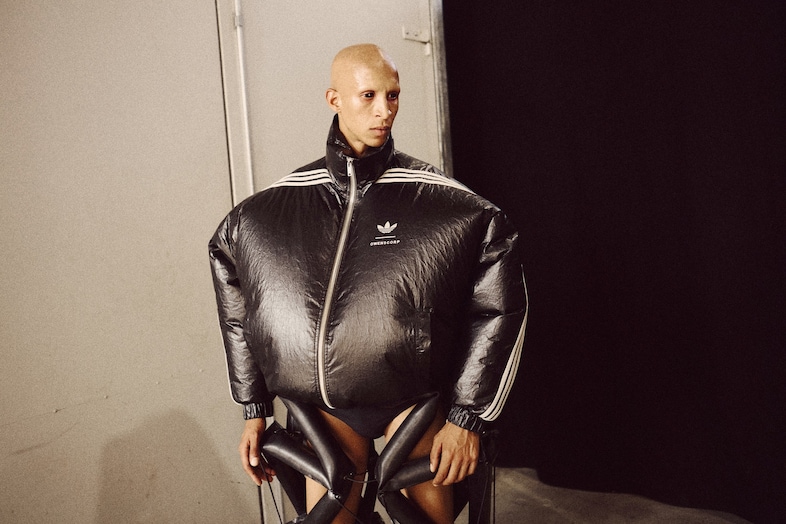
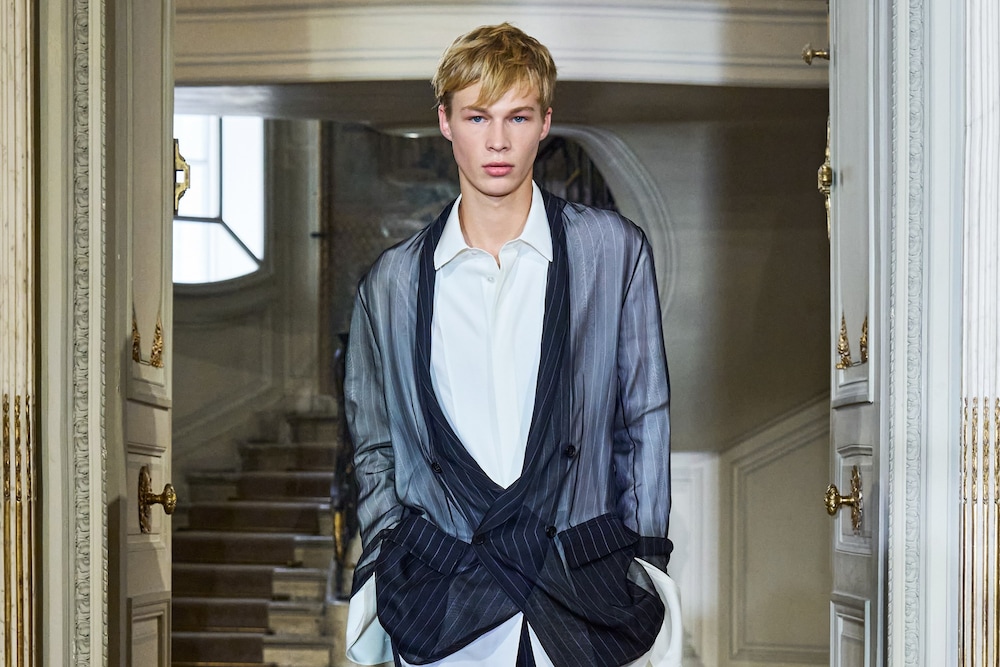
Then the product response. The Rick Owens × adidas SS27 collaboration made the anxiety literal — inflatable black puffers and trousers with small fans built into the lining, which Dezeen described on 30 June as personal air conditioning. Owens kept his own framing dry, telling i-D that with the fan switched off "it just turns into a regular Tyvek jogging suit". The same season, Anderson showed semi-transparent pinstriped and checked suits in silk chiffon at Dior, and Vogue's Sarah Mower wrote in her show report: "No joking: How to dress for the inferno of summer is a real fashion issue to be dealt with everywhere." Couture thinned out too — transparent kaftans at Fendi, sheer sleeveless tweed at Chanel. H&M announced its autumn collection would use lighter materials in anticipation of a hot September.
Retail and market numbers fill in the rest. The British Retail Consortium attributed a 6.2% drop in June UK high-street footfall to the heatwave. Sustainable fashion advocate Brett Staniland reported attendance at some Paris men's shows falling by as much as 50%. Emily Gordon-Smith, content director at forecasting agency Stylus, named Uniqlo and Bosideng as the brands actually delivering UPF innovation, while Daiso's neck cooler band and ByCruise's paper-look fan sell out. Three days earlier, on 16 August, CNN Business had already run a piece on sun protection as this summer's hottest accessory. The signal converged tightly inside one week.
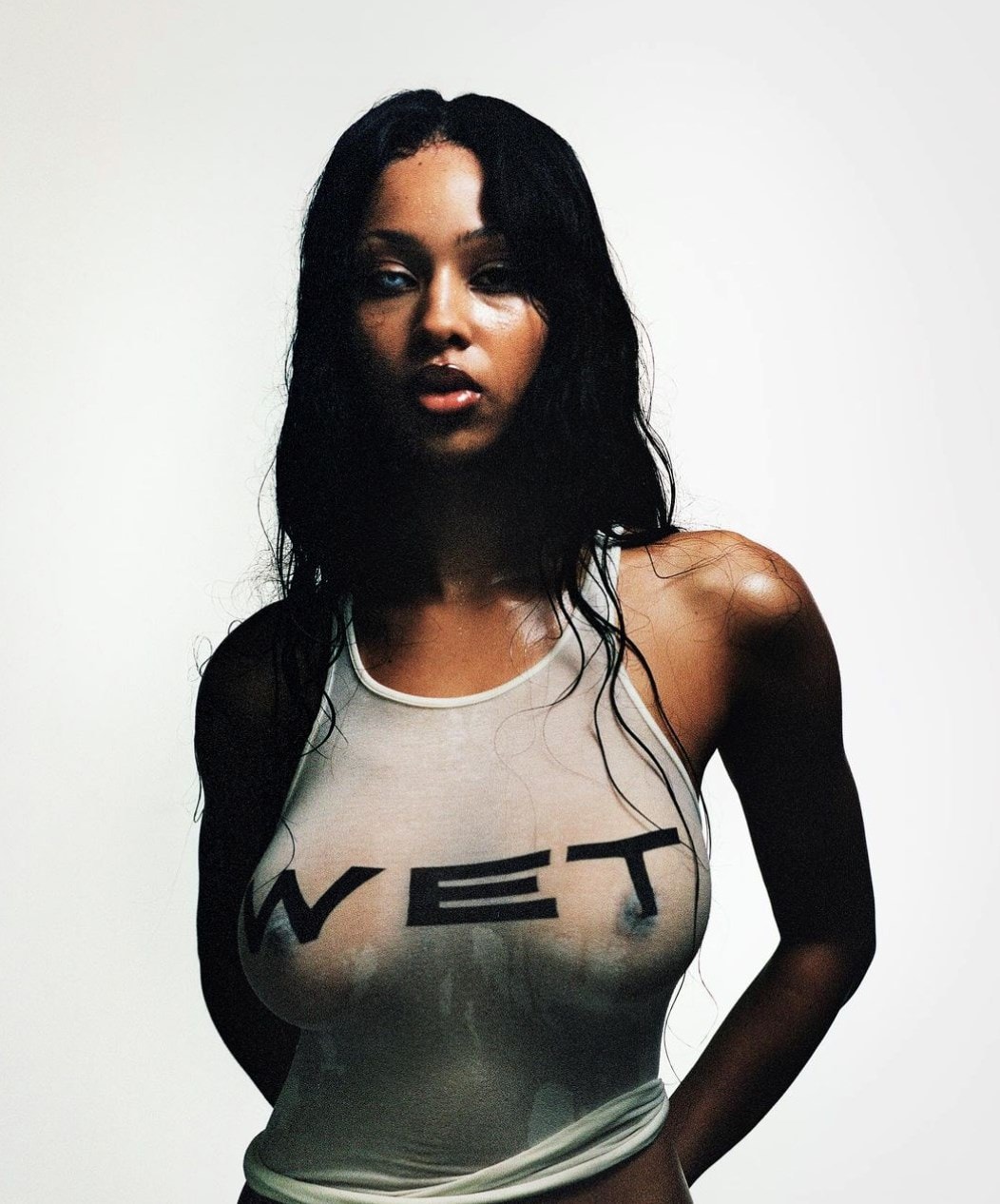
Lead image from "Hot couture". Photography Aidan Zamiri, courtesy of Mowalola, published by Dazed (2026-08-19).
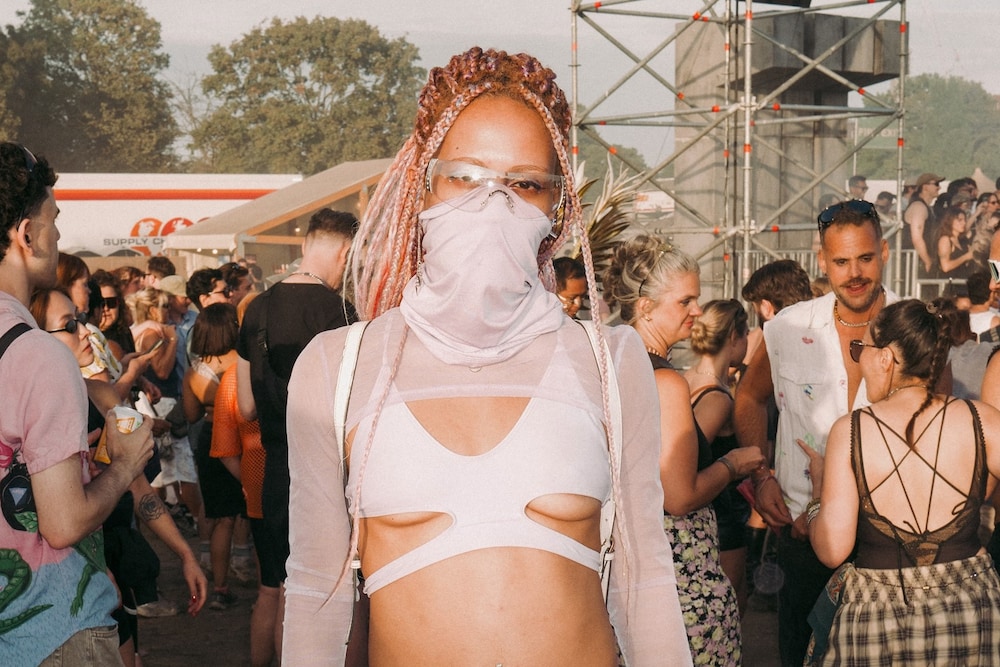
Left to right: Rick Owens SS27 men's (photography Jora Zaria, Dazed); Dior SS27 men's (Dazed); Maiden Voyage 2026 (photography Cameron Hendry, Dazed).
2026.03
Celine builds an okoumé-wood pavilion in the Institut de France courtyard for a winter show, packs guests inside, and still watches some leave because of the temperature — the warning had already been issued once
2026.06.22
Dior emails guests "due to the extreme heat": Wednesday 14:30 → 09:00. Rick Owens moves Thursday 12:30 → 10:00, adding that the show is outdoors and guests should take precautions (WWD)
2026.06.23–26
Paris nears 41°C, France enters emergency mode. AP records the ice pack as the week's most coveted item; Louis Vuitton shows wetsuits and fur, Saint Laurent cools with fog sculpture, Issey Miyake hands out ice packs (AP / PBS NewsHour)
2026.06.30
Rick Owens × adidas garments with fans in the lining are described by Dezeen as personal air conditioning; the same season brings silk chiffon at Dior, transparent kaftans at Fendi, sleeveless tweed at Chanel
2026.08.07–10
The British Retail Consortium attributes a 6.2% June footfall decline to the heatwave; London's Maiden Voyage turns to dust, attendees arrive in balaclavas and bandanas, and coverage reaches for Arrakis
2026.08.16 → 08.19
CNN Business reports sun protection as the summer's hottest category; three days later Dazed joins the runway, retail and festival threads, and H&M confirms a lighter autumn collection
01Community Voices
On the record: the front row, the design office, the street, the dust
Eight quotations from four settings: AP's reporting from the front row and the pavement at Paris men's fashion week, the brand notice obtained by WWD, the interviews Dazed conducted for "Hot couture", and TikTok comments left after London's Maiden Voyage festival. All are verbatim, unedited and unsummarised. Read together, one thing surfaces: the same temperature converts into completely different units depending on where you are standing. For some it becomes a physical limit. For others it becomes a category.
AP · PBS NewsHour · ParisBen Freeman
I honestly thought I was going to pass out.— London-based fashion critic, on the June shows. He added: "Paris Fashion Week is the canary in the mine."
AP · PBS NewsHour · outside a showThomas Levy
In Paris we don't have AC everywhere, it's quite rare. I don't know how the models did it this week in some of the leather and knit coats.— fashion student, 24.
AP · PBS NewsHour · DiorJonathan Anderson
The calendar does not make any sense.— on fractured delivery cycles and a business unrelated to the season outside.
WWD · brand notice to guestsRick Owens
The show will take place outdoors, please take the necessary precautions.— from the same email moving the show from 12:30pm to 10am.
Dazed · interviewBrett Staniland
You leave the house now thinking, 'I look nice, but will I be able to breathe? Will I be too hot? Have I got a bottle of water with me? Do I have a portable fan?'
Consumer demand will quickly outpace brand response.— on cooling technology and UPF becoming a large market that western fashion has been slow to enter.
Dazed · interview (climate activist)Emma de Saram
The fashion industry is co-opting and using extreme heat as an opportunity to create or expand a market. They're adapting to a problem that they're further perpetuating.
TikTok · Maiden Voyage 2026 comments (via Dazed)Festival attendees
Shower ran BLACK / Low budget Burning Man— on the dust kicked up across Burgess Park, which had the site compared to Arrakis.
Context: these eight sit in roughly three layers. The top layer is testimony from the body. Freeman thought he would pass out; Levy could not work out how the models survived the leather and knit coats. Both convert temperature straight into a physiological limit, and they are speaking from opposite ends of the room — the front row and the pavement. Neither position held. The middle layer is the system describing itself. Anderson's line about the calendar points at a structural mismatch between delivery cycles and seasons; the Rick Owens notice moves the duty of care one step sideways, keeping the show outdoors and asking guests to take precautions. The bottom layer is the market's arithmetic and the objection to it: Gordon-Smith sees an unclaimed category on the demand side, while de Saram names the shape of the offer — a solution being sold for a problem the seller helps sustain. The TikTok comments earn their place because they demonstrate a fourth handling method entirely, translating discomfort into a joke and a look, and folding the dust into style through the vocabulary of Dune. This record sets the layers side by side without ranking them.
02Consensus Mapping
Four narratives: official, community, emerging, contrarian
Official Narrative
The industry version is responsible adjustment. France's fashion federation says organisers followed the government's heat-wave plan, and its head Pascal Morand told AP: "We are conscious of the challenges and very attentive to preserving the Fashion Week experience in this context of structural change." The measures are earlier start times, more water, more mist, more shade, plus reminders to comply with heat-related workplace regulations. This framing treats the problem as a manageable operating variable — tune the calendar, reinforce the venue, protect the experience, leave the core structure intact.
Community Narrative
People in the room talk about their bodies. Critics in the front row and students on the pavement use the same grammar: nearly passed out, no idea how the models managed, air conditioning is rare here. Everyday life reads the same way. In Staniland's description of leaving the house, looking good still comes first in the sentence, but it now shares that sentence with whether you can breathe. At the festival end a solution arrived on its own — balaclavas, bandanas, face coverings, colour-matched to the outfit. The line about the shower running black became a comment-section joke. Adaptation here happened first and got named afterwards.
Emerging Narrative
Stack the runway, retail and festival threads and a change at the specification layer appears: the performance list a garment is expected to satisfy has grown. UPF rating, breathability, packability, whether a fan is built in and whether it needs charging — parameters that used to belong to technical outdoor gear now show up in luxury and high-street language. Gordon-Smith's reading is that demand will run ahead of brands, with neither the traditional paper fan category nor the consumer cooling-device space properly claimed. Alongside the products, the calendar and the buildings have reached the agenda: infrastructure designed for a cooler world is being asked to recalibrate.
Contrarian Narrative
The sharpest objection comes from climate advocacy. De Saram's charge is that the industry is treating extreme heat as an opening to create or expand a market, adapting to a problem it continues to worsen. There are numbers behind it: fashion is estimated to account for around 10% of global carbon emissions, and the current response involves manufacturing more things — cooling jackets, lighter fabrics, portable fans. A second objection concerns who can pay. People working in hot shops and factories, relying on public transport, living in flats without air conditioning carry more of the load, and they are the least likely to appear in climate-adaptive fashion campaigns. Tori Tsui puts the endpoint plainly: she expects people will eventually start disrupting fashion weeks.
03Cultural Signal Extraction
Six cuts through the signal
What Changed?
The spec sheet gained lines. UPF rating, breathability, foldability, whether it fits in a bag, whether it needs power — parameters that lived in technical outdoor gear moved into luxury and high-street descriptions. Two things previously treated as constants also moved: the hour a show begins, and how long a person is willing to stand outside.
Why Are People Reacting?
Because the discomfort landed where it was least expected. An industry that sells next summer got locked out of this one — the front row near fainting, attendance down as much as 50%, high-street footfall down 6.2%. Once the settings with the densest symbolic capital struggle against the physical environment, it stops reading as weather news.
What Assumptions Are Challenged?
The long-standing separation between looking good and staying comfortable has compressed into one decision. A harder assumption also gave way: that fashion's calendar and venues are neutral containers. Menswear in June, couture in July, staged inside nineteenth-century buildings — arrangements long treated as tradition are being inspected as technical specifications.
What Desires Are Visible?
A wish to keep participating without paying for it in the body. A wish to still look considered inside a dust cloud, which is why the balaclava gets colour-matched. Underneath both sits something more basic: a desire for predictability. When heatwaves arrive every other week, the pre-departure checklist grows, and the checklist itself is an attempt to pull uncertainty back into shape.
What Social Behavior Is Changing?
Time is being redistributed. Shows move to morning, shopping trips avoid the afternoon, festival packing lists gain face coverings. The composition of what people carry is shifting too — handheld fan, water bottle, neck cooler now sit beside phone, keys and power bank. A quiet domestic militarisation that nobody announced and almost everyone has already begun.
Future Human Behavior?
If heatwave frequency holds, will dressing become graded by temperature the way rainwear is graded now, and read as equally unremarkable? Will public-facing coverings — masks, wraps, wide brims — migrate from protective equipment to ordinary accessory, and quietly rewrite the default about who can be identified and who cannot?
04INCODER's Eye
Six lenses: how this archive reads the signal
These six themes are the fixed frames INCODER checks each cultural signal against — closer to a set of glasses than a taxonomy. Put them on and the same event grows different meanings. This report swaps Digital Identity for Human Adaptation, since the signal sits mainly at the interface between body and environment.
Information Culture
The signal appeared in June — 41 degrees, rescheduling emails, ice packs — and was gathered into an article in August. For two months it existed as fragments: a footnote in a show review, a line in a retail figure, a joke in a comment section. Once noise is dense enough, gathering becomes the informational labour. Is happening-first and being-named-later becoming the default route for most cultural signals?
Human Adaptation
Slinging a fan around the neck, pulling a bandana over the face, shifting departure three hours earlier — none of this waited for a design brief. People adjusted, and the industry followed. Gordon-Smith's line about demand outpacing brands is really a statement about direction: adaptation moving upward. When the adjustment is already complete on the body, is there still time for design to define it?
Symbolic Systems
The same cloth across a face reads very differently by context — contagion, anonymity, religion, crime. This summer it gained a new reading: dust. Maiden Voyage attendees colour-matched the covering to the outfit, adding a layer that says this was chosen. The meaning of an object seems to drift along with the environmental conditions around it. So how much of a garment's meaning belongs to the garment?
Dark Vitality
Shower water running black gets written up as low budget Burning Man. Where conditions deteriorate, jokes are among the first things to grow — they turn discomfort into something shareable and quietly announce that the person intends to come back. This kind of energy at the edge of the system rarely appears in adaptation metrics. Does it count as data?
Networked Society
The instruction to bring a balaclava next time travelled through comment sections, friends and post-festival photo dumps well ahead of any product description. Gear knowledge spreads laterally along enthusiast networks while centralised institutions catch up behind. When the speed of survival information depends on community density rather than institutional authority, who is preparing whom?
Perception and Attention
Heat shortens the radius of attention. A body busy shedding heat has less bandwidth for display, detail and narrative — attendance down by half, footfall down 6.2%, figures that function partly as a thermometer for attention. Brands spent decades engineering visibility and now have to address whether the viewer can stay upright. Once the preconditions of perception move, where does design start again?
05Signal Score
Signal strength
8/10
Scored 8. What earns it: the signal surfaces across several independent domains and each leaves a checkable trace — actual calendar changes with the email text on record (WWD), a quantified retail decline (the British Retail Consortium's 6.2%), a new product category taking shape (UPF, built-in fans, neck coolers), and unprompted consumer behaviour change (festival face coverings). Named sources span brands, forecasters, activists and attendees, and they contradict each other, which argues against a single PR narrative. It also reaches the structural layer — timetables and buildings — rather than only a season's visual vocabulary. What costs it: sales figures for cooling and sun-protection lines currently come mostly from forecasters and brand self-reporting, without independent audit; the crisis-into-market critique is persuasive and also a ready-made frame that needs more specific cases to hold; and the disruption Tsui predicts has not happened. It would harden if June and July show seasons were formally moved, or if UPF and cooling became a separately disclosed category in financial reporting. A mild next summer with coverage evaporating should pull the score down.
06Final Question
The deepest hidden assumption
?
We treat adaptation as a neutral, technical act — a problem appears, a solution is found, life continues. What if the capacity to adapt is itself becoming something that can be sold, and cornered? Once comfort has to be purchased, who decides who is still entitled to be outdoors?
Adaptation carries a positive charge in public discussion. It sounds practical, actionable, more constructive than arguing about causes. That impression rests on an assumption that rarely gets inspected: that the results of adaptation distribute broadly, because it is technology and technology gets cheap. This signal offers a different set of observations. Cooling and sun protection are becoming a category, and a category means price tiers, flagship and entry level, someone who can afford a jacket with a fan in the lining and someone holding a plastic one. De Saram names one half of this — an industry selling the remedy for a problem it keeps intensifying. The Dazed piece names the other half: people working in hot shops and factories, taking public transport, living in flats without air conditioning carry more of the weight, and they are precisely the people least likely to appear in a climate-adaptive fashion campaign.
Follow the assumption and it arrives somewhere uncomfortable. If temperatures keep climbing, access to the outdoors slowly becomes a right that requires equipment to exercise. Who can move through a city at midday, who can stand in a crowd for three hours, who can attend a festival, who can make it to a show — questions previously treated as matters of inclination start becoming matters of kit. Fashion occupies an awkward position here: among the first industries to notice, and among the most capable of converting noticing into product. What this record wants to hold open is a narrower question. When being too hot to continue shifts from a shared experience to one that money can partly route around, how much of the shared part is left? Freeman called Paris Fashion Week the canary in the mine. The canary warns early. The miners still go down. This record has no answer for now.
Observation remains incomplete.
This report records the state of observation at this moment.
The evidence for clothing being re-specified as equipment comes from one summer, one hemisphere, and a handful of independent threads. The real scale of the cooling and sun-protection category, whether calendars actually move, and how the cost of adaptation distributes all lack firm numbers. These readings may be confirmed next season, or overturned entirely after a cooler one.