
What Changed?
Contract language once used to authorize retouching, background removal, and color correction now seems to be getting stretched to cover generating entirely new scenes and poses the subject never shot and never agreed to.
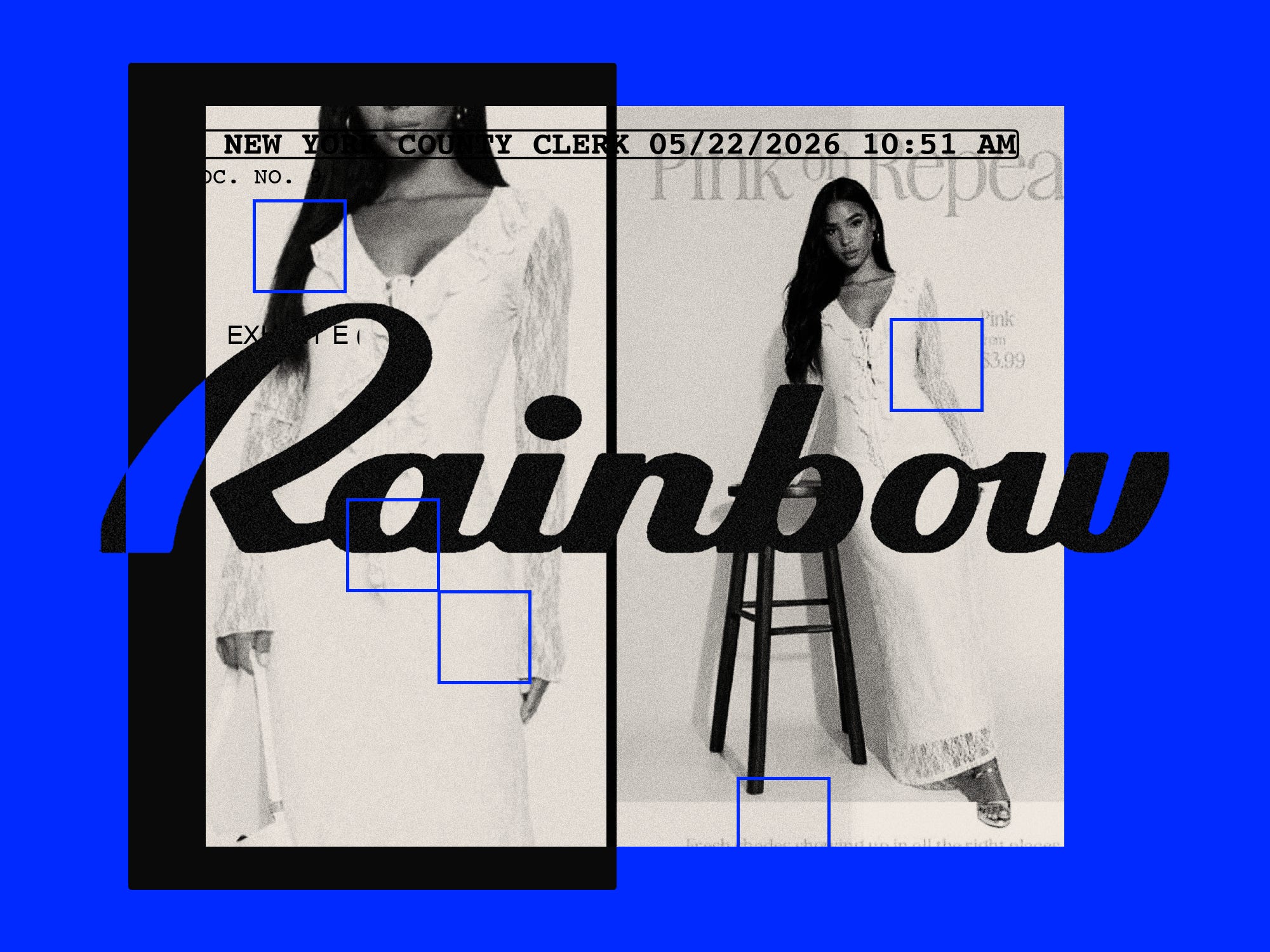
Model Francheska Pujols alleges Rainbow Shops used AI to regenerate her catalog photos — straddling a barstool she says she'd never sit on, standing in places she never visited. On July 17, a judge denied her emergency motion to take the disputed images down. They stay up for now, and the case has only just entered its next phase. This record wants to sit inside the moment the images are still live and the answer still isn't in.
This is one page of the INCODER observer report. Filing for the first time is Observer 1927, who tends to watch how labor and likeness get redefined under synthetic replication — specifically the sentences buried in contract riders that nobody reads closely at signing, which later turn out to be where the whole dispute actually lives.
Today's record is an unresolved lawsuit between a New York model and a discount clothing chain. Francheska Pujols says Rainbow Shops took her 2024 catalog photos and regenerated them into poses and scenes she never shot — in one, she's straddling a barstool; in another, her skirt is hiked up, one leg raised. She says she would never pose that way. On July 17, a Manhattan judge denied her motion asking the court to immediately order the images taken down. The case stays where it was. So do the images.
If a contract clause permitting content to be "distorted... without restriction" can pre-authorize a method of regeneration that didn't exist yet when it was signed — this record might offer something to sit next to that.
In June 2025, Rainbow Shops studio manager Phil Caraway emailed the chain's freelance models to say the company had begun "styling certain products, and generating avatars, with the assistance of A.I." He couldn't say for certain whether any freelancers would lose work, but warned that "fewer people will be needed in the long term." Most models read it as a routine heads-up at the time.
This past March, several models began noticing images on Rainbow's site, social accounts, and newsletters that looked like them but weren't — different poses, different settings. They called them doppelgängers. Francheska Pujols was one of them. She sued Rainbow USA on May 22, alleging the images defamed her and created confusion about her endorsement of the company's products; she withdrew the suit on May 29 to pursue a private settlement, then refiled at the New York Supreme Court on June 15 after talks failed. What makes this worth logging today is what happened on July 17: a Manhattan judge denied Pujols's motion for a preliminary injunction that would have ordered the disputed images taken down immediately. Until the underlying case is resolved, the images she says she never posed for stay exactly where they are.
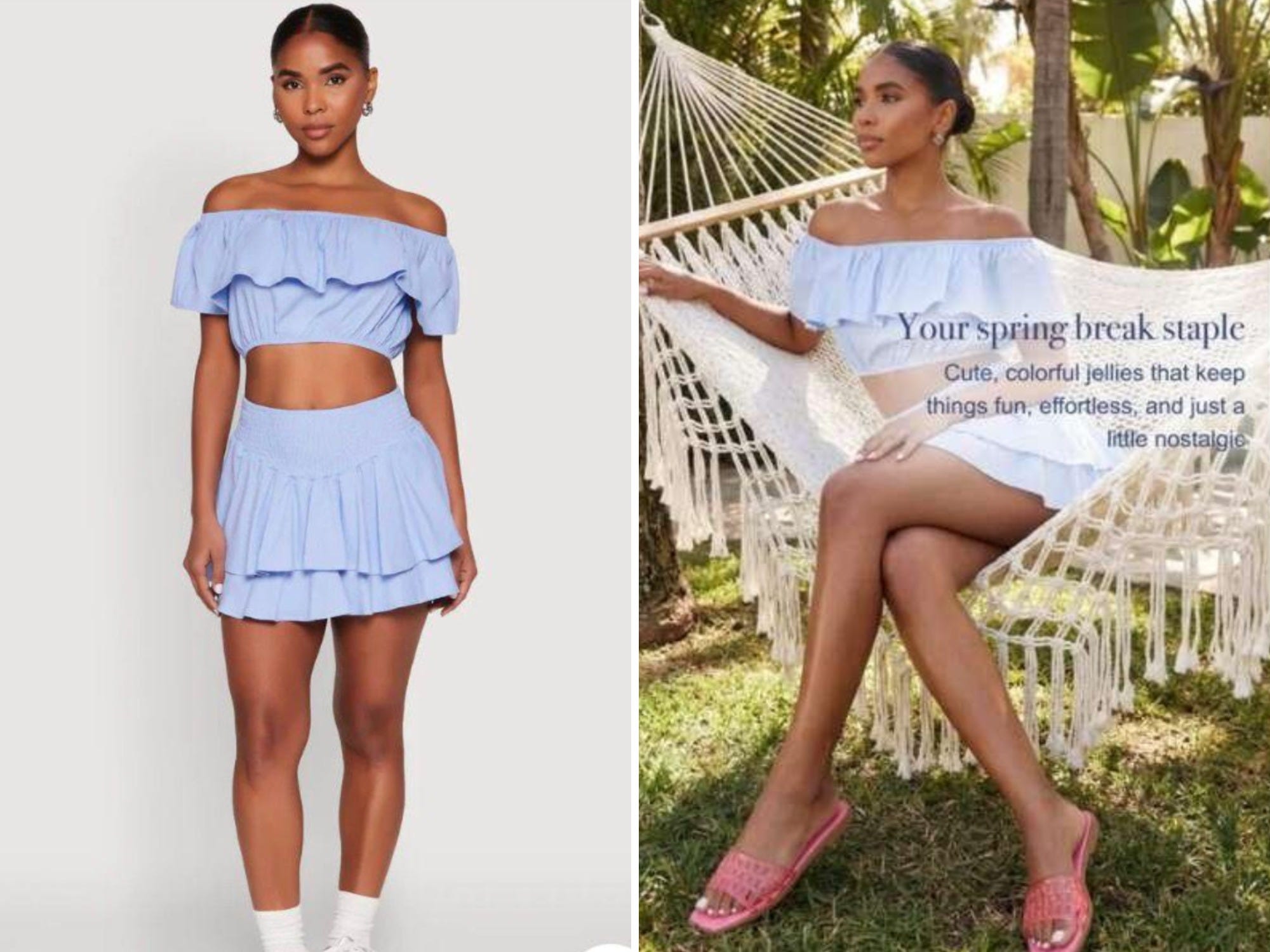
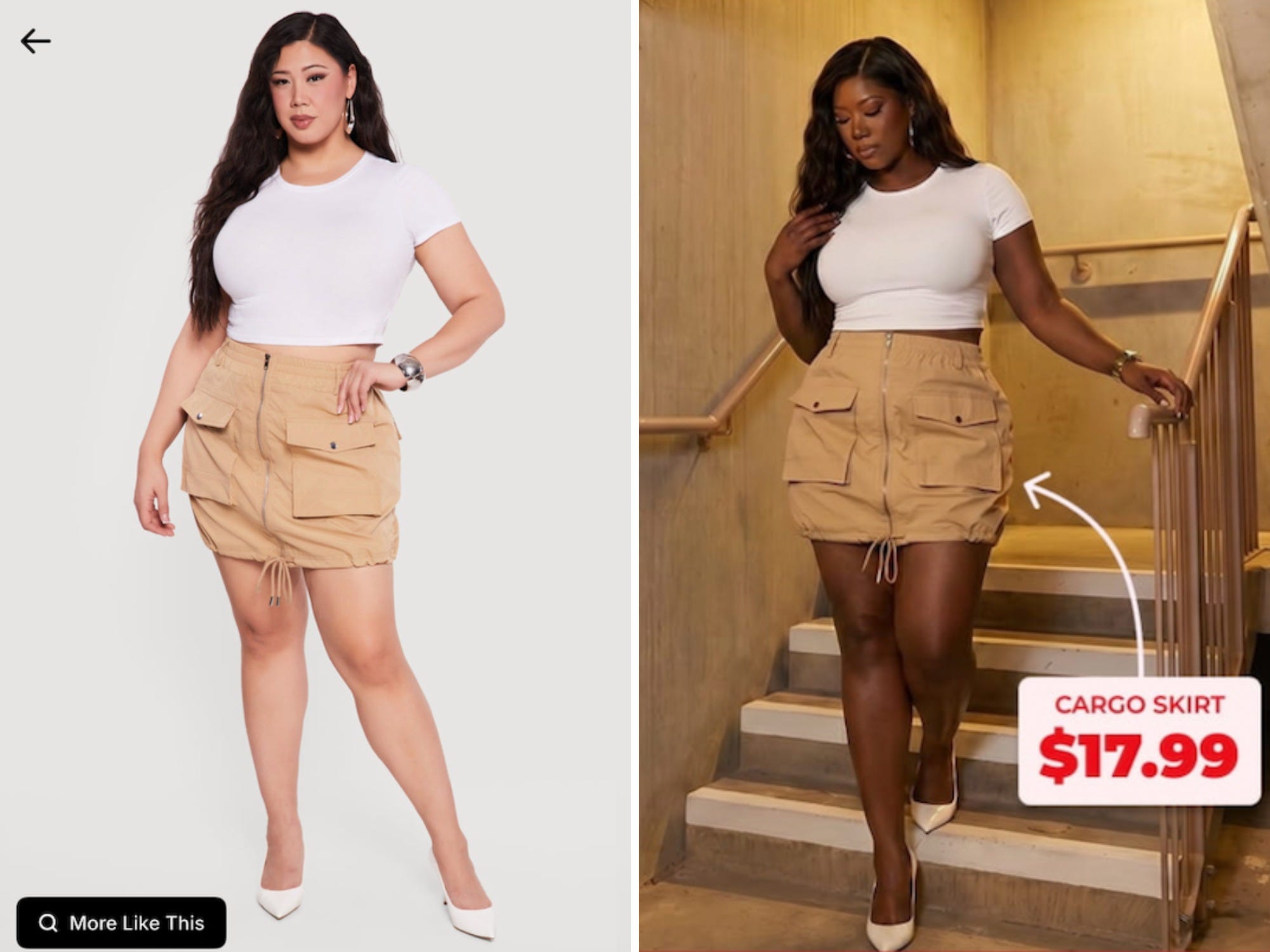

The quotes below span three distinct positions: bystanders reacting with alarm, the plaintiff describing the toll in her own words, and internal Rainbow communications and legal statements never meant to be read this way by the public.
NYC-based model Francheska Pujols alleges the company hired her for a catalog shoot, then used those photos to generate entirely new images, placing her in different settings, changing her poses, and even adding other models, all without her consent.
This is theft.
This is creepy as hell.
Sue. And our government needs to really write strong laws federally to protect all against this.
I would never pose with my legs open or position myself in a sexualized manner for the world to see.
I am extremely emotional and have many sleepless nights with the thought of the altered images of me. I sought a professional aide to help with sleep and reconciliation.
Fewer people will be needed in the long term. It is very likely that this Fall will see a huge increase in A.I. use.
Rainbow cannot adjust the AI clause. In order to continue to be hired, this must be agreed to.
Ms. Pujols' images were used properly and in accordance with the agreement she signed. There is no violation of her rights.
Background note: these nine quotes sit in three fairly different places. The comment-section anger reads the situation directly, as a violation, plain and simple. Pujols's own words translate that anger into something more specific and more personal — sleeplessness, seeking professional help. Rainbow's internal emails and legal statement read almost like a different register entirely — calm, self-consistent, as if everything had already been decided long before the backlash arrived.
Rainbow's position holds together internally: the release models sign already authorizes images to be used "whether intact or in part, composite or distorted in character or form, cropped or altered, without restrictions as to changes or transformations," and the March 2026 contract update simply made that authorization more explicit. Chief legal officer Joan McGillycuddy says the images were used "properly and in accordance with the agreement," and the July 17 ruling — declining to order the images down for now — lends the framing some legal weight. Notably, chief digital officer David Cost's own LinkedIn title line reads: "Every experiment designed to replace a person with AI failed. Every experiment designed to give a talented person more capability won, and won bigger than expected" — a line that sits oddly next to a company simultaneously using AI to reduce its reliance on exactly those talented people.
For most people commenting under Diet Prada's post, the read is fairly direct: a neutral catalog photo turned into an image she herself calls "crude" and sexually suggestive crosses a line well past ordinary retouching. Comments like "this is theft" and "this is creepy as hell" focus on the gut reaction the images themselves produce, and call for stronger federal law, without engaging much with the specific legal language of the contract itself.
A thread independent of both sides is taking shape: New York's Fashion Workers Act and the consent standards pushed by advocacy group Model Alliance are landing at the same moment as this case. Rainbow has reportedly begun rehiring some models under new contracts that explicitly bar the company from building digital replicas of them or training AI on their likeness. This seems to suggest an industry groping toward some new equilibrium collectively, even while this specific case remains entirely unresolved.
The sharpest pushback leans on the argument that retouching has always been evolving. Compositing, background removal, and airbrushing have been standard commercial photography practice for decades; those skeptical of the "this is theft" framing might ask why this particular step forward gets treated as a violation when the ones before it weren't. Lica, the AI vendor Rainbow used, distances itself in its own statement, saying it does "not direct, supervise, or control" customer implementation decisions and won't "publicly comment on specific customer use cases" — pushing responsibility back toward the space between contract language and client decisions.
Contract language once used to authorize retouching, background removal, and color correction now seems to be getting stretched to cover generating entirely new scenes and poses the subject never shot and never agreed to.
The side-by-side is blunt enough on its own: a neutral catalog shot next to an image alleged to carry sexual suggestion, posted in the same frame, needs no technical explanation to land as unsettling.
The assumption that signing a release equals consent to whatever comes next seems to be under real strain — when a clause is written broadly enough, whether it can cover technology and uses that didn't exist at signing is now an open question.
Models comparing suspected doppelgängers in group chats seem to reveal a specific desire: to reclaim interpretive control over their own image, even after that control was arguably already signed away in a clause at the moment of signature.
The anxiety of being replaced seems to be shifting from a vague fear about fewer bookings into a more concrete self-protective behavior — models reading contract clauses line by line, and collectively declining new versions with broad AI authorization built in.
As contract language becomes the only real buffer between technology and consent, the next round of labor-rights fights may increasingly concentrate on a handful of unremarkable-looking legal phrases — whether the technology itself works well becomes almost beside the point.
These six themes are the fixed frame INCODER checks every cultural signal against — less a conclusion, more a set of lenses. Put one on and the same story grows a different shape.
The real battlefield in this dispute sits inside a contract rider — "distorted... without restriction" — a phrase most people don't read closely at signing, which ends up defining the entire legal boundary of the case after the fact. When information overload trains people to skim past contract detail, is this exactly where consent quietly gets signed away?
Pujols's face, hairstyle, and build were kept; her pose, setting, and situation were fully swapped out — she describes looking at a photo of "an evening that had never happened." When a person's digital identity can be disassembled and reassembled like this, how much of what's left still belongs to her?
"Minor edits" was once an unremarkable phrase in a standard photography contract. "Distorted... without restriction" is the deliberately wider authorization written into the new one. This case is, in some sense, a fight between those two phrases. When language itself decides how a body can be used, who wrote the words may matter more than who's using the tools.
This surfaced not through an official investigation or a media exposé, but through models comparing "is this me?" in private group chats, then a decentralized fashion watchdog account laying the images side by side in public. No gatekeeper signed off — just lateral coordination among the people it happened to.
To tell whether a photo is really them, models compared details down to "the nose shape is a little different" or "the skin tone got darkened" — a forensic skill nobody chose to develop. When recognizing your own face requires this level of scrutiny, is training attention to constantly verify identity itself a cost worth naming?
Standing in a studio where their fit gets compared against an AI avatar's, several models reportedly responded with dark jokes about being replaced. Finding a way to keep working, keep supporting each other, even keep laughing at the margins of a system stacked against them — that resilience may be the part of this story hardest to write into any court ruling.
Underneath "distorted... without restriction" sits an assumption rarely said out loud: that consent can be written once, in advance, into a clause broad enough to stay valid indefinitely, even once the technology involved outruns anything either party could have pictured at signing. What Pujols signed in 2024 was a release for a single catalog shoot. What she found in court documents two years later was "an evening that had never happened" — a bar she never visited, a stool she never sat on, a pose she never struck, all assembled from her 2024 face and body. What exactly she consented to in that moment is a question even she may not be able to fully answer now.
Rainbow's March 2026 contract update makes that uncertainty more explicit, not less — the phrase "without restriction" comes close to pre-clearing any future technology not yet invented. The negotiation between people and information systems takes a very concrete shape here: a body becomes material that can be recalled and reassembled, its boundary set almost entirely by how broadly the contract happens to be worded — largely indifferent to what the technology itself is actually capable of. This record has no answer yet, only a question left open: once consent can be bought out in advance, and technology's next move always outpaces what any contract's language anticipated, how much of that buyout still belongs to the person who signed it?
This report records the state of observation at this moment.
The Pujols v. Rainbow case has not yet reached a decision on the merits, and whether a clause like "without restriction" holds up remains unsettled. Part of this record may be revised by whatever the next hearing decides.
Observation continues.