A body-horror short built to dissect looksmaxxing forum culture has, within three months of release, been pinned to the top of the very forum it depicts and celebrated as a trophy. The critique and its subject seem, for a moment, to be sharing the same mirror. This record wants to sit inside that moment of capture.
Filed By
OBSERVER 22
Report
0005
Encoded
3R-Q8-V5
// recurring focus: body modification, algorithmic beauty standards, forum radicalization, self-optimization subcultures
This is one page of the INCODER Observer Report. On duty today is Observer 22, whose recurring watch is the body treated as a project — something to be optimized, scored, and publicly rebuilt — and the forums where people gather at the margins to trade notes on how.
Today's record starts small: a fifteen-minute horror short. Its director says it's an attempt to understand, not to judge. Within weeks of release, the forum culture it depicts pinned the official trailer to the top of its own board and celebrated it as a trophy. The critical lens and the thing it was pointed at seem, here, to be sharing the same mirror.
If you've ever wondered whether exposing something's cruelty can accidentally make it look cooler — this record might offer something to sit alongside that thought.
— OBSERVER 22 · Observation Archive
00Why This Topic Today
Why Today: A Critique, Claimed As A Trophy By The Thing It Critiques
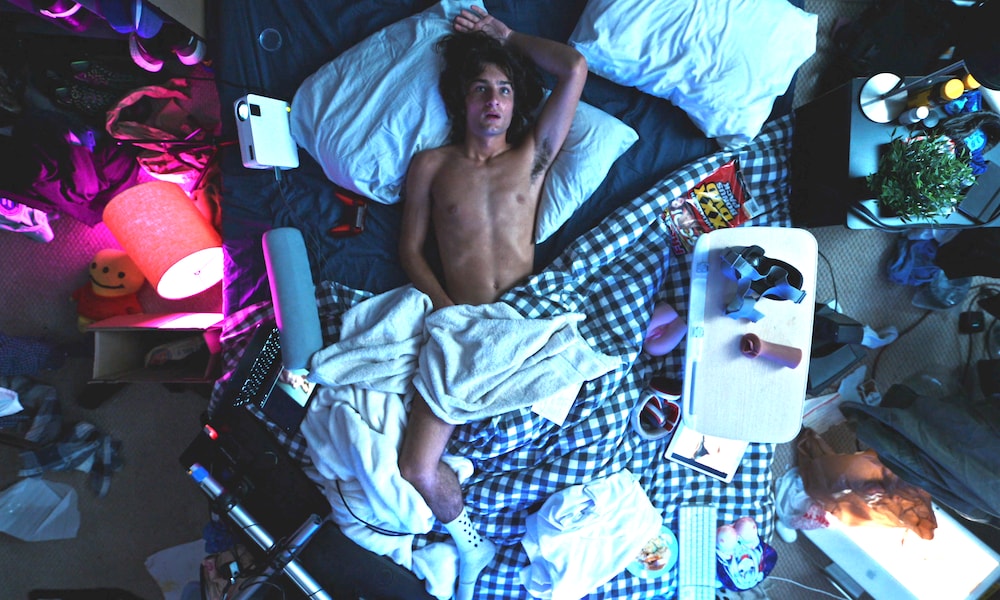
American director Elan Alexander's short film Looksmaxxing premiered in Los Angeles on April 28, 2026, and went live online on May 20. It follows a "dopamine-depleted young man" named Niles — played by Sunny Suljic, best known as Atreus from the God of War franchise — as he spirals into looksmaxxing forum culture: DIY drug protocols, unverified supplements, and "bonesmashing" (striking one's own facial bones in an attempt to reshape them), all in pursuit of what the forums call an "ascend." Alexander started lurking these forums back in 2022 — the script, he notes, predates The Substance. Once the film went live, Looksmax.org, the forum culture it depicts, pinned the official trailer to the top of its own board under a single line: "they made a movie about us."
This is worth pausing on not just because the film is well-made, but because of what's converging around it. Over the same stretch of months, Clavicular — the real-world face of this subculture, who says he was "raised on these forums" from age 14 during the pandemic — collapsed on a livestream in a Miami mall on April 14 after a suspected overdose, in front of thousands of live viewers, an incident CNN and other outlets covered extensively. That gave Alexander's low-budget horror short an unexpected extra weight: this wasn't purely fiction anymore. On July 3, Dazed ran a full interview; later in July, 032c published its own conversation with Alexander, probing the subculture's vocabulary and how we might "brace for this new reality." This is worth recording now because the moment of capture — a critique, claimed by its subject as a celebration — is still visible. Give it a little longer, and the line between the two will likely blur back, and no one will remember there was ever a mismatch here at all.
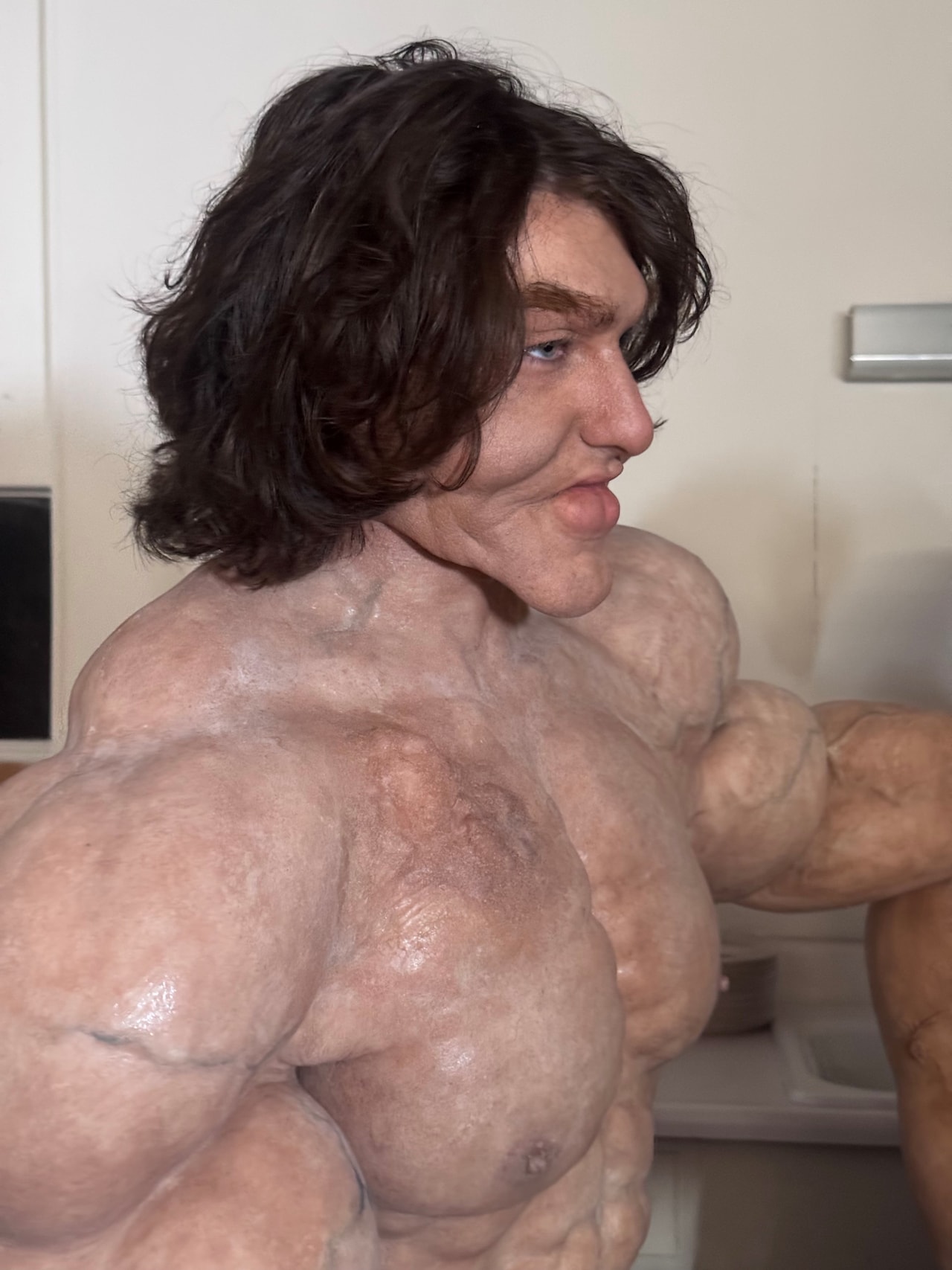
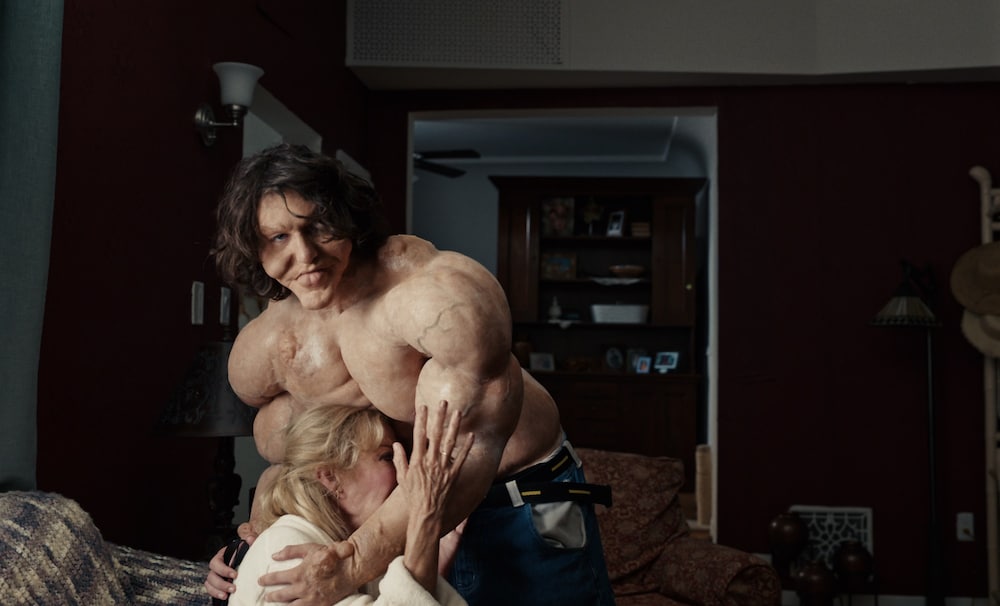
BTS from Looksmaxxing, Sunny Suljic as the increasingly "ascended" Niles. Courtesy of Elan Alexander, Dogma Studios, via Dazed.
Left to right: prosthetic still of Niles's "ascent"; on-set BTS; the official Dogma Studios poster. Courtesy of Elan Alexander, Dogma Studios / Dexerto.
2022
Elan Alexander begins lurking looksmaxxing forums for material, drafts the Looksmaxxing script
2026.04.14
Clavicular, the subculture's real-world face, collapses live on stream after a suspected overdose; CNN and wires pick it up
2026.04.23–28
Looksmaxxing trailer drops, LA premiere follows; Looksmax.org pins it as a top thread
2026.07.03 onward
Dazed runs the full Alexander/Suljic interview; 032c follows with a conversation probing the vocabulary itself
01Community Voices
Community Voices: One Film, Two Viewing Experiences That Barely Recognize Each Other
The quotes below span real Letterboxd reviews, a statement from the film's own account on X, and a passing comment picked up by tech outlet Dexerto — the same film producing two viewing experiences that seem to belong to almost entirely different audiences.
LETTERBOXDEnas Cooper · ★★★½
lowkirkenuinely needed a whole movie of this no cap on god bro it mogged so hard
LETTERBOXDeli · ★★★
i'd rather stick to my chud life
LETTERBOXDgiftfrumheaven · ★★★★
wow. incredibly made film that's also a terrifying watch in the sense that there's people out there like this. i love the use of actually current trends/memes, it just adds to the realism.
LETTERBOXDcorry
the substance with andrew tate mindset
LETTERBOXDSchizo_Nugget · ½
One of the worst and most random shit movie ever
LETTERBOXDjacobravencroft · ★★
Bone smashing is really a thing? 💀💀💀
X / TWITTER, VIA DEXERTOSunny Suljic
This film does not promote nor villainize the looksmaxxing community or ideology. This is an exploration of today's world through a body horror lens.
X / TWITTER, VIA DEXERTOAnonymous commenter
Sunny Suljic doesn't need to looksmaxx, his dad is literally the God of War.
Background note: the Letterboxd reviews split into two barely-overlapping reactions — some treat it as pure spectacle ("mogged so hard"), some are unsettled by the thought that "there's people out there like this," and some just think it's a bad, random movie. Suljic's own statement reads like an attempt to get ahead of controversy before it lands: the film doesn't endorse, doesn't villainize. What's notable is that across every reaction, almost no one questions the vocabulary and imagery the film reproduces so faithfully — mog, ascend, bonesmashing — as if these terms, which once carried clear ideological weight, have already become generic entertainment shorthand anyone can use without a footnote.
02Consensus Mapping
Four Narratives: Official, Community, Emerging, Contrarian
Official Narrative
Alexander and Suljic return, in every interview, to the same framing: this is an attempt to understand, not to judge. Alexander tells Dazed he didn't want to point and laugh, because "nothing gets solved that way" — he was more interested in how someone like Clavicular got formed by these forums in the first place. Suljic posted his own statement on X insisting the film neither promotes nor villainizes the looksmaxxing community or its ideology, framing it instead as "an exploration of today's world through a body horror lens." Both position themselves in a deliberately blurred middle ground between critique and empathy.
Community Narrative
For Looksmax.org's users, the film's meaning flips almost entirely — less a cautionary tale, more proof that the mainstream finally noticed. The pinned thread's title, "they made a movie about us," carries something close to pride. Some Letterboxd viewers echo this reading too, praising the prosthetic transformation for how hard it "mogs," consuming Niles's arc as spectacle rather than warning. For this audience, whether the film ultimately lands as critique or celebration seems almost beside the point.
Emerging Narrative
An observation independent of either camp is taking shape: the film and Clavicular's mid-April on-stream collapse were covered by mainstream outlets almost in the same breath, and readers have started treating Niles's fictional "ascent" and one real man's physical collapse as two chapters of the same story. This feedback loop between fiction and reality — each seeming to confirm and amplify the other — may be the real center of this signal, less about whether the film is good and more about a mutual-feeding relationship forming between the culture industry and this underground subculture.
Contrarian Narrative
The sharpest pushback comes from a March essay in the University of Pennsylvania's student magazine, 34th Street. Writer Insia Haque argues that the entire vocabulary — mog, ascend, bonesmashing — grew out of incel ideology, carrying explicit misogyny and objectification at its root; even when a work wraps that vocabulary in satire or horror-genre distance, faithfully reproducing it may already be doing the work of laundering its edge. Her point is that irony hasn't made the danger disappear — it's made the danger easier to say out loud, easier to screenshot and share as a joke, and each share paves a slightly smoother road for the next teenager who ends up where Clavicular did.
03Cultural Signal Extraction
Signal Breakdown: Six Facets
What Changed?
A vocabulary and set of behaviors (mog, bonesmashing, ascend) that once circulated only in the depths of a forum carrying explicit misogyny and self-objectification has, via a studio-quality horror short, moved fully into mainstream film criticism and tech-press coverage — with almost no translation or dilution along the way.
Why Are People Reacting?
The film lands on two contradictory desires at once: viewers who want the validation of seeing this underground world "finally said out loud," and viewers drawn in by the fear that "people like this actually exist" — feeding both morbid curiosity and belated alarm in the same sitting.
What Assumptions Are Challenged?
The assumption that "a critical work naturally dulls the appeal of what it critiques" doesn't hold up well here. The forum's decision to celebrate the film as a trophy shows that critical intent doesn't guarantee a critical reading.
What Desires Are Visible?
Whether it's the forum's pride or viewers marveling at the prosthetic work, both seem to point at the same underlying wish — to be seen, to have one's existence recorded into the mainstream narrative, even if the recording comes through the distorting mirror of a horror film.
What Social Behavior Is Changing?
Vocabulary once treated as something to be wary of, even dangerous, seems to be spreading faster into everyday speech via two channels at once — ironic quotation and horror-genre reenactment — often without users realizing they're repeating language that still carries its original ideological weight.
Future Human Behavior?
If fiction keeps playing translator for underground subcultures, the next wave of young people curious about extreme body modification may no longer need to find these forums themselves — mainstream film and TV may have already drawn them the map.
04INCODER's Eye
The Lenses We Read This Through: Six Observation Frames
These six themes are the fixed frameworks INCODER checks every cultural signal against — less a conclusion, more a set of glasses. Put them on, and the same story grows a different shape.
Information Culture
A vocabulary, amplified by algorithms, moved from the depths of a forum into mainstream film criticism and tech press faster than anyone could verify its ideological roots. When even a critical work needs the same viral mechanics to be seen, does the critique itself get quietly tamed into just another piece of consumable content?
Digital Identity
Niles's "ascent" is a sequence of screenshottable, displayable, forum-scored milestones — body modification here reads less like a private choice and more like a public résumé that owes the community regular progress updates. When a person's worth gets sliced into quantifiable, rankable visual metrics, how much of the self is left that doesn't have to be on display?
Symbolic Systems
Mog, ascend, bonesmashing were once a closed vocabulary used inside the forum to mark hierarchy — now a horror film has translated the whole system for a mainstream audience unfamiliar with its logic. When the code loses its walls and becomes something anyone can casually quote, does the cruel ranking system it was built to encode get carried along with it?
Dark Vitality
Forums like Looksmax.org have long operated outside mainstream view, sustained by a warped but stubborn vitality — members trading extreme regimens, pushing each other toward "ascent." When that fringe survival strategy gets noticed by mainstream production, even turned into the forum's own proof of being finally recognized, does this life-force at the system's edge become easier to observe, or harder to actually intervene in?
Networked Society
No official gatekeeper stepped in to demystify or debunk this film — its meaning was produced entirely by two audiences with no formal connection to each other, forum users and ordinary film critics, each reading and spreading it independently. With no gatekeeper to arbitrate which reading is "correct," is this decentralized meaning-making becoming the primary — and hardest to intercept — route by which underground culture crosses into the mainstream?
Perception and Attention
Four to six hours of prosthetic makeup turned a live actor into a body-as-spectacle that audiences have to keep staring at, keep trying to parse — where's the prosthetic, where's the real face. When attention gets trained this way, habitually treating bodies as visual data to be inspected and scored, does that same habit quietly bleed into how viewers look at their own bodies?
05Signal Score
Signal Strength Rating
8/10
This signal comes with solid primary material: full director and actor interviews, a months-long real-world event (Clavicular's on-stream collapse and the media storm after), a sharp contrarian narrative from academic and campus press, and a rare case of a community turning its own critique into a celebration. Points come off because the film is still a short outside theatrical distribution — under twenty ratings on IMDb — and hasn't truly crossed into the core of mainstream pop culture; the full 032c interview also has no independently verifiable public link yet. If Alexander's teased "something bigger" actually materializes as a feature or series, or if Clavicular's situation takes a new turn, this signal's strength should move up.
06Final Question
The Deepest Hidden Assumption
?
If a work insists "we don't celebrate, and we don't villainize" — then when it chooses to reproduce an entire vocabulary and its imagery at near-zero loss, does that faithfulness already count as a position?
Alexander and Suljic's stance is clear and sincerely held: they want to understand, not judge. But the moment Looksmax.org pinned this film and celebrated it as a trophy, it seems to have quietly answered a question the filmmakers may never have asked themselves — that reproducing an ideology's language and imagery, even wrapped in horror-genre critique, can still read, to that ideology's original audience, as a belated and spectacular validation. The warning in that 34th Street essay lands with particular weight here: irony and critical distance may never have actually made the danger disappear — they may have just made it easier to share, easier to screenshot, easier for the next fourteen-year-old to read as proof that "everyone's watching now."
The negotiation between people and information systems takes a particularly hard-to-untangle shape here: the filmmakers want critical distance to protect the audience, while the forum uses that same material to feed its own sense of identity — and both things seem to be true at once, with no one lying. This record has no answer for now, only a question left open: once "faithful reproduction" and "active promotion" start producing indistinguishable effects, can a work's intent alone still determine what it ends up being used for?
Observation remains incomplete.
This report records an observational state as it stands right now.
Whether Looksmaxxing actually becomes the "something bigger" Alexander has teased, or turns out to be a one-off footnote in this cultural moment, remains to be seen — part of this record may be revised by new facts at any time.