
What Changed?
The "ship with defaults on, retreat if the backlash is loud enough" playbook, which took weeks to play out last fall, compressed into 72 hours this July. The speed at which consent boundaries get stress-tested is visibly increasing.
In early July, Meta shipped a tool that let anyone tag a public account and pull that person's likeness into an AI-generated image. Hollywood unions and privacy groups took it down within three days — widely reported as a consumer win. One line in the same announcement, about folding the same model into ad automation "in the coming weeks," was never retracted, and almost no one finished reading that far.
This is one page from INCODER's Observer Reports. On duty today is observer number 2020, whose recurring beat is the constantly shifting negotiation line between humans and machines.
What's on the desk this time reads, on the surface, like a clean three-day story: launch, backlash, withdrawal. But reading the same announcement all the way to the end turns up a sentence that almost nobody mentioned — the one that was actually kept.
If you've ever walked away from a "win" with the faint sense that you'd only been allowed to take the round that didn't matter — this record might give you something to hold up against your own read.
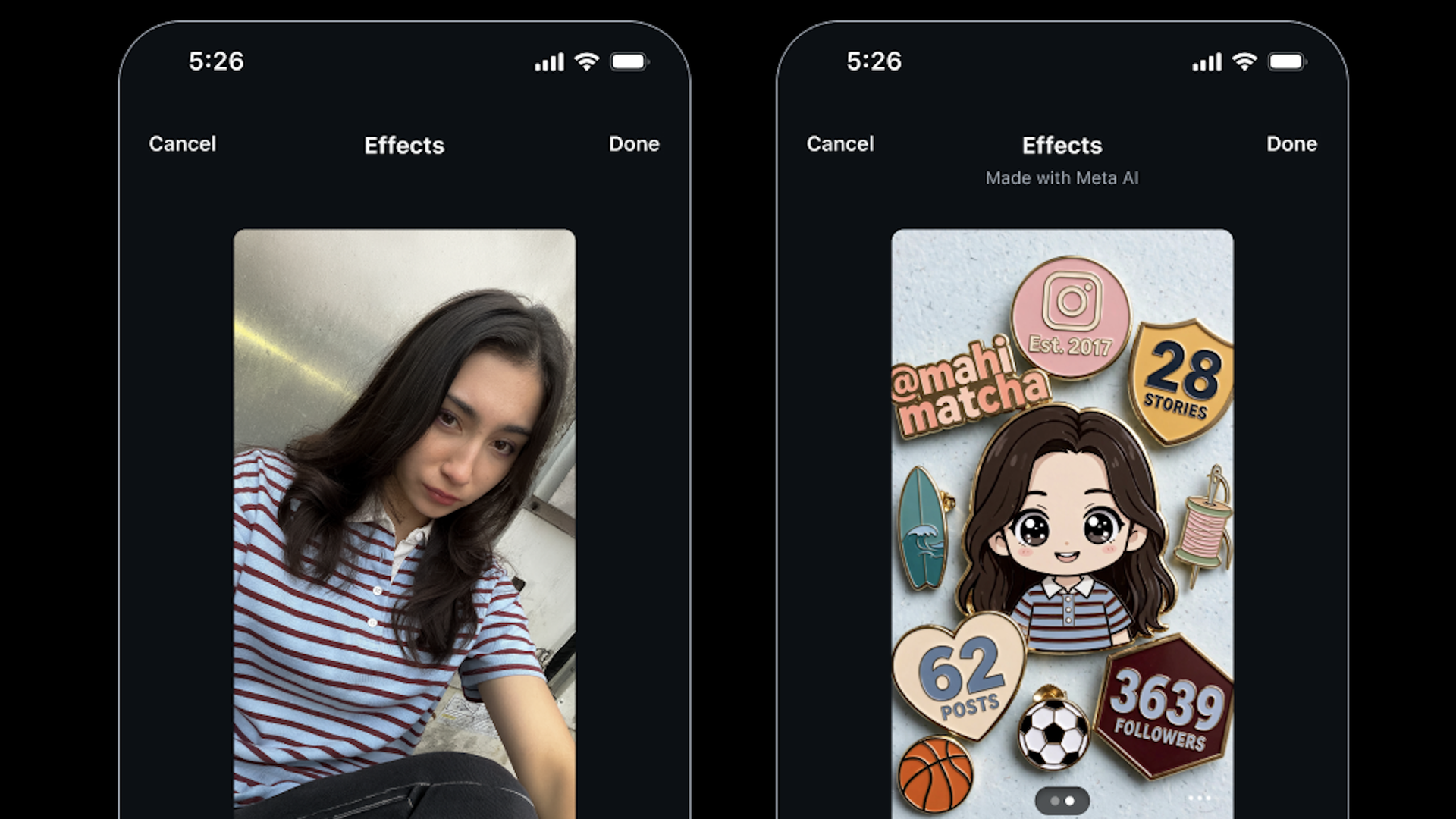
On July 7, 2026, Meta launched Muse Image — the first image-generation model from Meta Superintelligence Labs. What drew the attention first was a feature inside the Meta AI chatbot that let anyone tag a public Instagram account and pull that person's photos in as a reference for a new AI-generated image: every adult's public account was enrolled by default, account holders weren't notified when it happened, and opting out required finding the toggle yourself. Within three days, talent agency CAA, actors' union SAG-AFTRA, privacy group Public Citizen, and a large volume of individual users pressured Meta into pulling the feature on the evening of July 10. The company's statement admitted it had "missed the mark."
Most coverage ends the story there, under headlines about Hollywood beating Meta. But the same announcement contained a line almost nobody quoted: in the coming weeks, Muse Image would be integrated into Advantage+, Meta's ad automation suite, letting advertisers generate creative variations on demand. That sentence, and the deeper work of welding Muse Image into a product line used by three billion people a day, was never retracted and never made it into a single "victory" headline. Right now happens to fall inside the "coming weeks" window the announcement named. Recorded a week later, this three-day story — loud, then quickly forgotten — would likely already be buried under the next news cycle, and its real second act would finish quietly, with no one left watching.


The quotes below span a privacy group, a talent agency, an actors' union, Meta's own statements, and individual Reddit users — the same three-day standoff, sounding almost unrecognizable depending on who's speaking.
Meta has once again chosen the creepiest possible path. People should not wake up to discover their face has become raw material for someone else's AI experiment.
No one's name, image, likeness, voice, or creative work should be used by any third party, including AI models, without clear, documented consent.
SAG-AFTRA recommends that #SagAftraMembers (and all Instagram users) opt-OUT of Meta's new AI image generation tool, Muse Image. Take action to protect your likeness.
We're definitely receiving a lot of the feedback and are being thoughtful about what the next steps for that product should be.
We've heard the feedback that this feature missed the mark, so it's no longer available.
The surprising part is still pretending 'you can turn it off in settings' is meaningful consent for normal users.
This definitely changes how I think about public profiles.
We commend Meta for its swift decision to remove the Muse Image feature. Putting individual rights and consent at the forefront is essential to building responsible technology.
Context: the same organization said two very different things within three days. CAA's opening statement reads close to an accusation; its response after the removal reads like a commendation. In between, exactly one feature got switched off — the underlying system didn't move at all. That gap might be worth sitting with longer than either quote on its own.
Meta's public line has stayed close to "we heard the feedback." The removal statement admits Muse Image "missed the mark," stresses the original intent was to offer a useful creative tool, and frames the opt-out mechanism as something that existed but "didn't land the way we hoped." Meta Superintelligence Labs chief Alexandr Wang kept the same posture in interviews, describing the company as being "thoughtful" about next steps. The overall framing casts the withdrawal as a routine, feedback-sensitive product iteration rather than a forced retreat.
Talent agencies, a union, and a privacy group pulled off an unusually fast coordinated push within three days. CAA and SAG-AFTRA issued statements almost in sync, demanding the default flip from opt-out to opt-in; Public Citizen called the whole rollout an "egregious invasion" of privacy outright. Individual Reddit users sounded less organized and more unsettled — their concern wasn't only the new feature itself, but the older, only-now-visible fact that their public posts had apparently always been usable this way.
An observation independent of either official story is taking shape: this isn't new. Last fall, when OpenAI launched its Sora video app with similarly thin likeness protections, SAG-AFTRA condemned it and OpenAI backed off within days. Forbes' analysis notes that Meta compressed the same script into 72 hours this time: ship, absorb outrage, admit fault, collect a commendation from CAA. When the same "test the line, retreat if needed" rhythm keeps recurring across different companies — and keeps getting faster — that pattern itself may be worth recording more than any single incident.
The sharpest challenge comes from Forbes contributor Gabriel Alin Zainescu's analysis: what got pulled was only the costume — the consumer-facing, virally shareable tagging feature. What actually mattered sat near the bottom of the same announcement, in a sentence almost nobody quoted: in the coming weeks, advertisers would be able to generate creative variations through Advantage+ using the same model. That sentence was never retracted. The piece's calculation is that Meta traded three days of bad press for a precise read on exactly where the market's tolerance for likeness consent currently sits — a cheap price against a quarter-trillion-dollar annual ad business.
The "ship with defaults on, retreat if the backlash is loud enough" playbook, which took weeks to play out last fall, compressed into 72 hours this July. The speed at which consent boundaries get stress-tested is visibly increasing.
Many users only realized their public posts had always been usable this way once they learned they'd been enrolled by default — the reaction seems aimed less at the new feature itself than at an older fact that only became visible through it.
The assumption that "you can turn it off in settings" equals meaningful consent takes a direct hit here. The Reddit objection is blunt: does an opt-out buried in a menu actually count as informed, voluntary consent for an ordinary user?
CAA and SAG-AFTRA's core demand — flip opt-out to opt-in — points less toward rejecting AI outright and more toward wanting to be asked before something happens, not informed afterward that an exit exists.
Major outlets and individual creators produced a wave of "how to opt out" guides within 48 hours — this kind of fast, collective, self-protective content production is becoming close to a predictable reflex every time a tech company crosses this particular line.
As "checking whether I got defaulted into some new feature today" turns into a recurring chore, people may be developing a new digital habit — a kind of ongoing patrol, regularly auditing which systems are currently referencing their face, voice, or work, and how.
These six themes are the framework INCODER checks every cultural signal against — less a rulebook, more a pair of glasses: put them on, and the same headline grows a different meaning.
Three days of uproar absorbed nearly everyone's attention, while the line in the announcement with the longer consequences went almost unquoted. When the noise itself uses up the energy needed to spot the signal, does a publicly released document become, ironically, the hardest place to actually finish reading?
The line between "a public account" and "a raw-material library available to anyone" got redrawn here, and not by the account holder. When a public selfie can become part of someone else's creation without the subject ever knowing, how much of a digital identity is still actually one's own?
An @-mention used to be one of the lightest gestures on a social platform. Now it's enough to summon someone's face into a newly generated image. When mentioning someone becomes a way of requisitioning their body, does tagging itself need to be understood as a kind of language?
Forbes' analysis notes that before shipping its own model, Meta had been "renting" image generation from Midjourney and Black Forest Labs. Muse Image's real significance may be less about a new feature and more about swapping an outsourced part for an in-house core — once the interface controversy exited the stage, the engine underneath had already quietly changed. When a system's core components can be swapped out this silently, how would a user know which logic they're actually dealing with?
A talent agency, a union, a privacy group, and strangers on Reddit — with no central command — completed a coordinated push within 72 hours strong enough to force a public concession from a company worth hundreds of billions. Is this kind of decentralized, ad hoc coalition becoming the most effective tool against large systems, precisely because it's also the hardest to formalize into anything lasting?
Nearly all the attention went to the feature built to go viral, while the equally consequential ad-system integration, written in far quieter language in the same document, drew almost no discussion at all. When a "victory" gets celebrated this widely, is that partly because it was designed, from the start, to be a round the system could afford to let someone win?
One line from the Forbes analysis is worth keeping in this record: a default set to "on" doesn't read like an oversight from a company with a world-class legal team so much as a live test run in production — a test in which retreat was already priced in as one acceptable outcome. Three days of bad press bought a precise read on the boundary, set against an engine about to be wired into the core of an annual ad-revenue business. If that holds, CAA's later line — commending Meta for its "swift decision" — may not be only a compliment. It may also be exactly the kind of feedback the test was built to produce.
The negotiation between humans and machines shows up here in an unusually quiet form: no one was forced into anything, the opt-out button genuinely existed, and the company genuinely listened and genuinely backed down. Every procedural box looks checked. But the place where the real negotiation happened — that sentence about ad-system integration — drew almost no engagement, because almost no one read that far. This record doesn't have an answer yet, only a question left open: when an act of resistance gets absorbed this smoothly by the very system it resisted, and both sides agree to call it a win, what form of resistance is left that a system like this hasn't already priced in?
This report records the state of observation at this moment.
Whether the Advantage+ ad-creative integration ships on the timeline the announcement described remains to be seen; part of this record could be revised by facts not yet known.
Observation continues.