
What Changed?
Robots headlined a mainstream fashion week finale as the show itself, not as a device serving any garment.
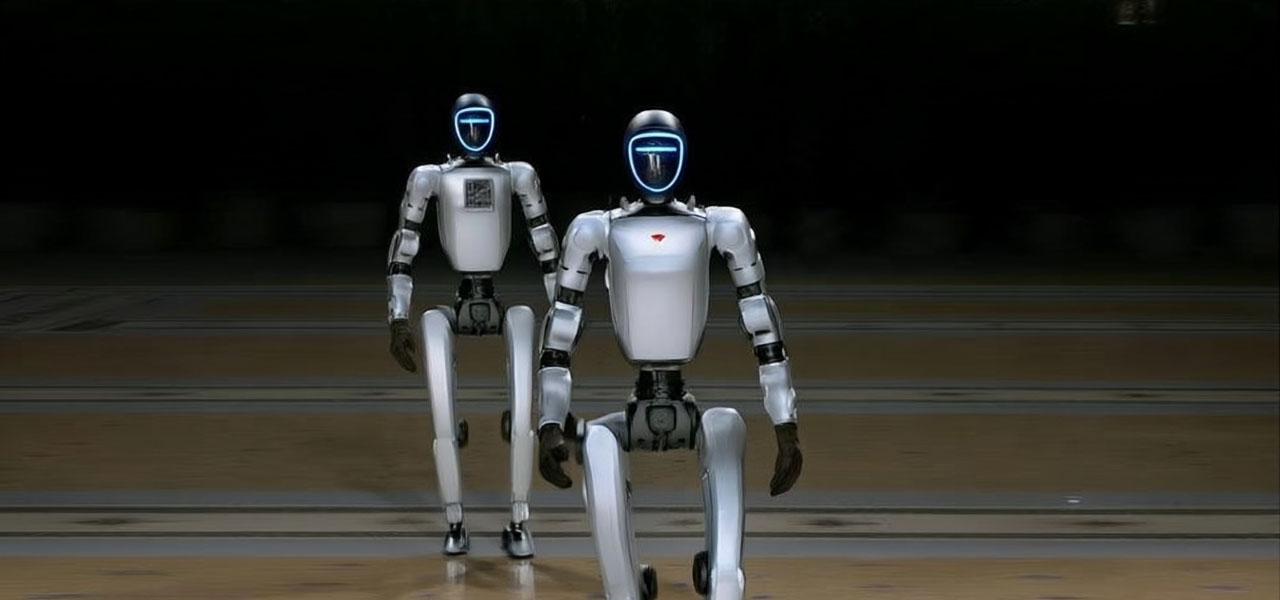
22 September 2026, Milan. Vogue World: Milano closed with "The Age of Intelligence," Unitree humanoid robots walking the runway unclothed, waving to a dance track. Creative director Juan Costa Paz called it "the beginning of robotics"; the segment was partly sponsored by OpenAI. Alessandro Michele sat stone-faced in the front row. By the next day, the community had converged on one line: the robots weren't dressed. This page records how a show built on craft and humanity left behind the opposite image.
This is one page of the observer report. What I usually track is machines edging into positions that used to belong to people alone. This time they didn't even get clothes, and still walked off with the whole show's attention. That gap is what I want on record.
Vogue World said this show was about craft and humanity. The closing act was a group of naked robots. The designers didn't say a word, and their faces got read as a position anyway. What I want to note is who decides who gets dressed, and who only gets looked at.
22 September, Milan. Vogue World: Milano closed on "The Age of Intelligence." Unitree humanoid robots walked the runway with no clothes on. They waved and gestured to a dance track. Director Juan Costa Paz said the robots marked this moment, the beginning of robotics.
Robots on a runway aren't new. In 1999, McQueen had robotic arms spray-paint a model's dress. The machine worked for the garment. This time the robots wore nothing themselves, and served no garment at all. They were simply what got watched. The segment was partly funded by OpenAI, the first time a tech giant has backed Vogue World.
In the front row, Alessandro Michele sat stone-faced. Prada looked just as unmoved; Versace applauded instead. Designers split. The community didn't. Nobody remembers what brand the robots were wearing, because they weren't wearing one. A show about craft and humanity left the opposite picture behind.


All six quotes below are verbatim, unedited. Four are from X. Two are from the same Reddit thread on r/Fauxmoi, both posted by user u/cmaia1503.
Vogue World Milano ends (appropriately Europoor-kitschily) with tiny robottini dancing to L'Amour Toujours while Alessandro Michele slowly dies inside
We are all Alessandro Michele, sitting front row at Vogue World Milan, having an existential crisis about the absolute state of things while robots awkwardly dance about.
just got off the phone with the creative director of Vogue World. First question he asked me. 'So you hated the robots?'
i had the same reaction as alessandro michele seeing these robots at vogue world
I am so sick of robots (and AI) being forced on us! It needs to stop!
Folk clapping for these sh*tty robots rather than the human models, the handmade clothes... gimme a break 🙄
The speakers split roughly two ways. One writes long lines on X, laced with jokes only industry people get. The other drops one short line on Reddit, saying plainly they're tired of this. The tone differs completely. Both land on the same image: robots with no clothes on.
The designers' reactions got read as testimony too. A stone-faced frame from the front row got screenshotted and passed around. It became proof that even the creators weren't buying it, though nobody actually said a single word on record. That reading is itself part of what the show left behind.
Creative director Juan Costa Paz says the robots mark this moment, the beginning of robotics. Official language frames a milestone, not a controversy.
u/cmaia1503 wrote: "I am so sick of robots (and AI) being forced on us! It needs to stop!" Blunt, unpolished, and the most reposted line on Reddit.
Attention is drifting toward the sponsorship itself. OpenAI backed the segment, yet few outlets mention it; most coverage only dwells on how awkward the robots looked.
nss magazine argues the real question is the sponsorship structure. A tech giant backing Vogue World for the first time matters far more than whether the robots looked good.
Robots headlined a mainstream fashion week finale as the show itself, not as a device serving any garment.
Unclothed robots read instantly, no fashion history required. The reaction needs only the image, nothing else.
The premise that Vogue World is "about craft and humanity" loosened the moment its own finale arrived.
Some wanted to see the future. Others just wanted to see clothes. Neither got what they came for.
A designer's facial expression is now read as an official position, even when nobody actually said anything.
If next season's robots actually wear clothes, will audiences remember the garment, or still just the robot?
These six themes are the standing frameworks INCODER checks every cultural signal against, more like a set of glasses. Put a different pair on, and the same event grows a different meaning.
One clip of unclothed robots traveled further than the show's other four acts combined. Does spread speed now decide what a show gets remembered for?
A designer said nothing, and a facial expression got read as a position. Can one frozen frame stand in for an actual statement?
For the first time on this runway, the robots represented no garment, only themselves. Does an unclothed body still count as fashion's language?
The robots got the most expensive stage in fashion and not one item of clothing. Who decides who's entitled to be dressed?
Same show: X mocked it in long sentences, Reddit vented in short ones. Does a platform's tone set the story before the content even does?
The sponsor's name barely made it into coverage; the robots got written about for a week straight. Did attention go to the image, or to whoever paid for it?
Start with the assumption itself. A runway's logic has always been that the stage belongs to the clothes, and a person is just the vessel that carries and walks them. Vogue World swapped the vessel for a robot, and the garment vanished outright. For the first time, the stage belonged fully to the machine body, and to whichever tech company paid to put it there.
If a show can run with no clothes at all, propped up purely by a moving body and the traffic it generates, does a fashion week still need fashion at its core? Who's entitled to that stage, the one who pays or the one who makes the clothes? The answer may already be quietly shifting, and this record has none yet.
This report records the state of observation at this moment.
The full terms of the sponsorship are not yet public; Vogue and Condé Nast have not issued an on-record response to the designer-reaction narrative; community reaction to this signal is still accumulating. What is judged here may be reinforced, or overturned.
Observation continues.