
What Changed?
Storming a runway is an old technique; PETA has done it for thirty years. What changed is who blocked it. This time the person rising from a seat ran the industry’s council, and a camera was next to him.
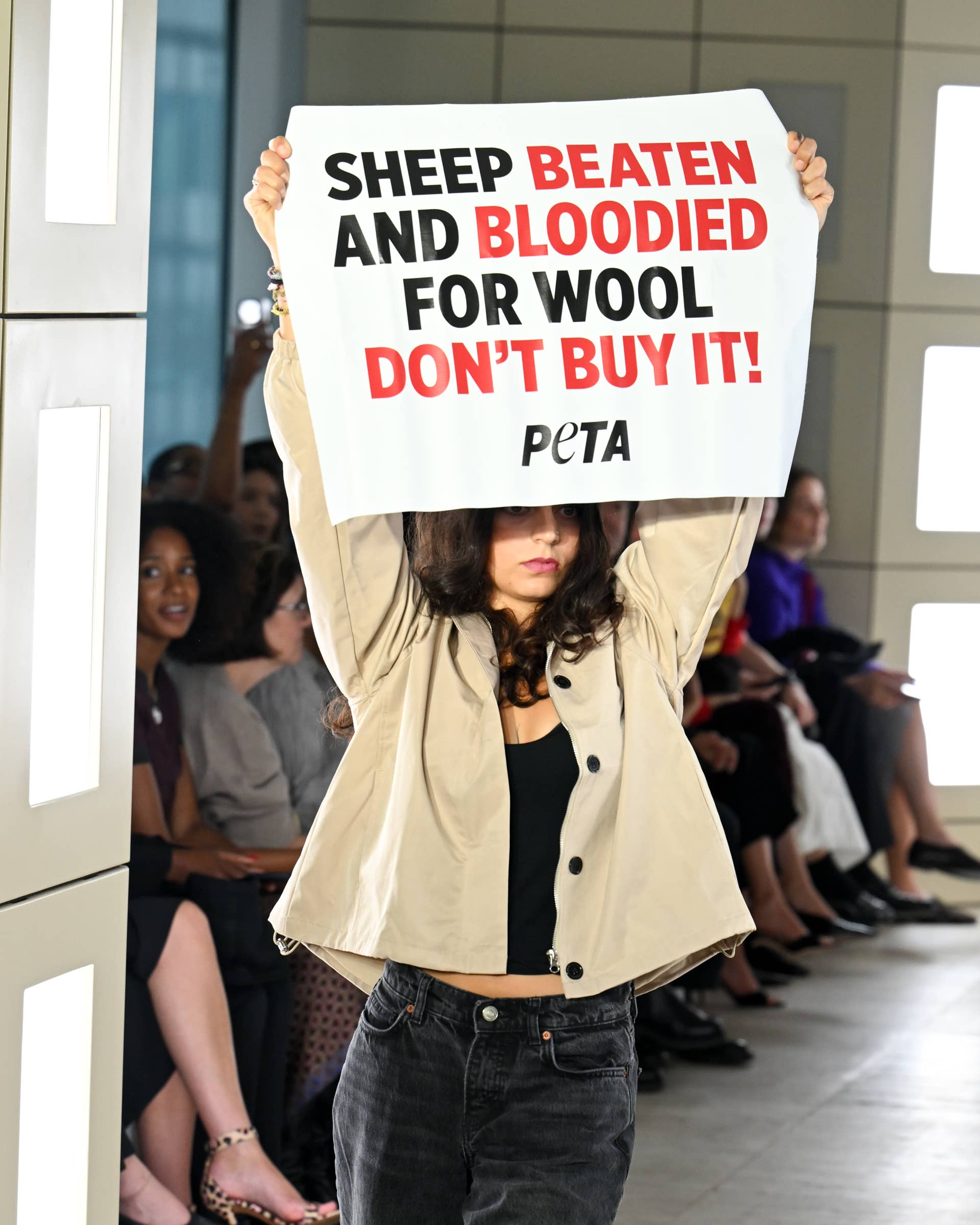
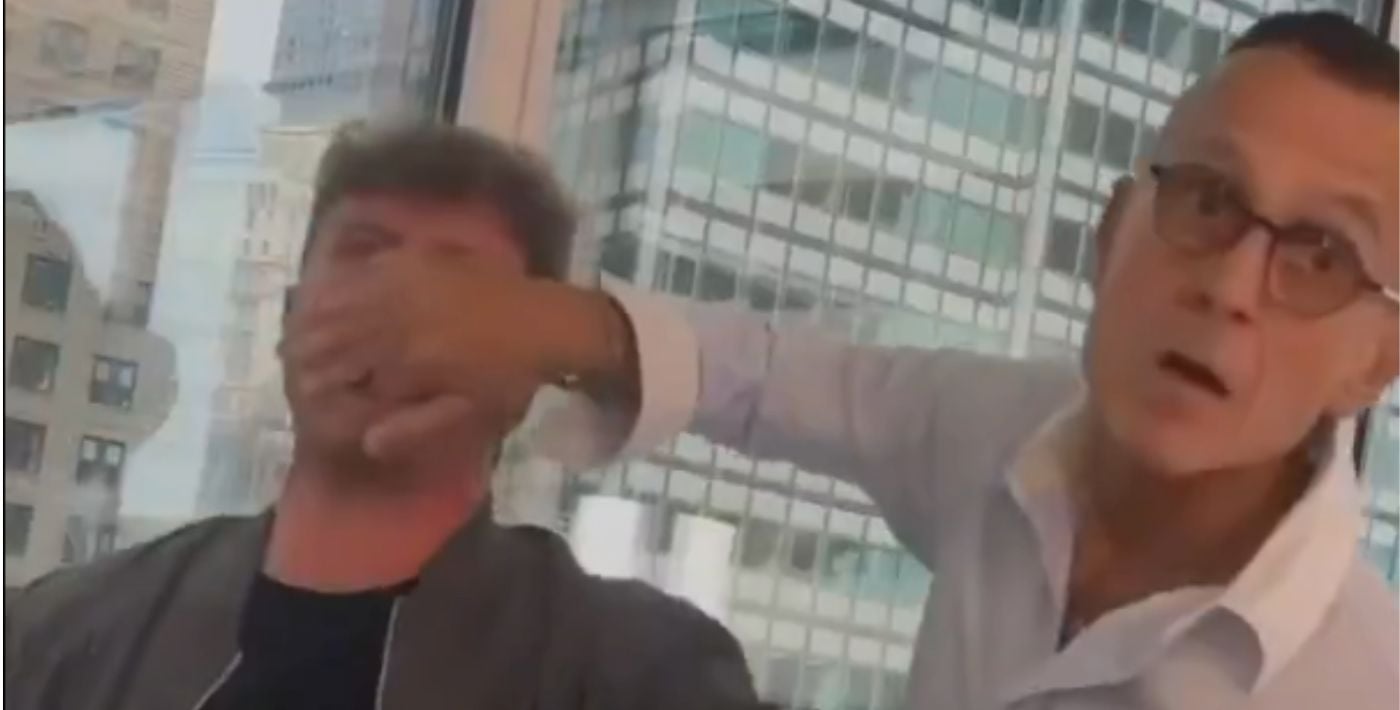
13 September 2026, the COS show at New York Fashion Week. Five PETA supporters walked the runway with signs about bloodied sheep. CFDA chief executive Steven Kolb rose from his seat, tore the signs away, covered one mouth with his hand and pinned another activist to the floor. The models kept walking. On the evening of 18 September he resigned. The night before, the same group had walked H&M’s London runway and security let her finish. This page records two hands: one that covers, one that waves through.
This is one page of the Observer Report. What I keep returning to is the interruption: who walks where they are not meant to, who moves to stop them, and which side the camera is on. Runway interruptions have a long record. What changed this week was the person doing the stopping.
A man who ran the American fashion council for twenty years stood up from the front row and put his hand over a mouth. A phone caught thirty seconds. Four days later the same organisation walked a London runway, and nobody reached out. What I want to record is the distance between those two hands.
The document first. On 13 September, at WSA in New York, at least five PETA supporters walked the COS runway holding signs that read “Sheep beaten and bloodied for wool.” Fashionista’s Steph Saltzman was seated nearby and filmed CFDA chief executive Steven Kolb ripping the signs away, covering two mouths, and using his leg to pin a woman to the floor. Security removed the others. The models kept walking. Sharon Stone and Lupita Nyong’o were in the audience.
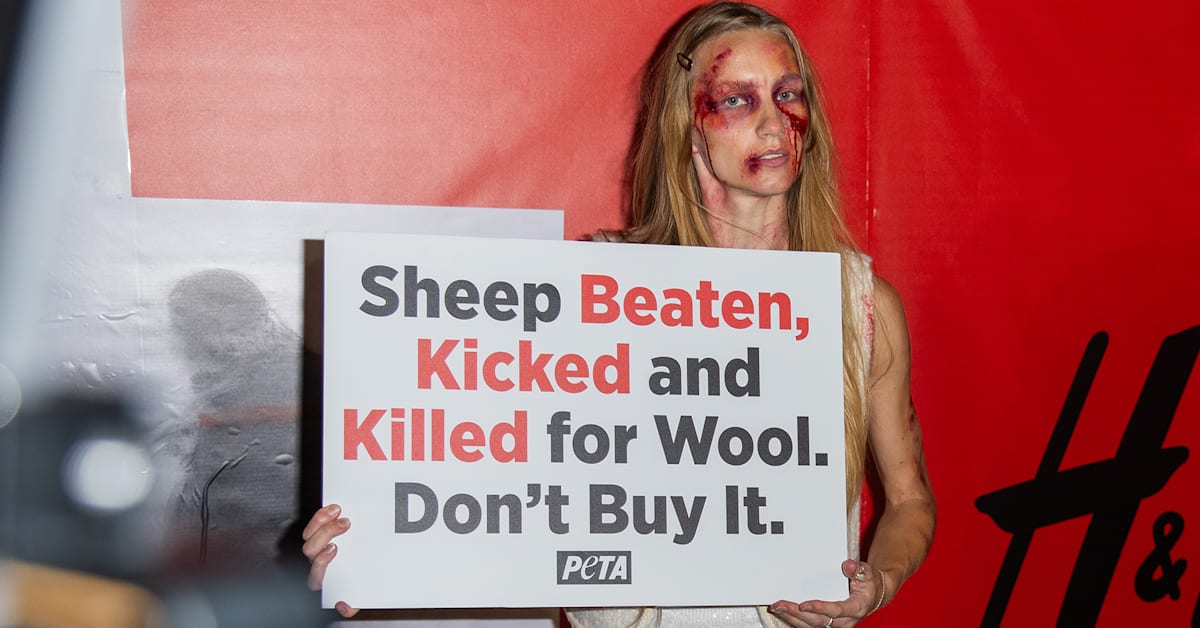
Then the control group. On 17 September the same organisation walked H&M’s runway at Olympia London with a sign reading “Wool is BLOODY cruel.” The Standard reported that security let them finish the full catwalk before escorting them out. Complex called the protester “modelesque”; the comments praised her physique. Further back: last December the CFDA announced a fur ban for New York Fashion Week, and Kolb said consumers were moving away from animal cruelty. Wool was not on the list.
Why today. On 14 September Kolb apologised, took leave, and said “I don’t recognize that person.” PETA first announced a police report, then asked for a meeting to show him footage instead. On the evening of 18 September he announced his resignation on Substack; the statement did not mention the thirty seconds. Milan Fashion Week opens tomorrow. Whether the same group walks again, and what the next hand does, nobody yet knows. The signal converges here.

All nine below are verbatim. One from X, three from Reddit r/vegan (as quoted by Fashion Times, usernames not given), two from the protester’s interviews, one from Kolb’s own Instagram Stories, and two from commentary on Substack and Dissenter.
Oigan, esto es un escándalo Steven Kolb, CEO del Consejo de Diseñadores de Moda Americanos (CFDA), usó fuerza física para silenciar e inmovilizar a activistas de PETA que protestaban en el desfile de COS durante #nyfw
Covering their mouths is so vile. I can’t imagine having someone else’s hands on my face like that. I would not have remained as calm as they did. They are amazing advocates.
He also put his finger in the guy’s mouth. Disgusting man.
It took a lot of restraint to not hit that guy back, and it made the protest that much more effective
She felt like she was being suffocated. She’s using her body to speak up for the sheep that have no say whatsoever. She is now at urgent care.
The violence the CEO of the CFDA showed toward us, in his attempt to silence us, just completely mirrors the violence inherent in the wool industry. What we really want to do is talk to Mr. Kolb.
What happened was completely out of character for me, both personally and as a leader. Frankly, I don’t recognize that person.
Nothing ruins an evening devoted to appearances quite like someone asking where the materials came from.
The difference between accountability and a press release is who you are.
The speakers first. Three positions appear across the nine: the side pinned to the floor, the side that reached out, and the people watching the clip. The protesters talk about suffocation and sheep; Kolb talks about “that person.” Neither side talks about the clothes, or the show.
Then the tone. The r/vegan thread passed six hundred upvotes; the most-replied detail is the hand on the mouth, followed by the protesters not hitting back. Dissenter sits at the other end of the political spectrum and says the same thing: who gets to use force, and who answers for it. This record does not rule yet.
The CFDA says the matter “should have been handled by security”; Kolb says “it wasn’t my place.” The resignation statement speaks of twenty years and a new chapter. H&M’s priority is “the safety of guests, models, and colleagues.”
The threads fix on one gesture: a hand over a mouth. r/vegan calls it “vile,” and notes that not hitting back made the protest more effective. Rebeca Maccise’s word was “silenciar.”
What surfaces is the contrast between two handlings. New York: the hand. London: the wave-through. Complex says London “worked” because the protester looked like a model. Is the interruption being scheduled into the show?
The hardest pushback comes from two directions. The Daily Caller headline says the protester got a “reality check.” Dissenter says an ordinary person would be in handcuffs; he gets a therapist.
Storming a runway is an old technique; PETA has done it for thirty years. What changed is who blocked it. This time the person rising from a seat ran the industry’s council, and a camera was next to him.
A hand over a mouth. The image needs no knowledge of wool supply chains. People are reacting to the gesture; the issue comes second.
“Order at a show is kept by security.” Kolb said so himself. But for thirty seconds the enforcer was the industry, using its hands.
The protesters want to be seen, and to be filmed being restrained. Kolb wants the show to keep walking. Both wishes are granted in the same frame.
In London, security let the protesters finish the catwalk. The interruption becomes a segment the show can hold. Is this the new standard procedure?
If every reach is filmed, will people in the front row learn not to move? Will “not reacting” become a trained skill?
These six themes are the fixed frames INCODER holds up to every cultural signal it screens, closer to a pair of glasses than a checklist. Put them on, and the same event grows different meanings.
Thirty seconds of video outweighed twenty years of tenure. One clip’s signal can cancel a whole résumé. Is that information overload, or information finally clear enough?
Kolb said “I don’t recognize that person.” The man in the video and the man he knows himself to be split apart. Does the filmed version count for more than the remembered one?
The sign torn away, the voice covered, the body still on the runway. With text and sound gone, only posture remains. Is the silent body the hardest language to block?
PETA has survived thirty years by storming stages; every removal is material. Does an organisation working at the edge of the system already budget for being restrained?
No outlet broke it first; an editor seated nearby filmed it on a phone. The event’s first record came from the audience. Is whoever is in the room the wire service now?
The models kept walking; where did the audience look? The show designed one sightline and the protesters opened another beside it. In the seconds attention was taken, did the show still exist?
The assumption first. A fashion show rests on one premise: what happens on the stage was designed. Protest is the exception, and security exists to clear it. In New York that premise held for thirty seconds. Someone without a security badge reached out; the exception was not cleared, and became the only image the show left behind.
Four days later London tried another method. Security stayed still, the protester finished the walk, and the comments praised her body. The exception was placed inside the show, and the show absorbed it. Two handlings: one cost a chief executive, the other cost the protest its edge. Which one will the next show rehearse? This record has no answer yet.
This report records the state of observation at this moment.
Whether the PETA–Kolb meeting took place is not yet public; the CFDA’s successor has not been named; the Milan and Paris shows have not begun. What is written here may be strengthened, or overturned.
Observation continues.