
What Changed?
The removal produced a cascade. One support act was cut; the other four left the same day of their own accord. Punishment used to be point-to-point. This time it spread down an entire bill.
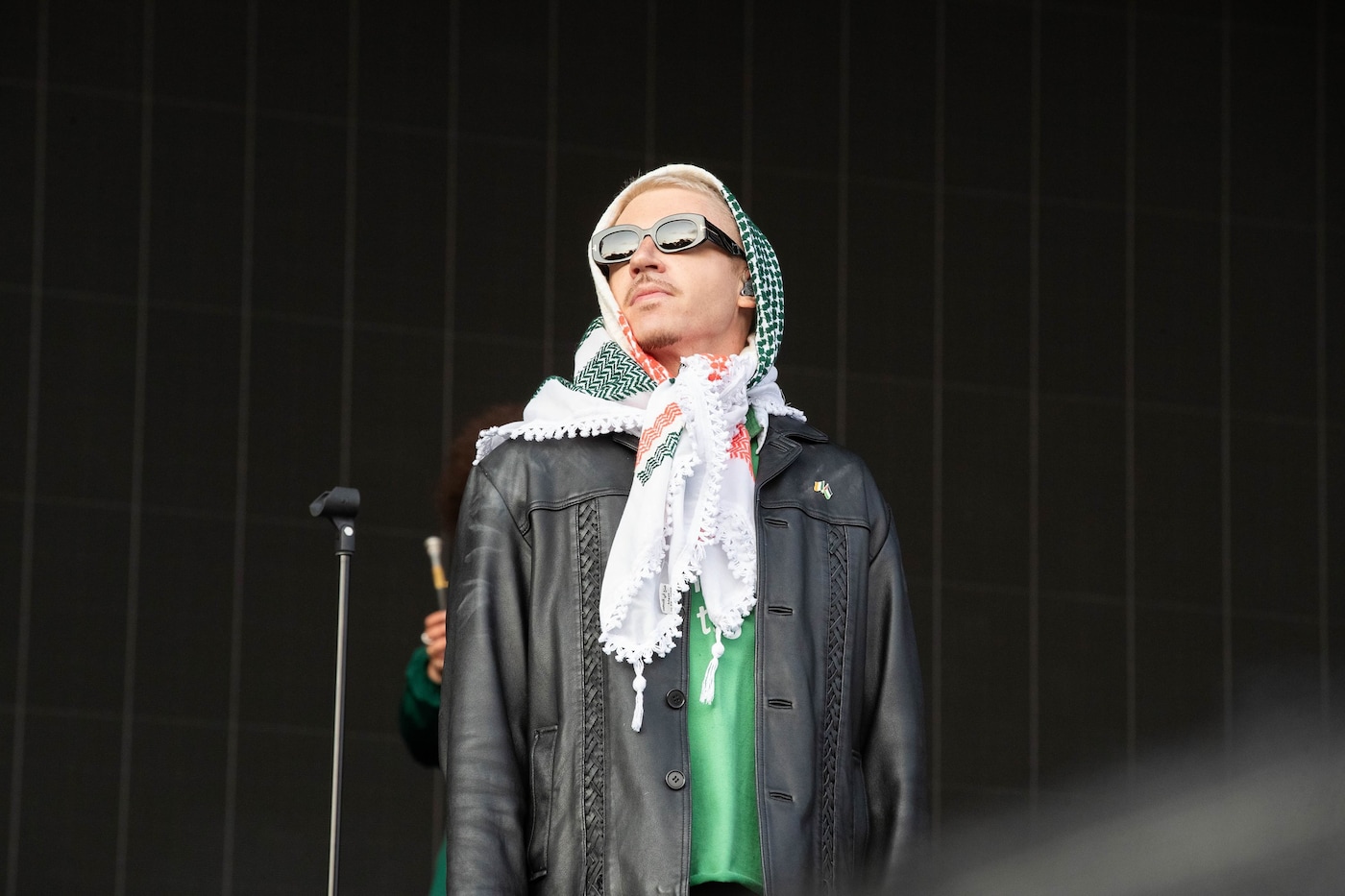
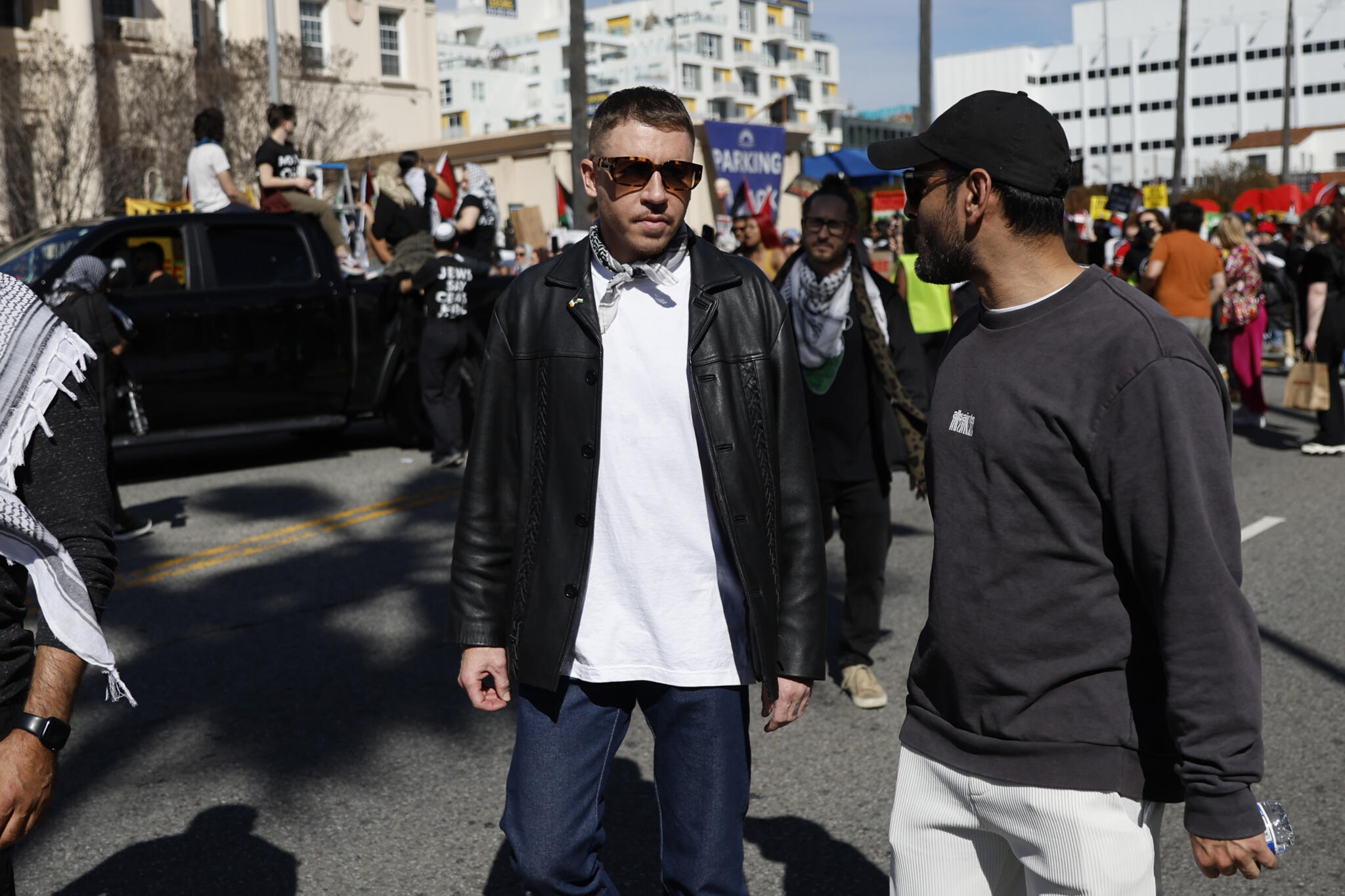
4 September 2026, MetLife Stadium, New Jersey. Opening for Ed Sheeran, Macklemore said “Free Palestine” to 80,000 people before playing “Hind’s Hall”. Ten days later he was off the entire North American tour; the person he named was Gillette Stadium owner Robert Kraft. On 15 September Sheeran posted that the decision was the promoter’s. The same day, all four remaining support acts withdrew. This page records the structure of the thing: who, in the end, governs a sentence spoken from a stage.
This is one page of the observer report. What I watch, over the long run, is a single recurring scene: someone says a sentence from a stage that was not on the setlist, and the whole system starts redistributing responsibility. Radio stations, sponsors, stadiums, promoters take turns explaining that the decision was someone else’s. The scene replays every few years; only the medium changes.
This week’s sample is Macklemore. He said three words at MetLife and ten days later was off the whole tour. What happened next is worth recording more than the removal itself: the headliner said it was the promoter’s call, the stadium owner said it was a matter of a line being crossed, four support acts walked out, and then everyone started comparing donations. What I want on file is the shape of that chain.
First, the document. On 16 September Dazed ran a column by James Greig, “Ed Sheeran, Macklemore and the new politics of Palestine solidarity”. He lays out ten days of events and offers a judgement: the episode reads as evidence that the culture has already turned. His comparison is Kneecap, dropped from several festivals last year with no cascade of withdrawals on this scale.
Second, the counter-document. Robert Kraft’s statement of 14 September says Gillette Stadium does “not provide a platform for hate speech” and cites a “broader history of antisemitic rhetoric and imagery”. That most likely refers to a 2014 stage costume read as a Jewish caricature, for which Macklemore apologised at the time. Pink’s post of 11 September refers to the same episode. Both documents say the objection was never to the slogan itself.
Why today. On the afternoon of 16 September Macklemore announced he would give his entire net tour earnings, one million dollars, to six Palestinian relief organisations, and invited Kraft to match. Kraft replied within hours: Ed Sheeran had already asked him for two million. At that moment the argument switched from who may take the stage to who gives more. Wait a week to file this and the next round of statements will bury the switch.


All nine are reproduced verbatim, unedited. Four come from the four parties: Macklemore, Kraft, Sheeran, Pink. Two come from support acts who withdrew. One comes from the organisation that petitioned for the removal. The last two are the most widely shared jokes on X, one from each side.
Ed also told me that Kraft had rallied some of the other stadium owners and collectively they gave him an ultimatum: if Macklemore stays on the tour, you will not be allowed to play in our venues.
Gillette Stadium has a longstanding commitment to providing a welcoming environment for all guests and ensuring that events held at our venue do not provide a platform for hate speech.
There is a reason I do not use my professional platform for politics - my audience includes young people, often children, of all backgrounds. Those who come to my shows do not expect a political forum.
You don’t have to agree with one thing Israel’s government does to not want the Jewish family two rows down from you to be scared or targeted at a concert. That’s the only thing I’m asking anybody for.
Money doesn’t give you the right to own the conversation. Nobody’s bank balance should decide who gets to speak or which suffering we’re allowed to acknowledge.
But as Irish people we know all too well about genocide, forced famine and violent occupation.
Freedom of speech is not freedom from responsibility. Anyone who chooses to turn an 80,000-person concert into a vehicle for advancing a one-sided political agenda must stand behind that choice.
rough time to be a fan of both Ed Sheeran and Hamas
Ed Sheeran be like I’m in love with the shape of Netanyahu
First, the four positions. Macklemore points at Kraft; Kraft grounds his reasons in hate speech and the 2014 costume; Sheeran places the decision with the promoter; the promoter, Messina, says it was notified by multiple venues. Each party locates the decision somewhere outside itself.
Then the people who left. Beoga and Aaron Rowe cite Irish history; Lukas Graham talk about money and the right to speak; FINNEAS wrote three lines. All four used the same format: a Notes-app screenshot posted to Instagram. The format itself may be one of this week’s signals.
On the venue and promoter side the language is venue policy. Kraft says Gillette does not platform hate speech; Messina says multiple venues refused the show, which would have cancelled the tour. The decision is described as a rule executing itself; nobody claims to have made it.
The community side is nearly one-directional. Dazed’s figures: Macklemore up a million followers, Sheeran down close to 100,000. Each support act’s statement out-liked Sheeran’s defence. The memes moved from the man removed to the man who declined to take a side.
The emerging reading is Dazed’s: the power to discipline a public figure still exists, but discipline now draws a backlash of its own. The cascade turned one removal into a collective statement. When Kneecap was dropped last year, that did not happen.
The hardest counter-voices are the IAC and Pink. The first argues that choosing to turn an 80,000-person concert into a political vehicle carries consequences. The second is narrower: she asked no one to be silenced, only that Jewish families in the crowd not be afraid. Both locate the problem in venue and audience.
The removal produced a cascade. One support act was cut; the other four left the same day of their own accord. Punishment used to be point-to-point. This time it spread down an entire bill.
Because everyone with power said someone else decided. The headliner pointed to the promoter, the promoter to the venues, the venue owner to a line. Responsibility went once around the chain and never landed.
The assumption that words spoken from a stage belong to the performer. This week’s facts read differently: they belong to whoever owns the building, provided he can rally the owners of other buildings.
The wish for a position that requires no position. Sheeran’s statement spends most of its length explaining why he does not speak. That used to be the default; now it takes six screenshots to apply for.
The statement is becoming a collective act. Four acts withdrew within hours using the same format on the same platform. Withdrawal itself became a template that can be copied.
At the next tour signing, does a venue’s veto over support-act speech go into the contract? If so, an unscripted sentence onstage acquires a price, set in advance.
These six themes are the frames INCODER checks every cultural signal against. They work like a pair of glasses: put them on and the same event grows a different meaning.
The main documents in circulation over ten days were almost all Notes-app screenshots. No press conference, no press release, just black text on a white phone note. Could this become the only format in which a public figure is trusted to speak?
Sheeran says he has views, he just keeps them private. Does a private position still exist when followers are leaving in the tens of thousands? Could silence be read as a quantifiable identity?
Three words, a flag, footage on a screen. Both sides agree the words may be said; the dispute is about which venue, which audience, which images. Is the meaning of a symbol increasingly set by the room it is used in?
Beoga and Rowe reached for Irish history as their reason. That “we have been here too” connection let mid-sized bands out-like the headliner while walking off a job. Was the margin the most effective speaking position this week?
Four acts with no shared management did the same thing on the same day. The network made a cascade cheaper and faster. Next time, could the cascade start before the removal does?
Follower counts were treated as public opinion. Up a million, down a hundred thousand: the press wrote conclusions from those two numbers. Could the flow of attention slowly replace the vote as the way cultural disputes are settled?
Lay the assumption out. Concert logic has always presumed that whoever holds the microphone owns the words. Sheeran’s statement even says support acts choose their own setlist. This week exposed another layer: the setlist may be chosen freely, but the venue can veto it afterwards, and the veto can be coordinated among a handful of owners.
Every link in the chain says the decision sits elsewhere. The sentence leaves the stage, passes through headliner, promoter and venue, and comes to rest in a venue policy. Then four acts pick it back up by leaving, and Macklemore pushes it forward with a million dollars. Where it finally comes to rest, this record has no answer yet.
This report records the state of observation at this moment.
The tour resumes in Philadelphia on 19 September; the two Gillette dates have not been played; whether Kraft’s two million arrives, and whether anyone else withdraws, has not happened yet. The judgements here may be reinforced, or overturned.
Observation continues.