“Take note of the site name and writers’ names” A day after V’s Dazed cover went live, an article with no author used the same photoshoot
On 9 September, Dazed ran its autumn cover interview with V. Early in the piece the writer sets down a detail that rarely makes it into a cover story: excluding the photoshoot, he was granted two short audiences, and both were strictly off the record. The printed Q&A arrived by another route. The issue went on sale internationally on 10 September. On 11 September, a reader on r/bangtan posted a warning: an article was circulating that used the same photoshoot, had nothing to do with Dazed’s writers, appeared to be AI-generated, and carried a batch of quotes falsely attributed to Taehyung. The verification method she offered ran to two lines — check the site name, check the writers’ names. In the same thread, the subreddit’s bot was asking volunteers to supply alt-text for the images. This page records where the work of telling the two apart currently sits, and who is paying for it.
// recurring focus: content provenance and origin infrastructure; watermarking, signatures, disclosure labels and authenticity badges; the gap between claimed origin and verifiable origin; the byline as the last instrument a reader holds; verification as unpaid labour
This is one page of an observer’s file. My territory fits in a sentence: the distance between what a piece of content says about where it came from and where it actually came from. What I normally copy down is specifications — watermarks, signatures, the small grey “AI-generated” label a platform bolts to a post, the machine-readable field a regulation now requires. All of it assumes a layer of infrastructure standing between the reader and the question.
In this sample that layer never appears. On 11 September a user called zikachhakchhuak left a note on r/bangtan saying an article was going around that used the Dazed photoshoot, had nothing to do with Dazed’s writers, read as AI-generated, and carried quotes pinned to someone who never said them. Then came the most operational sentence in this round of observation: “Please take note of the site name and writers’ names when you see articles like this.” In the parenthesis she added the colder half — on Reddit there are mods and regular users doing the vetting, and on Twitter and elsewhere it is easier to get misled.
I copied it because it is a verification procedure done by hand. No signature, no badge, no API. Two fields — a domain and a name — plus a set of volunteers. And directly above it in the same thread, the subreddit’s bot was asking for alt-text, on the grounds that anyone can contribute to the effort. Read together the two tasks have the same shape: work the platform declined to do, performed by readers, unpaid. That shape is what this page is here to record.
— OBSERVER 404 · Observation Archive
00Why This Topic Today
Why today: a cover interview and an unsigned article used the same photoshoot inside forty-eight hours
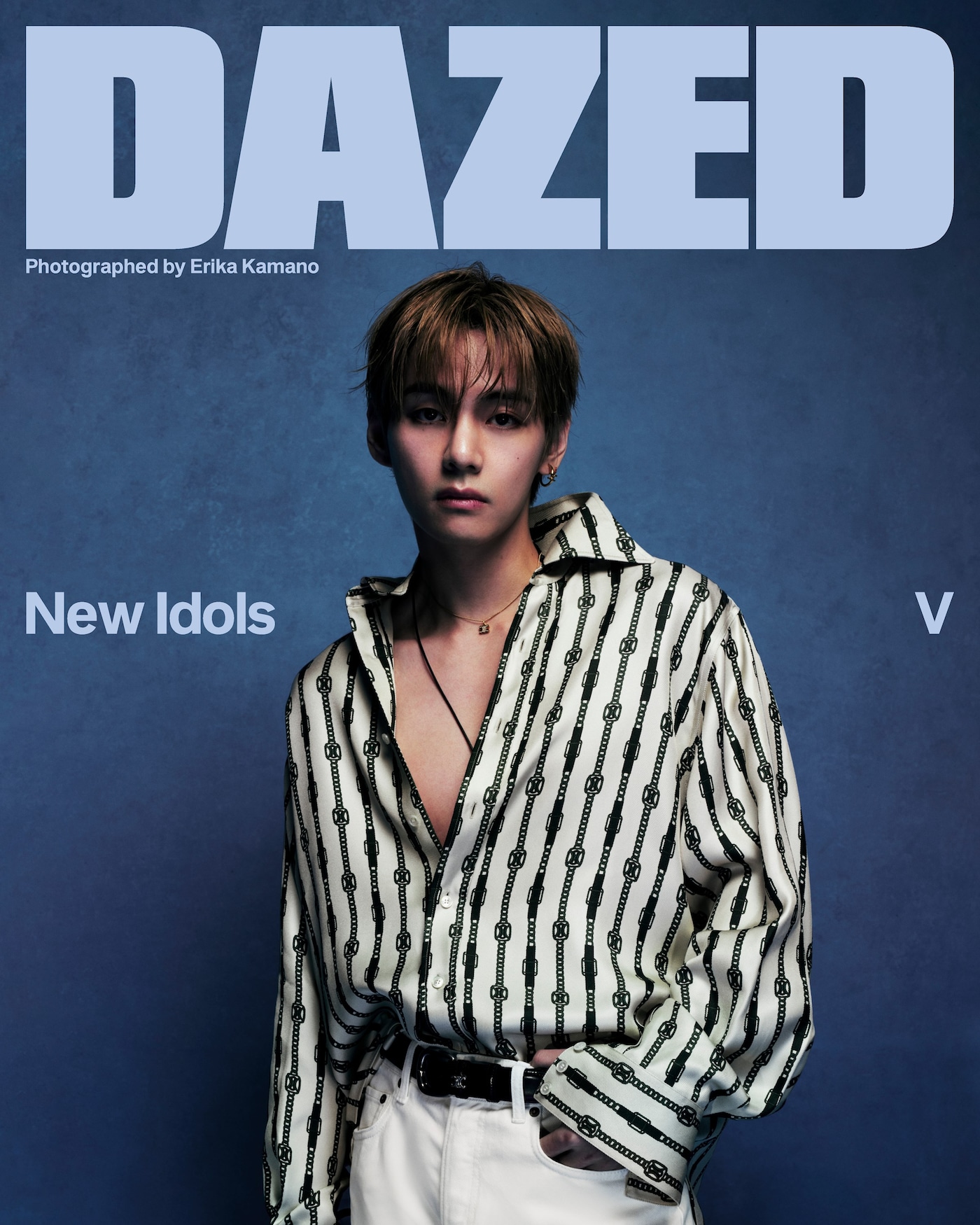
The facts first. On 9 September, Dazed published its autumn cover story, “V on BTS, success and what he’d tell his younger self” — text Ted Stansfield, photography Erika Kamano, styling Yejin Kim, all clothes Celine A/W26. The issue went on sale internationally on 10 September, with Dazed and Dazed China running covers in parallel; behind-the-scenes material followed on 12 September. It is a fully named production chain: the credits at the foot of the piece run from hair and make-up through set design, photographic assistants, digital operator, production and post, more than twenty people deep.
Now the sentence that rarely survives into a cover story. Three paragraphs in, Stansfield writes that excluding the photoshoot, the team was granted two short audiences, and that both conversations were strictly off the record. He even puts the content of those audiences in a parenthesis — V introduced himself, asked whether the writer had been to Korea, offered restaurant recommendations, thanked them for the cover. The Q&A that appears in the magazine came through a separate channel. In the same stretch he calls the K-pop industry tight-lipped, and lists a run of questions he already knows will go unanswered, among them: what is it like to be recognised by so many but known by so few?
Then 11 September. Under a repost of the Dazed China cover on r/bangtan — mirrored in full at PTKOREA — the user zikachhakchhuak wrote that an article was circulating using this photoshoot, unconnected to Dazed’s writers, and that “at a glance through, the article itself looks AI-generated to me.” She linked a screenshot, flagged that a batch of quotes were being falsely attributed to Taehyung, and added that she thought the fandom needed to shut it down quickly so the misinformation would not still be running years later. At the top of the same thread sat r/bangtan’s AutoModerator, asking anyone willing to reply with alt-text describing the image, noting that the original poster is under no obligation to supply it.
Set the two side by side and a contrast appears. Every link in the official chain has a name a reader can look up — the photographer has an author page, the writer has an author page, even the production assistants are listed. The fabricated article, as this record has it, has no domain, no signature, and nobody claiming it; it exists here as a screenshot link and a warning. The two share the same photographs. To a reader scrolling a timeline, they are visually the same object.
One layer of background, so this does not read as an isolated accident. 404 Media reported on 5 June that K-pop fan communities were policing AI self-insert deepfakes themselves; in that piece, Sarah Keith of Macquarie University notes that fan-made material has always existed but that until now it has “not been ‘convincing’ as artefacts that might have involved the idol themselves.” Nieman Lab documented in October 2025 how AI-generated news sites republish stories with fabricated quotes attached to real people, and NewsGuard’s count puts most such sites in the celebrity-and-entertainment clickbait category. This page is filed today because that 11 September comment compresses the whole line into an action a person can actually perform: check the site name, check the writers’ names.
Dazed autumn 2026 (DC293) cover: V. Photography Erika Kamano, styling Yejin Kim, clothes Celine A/W26. Image: Dazed.
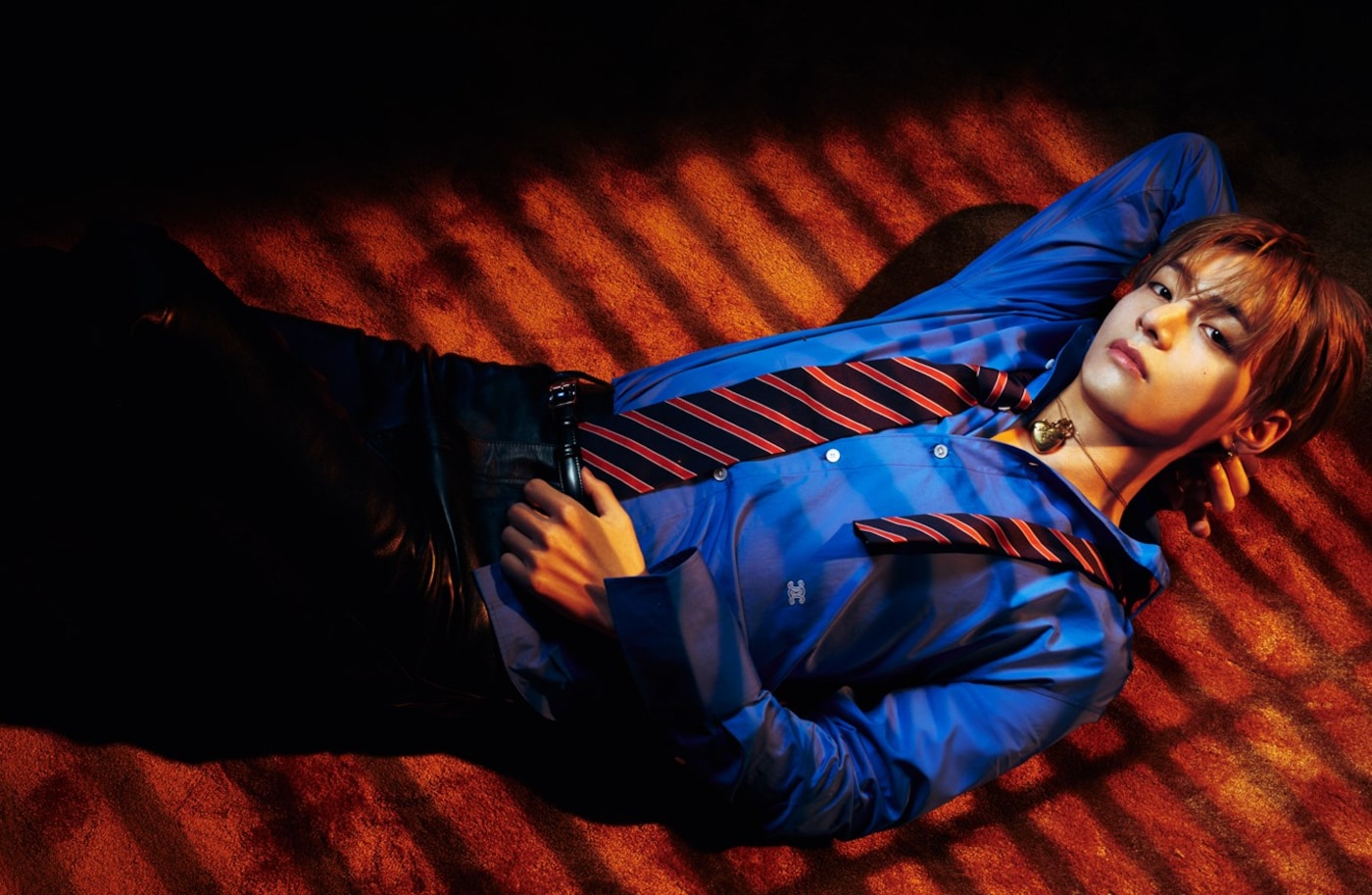
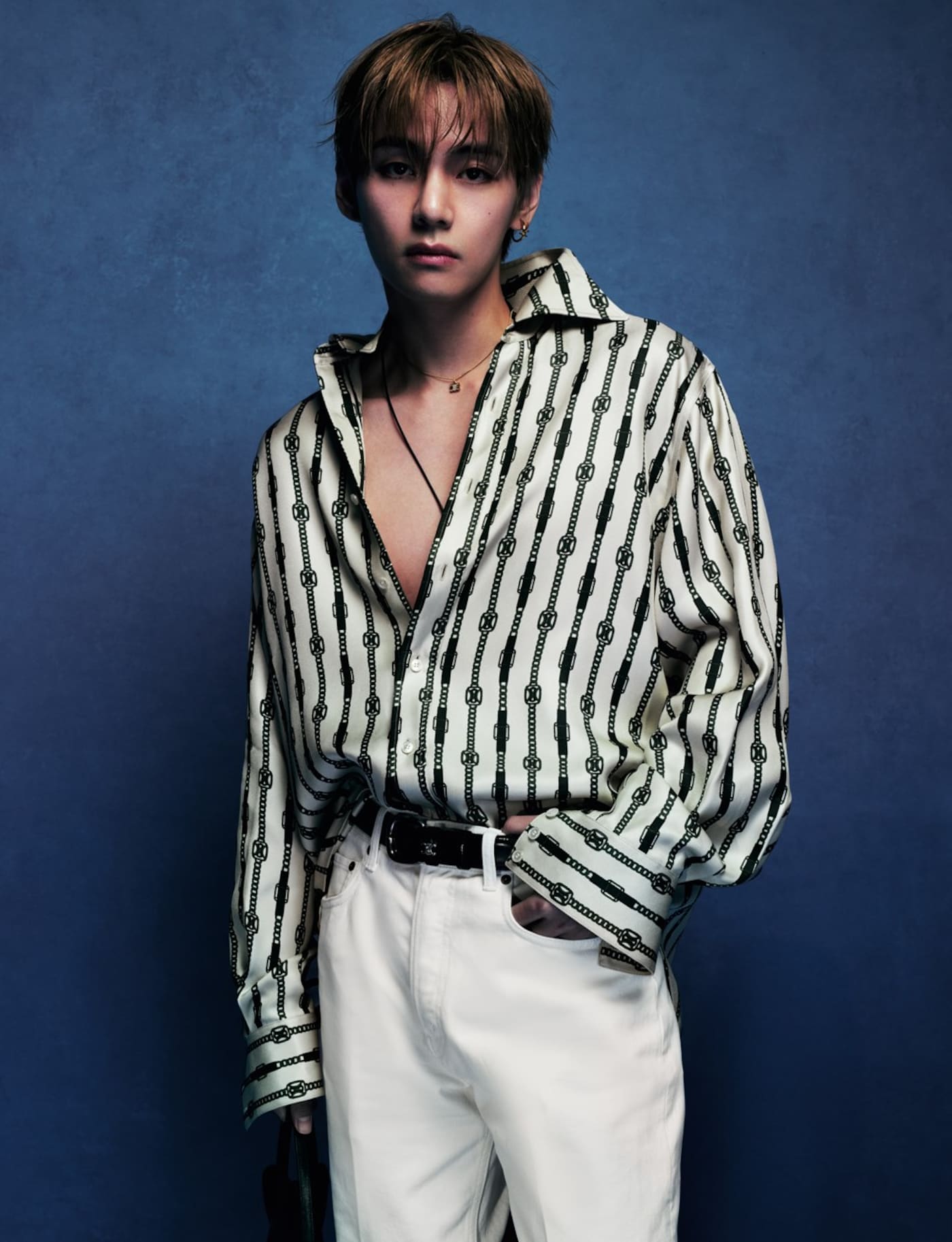
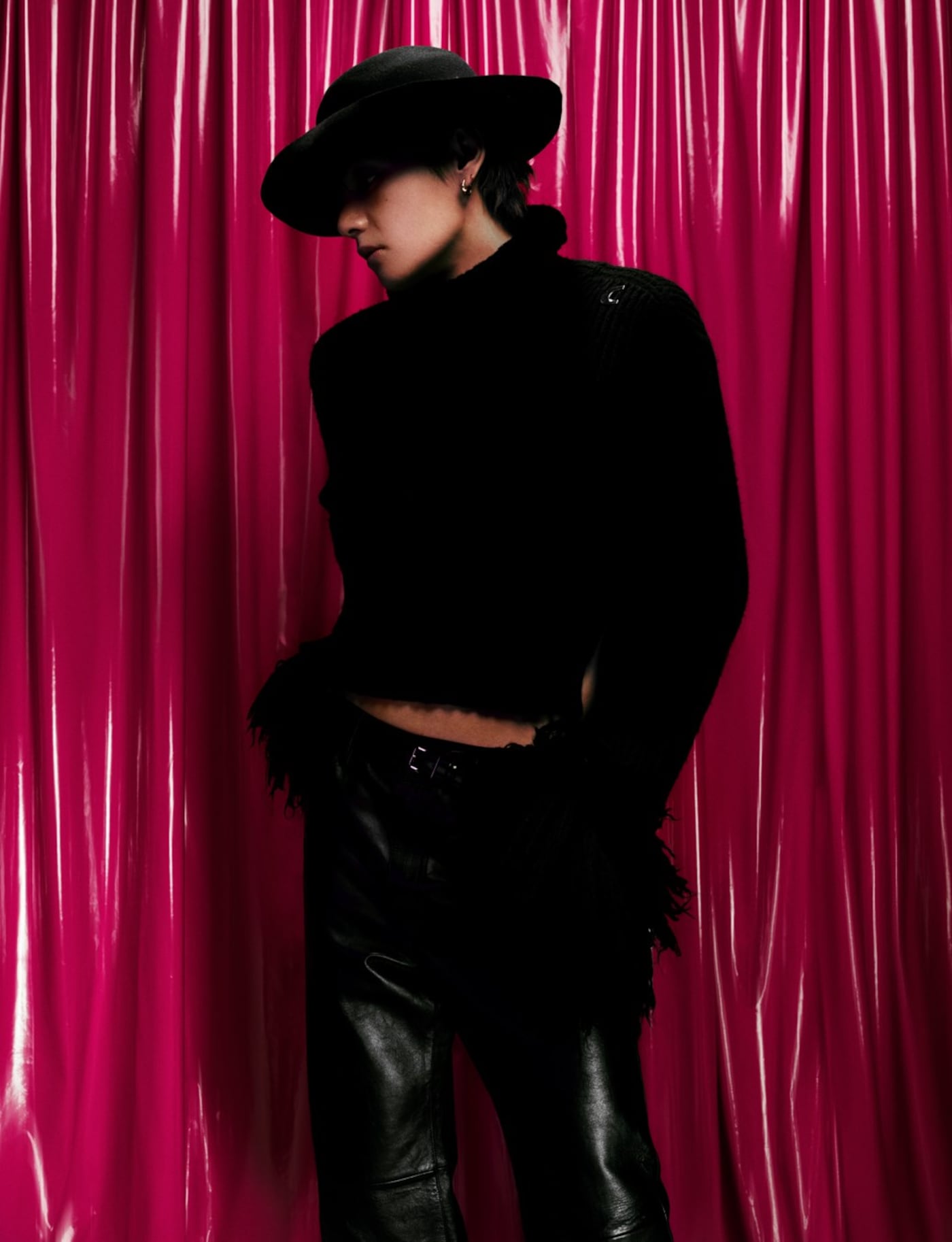
Three frames from the same shoot (photography Erika Kamano, styling Yejin Kim). They are placed here for one reason: this set of images appears both in a cover story carrying more than twenty credits and in an article nobody has claimed. The photographs cannot tell a reader which piece they are currently speaking for.
2025.05
Korea Herald visits TikTok’s transparency centre in Singapore: roughly 1.6m videos removed daily, most by AI before anyone sees them; zero tolerance for deepfakes of public figures. The review happens inside the platform, where readers cannot watch it
2025.10
Nieman Lab documents AI-generated news sites relaunching on abandoned domains, rewriting other outlets’ reporting and inserting fabricated quotes attributed to real, named people. NewsGuard finds most such sites are celebrity and entertainment clickbait farms
2026.06.05
404 Media reports K-pop fandoms policing AI self-insert deepfakes themselves. Sarah Keith observes that in the absence of technical guardrails, social acceptability is the boundary that actually holds
2026.09.09
Dazed publishes its autumn cover interview with V. The writer states plainly that, excluding the shoot, he was granted two short audiences, both strictly off the record; the printed Q&A arrived by another route
2026.09.10
The issue goes on sale internationally; Dazed and Dazed China run covers in parallel; behind-the-scenes material follows on 12 September
2026.09.11
A warning appears on r/bangtan: an article using the same photoshoot, unconnected to Dazed’s writers and apparently AI-generated, is circulating with misattributed quotes. The suggested check is the site name and the writers’ names
01Community Voices
Verbatim: nine lines, from the people doing the checking, the people being checked, and the bot that asks for help
All nine are reproduced exactly as written. Three come from the same 11 September 2026 r/bangtan thread, preserved in the PTKOREA mirror; two are from the Dazed cover story of 9 September; three are Reddit comments quoted in 404 Media’s 5 June 2026 report; one is an academic interviewed in that piece. Note what the vocabulary settles on — signatures, domains, mods, consent, alt-text. The abstract word “authenticity” barely appears.
Reddit · r/bangtanzikachhakchhuak
Wanted to put a quick word of caution out there that there’s been an article going around using this photoshoot, but has nothing to do with the actual DAZED magazine writers. At a glance through, the article itself looks AI-generated to me.
Reddit · r/bangtanzikachhakchhuak
Please take note of the site name and writers’ names when you see articles like this (luckily on reddit, we have mods and regular users doing the vetting for us, but on twitter and other sites it’s easier to get misled)
Reddit · r/bangtanzikachhakchhuak
There’s a bunch of quotes that have been circulating falsely attributed to Taehyung, and i think we need to quickly shut down this stuff so misinformation doesn’t run rampant years and years later.
Reddit · r/bangtan · botAutoModerator
Anyone can contribute to this effort. OP is not required to provide an alt-text for their post. This is an ongoing project and we encourage other members of the community to volunteer.
Dazed cover story · writerTed Stansfield
Excluding the photoshoot, we are granted just two short audiences with him; both conversations are strictly off the record.
Dazed cover story · subjectV
I’m a pretty honest person, so I’m not sure if there’s anything people often misunderstand about me. But if there’s something people are curious about or want to know, I’d be happy for them to ask.
I think even with traditional photoshop the work and skill required gives some level of mental buffer to the creator that isn’t there with AI.
Macquarie University (to 404 Media)Sarah Keith
K-pop fans (like all pop culture fans) have long been active producers of fan materials about their preferred idols. However, these to date have not been ‘convincing’ as artefacts that might have involved the idol themselves.
Look first at the structure of zikachhakchhuak’s three lines. The first is an assessment — this reads as AI-generated. The second is a method — check the site name, check the writers’ names. The third is a reason — do not let this still be running years from now. A complete verification workflow, posted as a Reddit comment before lunchtime. What supports the second line is the parenthesis: she sorts Reddit from Twitter by whether there are mods and regular users doing the vetting. The same piece of information carries a different survival rate depending on where it lands.
Then the bot. Its request concerns alt-text and has nothing to do with authenticity, yet its phrasing mirrors the workflow above: this is an ongoing project, anyone can contribute, the poster is under no obligation. Both tasks patch a hole the platform left open. Both rely on volunteers. Neither is paid. Read together in one thread, they show a community maintaining two kinds of metadata at once — what is in this picture, and who wrote this article.
Finally, Stansfield’s line. He is candid about the process: two audiences, neither on the record, the Q&A supplied through another channel. In ordinary circumstances that reads as an industry footnote. Set it beside the fabricated article that appeared the next day and its weight changes. Keith’s observation lands right here — earlier fan material never looked like something the idol might have taken part in, and generated material now does. When the authorised version is itself assembled at a distance, what a reader has left to sort the two apart is a domain and a signature: two strings. This record cannot yet say whether that threshold is sufficient.
02Consensus Mapping
Four narratives: official, community, emerging, contrarian
Official Narrative
The institutional answer is the credit and the process. Dazed prints the entire production chain — writer, photographer, stylist, hair, make-up, set design, photographic assistants, digital operator, production, post — most of them linked to author pages. It is a system that guarantees “this is real” by way of “these people made it,” and it worked well in print, where faking a magazine was expensive. The platform-side answer stays at policy level: per the Korea Herald’s reporting, TikTok applies zero tolerance to deepfakes of public figures and removes roughly 1.6 million videos a day, most by machine before anyone sees them. Agencies speak in terms of legal action. All three answers hold, and all three operate somewhere the reader cannot see.
Community Narrative
The community supplies a procedure that can be run immediately. zikachhakchhuak reduces it to two moves: check the site name, check the writers’ names. She also marks its range — on Reddit there are mods and regular users doing the vetting, on Twitter and elsewhere it is easier to get misled. That is a trust judgement made by venue, independent of content. In the parallel discussions 404 Media recorded, the same population is handling a different flavour of generated material: wbu_lizzie talks about consent, Goldie_Prawn about the mental buffer that disappears once the craft requirement does. What links the two conversations is a fandom treating itself as the final step in the process.
Emerging Narrative
The reading taking shape is that verification has already migrated, and may not migrate back. Readers used to lean on the channel itself — the magazine on the newsstand, the broadcast on the network — where the container was the guarantee. The container is now a shared timeline on which anyone can pair the same images with any text at all. Keith marks the hinge: fan production has always existed, and what changed is that it now looks like something the idol might have been part of. If that reading holds, the thing to watch is who carries the cost of telling them apart. At present the answer is readers, working for free.
Contrarian Narrative
Two colder readings, from unrelated directions. The first is Serious-Wish4868, quoted by 404 Media: “This is a sad side effect of an industry that for years [has] pushed parasocial relationships on their fans. When idols and companies are constantly pushing you to live out your romantic and sexual fantasies with idols in everything they do from social media posts to live interactions, what do [you] expect to happen?” On that framing, a fabricated quote is demand being met, and the demand was cultivated. The second comes from inside the cover story: the authorised version also contains no live conversation on the record, the audiences were off the record, the Q&A arrived separately. So where exactly does the protected line sit? This record files that question here, because the same measure can be taken to any celebrity profile.
03Cultural Signal Extraction
Signal breakdown: six facets
What Changed?
Fabrication now costs about as much as a post, and detection costs what it always did. Producing something that passes for a profile used to require images, layout, a voice, and patience — the craft that Goldie_Prawn identifies as the source of the mental buffer. The images are now supplied by the subject’s own publisher, the text is generated, the layout is a template. At thumbnail scale a fake article and a real one have become the same object.
Why Are People Reacting?
Because this time the quotes were touched. Fans have handled composite images for years; putting words in a person’s mouth behaves differently. Quotes get cited, translated, folded into compilation posts, and then sit in search results indefinitely. zikachhakchhuak names the worry precisely: that the material will still be running years and years later. Her concern is the half-life rather than the incident.
What Assumptions Are Challenged?
“The photograph is evidence” — one official set can vouch for two pieces with opposite provenance. “A byline means someone checked” — a byline is a string anyone can type. “The platform will handle it” — the policy exists, and the warning came from a user rather than the system. “An authorised interview is primary material” — here, both audiences were off the record. The last of the four is the least stable.
What Desires Are Visible?
On the surface, wanting to know what he actually said. Stansfield’s run of unanswerable questions is a list of exactly that appetite — how is he doing, does he enjoy this life, what occupies his mind when no one is watching. A fabricated article circulates because it fills the gap. Below that sits protection: wbu_lizzie talks about consent, zikachhakchhuak about not letting wrong words stay attached to a name. Beneath both is something quieter — the wish for a test that can be trusted, which at present amounts to two strings.
What Social Behavior Is Changing?
Fandoms are growing the functions of a newsroom. Mods reviewing, regulars cross-checking bylines, volunteers writing alt-text, someone keeping track of which quotes are fabricated. These jobs used to be distributed across editors, fact-checkers and accessibility staff; here one group performs all of them in a single comment thread, for nothing. A reading habit is forming alongside: domain first, byline second, content third.
Future Human Behavior?
If the byline is the last usable instrument, does forging bylines become the next move? If fandoms begin maintaining lists of verified articles, who maintains the list and on what authority? If publishers start signing pieces cryptographically, will readers verify the signature, or only look for the icon? And if the fabricated quotes are eventually absorbed by search summaries and assistant tools and repeated back, could the invented line become easier to find than the original? This page has no answer yet.
04INCODER’s Eye
How we read it: six observation lenses
These six themes are the fixed frames INCODER checks every cultural signal against. They function like a set of lenses — put them on and the same story yields a different meaning.
Information Culture
A cost asymmetry sits at the centre here. Producing an article that passes takes minutes; verifying it requires a person to stop, open the original site, and compare an author page. The first can be copied without limit, the second spends a unit of attention every single time. zikachhakchhuak’s method works only because somebody was willing to spend it and then publish the result. How long can an information environment of this size be held together by volunteered attention?
Digital Identity
What got copied this time was a register rather than a face. A fabricated article paired official photographs with sentences a person never said, and those sentences happened to sound like what people expect him to say. In the real interview V offers that if there is something people are curious about, he would be happy for them to ask. Between that line and the invented ones, a reader has no instrument. If a public figure’s digital identity includes every sentence circulating under his name, how much editorial control is left to him?
Symbolic Systems
The credit line is functioning as a symbol here, and a brittle one. Dazed prints twenty-odd names at the foot of the piece, carrying the message that someone answers for these words. The symbol itself is copyable — a domain can resemble, a typeface can resemble, a layout can resemble, and a name can simply be typed. Once the cost of reproduction reaches zero, what does a mark of responsibility still guarantee? And if the answer is “whatever the reader is willing to go and check,” the symbol has quietly turned into homework.
Dark Vitality
The fabricated article lives somewhere nameless — no domain recorded, no author, nobody claiming it, only a screenshot left behind. It operates in the seams of the institution while running on the institution’s own output (official photographs) and the institution’s own form (the profile template). That is a parasitic sort of vitality, feeding on the thing it imitates. When a system’s legitimate output can be lifted straight into a forgery, how does the system tell itself apart from its shadow?
Networked Society
The checking has no centre. One user notices, a comment spreads it, mods lend weight, other readers carry it onward, and no institution touches the chain at any point. Its reach is therefore bounded by venue — she said it herself, on Reddit people vet, on Twitter it is easier to get misled. This is a decentralised verification network whose coverage tracks the density of governance at each node. Can a structure like that extend into places with no moderators, or does it only exist where someone volunteers to be one?
Perception and Attention
On a timeline, an article gets about a thumbnail and a headline’s worth of attention. That happens to be the scale at which a forgery performs best: the picture is authentic and the headline is plausible. The difference lives in the domain and the byline, which on most layouts are set in the smallest type in the most peripheral position. The interface puts the most decisive information at the bottom of the visual hierarchy. If layout determines what a reader sees first, is the person designing the layout also deciding what is easy to believe?
05Signal Score
Signal strength
7/10
Seven. In favour: the sequence is tight — published 9 September, on sale 10 September, warning posted 11 September, one full turn inside forty-eight hours. The primary text is directly checkable, with the writer, photographer and full crew list online, and the line about both conversations being off the record is the publisher’s own wording rather than this record’s inference. The community-side warning carries a named account, complete verbatim text and a preserved mirror. The background layer has independent support in 404 Media’s reporting, Nieman Lab’s documentation of fabricated quotes on AI-generated news sites, and the Korea Herald’s account of moderation scale. Against: the fabricated article’s domain and byline cannot be confirmed, and its existence reaches this record only through one comment and a screenshot link; its circulation has no number attached; no researcher or institution has examined this case; Dazed and Dazed Media have not responded publicly; AI-generated celebrity fabrication dates back to at least 2023 and is not news on its own; the 404 Media piece is from June and concerns a separate incident. Conditions that would raise the score: a public response or correction from the publisher; identification or removal of the host site; the fabricated quotes being cited back by search summaries or assistant tools; any fandom building a formal register of verified articles; or publishers beginning to attach verifiable signatures to articles.
06Final Question
The deepest hidden assumption
?
“That interview is fake” presumes a real interview on the other side, and presumes the real one was a conversation that took place. This time, the authorised version also contains no on-the-record conversation — both audiences were off the record, and the printed Q&A arrived through another channel. So where is the protected line actually drawn?
Lay the assumption out. The whole act of checking rests on a pairing: on one side a reporter asks, a person answers, a publication carries the consequences; on the other a machine generates, nobody answered, nobody carries anything. The pairing is intuitive and usually correct. The trouble lies in this particular sample. Stansfield sets out the process himself: excluding the shoot, two short audiences, both off the record, consisting of an introduction, a question about whether he had been to Korea, some restaurant recommendations and thanks for the cover. The published Q&A is text delivered separately, translated, routed through an approvals process, inside an industry he describes as tight-lipped. The honesty of the piece is that it says so.
Which means the difference between the two sits in the column marked responsibility. The real piece has an institution willing to stand behind a set of names; the fabricated one has nobody. That test holds, and it is narrower than most people assume — it guarantees that someone will answer for the words, and says nothing about whether the words came from a conversation. Keith’s line slots in here: earlier fan material never looked like something the idol might have been involved in. When the authorised version is also assembled at a distance, the bar for “might have been involved” sits far lower than anyone budgeted for.
The open end is a matter of time. What zikachhakchhuak fears is those quotes still running years and years later, and that fear points at a stage nobody owns: the corpus. A sentence pinned to a famous name, once reposted, translated, folded into a compilation and indexed, becomes a retrievable object — and the next generation of summarising systems learns from what is retrievable. By then, proving he never said it will take considerably more evidence than it would today. This record has no answer. It notes only that in the second week of September 2026, the most complete verification procedure available was written by a reader in a comment box, and ran to two lines: check the site name, check the writers’ names.
Observation remains incomplete.
This report records a state of observation at one moment.
The fabricated article’s domain, author and circulation cannot be verified; its existence reaches this record indirectly, through a single community comment and a screenshot link. The publisher has not responded publicly. No institution has examined this case. The judgements here may be strengthened, or overturned.