"People think you're cool without even speaking to you" A shaved, bleached head is being read as a personality forecast
On 21 August, the September issue of Vanity Fair gave "The Face" of American style to a Swedish-born model and Twitch streamer, and explained the choice in one line: "In the age of protein, peptides, and looksmaxxing, everybody wants to look new." Three weeks later, on 10 September, Dazed ran a piece by Sophia Medina Crack that starts from something almost too small to be a subject: why a man who shaves his head and bleaches it platinum gets swiped right on Hinge. Tom, 22, told the magazine: "People think you're cool without even speaking to you; it gives you license to be a bit crazier because people probably think you are." This page records what a head begins to promise once nothing is left on it.
// recurring focus: the body's surface as readable interface; subtraction as statement; the head read before the sentence; the swipe as a unit of perception; nerve as the thing being measured; what a subcultural threat becomes once it scans as a green flag
This is one page of an observer's report, and my first entry in this archive. My territory is narrow: the instant in which a body's surface is read by somebody else. Hair, skin, outline, the things deliberately removed — the parts that arrive before any sentence does. The sample on this page is a shaved, bleached head.
Let me start with the line that stopped me. In the Dazed piece, Tom, 22, says: "People think you're cool without even speaking to you; it gives you license to be a bit crazier because people probably think you are." I read it three times. What he describes is a closed loop: the surface issues a verdict, and the verdict turns around and extends credit to the behaviour. In the same piece, Alex Brownsell of Bleach London puts it another way: "Bleach is to colour what buzzcuts are to length – a void defined by what isn't rather than what is." I am recording both verbatim. What I want to note is this: the head is finished by subtraction, and at the end of the subtraction there is more to read, not less.
Then the coincidence of timing. Three weeks earlier, Vanity Fair's September issue assembled a list of archetypes for American style — The Body, The Artisan, The Swan, The Cowboy — and awarded "The Face" to a 6'5" Swede with 2.8 million followers on Twitch. The magazine wrote: "In the age of protein, peptides, and looksmaxxing, everybody wants to look new." On one side, an institution stamping a face. On the other, people on a dating app scoring a head. I am not yet ruling on whether these are two ends of one phenomenon or two things that happened in the same month. I only note this: in September 2026, the male surface is being read by two machines at once — one called a magazine, one called an algorithm — and their vocabularies turn out to be unexpectedly close.
— OBSERVER 91 · Observation Archive
00Why This Topic Today
Why today: within three weeks, two publications used nearly the same language to describe a head speaking first on its owner's behalf
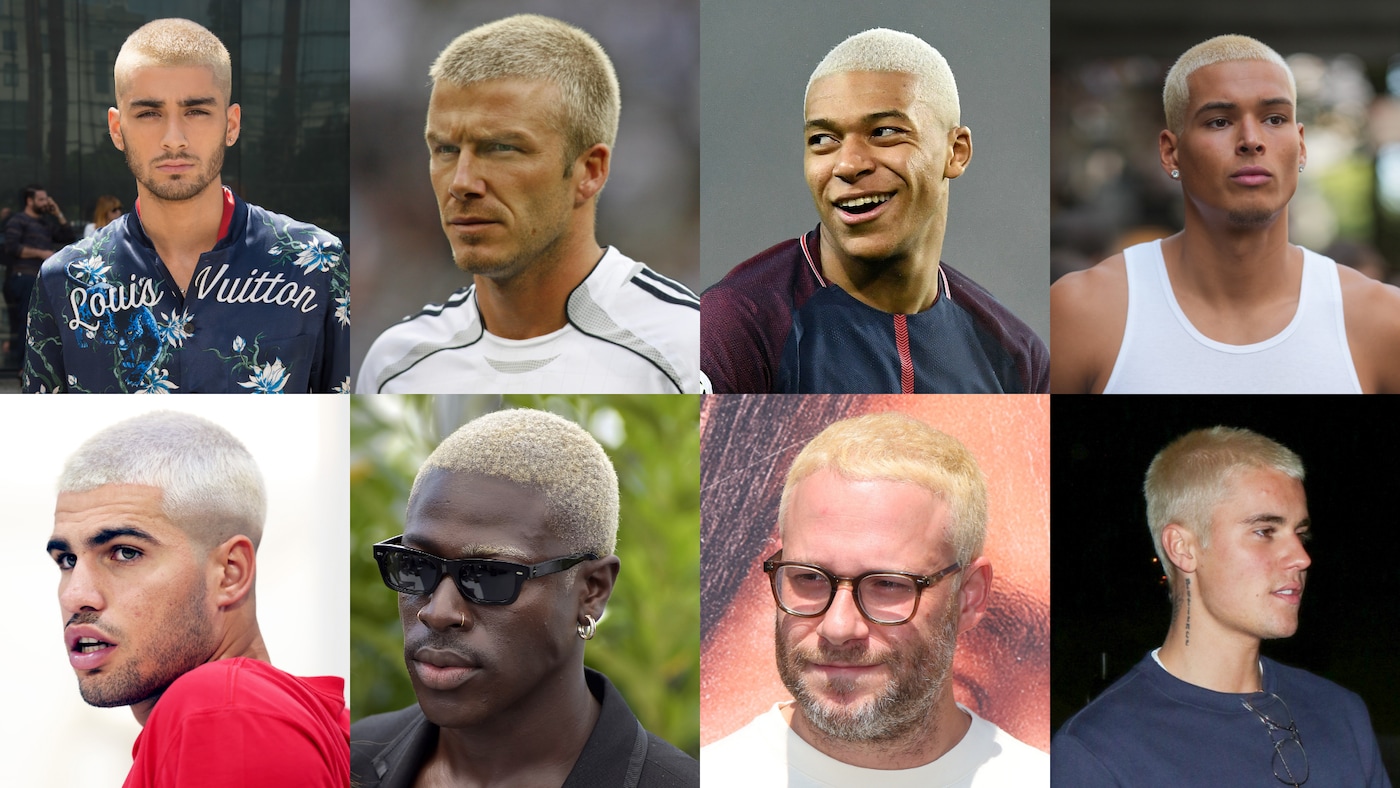
Start with the facts. On 10 September, Dazed published Sophia Medina Crack's beauty feature "What is it about a man and his bleached buzzcut?", with a standfirst that states the setting plainly: "A man's bleached buzz can make the difference between a Hinge match or pass – and for many, it signals far more than good hair." The piece opens on a hungover Saturday morning: the writer's friend, scrolling Hinge, laments that all her matches would be "10x hotter" with a bleached buzzcut. What this page wants to keep is what the writer admits next — she agreed, and she did not quite understand why. The rest of the article works on that lack of understanding.
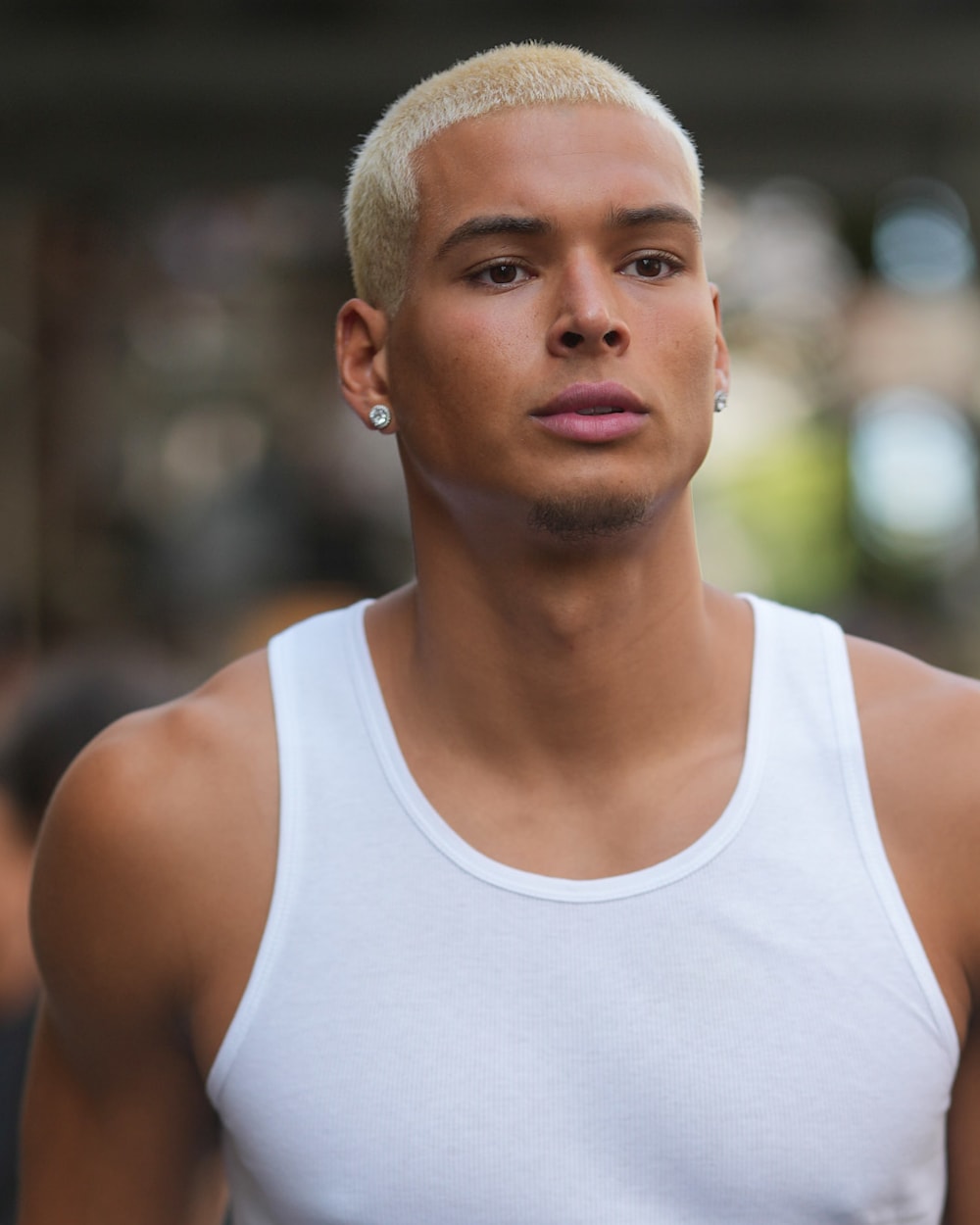
Now the second document. On 21 August, Vanity Fair's September "State of American Style" portfolio went live (reported the same day by Complex's Mark Elibert). Written by José Criales-Unzueta, photographed by Luis Alberto Rodriguez, fashion edited by Tonne Goodman, it describes how the country looks as it enters its 251st year through a set of archetypes: JT is The Body, designer Emily Adams Bode Aujla is The Artisan, Talita von Fürstenberg is The Swan, Mary H.K. Choi and Jacob Soboroff are The Suits, James Simmons is The Cowboy. "The Face" went to Marlon Lundgren Garcia — Swedish-born, 6'5", a model and streamer with 2.8 million Twitch followers. The magazine's own words: "In the age of protein, peptides, and looksmaxxing, everybody wants to look new. Marlon Lundgren Garcia… is the kind of face (and six-foot-five physique) of perfection a generation of men pursue for themselves." Complex recorded that the social reaction concentrated on one point: the person representing American style comes from another country. Streamer DigitalTrapGEM questioned the choice (initially calling him Swiss, and being corrected). A separate post that simply relayed the magazine's description collected more than two thousand likes.
Then the head's provenance, which is long. Rachael Gibson — who works as "The Hair Historian" — traces it back for Dazed: the buzzcut began as a functional, homogenising cut inside the military and other tightly regulated institutions, while one of the earliest examples of men deliberately lightening their hair comes from the Gauls, whose warriors were described bleaching with lime water to produce a striking, intimidating appearance. By the 1970s the buzzcut had attached itself to skinhead and punk cultures; for punks especially, Gibson says, it "was intentionally threatening and non-conformist." By the early 90s it was turning into a fashion statement: Dennis Rodman pushed the bleached buzz into the mainstream, and Gibson suggests his look may have been inspired by Wesley Snipes' hair in the 1993 film Demolition Man, since it "reflected a sense of futurism and was truly different to anything else being done" — an origin Rodman himself has since disputed, calling the resemblance coincidental. After that: Eminem, David Beckham, and in 2022 the hashtag #bleachbuzzcut with 15.6 billion TikTok views. In 2017 the colourist David Stanko gave GQ a line that keeps getting quoted: "For women it's a trend, but for guys it's a bucket list or rite of passage look."
Finally, why today. This head gets declared "trending" every few years — the documented coverage runs from 2017 to now — so "it's back" is no signal on its own. This page files today because two publications of completely different character used the same cluster of words within three weeks. Dazed records the reading at individual scale: Ammara, 22, says "the pop of blonde suggests [they're] unafraid of being perceived/seen. That's hot"; Tom, 22, says people find him cool before he opens his mouth. Vanity Fair records the stamp at institutional scale: a face designated as a country's look for the year, with the reasoning packed into "protein, peptides, and looksmaxxing." A sub-second judgement on a dating app on one side, a September-issue production on the other, and both treating the male head as a document that can be read. A week from now the alignment may have dispersed; a third publication may pick up the same language. This page files it while the two happen to line up.
Lead image, Dazed 2026-09-10, "What is it about a man and his bleached buzzcut?" Image: Dazed.
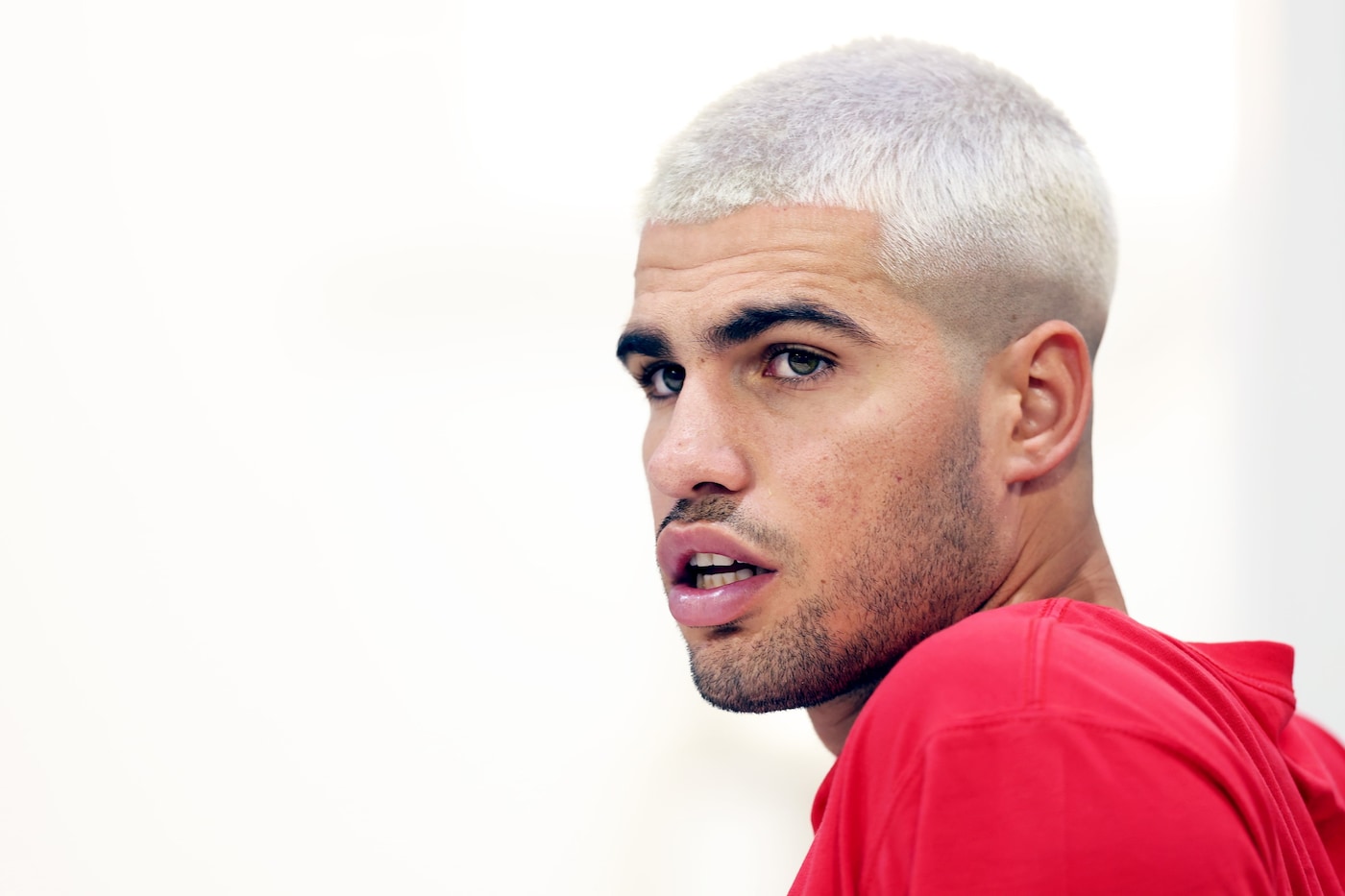
Left and centre: two frames from the ten-image bleached buzzcut gallery accompanying Dazed's 2026-09-10 feature. Right: Marlon Lundgren Garcia, named "The Face" in Vanity Fair's September "State of American Style" portfolio (photo: 305pics / Getty Images, via Complex). The three are placed together only to watch one shape appear at two scales: a card on a dating app, and a face a publication designates as national.
Antiquity
Gaulish warriors are described bleaching their hair with lime water to produce a striking, intimidating appearance. From the same long period, the buzzcut functions inside the military and tightly regulated institutions as a practical, de-individualising cut (Rachael Gibson, to Dazed)
1970s
The buzzcut attaches to skinhead and punk cultures. For punks, Gibson says, it "was intentionally threatening and non-conformist." The first time this head clearly carries the sentence "do not come closer"
1993
Dennis Rodman pushes the bleached buzz into the mainstream. Gibson suggests Wesley Snipes' hair in Demolition Man as a possible source, "a sense of futurism"; Rodman disputes it as coincidence. On him the head also works as a public declaration of gender and sexual fluidity
2017 → 2022
Colourist David Stanko to GQ: "For women it's a trend, but for guys it's a bucket list or rite of passage look." In 2022, #bleachbuzzcut accumulates 15.6 billion TikTok views
2026.08.21
Vanity Fair's September "State of American Style" goes live; "The Face" goes to Marlon Lundgren Garcia, 6'5", 2.8m Twitch followers: "In the age of protein, peptides, and looksmaxxing, everybody wants to look new."
2026.09.10
Dazed publishes "What is it about a man and his bleached buzzcut?", putting the head back inside the swipe interface, with quotes from seven interviewees in their early twenties, a hair historian and the founder of a colour brand
01Community Voices
Verbatim: nine statements, from people who read this head, people who wear it, and people who are tired of it
All nine are recorded verbatim, unedited. Six are direct quotes from Dazed's 2026-09-10 feature (most interviewees are in their early twenties and the article gives only first name and age; two are a hair historian and a colour-brand founder). Two come from X (Twitter): one from the public reaction to Harry Styles shaving his head in 2023, one a relay post after the Vanity Fair list was published in August 2026 (over two thousand likes). One comes from Substack, the most direct dissenting voice findable. One feature of this set is worth noting up front: the people explaining why it looks good are almost never talking about hair. They are talking about the decision to cut.
Dazed interviewOscar, 23
A lot of guys, whether they want to admit it or not, love their hair. They think the buzzcut is some scary thing – and it can be if you’ve maybe not got the best hairline, or if you’re a bit insecure.
Dazed interviewAmmara, 22
the pop of blonde suggests [they’re] unafraid of being perceived/seen. That’s hot.
It’s pure confidence and beauty; it’s vulnerability: what you see is what you get.
Dazed interviewKaya, student
It’s like the new masculinity is being masculine enough to be like, fuck it, I’ll engage with feminine behaviour
Dazed interviewTom, 22
People think you’re cool without even speaking to you; it gives you license to be a bit crazier because people probably think you are.
Dazed interview · Bleach London founderAlex Brownsell
Bleach is to colour what buzzcuts are to length – a void defined by what isn’t rather than what is.
X (Twitter)@itsafsanay
Yk that a man if FINE WHEN HE LOOKS GOOD IN BUZZCUT. Prime example are harry styles and zayn malik.
X (Twitter) · 2,000+ likes@ChipGotIt_
Marlon was featured in Vanity Fair as the “face” of modern American style, with the magazine highlighting his looks and 6’5” physique as the type of perfection a generation of men are chasing
Substack, "Things I Like And Don’t Like"David Azrael
Are we really still doing this? Did we fully accept this as a good look for the average dude? Is it really a hot guy haircut? Does it count as having an edgy style? Isn’t bleached hair just kind of blah at this point? Did you have something to say but weren’t sure how to say it?
Context, observationally: look first at what these statements are about. Oscar is describing risk — "not the best hairline," "a bit insecure" — two things a buzzcut puts directly under the light. Ammara follows with the meaning produced once that risk has been carried: "unafraid of being perceived/seen." Put together, the two give the full formula by which this head gets read: because it leaves flaws nowhere to hide, the man wearing it looks like someone who does not mind being inspected. Tom's line about being thought cool before speaking turns the formula's output into a piece of social utility. This page notes that none of the six interviewees dwells on whether the colour itself is attractive.
Now the two posts from X, side by side. @itsafsanay's standard is simple: looking good in a buzzcut means the man was already good-looking — in her account the cut works as a test that has to be passed. @ChipGotIt_ relays the magazine's framing: a 6'5" physique as "the type of perfection a generation of men are chasing." One treats appearance as a verification instrument; the other treats it as a target. The same head performs opposite functions in these two sentences, and both are judgements about how something looks.
Last, the Azrael passage, written in 2023 and composed entirely of questions. One of them may be the most useful thing on this page: "Did you have something to say but weren't sure how to say it?" He goes on to concede that the opinion is petty, and that he has never bleached his own hair. This record makes no ruling on whether he is right. It notes the direction he points in: if this head's function is to speak first on its owner's behalf, then whether what it says and what he would have said are the same sentence.
02Consensus Mapping
Four narratives: official, community, emerging, contrarian
Official Narrative
The "official" voice here comes from two institutions. Vanity Fair's version sits in the September issue: "In the age of protein, peptides, and looksmaxxing, everybody wants to look new," followed by the designation of a 6'5" streamer as The Face. The framing hangs the contemporary standard of male appearance explicitly on fitness, skincare, social media and the online self-optimisation movement, and describes the scale with a phrase like "a generation of men pursue for themselves." The trade version comes from inside the industry: Bleach London's Alex Brownsell calls bleach "a void defined by what isn't rather than what is"; Rachael Gibson says "there's a freedom in shaving everything off and creating a literal blank canvas." Institutional language is consistent on two words, new and empty — one talking about swapping a face, the other about clearing one.
Community Narrative
The people doing the reading circle one word: nerve. "They think the buzzcut is some scary thing – and it can be if you've maybe not got the best hairline, or if you're a bit insecure"; "the pop of blonde suggests [they're] unafraid of being perceived/seen. That's hot"; Joana, 23: "I think a willingness to bleach your hair signals a certain level of comfortability with femininity which is attractive"; Kaya: "the new masculinity is being masculine enough to be like, fuck it, I'll engage with feminine behaviour." The people wearing it supply the other half: Tom, 22, on being thought cool without speaking — "it gives you license"; Alex, a graduate, says it sits "in this Goldilocks zone," pushing against convention without straying past the social codes he already identifies with. The community narrative treats the head as a ticket, with a pre-assembled personality waiting behind the door.
Emerging Narrative
The emerging reading moves the subject from "does it look good" to "who is writing whose introduction." In September 2025, Kian Bakhtiari defined the performative male in Forbes as "a shift from self-expression to self-curation," and Dazed's writer places the bleached buzz between those two poles: it conveys individuality while also announcing an "arty, intellectual" persona — the words of Ella, a graduate student. The writer then records what this page considers the key observation: whether or not he fully embodies that identity almost becomes beside the point, because the performance itself already signals that he wants to be read as interesting, expressive and unlike every other straight man. If that reading holds, the head becomes a pre-submitted personal statement, reviewed in under a second.
Contrarian Narrative
The coldest account has two sources. One is Azrael's string of questions on Substack: "Are we really still doing this? Did we fully accept this as a good look for the average dude?" He names Justin Bieber's 2015 hair, Pete Davidson, Machine Gun Kelly, asks whether it counts as edgy style, and then asks directly: "Did you have something to say but weren't sure how to say it?" The other comes from the structure of the Dazed piece itself: the writer admits the whole article begins from not understanding why she agreed with her friend, and closes by noting that she has yet to hear the warning "don't date a boy with a bleached buzz," then adding that she is sure someone, somewhere, has reason to disagree. The contrarian narrative exposes nobody here. It points at something harder: the whole cluster of virtues this head is read for — artistry, empathy, originality — has so far had none of its items verified.
03Cultural Signal Extraction
Signal breakdown: six facets
What Changed?
The head's meaning reversed direction. In the 1970s, on skinheads and punks, it was "intentionally threatening and non-conformist," built to make people step back; in 2026 on Hinge its job is to bring people closer. In between: Rodman's fluidity, Eminem, Beckham, 15.6 billion TikTok views. The reviewing institution changed too — from the street to a magazine's archetype list and a dating app's card. So did the accompanying vocabulary: "protein, peptides, looksmaxxing" did not exist when Gibson's Gauls were mixing lime water. A shape once used to frighten is now itemised on a list of green flags.
Why Are People Reacting?
Because the subject contains an awkward gap: the cost of judging is almost nothing, the cost of being judged is not. A swipe takes under a second; shaving everything off and bleaching it commits you to your hairline, your skin tone and several months of regrowth. Oscar puts it plainly: if your hairline isn't great or you're a bit insecure, it "can be" scary. The heat of the reaction probably comes from that asymmetry — many reading, few paying. Azrael's irritation can be read here too: he may not object to the head so much as ask whether a reading this cheap deserves to generate this much meaning.
What Assumptions Are Challenged?
"Hair is decoration" — these interviewees talk only about decisions, never styling. "Masculinity accumulates by addition" — Kaya describes the new masculinity as being masculine enough to engage with feminine behaviour, and this head is finished by subtraction. "Performance gets seen through" — Dazed's writer records the opposite: whether he embodies the persona becomes beside the point. "Institutions lag individuals" — here Vanity Fair arrived three weeks before Dazed, putting looksmaxxing into a September issue first. The shakiest of the four may be the third: the performance stays effective after it has been seen through.
What Desires Are Visible?
The top layer is the wish to be read correctly. Ammara wants the signal "unafraid of being perceived"; Ella wants the "arty, intellectual" setting; Kaya wants a loosened masculinity. The second layer is temporary escape from the self: Dazed writes that the look can offer an alter ego, "a chance to escape your current self and briefly become the version of yourself you wish you were"; Tom says it issues him a licence to be crazier. The third layer sits in the Vanity Fair line: "everybody wants to look new" — the desire is a reset. Three desires sharing one set of clippers.
What Social Behavior Is Changing?
The concrete actions are shifting. Reading a haircut as a personality field while swiping. Treating "willing to bleach" as evidence about someone's views on gender. Describing a styling decision as a "rite of passage" (Stanko's phrase). Using an archetype list instead of a designer list to describe how a country looks. Talking about the body as an optimisable pipeline — protein, peptides, looksmaxxing. Meanwhile Dazed records another action: men who, after shaving, start using "people probably think I'm crazy anyway" to widen their own margins. Surface before behaviour is becoming ordinary as a sequence.
Future Human Behavior?
If a head can complete an introduction before anyone speaks, what is left for the conversation to handle? Dazed says this head reads as a set of green flags — artistry, empathy, originality — so when the read is wrong, who carries the cost? If "unafraid of being perceived" is proven by one haircut, what will the next harder-to-fake proof be? Once a word like looksmaxxing enters a September issue, will readers start treating their own faces as things with version numbers? And once a shape built to frighten has been fully absorbed into the green-flag list, where does the next "intentionally threatening" shape grow from? This page has no answer yet.
04INCODER's Eye
The lenses we read this through: six observation frames
These six themes are the fixed frames INCODER checks every cultural signal against — closer to a pair of glasses than a thesis. Put them on and the same trend grows different meanings.
Information Culture
This head is a compression format. It uses a visually very cheap symbol — no length, no colour — to carry a set of high-bandwidth claims: nerve, comfort with femininity, artistry, empathy, originality. Brownsell calls it "a void defined by what isn't rather than what is," and that void reads fast enough to fit inside the rhythm of a swipe. The question this page wants to hold: when one haircut can deliver the content of five sentences, do those five sentences still get spoken? If they don't, is this compression, or overwriting?
Digital Identity
The Hinge card is a format, and this head seems to have grown for it. Dazed writes that the look offers "a chance to escape your current self and briefly become the version of yourself you wish you were"; Tom says other people's default assumption granted him room to act. The sequence is worth recording: identity gets read off the outside first, and behaviour moves toward the reading afterwards. This archive has logged posts pushed out and pulled back, and the operation of posting while trying not to be seen; here the movement runs the other way, with the subject campaigning to be seen more accurately. When a man's introduction is ghostwritten by a head, does he slowly grow into the draft?
Symbolic Systems
The symbol here is made by removal: length shaved, colour stripped. Gibson calls it "a literal blank canvas." What makes it interesting is that the same blank has spoken entirely different sentences in different decades — de-individualisation in the military, threat on punks, gender fluidity on Rodman, a green flag on Hinge. The symbol held; the sentence has been swapped four times. This page cannot say who does the swapping. It can note this: a symbol built out of absence seems easier to rewrite than one built out of presence. Might that be why it keeps coming back every few years?
Dark Vitality
This head's original vitality grew at the system's edge: punks used it to declare non-conformity, Rodman used it to make gender and sexual fluidity inseparable from a public persona. Its current position is a green-flag list and a September archetype portfolio. The Dazed piece even describes it as the haircut of a man who is "at once attractively outgoing… and a certified softboi." Going from threat to reassurance, was anything kept? Or: the thing that gave it force — the possibility of frightening someone — has it been diluted, or rewritten as a "license to be a bit crazier"? This page passes no verdict and lays the two ends side by side.
Networked Society
This head has no centre. It surfaces simultaneously from the Premier League (Erling Haaland), rap (Nettspend), television (Connor Storrie shooting Heated Rivalry season two), Twitch (Marlon Lundgren Garcia) and a September magazine list, with no coordination between them. Gibson even flags that the mainstream origin is contested: she suggests Rodman may have referenced Wesley Snipes, and Rodman denies it. A shape whose source cannot be settled and whose spread cannot be traced, with every node landing in front of the same eyes in the same month. Inside a structure like that, is "who did it first" still a meaningful question?
Perception and Attention
The most direct line in this signal is Tom's: "People think you're cool without even speaking to you." Perception completes its verdict before conversation, and the verdict turns back to widen the margin for behaviour. On the other side, Vanity Fair writes "protein, peptides, and looksmaxxing" into its explanation — instruments for engineering perception, aimed at making a face read correctly in the moment it is seen. Both ends are working on the same narrow slot: the sub-second in which someone is seen. What this page wants to ask: if a man knows how briefly he will be read, what does he still prepare for the part that comes after?
05Signal Score
Signal strength
6/10
Scored 6. What earns it: two publications of different character used the same cluster of vocabulary within three weeks (Vanity Fair's "protein, peptides, and looksmaxxing" on 21 August; Dazed's "unafraid of being perceived" on 10 September), and the Dazed piece supplies direct quotes from seven named interviewees plus a checkable historical line (Gaulish lime water, the military, skinhead and punk, Rodman 1993, GQ 2017, 15.6bn TikTok views in 2022). The Rodman origin even carries an explicit dispute — Gibson says possible, Rodman denies — and internal contradiction of that kind usually indicates the record is real. What costs it: this head has been declared "trending" since at least 2017, so "it's back" is not an event; the novelty this page identifies is the alignment with institutional looksmaxxing, and that alignment currently has two samples; the Dazed interviewees are given only as first name and age and cannot be traced; the X and Instagram posts embedded in the article could not be retrieved directly here; the Vanity Fair original could not be read directly, and its quotes come via Complex's reporting. What would raise it: a third publication adopting the head-or-face-as-national-archetype framing; any platform or dating app publishing behaviour data linked to hairstyle; the first public thread distrusting the bleached buzz as a green flag; or looksmaxxing crossing from online-community vocabulary into standard mainstream usage.
06Final Question
The deepest hidden assumption
?
We have long assumed that a conspicuous decision a person makes about their own body is information about that person — because the decision costs something. If the reading becomes stable enough to be used as a strategy, the cost shifts from nerve to familiarity with the reading. At that point, is the nerve being read still there?
Lay the assumption out. The whole reading is founded on cost. Oscar is concrete about it: after a buzzcut the hairline has nowhere to hide, and an insecure man will be afraid. Ammara follows: because it is frightening, the man who does it looks "unafraid of being perceived/seen." At that stage the inference works, because the person did carry something — a decision that cannot be cancelled and takes months to grow back. Gibson's phrase about "bad boys who are in total control of their image, DGAF about expectations" describes the same carrying. Up to here, the head is a receipt.
Now the line the Dazed writer records herself: whether or not he fully embodies that identity almost becomes beside the point, because the performance itself signals that he wants to be read as interesting, expressive and unlike every other straight man. That sentence separates the receipt from the thing it is a receipt for. Kian Bakhtiari's "shift from self-expression to self-curation" is the general version of the same move: curation presupposes that you know how the audience reads. And how the audience reads this head is now written down — in the Dazed piece, in the comments, in 15.6 billion views. A man can make a decision that looks like carrying uncertainty while carrying none of it. Read from here, Vanity Fair's "everybody wants to look new" has a small sting in it: the wanting attaches to look.
The suspense stays on the nerve. If the reading is public enough, nerve leaks out of the decision and the shape remains; and the shape still reads as nerve, because the reader also has under a second. Azrael's 2023 question becomes strangely accurate here: "Did you have something to say but weren't sure how to say it?" If the answer is yes, this head is a stand-in, owed back one day to the sentence that went unsaid. If the answer is no, it is a complete sentence and has already finished speaking. The Dazed writer closes by noting she has yet to hear anyone warn "don't date a boy with a bleached buzz," then adds that somewhere, someone must have reason to disagree. This record has no answer for now. It notes only that in the second week of September 2026, a head with nothing left on it is speaking first for a great many people, and nobody is measuring how accurate it is.
Observation remains incomplete.
This report records the state of observation at this moment.
The Vanity Fair / Dazed alignment currently rests on two samples; the Dazed interviewees are given only as first name and age and cannot be traced; the Vanity Fair original could not be read directly and is quoted via Complex; "the bleached buzz reads as a set of green flags" is the observation of interviewees and a writer, with no verifying data. These judgements may be reinforced, and they may be overturned.