Post it. Pull it minutes later. Put it back, quietly, a week on. This week, the point of posting became going unseen
There is a way of posting on Instagram that two outlets have just named in the same month: ghost-posting. The method is simple. Post a photo, archive it at once so it vanishes from every feed, wait days or weeks for other people's posts to wash the algorithm clean, then unarchive. The photo returns to your profile in its original chronological slot — no notification, no appearance in anyone's feed, visible only to whoever opens your page. Dazed wrote it up on 14 August; Her Campus followed on 21 August. In the same month Instagram changed its wordmark for the first time in a decade and began testing cash bonuses for photo posts, while the one official option that would have made the whole workaround unnecessary — "Share to profile only" — had quietly disappeared in the second half of last year, and drew a petition in February. This page records how "posting in public while trying not to be seen" went from an odd little habit to a generation's default.
// recurring focus: surveillance culture, the attention economy, documentation refusal, the politics of visibility, opting out of the feed; the profile as a place you can post to without being seen; the workaround as a feature the platform declined to keep
This is one page of the Observer Reports. The territory I watch is the politics of being seen — who is allowed to go unphotographed, who is allowed to be unfindable, who can keep an unseen corner inside a system designed for seeing. This page's sample is small: a manoeuvre on Instagram, post, archive, unarchive. Small enough that most people doing it would not describe it as doing anything at all.
First, the thing that made me stop. In the Dazed piece, Willa Farrell, 23, in Los Angeles, says she "hasn't posted 'for real' in years"; she only ghost-posts. Her words: "When you ghost-post, you acknowledge the fact that it's not going to be seen by a lot of people." I record that as she said it. What I want to note for myself is the word "acknowledge" — on a product built around reach, she has chosen a method that guarantees low reach, and describes the choice as a kind of freedom. Danait Desta, 26, a social media manager, is blunter: "I don't really want to appear on people's feeds or be perceived constantly." Perceived is a word that will keep coming back on this page.
Second thing. This manoeuvre never needed to exist. In April 2025 Instagram was rolling an option called "Share to profile only" out to more users — the post stays on your page and enters no one's feed. By August someone replied under a Threads post: "i love it but it has just disappeared." Around January this year a help thread appeared on Reddit: "share to profile only option gone." On 6 February a Change.org petition asked for it back. As of today it has 75 signatures. The platform once offered an official button for not being seen, then took it away; users went back to the archive tool and rebuilt the button by hand. This page does not rule on why Instagram did that. It only records that in September 2026, not wanting to be seen is something you have to do manually.
— OBSERVER 1984 · Observation Archive
00Why This Topic Today
Why today: a manoeuvre got a name, a button got withdrawn, and the profile page started paying wages
The facts first. On 14 August Dazed published Isabel Bekele's feature "Is the grid dead? How young people are changing the feed", defining a ghost-poster as someone who posts on Instagram, archives the post, and unarchives it later. The piece interviews five people aged 23 to 26 and one independent technologist, Sean Thielen-Esparza. Their motives differ. One wants "a little moodboard for me, rather than something for others"; one doesn't want to "be perceived constantly"; one (Samantha Harper, 26, who works in fashion marketing) accepts that a ghost-post "might not even hit 100 likes" because she wants her feed "to look cute"; one unarchived old thirst traps during Pride Month to find a boyfriend; and one, who says "almost every single job I get is from Instagram", archives posts warning his nightlife community about a predatory person or ICE officers on the block, for fear of doxxing someone or losing work. On 21 August Her Campus ran Arishita Gupta's "What Is Ghostposting? The IG Trend Is All About Curation", framing it as Gen Z having its cake and eating it too: taking part in "Instagram's high-stakes performance environment without feeling like there's an audience to impress — at least, not immediately."
Then the line that leads here. The archive tool launched in June 2017; Instagram's stated purpose was to let people remove unwanted posts without deleting them, so they would feel more comfortable posting in the first place. By late 2021 someone on Reddit's r/Instagram was already asking why people post, archive within minutes, and unarchive a week later. The reply was one line: you want the photos on your page, but you don't want to be perceived by all. In 2023 another thread asking "is this ghost posting?" got the same explanation. So the manoeuvre circulated among users for four or five years before any outlet named it, and the name was there the whole time.
Then the platform's side. On 27 April 2025 the social media analyst Lindsey Gamble noted on Threads that Instagram was rolling "Share Only to Profile" out to more users — a way to "post content without it appearing in anyone's feed", useful "for those who want to post without performance pressure or simply for aesthetic reasons." The post drew 31,000 views and two kinds of reply: "Weird feature", "more shit no one wanted or asked for"; and "i love it but it has just disappeared." Around January 2026 a help thread appeared on r/Instagram — "share to profile only option gone" — with the reply: "Came here to see if anyone else is experiencing this. Updated the app but no change yet." On 6 February Casey Gleeson opened a petition on Change.org, "Bring back the 'Share to profile only' option on Instagram", stating the situation precisely: since the removal, "the only way to avoid feed exposure is to post content and then archive it, or to unarchive posts later, which often results in them appearing in feeds anyway. This workaround is unintuitive and does not replicate the original functionality."
Finally, why today. On 13 August Instagram changed its wordmark for the first time in ten years. The same month it began testing bonuses for photo and carousel posts — until now only Reels paid; now a single photo can, provided the account clears hundreds of thousands to five million views a month, three months running. In the week Dazed asked in a headline whether the grid was dead, Instagram formally turned the grid into a place that pays. Thielen-Esparza's line in the piece thereby gets a counterpart: "posting on the grid basically equals default 'commercial'." On one side, the platform puts a price on public posting; on the other, users assemble a way of posting that never enters a feed; and the button that would have reconciled the two has been withdrawn. This page is filed while those three things sit in the same month and Instagram has said nothing about where "Share to profile only" went. A week from now the manoeuvre may be buried under the next update, or absorbed as an official feature — either way, the present handmade state will be hard to recover.
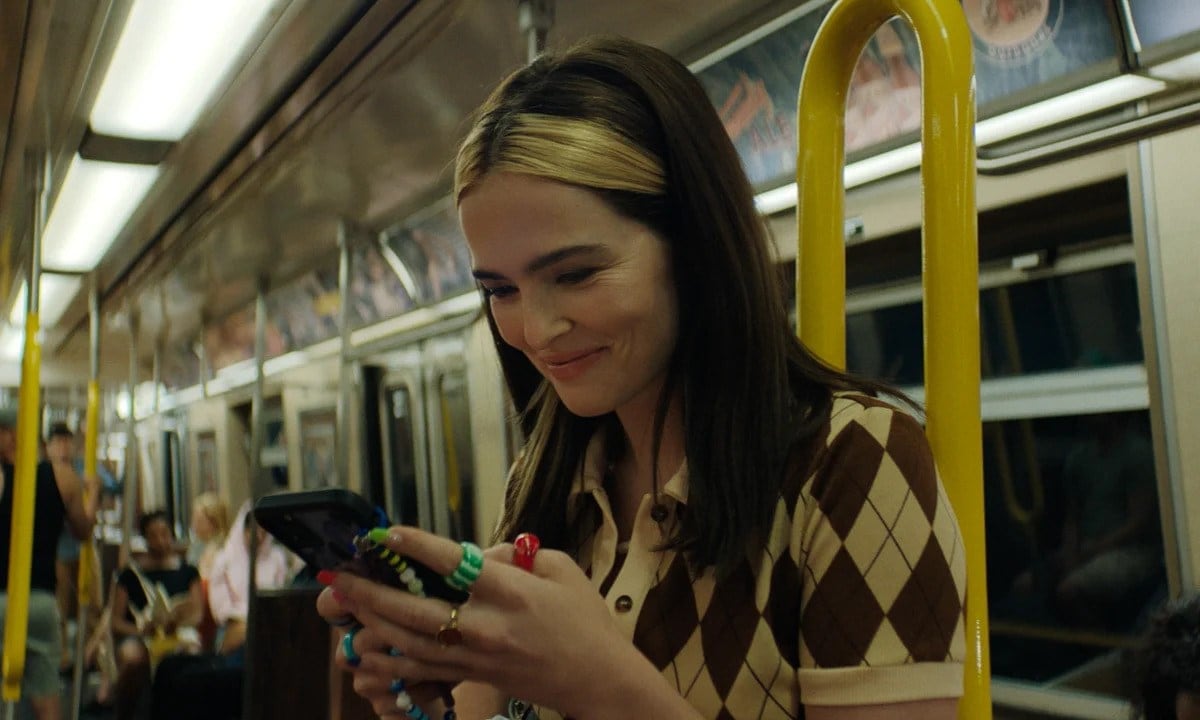
Lead image from Dazed, 14 August 2026, "Is the grid dead? How young people are changing the feed": a still from Not Okay (2022). The five people interviewed are between 23 and 26.
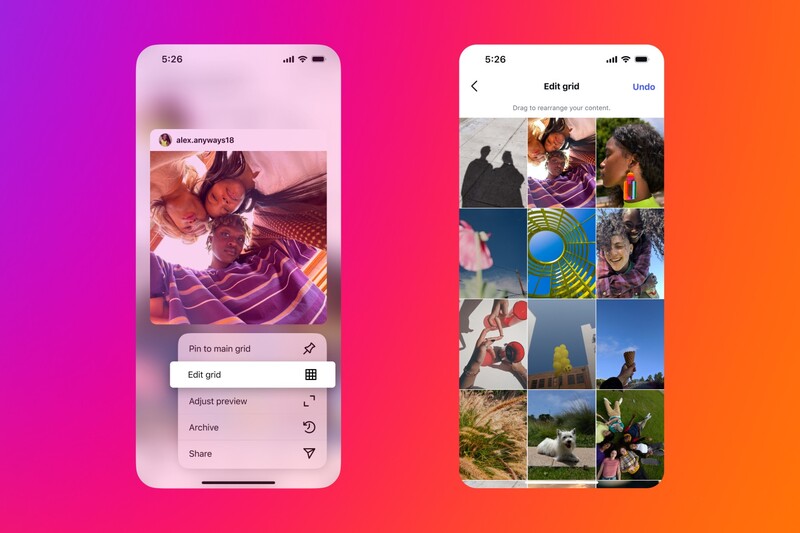
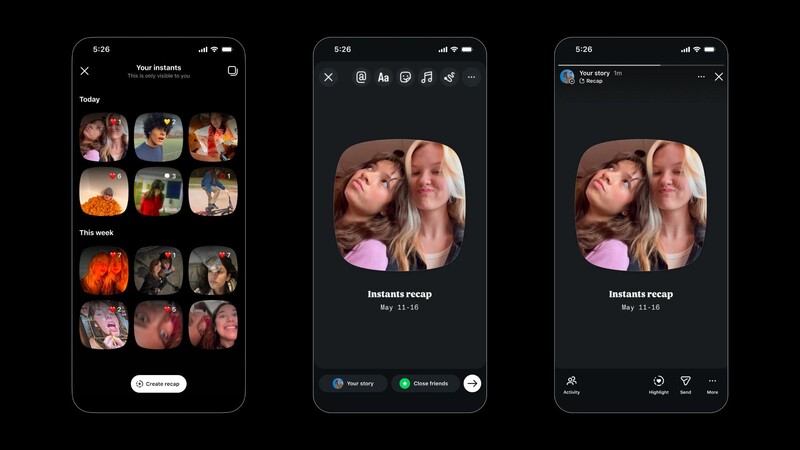
Left: lead image of the Change.org petition "Bring back the 'Share to profile only' option on Instagram", opened 6 February 2026 by Casey Gleeson, 75 signatures to date. Centre: Instagram's grid reorder feature (compiled by NapoleonCat, image via TechCrunch) — the profile is no longer bound to posting dates. Right: Instagram Instants (compiled by NapoleonCat, image via Instagram) — photos for friends only, gone once opened. Seen together, the platform is slicing "where you can be seen" into more and more layers.
2017.06
Instagram launches Archive: hide a post from your page without deleting it. Official reason: so people feel more comfortable posting. It becomes the only tool ghost-posting has
2021.12 → 2023
Two r/Instagram threads ask why people archive posts minutes after posting and unarchive later. Reply: "you want photos on your page, but don't want to be perceived by all." The phrase "ghost posting" already appears in the comments
2025.04.27
Lindsey Gamble on Threads: Instagram is rolling "Share Only to Profile" out to more users — "post content without it appearing in anyone's feed". Replies split between "Weird feature" and "i love it"
2025.08 → 2026.01
Threads reply: "i love it but it has just disappeared." r/Instagram help thread "share to profile only option gone": "Updated the app but no change yet"
2026.02.06
Change.org petition "Bring back the 'Share to profile only' option": "the only way to avoid feed exposure is to post content and then archive it… This workaround is unintuitive." 75 signatures to date
2026.08.13 → 08.21
Instagram's first new wordmark in ten years; bonus test for photo and carousel posts begins. 14/8 Dazed defines "ghost-posting" in "Is the grid dead?"; 21/8 Her Campus follows: a way to take part in "a high-stakes performance environment without feeling like there's an audience to impress"
01Community Voices
On the record: nine statements from people who ghost-post, people who can't find the button, and people who find the whole thing strange
All nine are quoted verbatim, unedited. Five are direct quotes from the Dazed feature of 14 August 2026 (speakers identified by their real names or the names the article uses); two are comments on Reddit's r/Instagram; two are replies under Lindsey Gamble's Threads post. The distribution is the reverse of the previous page: almost every voice here belongs to a user, and the platform has offered no statement at all. That distribution is part of the record.
Dazed interviewWilla Farrell, 23, Los Angeles
I haven’t posted ‘for real’ in years. I think there’s something about posting in secret… When you ghost-post, you acknowledge the fact that it’s not going to be seen by a lot of people.
Dazed interviewDanait Desta, 26, New York, social media manager
I don’t really want to appear on people’s feeds or be perceived constantly. I just want to be able to make my page look a certain way and share the things I want, without subjecting your feed to a picture of what I had for dinner or a vacation photo that’s already been posted in a dump.
Archiving a post then re-posting it almost keeps it neutral, because then the metrics and fear of being perceived aren’t really up for discussion.
Dazed interviewMaxwell Vice, 26, photographer and DJ
I feel like gen Z wants to use our social media to reach out to our community, keep everyone safe and spread reliable information, but we also use it for our money. Almost every single job I get is from Instagram.
I think, right now, we’re in a moment where posting on the grid basically equals default ‘commercial’. The way that people relate to Instagram [and particularly posting on the grid] right now is that it’s like work.
Reddit r/Instagramu/Teenager-
It’s when you want photos on your page, but don’t want to be perceived by all. So that way when someone checks my page they see them but not all my followers. Like if the photos are not the best quality but still wanna post them
Reddit r/Instagramu/AbroadAmbitious9372
I use instagram to journal my photos from my travels, but would rather not have them pop up on people’s feed. I only want to keep them on my profile. I remembered this feature being available on insta sometime ago, where did it go?
Threads@emmalucilles
i love it but it has just disappeared and now i can’t use it
Threads@prekuppanda
There’s a reason I have a photo gallery on my phone and the ability to create albums, interesting though
Background note: what stands out most across these nine may be how often the word "perceived" appears. Desta doesn't want to "be perceived constantly"; Frimpong says archiving takes "the metrics and fear of being perceived" off the table; the Reddit user doesn't want to "be perceived by all". None of them is describing a wish to stop posting — the photos still have to be on the page, and the page still has to "look a certain way". What they seem to want removed is the feed layer alone: the mechanism that pushes your photo in front of other people and then pushes their reaction, as a number, back in front of you.
Then the spread of the statements. The two Reddit comments are four years apart and describe the same thing in almost the same register — one explaining why anyone would do this, the other asking where the button that would have made it unnecessary went. The two Threads replies stand on opposite sides: one mourns the vanished feature; the other wonders why you would do this on Instagram when your phone already has albums. Thielen-Esparza's "posting on the grid basically equals default 'commercial'" ties the rest together — if public posting has become work, ghost-posting may simply be how you stay in the building after hours.
This record does not rule on whether ghost-posting is freedom or another kind of performance. It notes one structural point: Vice's is the only statement that holds two things at once — community safety and income live on the same account, so he archives the post warning people about someone dangerous, in case it costs him a job. For him, going unseen carries no aesthetic at all; it is, put plainly, risk management. The same manoeuvre is a moodboard for Farrell, a matter of the page "looking cute" for Harper, and a safety measure for Vice. This page cannot yet say which of those is the mainstream.
02Consensus Mapping
Four narratives: official, community, emerging, contrarian
Official Narrative
The platform has said nothing about ghost-posting, and nothing about why "Share to profile only" disappeared. The official language that can be found is all about other things: Archive, in 2017, was a tool to make people "more comfortable" posting; Instants, in 2026, are unfiltered, imperfect photos for friends that vanish once opened; grid reorder means your profile "no longer has to be ruled by posting dates"; photo and carousel bonuses mean money is finally available beyond video. Put together, the shape is clear enough: intimate things move toward DMs and Instants, public things move toward the grid, and the grid starts to pay. The position in between — public, but not pushed — is currently empty in the official vocabulary.
Community Narrative
The users' account is consistent and has been stable for years: keep the photos on the page, make the page "look a certain way", stay out of the feed, stay unmeasured, avoid being "perceived constantly". The 2021 Reddit explanation and the 2026 help thread use almost the same vocabulary. The consensus has a quiet quality — nobody defends it, and nobody seems to feel it needs defending; Farrell says she "hasn't posted 'for real' in years" the way you would describe a habit. The 75-signature petition may be the community's only collective statement, and what it asks for is small: give the button back.
Emerging Narrative
The reading now surfacing moves ghost-posting from "a trick" to "a generation's stance toward the feed". Dazed's headline asks whether the grid is dead; Her Campus calls it a way to take part in "a high-stakes performance environment without feeling like there's an audience to impress". Thielen-Esparza's "posting on the grid basically equals default 'commercial'", alongside Instagram's photo-bonus test the same month, gives the line a structure: public posting formally becomes work, while users treat the profile as an album shown only to whoever visits. If this reading holds, Instagram's "profile" and "feed" may slowly become two different products that happen to share one app.
Contrarian Narrative
The coldest readings are two. The first is the Threads reply — "there's a reason I have a photo gallery on my phone." If you really don't want to be seen, why keep it on a public platform at all? Ghost-posting removes only the feed layer; the page is still for other people, "looking cute" is still the goal, and Her Campus itself writes that social media now feels like "creating a persona for the world to consume." The second reading is colder still: the platform doesn't need to respond. A manoeuvre users build out of Archive still happens on Instagram, still produces data, still keeps people inside the app; withdrawing "Share to profile only" may have cost retention nothing. The contrarian narrative exposes no one here. It only points out that this whole negotiation over not being seen takes place, start to finish, on the platform's ground.
03Cultural Signal Extraction
Breaking down the signal: six facets
What Changed?
"Posting" and "being seen" came apart. They used to be one action; a group of people now split them into two steps and deliberately stop the second from happening. In the same month, the manoeuvre was named, defined and written up as a generational trait by two outlets, while the platform formally put a price on public posting. A small habit that had no name suddenly has a name, a control group, and a vanished official version.
Why Are People Reacting?
Because for many people the Instagram profile is already a CV, a portfolio and a source of income — Vice says "almost every single job I get is from Instagram." When the page carries that weight, every entry into the feed is an exposure: the numbers get seen, the content gets screenshotted, the persona gets judged. Ghost-posting lowers the exposure without giving up the page. The intensity of the reaction seems to track how much the page is worth, economically, to the person.
What Assumptions Are Challenged?
"Social media is for being seen" — Her Campus opens by questioning it: the word "social" is right there in the name. "Reach is the point of posting" — Farrell calls ghost-posting an acknowledgement that a post "is not going to be seen by a lot of people", and treats that as relief. "Platform features shape user behaviour" — here the order runs backwards: users built a feature out of Archive, the platform shipped an official version, withdrew it, and users went back to the handmade one.
What Desires Are Visible?
The clearest desire is for somewhere to put things that does not push them. Farrell wants "a little moodboard for me"; Desta wants the page to "look a certain way"; the Reddit user wants to "journal my photos from my travels". What these share is that the object is the page, never the audience. A second desire sits with Vice — to run community safety and income on the same account, and, when the two collide, to hide one of them temporarily with Archive.
What Social Behavior Is Changing?
"Post, then archive at once" is becoming a default gesture, performed by people who do not think they are doing anything unusual. Reading someone's page changes with it: photos with two or three likes used to read as "nobody cared"; now they can read as "this is one they chose not to push." Instagram itself is moving the same way — Instants for friends, heavier DMs, a reorderable grid — except that the "public but not pushed" position is, for now, left for users to assemble themselves.
Future Human Behavior?
If "public but not pushed" becomes an official tier of posting, will people start treating the profile as a public private album — anyone can visit, no one is notified? And if the platform never provides it, will manual archiving grow its own rhythm: archive for how long, restore how many, when? A further question: once the grid formally pays wages, will the people who insist on ghost-posting be read as people who don't want the money? This page has no answer yet.
04INCODER's Eye
Which lenses we read this through: six observation frames
These six themes are the fixed frames INCODER holds each day's cultural signals against. They work like a pair of glasses: put them on and the same trend grows a different meaning.
Information Culture
The feed's founding premise is that every signal you send should reach as many receivers as possible. Ghost-posting punches a hole in that premise — the signal exists, it just isn't broadcast. Desta's phrasing is worth a second look: she doesn't want to subject "your feed" to a picture of her dinner. The sender has started to think about the receiver's attention, treating her own content as potential noise. When users begin managing the signal-to-noise ratio themselves while the platform's bonus scheme rewards more exposure, where do those two forces meet?
Digital Identity
A ghost-posted page has two kinds of photo: the ones with hundreds of likes and the ones with two or three. A visitor who knows the manoeuvre reads the latter as "chosen not to push"; a visitor who doesn't reads them as "ignored". The same page thus presents two personas to two audiences. Farrell says hers has become "a little moodboard for me" — and it is still public. Is this "public reserve" a new format of digital identity? Or does it only defer the moment of being seen to some uncertain point when a visitor decides to tap?
Symbolic Systems
"Two or three likes" has become a symbol here. It used to mean failure; it may now mean intention. Frimpong says archiving keeps a post "neutral" — the number loses its original meaning because everyone knows it was engineered. This resembles the note list on the previous page: one format saying two things at once, with nothing in the format to tell you which is which. When a platform's most basic unit of measurement acquires two readings, how long can the symbol system hold before it needs a new mark to separate "pushed" from "not pushed"?
Dark Vitality
The most alive point in this signal may be Vice: a figure in Brooklyn nightlife, known as "the mayor of Bushwick", who uses one account to warn his community about a predatory person, to flag ICE on the block, and to take every job. He archives the first two kinds of post, in case they cost him work or expose someone. For him Archive is a survival technique at the system's edge — a public platform used as a temporary noticeboard, pinned, torn down, pinned again when needed. The platform probably never anticipated this use, yet it has always been there. Will the edge one day be noticed, and then "regulated" away?
Networked Society
The manoeuvre's path is interesting: no tutorial, no official name, just a Reddit question — "why is everyone doing this?" — and a one-line answer beneath it. Four years later two outlets name it at once, by which time it is stable enough that someone has posted "only this way for years". A norm formed without anyone announcing it. The 75-signature petition looks like failure, but it may simply mean most people never needed the button: they had already built their own. When a community's consensus is strong enough to need no cooperation from the platform, does the platform still count as the community's owner?
Perception and Attention
"Perceived" appears three times across these nine statements, each time as something to be avoided. It connects to lines this archive has recorded before: residents of tourist districts who don't want to be filmed, teenagers whose feeds now close at a set hour. The difference is that this time the people avoiding perception are still posting in public. What they seem to want is a precise state: present, but not pushed; findable, but never arriving unasked. Is this "passive visibility" a new attention setting? If so, will users keep maintaining it themselves, or will the platform eventually have to provide it — and then decide whether to take it back?
05Signal Score
Signal strength
6/10
Scored 6. In its favour: this is a behaviour practised steadily on the user side for four or five years before it was named — the 2021 and 2026 Reddit descriptions are nearly word for word; and in a single month two outlets named it, the platform put a price on public posting, and the one official option that would have made it redundant was withdrawn and petitioned for, giving the separation of "posting" from "being seen" a clear structure. Against it: the Dazed feature is dated 14 August, not this week; the petition has 75 signatures, and the collective reaction is quiet; Instagram has said nothing about where "Share to profile only" went, so the official side is blank; "is the grid dead" remains a question with no data behind it. It rises if Instagram restores "Share to profile only" or makes it a selectable tier of posting; if any figure emerges for the share of posts archived immediately after posting; or if creators or brands begin treating the ghost-post as a formal release format.
06Final Question
The deepest hidden assumption
?
We have long assumed that posting on a public platform means wanting to be seen — the premise inside the phrase "social media". If a generation uses the same platform and the same post button to say "keep this here, but push it to no one", and the platform once built a button for exactly that and then took it away — whose place is the platform now?
Lay the assumption out. Instagram's whole design — feed, algorithm, likes, reach, now bonuses — rests on the premise that posting is for being seen. The ghost-posters have not rejected the premise; they have dug a position beside it. Farrell "acknowledges" a post won't be seen by many; Frimpong says that keeps "the metrics and fear of being perceived" off the table. What they want sounds simple — a public page plus a post that never goes looking for anyone — and in 2025 Instagram did build it, then removed it within months. This page cannot know why. What it can record is that after the removal, users neither left nor protested (75 signatures hardly counts); they went back to Archive, rebuilt the button by hand, and carried on.
If that order is stable — users assemble a feature, the platform ships an official version, the platform withdraws it, users assemble it again — then Thielen-Esparza's line becomes hard to look away from: "posting on the grid basically equals default 'commercial'." In a place where public posting has formally begun to pay, not wanting to be seen is a state you maintain by hand, and the platform is under no obligation to maintain it for you. Vice's case makes this clearest: his account is noticeboard, CV and till at once, and Archive is the only tool he has for switching between the three. The platform likely designed nothing for that use, but it persists, held up by a feature built in 2017 so that people would feel "more comfortable posting".
The open question stays with "whose place". If a group can sustain, for years, a way of using a platform that the platform neither provides nor acknowledges, is that platform a space for them, or a borrowed address? And if one day the platform changes Archive too — the way it changed "Share to profile only" — will they rebuild once more, or leave for the first time? This record has no answer yet. It only notes that in the second week of September 2026, a photo with three likes may be the thing a person most wants to keep, and the word "likes" can no longer tell you which kind it is.
Observation remains incomplete.
This report records the present state of observation.
Nearly every voice in this signal comes from the user side; Instagram has not explained where "Share to profile only" went, and no figure exists for how many posts are archived immediately after posting. "Is the grid dead" is, at present, a question asked by two outlets, with no corresponding fact. These judgements may be strengthened or overturned.