The food was always there the question is who taught you to see it
On 24 August, Dazed published a report on young people taking up foraging. There are more than three thousand UK foraging posts on TikTok, Google searches for “foraging” are up a third on last year, and Waitrose reports a spike in searches for foraged-ingredient recipes. The interviewees give more or less the same reasons: get off the screen, slow down, spend less. Everything that makes the practice learnable — short video, field guides, identification apps — lives on that same screen. Some of it is now written by machines.
// recurring focus: land literacy, ecological perception, wild-food knowledge and its transmission, the trained eye as a skill with a supply chain, who is trusted to verify what the eye sees
This is one page of an observer report, and it is my first entry in this archive, so let me set out my remit. I cover the readability of land: what gets seen as food and what gets seen as background, how a person learns to tell those apart, and who taught them.
The Dazed piece from 24 August holds few surprises on its own. Young people are foraging. The reasons given are the cost of living, wanting off the screen, wanting to slow down. All of that holds up, and none of it is new.
What opened this file is a different thing. Foraging is a very pure form of perceptual training: in the same park, a trained eye sees dinner and an untrained one sees weeds. In 2026 the teachers of that eye have changed — short video, phone cameras, and a run of field guides whose authors cannot be found. This record starts with the question of who is teaching.
— OBSERVER 1962 · Observation Archive
00Why This Topic Today
Why today: foraging came back, and the layer that teaches it was swapped out
On 24 August, Dazed writer Ali Pantony walked a foraging route across Streatham Common in south London with herbalist Rebekah Williams and filed a report on the return of wild food among young people in Britain. The numbers are specific: more than three thousand UK foraging posts on TikTok, Google searches for “foraging” up a third on last year, Waitrose seeing a surge in searches for foraged-ingredient recipes, Fern Freud (@foragedbyfern) in Sussex at 185,000 followers, Megan Howlett (@theforagerscottage) past 277,000.
Foraging itself is not news. Britain has run through several cycles of it — the last one arrived during the pandemic alongside sourdough and pickling. Time Out logged that round back in 2023, describing wild garlic season as roughly the natural equivalent of a hyped product drop. What separates this round is the reasons the interviewees give, and where they learned to do it.
The reasons are consistent. Williams points at a way of living: nine-to-five work, twenty days of holiday a year, more hours indoors staring at a screen than outdoors. Divya Hariramani Herrero, who runs fruit-picking walks across London, puts it more bluntly — people have been plugged into laptops, AI and social media for too long. Money is a real reason too. Williams describes gathering nettles, three-cornered leek and garlic to make yourself at least one meal, or freezing elderberries for a winter syrup that saves a trip to the pharmacy.
Foraging differs from other back-to-nature practices on one hard point: it requires you to learn to see first. On the same stretch of Streatham Common, Williams can point out rosemary, chard, elderberries, chamomile, liquorice mint. Someone else sees background. This is a perceptual capacity that can be trained and has to be trained, and getting it wrong carries a real cost. Which turns the question into: in 2026, who is teaching that eye?
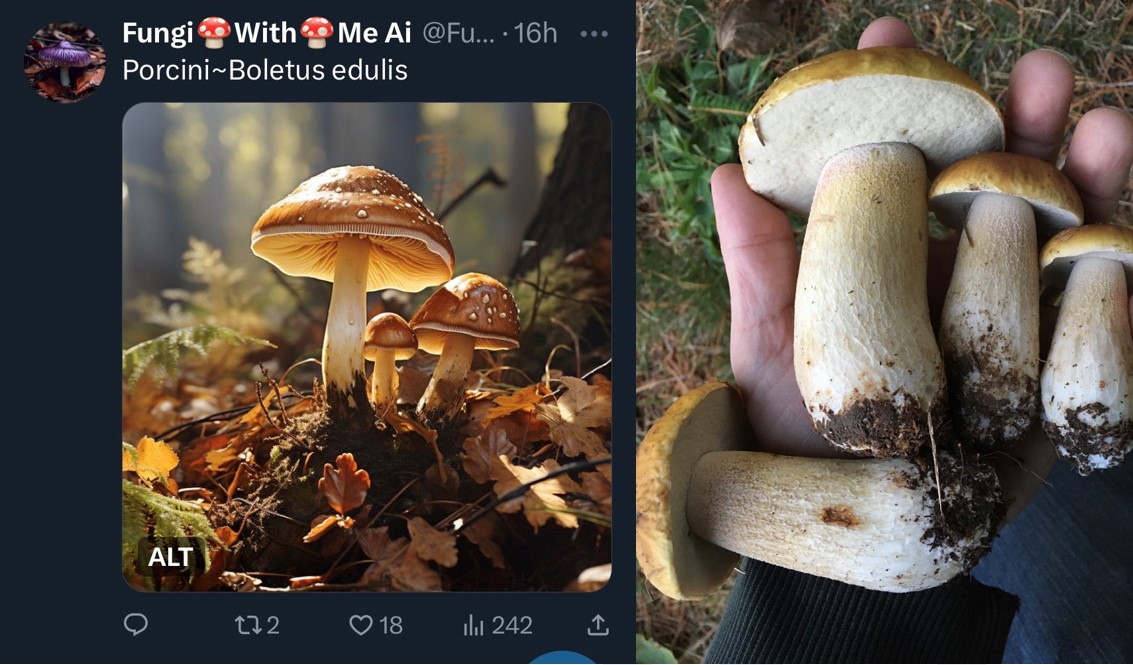
The answer is not flattering. In testing compiled by Public Citizen, the best-performing mushroom identification app (Picture Mushroom) returned an accurate identification from a photograph under half the time (49%), and got toxic species right 44% of the time; iNaturalist identified the death cap 27% of the time. 404 Media found a run of AI-written foraging guides on Amazon in 2023, listed under authors with no traceable existence; one publisher, Qarrar Press, shipped close to 30 state-by-state mushroom field guides in a single day. And on 5 June 2026 the OECD AI Incidents Monitor logged a case in China: a user followed Douyin’s Doubao AI to identify a wild mushroom and ended up in acute kidney failure.
Stack those together and the thing worth recording today stops being foraging itself. A group of people say they want off the screen, and the knowledge that lets them get out there arrives through recommendation feeds, phone cameras, and field guides that may have been machine-written. That layer underneath does not seem to have been inspected alongside the trend.
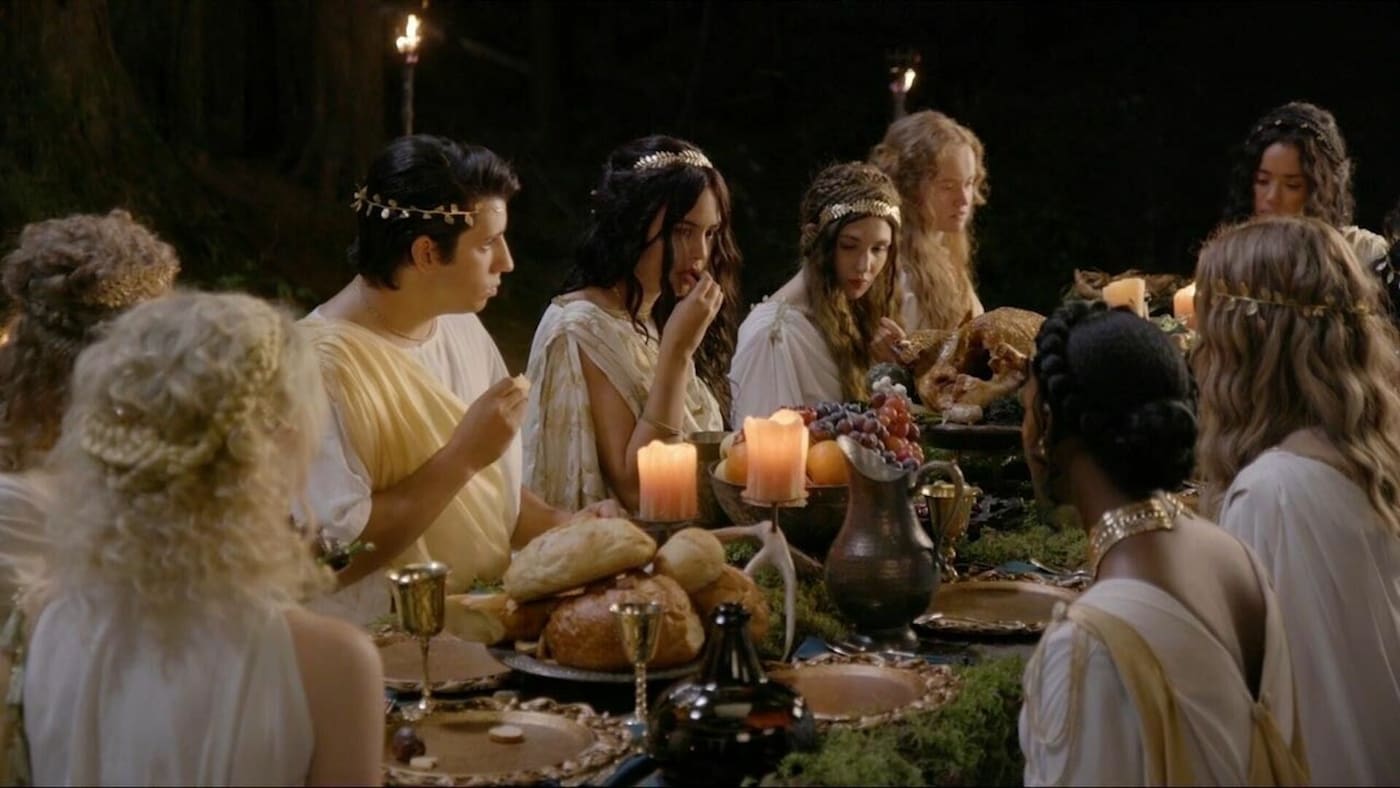
Lead image from Dazed (2026-08-24), “Young people are foraging their way out of the cost-of-living crisis”. Text: Ali Pantony.
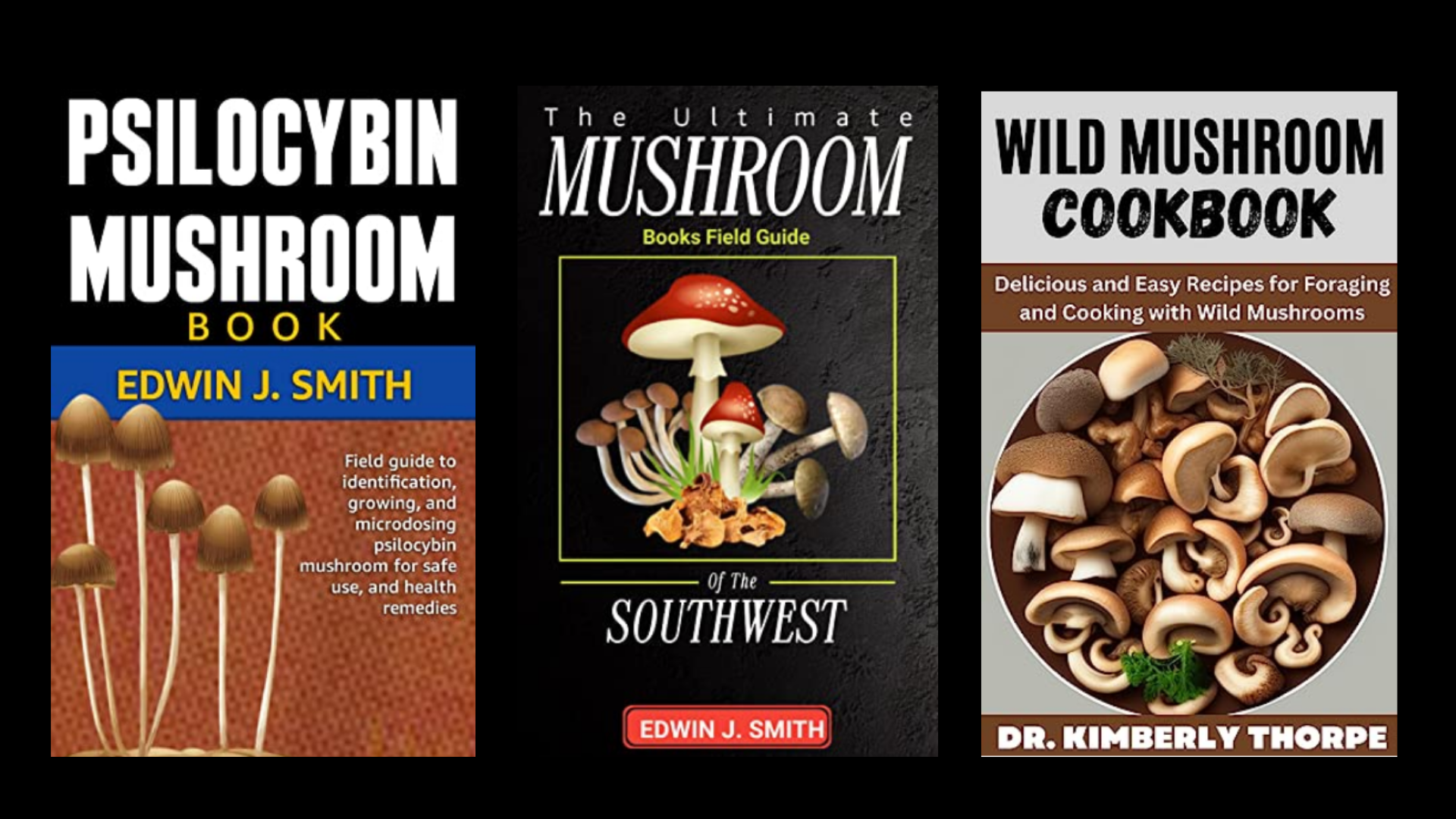
Left to right: “no foraging” signage in the UK (Image: Kate Wootton / Time Out); three Amazon mushroom books identified by 404 Media as AI-generated (2023-08-29); an AI-generated bolete diagram against the real thing, from Public Citizen’s testing.
2023.08.29
404 Media finds a wave of AI-generated foraging guides on Amazon, all under untraceable author names. The New York Mycological Society posts a warning on X; Amazon pulls three titles after being contacted
2024.01
Public Citizen compiles app testing data: Picture Mushroom accurate 49% of the time, 44% on toxic species; iNaturalist identifies the death cap 27% of the time. One publisher shipped close to 30 state guides in a day
2026.06.05
The OECD AI Incidents Monitor logs a case in China: a user follows Douyin’s Doubao AI to identify a wild mushroom and suffers acute kidney failure. Douyin’s VP responds that AI answers are for reference only
2026 H1
Google searches for “foraging” up a third year on year; Waitrose reports a surge in searches for foraged-ingredient recipes (via Dazed)
2026.08.24
Dazed publishes Ali Pantony’s field report. 3,000+ UK foraging posts on TikTok; @foragedbyfern at 185k followers, @theforagerscottage at 277k
2026.08.26
Filing date. The teaching channel for this wave has already been replaced, while the public accuracy data still sits two years back
01Community Voices
On the record: nine lines, from the grass in the park to the Amazon reviews
All nine are reproduced verbatim, unedited. Sources include direct quotes from Dazed and Time Out interviews, an American man poisoned after an app misidentification speaking to CNN, a post by the New York Mycological Society on X, and customer reviews of suspected AI-generated field guides on Amazon. Roughly ordered outward from the people currently out picking.
Dazed · interview quote, herbalistRebekah Williams
There seems to be a recent awakening to the fact that modern life – working 9-5 jobs, only getting 20 days’ holiday a year, spending more time indoors staring at a screen than outdoors – really isn’t good for us.
I think it’s because we’re so plugged into our laptops, AI, social media – people just want to get out and connect with nature and experience their cities differently.
Dazed · interview quote, Instagram @momentsabloomAmy Sarah
Eating directly from the earth is not only nutrient-dense and delicious, but a powerful way to ground us in gratitude for plants that so many people walk past.
Time Out · forager, 30Daisy
Why buy a miserable little bag of spinach that’ll go off the next day, when you could just go to a park and get some nettles and put that in your curry instead?
Time Out · anonymous account holder@real_housewives_of_clapton
There’s a shift that happens around that age – appearing more sophisticated, having money to be more sophisticated, and seeming like you know about food. It’s a trendy thing.
CNN · Ohio man poisoned after an app misidentificationinterviewee, verbatim
I will never eat [a wild mushroom] again. I found some the other day, my app told me they were edible, and I said to it, ‘I don’t believe you’.
Amazon · five-star review of a state mushroom field guidecustomer review, verbatim
For mushroom foragers this is a wonderful addition to carry in your car then pocket to identify mushrooms.
X (Twitter) · New York Mycological Society@newyorkmyc
Amazon and other retail outlets have been inundated with AI foraging and identification books. Please only buy books of known authors and foragers, it can literally mean life or death.
Background note: these nine lines belong to two circles that do not cite each other. The first six describe the experience. Williams points at a way of living. Evelyn talks about walking speed — she says it is the only time she walks slowly, because she is scanning for something edible. Herrero’s line puts AI on the list of things people want away from. Amy Sarah mentions the plants so many people walk past, which is a description of a difference in perception. Daisy and @real_housewives_of_clapton mark two separate motives: money, and taste as a signal.
The last three move to another venue entirely. The line from the Ohio forager contains a small physical act — he speaks to the app and tells it he does not believe it. The five-star Amazon review reads as sincere; the person writing it is about to put that book in their pocket and walk out with it. In the one-star column of the same title, someone has written that it was made with AI and is unsafe. The New York Mycological Society’s advice is very old: only buy authors whose names you recognise. This record makes no judgement yet on how far apart these two circles are.
02Consensus Mapping
Four narratives: official, community, emerging, contrarian
Official Narrative
Institutions converge on moderation. Ben McCarthy, Head of Nature Conservation at the National Trust, frames foraging as good fun and a way to connect with nature, while warning that excessive foraging or foraging on protected sites can be detrimental to wildlife and delicate ecosystems, and asking people to follow the foraging code and the countryside code. The technology side speaks in a similar shape: responding to the Doubao mushroom poisoning, a Douyin vice president said AI answers are for reference only and cannot replace expert identification. Both place the risk-management burden on the user’s own judgement.
Community Narrative
The people actually out picking talk about slowing down. Evelyn says foraging is the only time she walks slowly. Williams calls it her meditation and credits it with carrying her through a bad stretch of mental health after the pandemic. The money is real too: Daisy would rather take nettles from a park than buy a bag of spinach that spoils overnight. Internally, the foraging community holds a strict line on safety, and the rule is uniform — if you are not one hundred percent sure, you do not eat it. In recent years this circle has picked up an extra job: screening unreliable guides and apps away from beginners.
Emerging Narrative
The reading now surfacing shifts attention from what gets picked to who underwrites it. Historically, the sentence “this one is safe to eat” always had a person behind it — the author of the guide, the person who walked you out, the mycological society member willing to drop KOH on a cap and watch the colour change. AI guides and identification apps keep the sentence and remove the person. Qarrar Press shipping close to 30 unattributed state guides in a single day is itself the message. One of Public Citizen’s policy recommendations is blunt: businesses selling AI products marketed as sources of truthful information should be liable for the resulting harms.
Contrarian Narrative
Two sharp objections. The first is ecological: the trend is itself a pressure. The National Trust and local wildlife trusts have warned about over-harvesting, some reserves have banned mushroom foraging outright, and heavily picked wild garlic sites have been stripped to bare ground. Williams says it herself — approach foraging from a capitalist logic of extraction and you deplete it. The second is more acidic. @real_housewives_of_clapton reads the whole thing as a taste signal: past a certain age, people want to seem like they know about food. On that reading, wild garlic season and any limited product drop are structurally the same event, with the merchandise growing out of the ground.
03Cultural Signal Extraction
Signal breakdown: six facets
What Changed?
The teaching channel for wild-food recognition changed hands. What used to pass through apprenticeship, career authors and local mycological societies now arrives mostly through short video, phone cameras and digital guides, and the accuracy has not kept pace.
Why Are People Reacting?
Because this is one of the few internet hobbies where being wrong lands you in an emergency room. Most misinformation costs time. This category of misinformation can cost a liver.
What Assumptions Are Challenged?
The intuition that leaving the screen means leaving the algorithm holds up poorly here. Many people saw foraging in a recommendation feed first, and walked to the park second.
What Desires Are Visible?
A wish for something a person can verify themselves. In an environment where most information can only be believed, eating the plant and being fine afterwards is a rare form of confirmation.
What Social Behavior Is Changing?
Looking is turning into a deliberately practised act. Evelyn says foraging is the only time she walks slowly. Walking speed becomes a technical condition here.
Future Human Behavior?
If machines keep getting more reliable across most domains, will people start choosing to relearn the domains where being wrong has consequences? Could risk itself become the criterion for what is worth learning?
04INCODER’s Eye
How we read this: six observation lenses
These six themes are the fixed frame INCODER checks cultural signals against each day. They work like a pair of glasses — put them on and the same trend grows different meanings.
Information Culture
A field guide used to be expensive because the person writing it spent decades in the field. Qarrar Press shipped close to 30 in a day and pushed that cost near zero. When verification costs far more than production, what is left holding up the credibility of a sentence?
Digital Identity
The author name “Edwin J. Smith” leaves no other trace online and exists only on the covers of two mushroom books. The New York Mycological Society’s advice is to buy only authors whose names you recognise. In an environment where identity can be generated, does recognising a name still function as a threshold?
Symbolic Systems
The form of a field guide signals on its own: the cover, the layout, the trim size, the fact that it fits a pocket. That five-star review says it is good for the car and then the pocket. When an object’s form can be copied whole while its contents stay empty, what is the form still standing for?
Dark Vitality
Survival at the edge of the system this time looks like taking food out of a park. Daisy would rather pick nettles; Williams freezes elderberries to save a pharmacy trip. This kind of self-provision has always lived in the seams of the formal economy. Once an algorithm pushes it in front of millions, is it still the edge?
Networked Society
This knowledge now travels through two networks at once: creators like @foragedbyfern with a name, a face, and a safety note at the end of the clip, alongside unattributed guides shipped a dozen at a time. Both sit in the same search box. How is a beginner supposed to tell them apart?
Perception and Attention
Foraging is a very direct rebuild of perception: in the same park, the trained eye sees dinner. Amy Sarah mentions the plants so many people walk past. If a person’s perception can be retrained over a handful of walks, what has been training it into its current shape the rest of the time?
05Signal Score
Signal strength
7/10
Scored 7. In favour: both lines carry checkable evidence of their own. On the demand side there is the Dazed field report of 24 August, with specific figures, named interviewees and traceable creator accounts. On the supply side there is 404 Media’s 2023 investigation, the app accuracy figures compiled by Public Citizen, and the formal 5 June 2026 entry in the OECD AI Incidents Monitor — three independent sources, none written for the sake of the others. Against: the link between demand and supply is one this record made, and the Dazed piece never mentions AI guides or identification apps. The strongest accuracy data is two years old, and those apps may have changed. A secondary source also refers to 47 wild-mushroom poisonings, four deaths and four liver transplants since November 2025; I could not trace it to first-hand reporting, so it stays out of the timeline. What would harden the signal: a fresh 2026 round of app accuracy testing, UK or EU regulators classifying wild-food identification as a high-risk AI application, or a first civil suit arising from an app misidentification. What would soften it: the foraging surge cooling within a few months, which would reclassify this whole set of observations as a seasonal lifestyle cycle.
06Final Question
The deepest hidden assumption
?
This surge rests on an assumption nobody has taken out to inspect: that perception belongs to you. You see a plant, recognise it, pick it — the whole sequence appears to happen inside you. But if the recognising step was written by someone else and you are only executing it, how far does this walk away from the screen actually get?
Take it apart first. Foraging looks profoundly counter-algorithmic: no display, no notifications, no advertising, just a person, a stretch of park, and a small amount of caution. The state Evelyn describes — the mind quieting, the pace dropping, the eyes scanning — is hard to argue with. It happens in the body.
Something else happens before that step, though. You have to know what to look for, what it looks like, and that the thing growing beside it which looks almost identical must not be touched. For most of human history this knowledge moved face to face: somebody walked you out, pointed, and caught your wrist when you reached. You knew that person’s name, and if they were wrong you could find them. That knowledge now circulates mostly as thirty-second clips, camera screenshots, and $9.99 ebooks, and some fraction of it has nobody behind it. There is a line from the Ohio forager that is easy to slide past: without his phone, he says, he would not have picked those mushrooms. What the app supplied there went beyond an answer. It manufactured the confidence to reach.
Here is what this record wants to keep open. Foraging may look like a countercurrent because it is one of the few remaining activities that hands your errors back to you. Misread a post in a feed and nobody tells you; misidentify a plant in a park and the body does. That kind of feedback is scarce in the current information environment, and it may be a large part of what makes the practice attractive right now. But if the judgement inside even this field has already been outsourced, what is a person still telling apart on their own? This record has no answer yet.
Observation remains incomplete.
This report records the state of observation at this moment.
The evidence for “the teaching channel for wild-food recognition is changing hands” consists of a field report from two days ago, an app accuracy compilation from two years ago, an Amazon investigation from 2023, and one AI incident entry from June this year. The link between demand and supply is one this record made; neither side cites the other. These judgements may be reinforced in a few months, or overturned entirely.