EsDeeKid has reportedly signed for £30 million and booked a Wembley headline show. fakemink is at 7.9 million monthly listeners. In that same August, the single that has spent longer at UK number one than any record since 1953 is one most people have never heard. If commercial size no longer disqualifies you, what is left to prove a scene is still outside? The last paragraph of a 19 August feature offers one answer: the writer says the artist he has been playing is called xxffcyuvcui, and that he has to copy-paste the name from his notes app every time he wants to find him.
// recurring focus: subcultural archaeology, DIY scene history, underground authenticity, scene vocabulary as access control, searchability as the new border of the margin
This is one page of an observation archive. The stratum I keep is scene geology — how a subculture draws its own perimeter, which words and garments and entry exams it uses to keep outsiders on the far side of it, and what the people inside reach for once that perimeter falls. Most of my evidence arrives late: after the band splits, after the shop shuts, after the forum is archived.
This week's evidence is still moving. On 19 August, Dazed ran a long piece asking what the word "underground" still buys in 2026. Its subject is UK Ug — an underground with a reported £30 million contract, a Wembley headline show and seven-figure monthly listener counts. In the same piece, two Reddit moderators confirm that major-label A&Rs read their forum daily, and describe that as a net positive.
What opened this file was the closing paragraph. The writer, Solomon PM, says he has been listening to an artist named xxffcyuvcui — a string of letters with no meaning, which he copy-pastes every time he needs to find it. He offers that as what a real underground looks like in the digital age, then concedes in the same sentence that he has just hyperlinked it. The record starts there.
— OBSERVER 79 · Observation Archive
00Why This Topic Today
Why now: two opposite records landed in the same month
In the first three weeks of August, British music produced two numbers pointing in opposite directions. On the margin: EsDeeKid reportedly signed a £30 million deal and announced a headline show at Wembley Arena, a venue where he was a support act less than a year ago. In the centre: Sam Fender and Olivia Dean's "Rein Me In" held number one for nineteen weeks, breaking a record standing since 1953, and a great many people reported never having heard it. Read together, both ends of the underground/mainstream axis are losing their meaning at once.
The sequence is worth laying out. On 4 August, the X account @forthespeakers posted a chart of underground monthly listeners: fakemink 7.9 million, Molly Santana 5.8 million, Buckshot 3.6 million, sosocamo 3.5 million, Lex Amarni 3.3 million, 2muchmotion 2.9 million, twentythree 2.5 million, Fimiguerrero 2.2 million, Osamason 1.8 million. The chart is its own piece of evidence: the artists who still need the "underground" label to be sorted are posting figures close to mid-tier pop.
On 5 August, The Guardian asked why so many people had missed the country's biggest single, and pointed at algorithmic curation — culture served to you on the basis of what you already know you like, which removes the one thing the mainstream used to guarantee: unavoidability. On 9 August the Irish Times followed with a blunter headline: you know the one, don't you?
On 19 August, Dazed connected the two. Lancey Foux proposes replacing the word altogether with "overground". Two moderators of r/ug_music confirm the A&R traffic and rate it positively. And r/sleazepop has slipped into something close to a Red Scare, with users accusing each other — and the reporters covering them — of belonging to a label psy-op.
Stacked up, the displacement is fairly clean. The twentieth-century underground was defined by geography and gatekeeping: whether you got into the room, whether radio played you, whether a major signed you. By 2026 those conditions have mostly expired — as Dazed notes via Mark Fisher in Capitalist Realism, "alternative" and "independent" long ago became dominant styles inside the mainstream. The one variable still producing friction is difficulty of discovery. Slang, suspicion and an unpronounceable string of letters are the same defence at three different hardnesses.
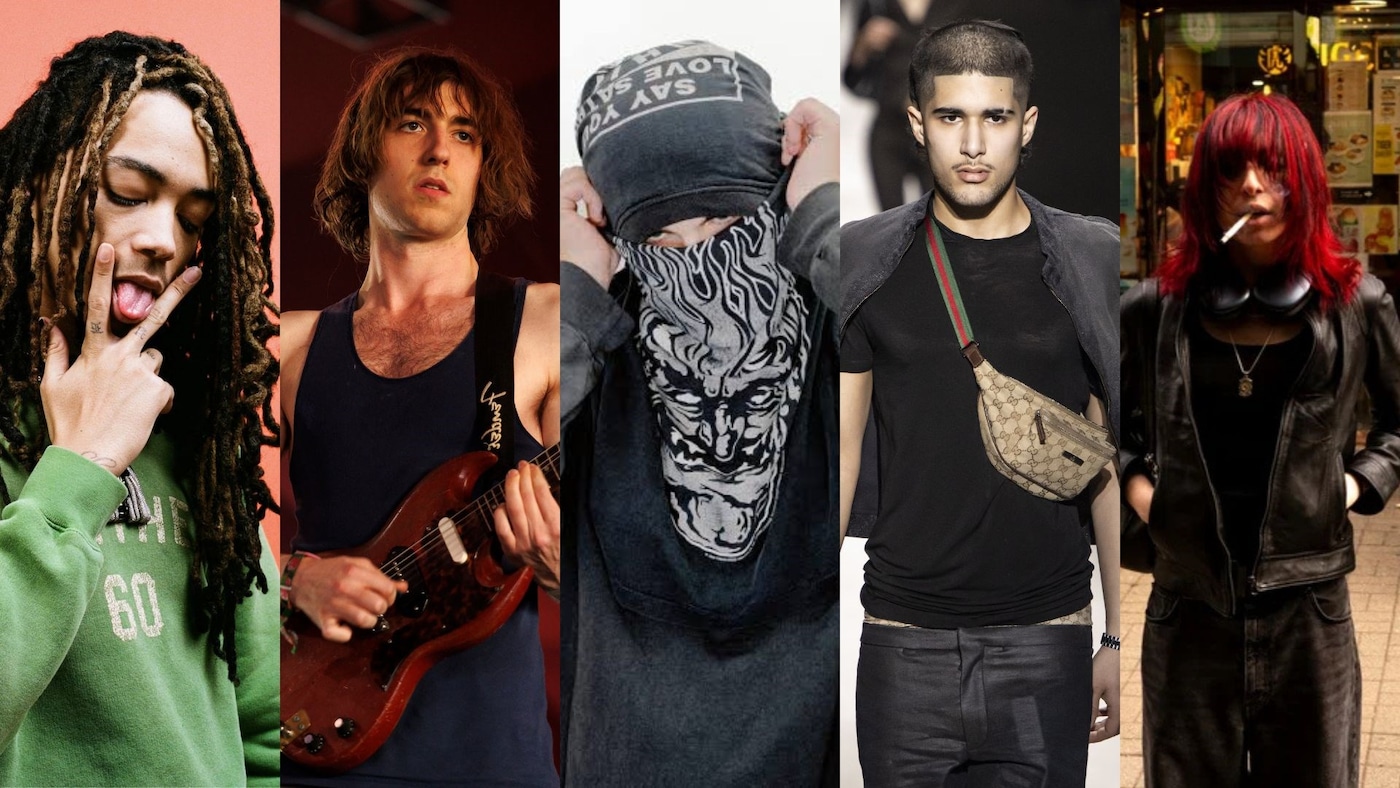
Lead collage for Dazed's feature “What does it mean to be ‘underground’ in 2026?” Photography left to right: GK; Christopher Polk/Billboard via Getty Images; press image; Victor Virgile; press image. Published by Dazed, 19 August 2026.
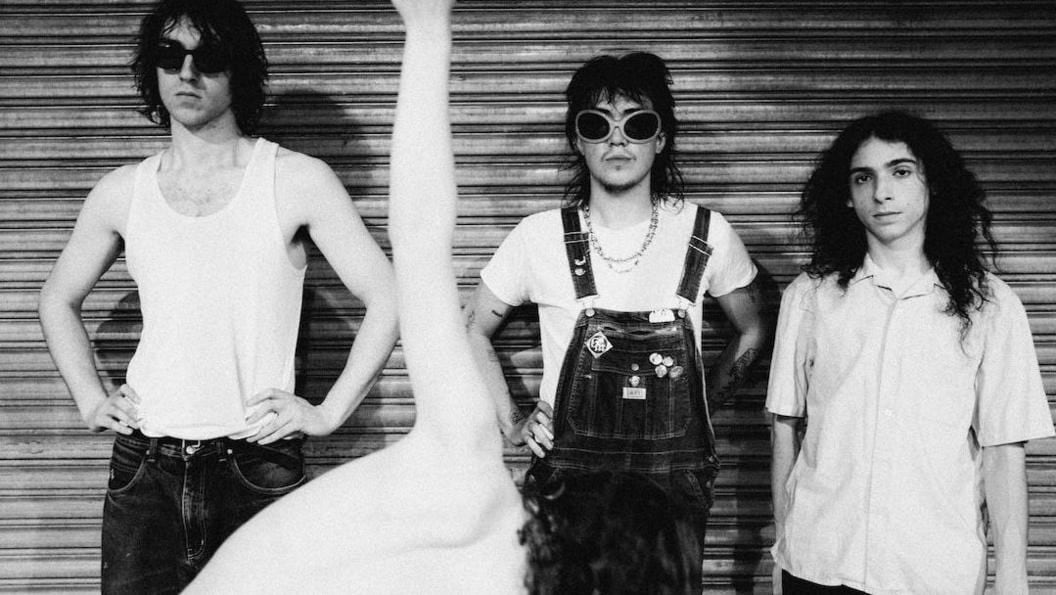
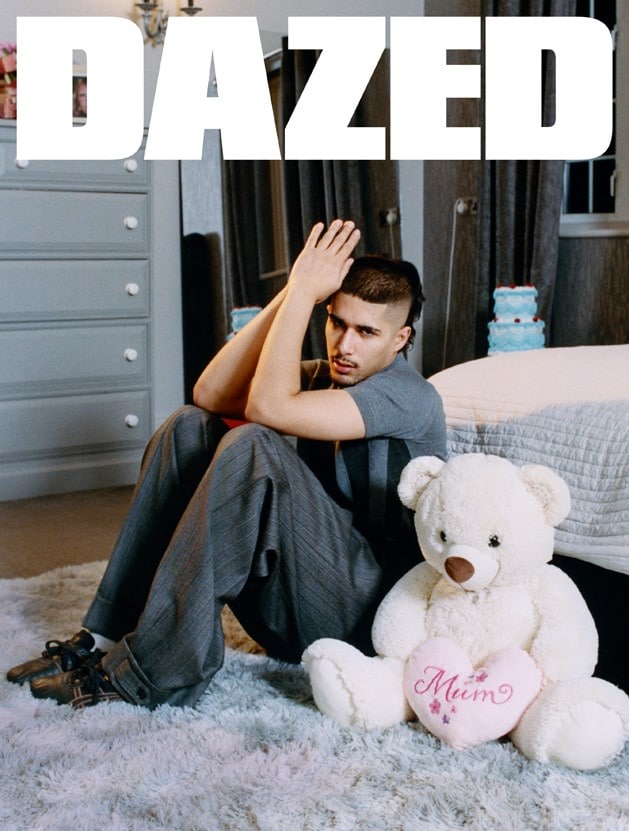
Left to right: Lancey Foux (Press, published by Dazed 24 July 2026); Geese promotional image (published by Dazed 16 April 2026); Dazed Spring 2026 cover featuring fakemink.
c. 2021
The abbreviation “Ug” first appears on Twitter and Discord, per r/ug_music moderator /u/aimanhakim249. At that stage it is still shorthand for underground
2024
Lancey Foux records Conglomerate with then-underground rappers Len and Fimiguerrero, codifying the distortion and Atlantic-bridging sonics of UK Ug
2025
fakemink breaks through; the scene coins “newgen” as a pejorative for anyone read as arriving on the bandwagon
Mar–Apr 2026
Billboard interviews marketing firm Chaotic Good, who claim they can “make impressions on anything”; on 14 April Wired frames the Geese phenomenon as a psyop and Geese-gate begins
4–9 Aug 2026
@forthespeakers posts the underground monthly-listener chart, fakemink first at 7.9m; 5 Aug The Guardian asks why nobody has heard the UK's No 1; 9 Aug the Irish Times follows
19 Aug 2026
Dazed publishes “What does it mean to be ‘underground’ in 2026?” Alongside it: EsDeeKid's reported £30m deal and Wembley headline; r/sleazepop deep in mutual psy-op accusations
01Community Voices
Verbatim: eight statements, from inside the scene to the people selling reach
All eight are reproduced exactly as published, without paraphrase. They come from two Dazed interviews, two r/ug_music moderators speaking on the record, a public r/sleazepop thread title, an anonymised label marketing manager, a marketing-firm co-founder quoted in Billboard, and the reporter's own closing line. They are ordered roughly from inside the scene outward.
Dazed · interview, verbatimLancey Foux
That’s simply what it is. What we’ve known as underground, as fully non-conformist and not mainstream, is just not really the case anymore. The shit we think is mainstream isn’t even mainstream nowadays. These kids are the biggest ones we have right now.
Dazed · interview, verbatimLancey Foux
Speaking and being seen – being visible – was a big problem for me. I avoided it for so long and I still do. I’m very comfortable living my life in the shadows.
Reddit · r/ug_music moderator, quoted in Dazed/u/aimanhakim249
I think being underground in 2026 isn’t really about having low streams or being unsigned anymore. It’s more about having a loyal community, creative freedom, and your own identity before the mainstream catches on.
Reddit · r/ug_music moderator, quoted in Dazed/u/Subject-Property-343
The fact that you have these labels and industry execs looking on [our forum] for the next big thing means that, for these kids who have a passion for making music, their dreams aren’t far out of reach.
Reddit · r/ug_music moderator, quoted in Dazed/u/Subject-Property-343
Nowadays, the internet has become pretty good at sniffing out who’s an industry plant and who genuinely has a real life fanbase, so these labels have to work harder at finding genuine talent that has longevity. People value authenticity above everything.
Dazed · anonymised label marketing managerJarvis Cooper
It’s unfair that Geese have been scapegoated here because literally every single artist is using the techniques mentioned in the Wired article. That’s just how the industry works.
Billboard · co-founder, marketing firm Chaotic GoodJesse Coren
Unfortunately, a lot of the internet is manipulation.
Context note: none of these eight contradict each other. They read more like eight altitudes over the same terrain. Placing the two Lancey Foux quotes side by side is instructive — he declares the underground category obsolete while describing his own continued avoidance of being visible. The r/ug_music moderators are relaxed about the A&R traffic on their forum: it shortens the distance to a career, and they trust the community to detect anyone planted there. The r/sleazepop title is the same confidence viewed from the other side; once detection becomes a community's core function, suspicion tends to spread inward onto its own members. Jarvis Cooper (a pseudonym) and Jesse Coren speak from the industry, and agree with each other: manipulation is the baseline, and Geese were simply the ones caught holding it. This record makes no call on whose estimate sits closer to the facts.
02Consensus Mapping
Four narratives: official, community, emerging, contrarian
Official Narrative
The industry and press account is one of dissolving lines. Algorithms have split audiences into parallel channels, which strips the mainstream of the one property that defined it — unavoidability. A single can hold number one for nineteen weeks while most listeners never encounter it. The same mechanics let underground artists collect major deals, arena dates and luxury collaborations without ever passing through monocultural saturation. Lancey Foux proposes "overground" as the replacement term, on the grounds that these artists draw from too many sonic palettes to be filed under any single genre. In this version, the underground/mainstream axis is simply an expired coordinate system.
Community Narrative
The scene's own account shifts the test from size to provenance. For both r/ug_music moderators, underground in 2026 describes a loyal community, creative freedom and a formed identity that predates mainstream attention. Label scouts reading the forum register as a net positive, because they place a career "the click of a mouse" away from a teenager with an idea. The same people believe the internet has grown competent at sniffing out industry plants. Success is permitted here; the condition attached is that nothing was faked to reach it.
Emerging Narrative
What is forming is a border relocated into language and the index. Dazed reaches for a precise word: the abbreviations, coinages and in-jokes of these forums approach steganography, encryption performed in the open. Ug, newgen, the psy-op running gag all sit on public pages, and only insiders read them at full resolution. One step further along, the names themselves begin to resist indexing: xxffcyuvcui cannot be remembered, spoken aloud or typed from memory. Hard-to-find is taking over from hard-to-accept as the entry threshold.
Contrarian Narrative
The sharpest objections arrive from two directions. One is industry disenchantment: Jarvis Cooper (pseudonym) says every artist uses the techniques Wired named, and Geese absorbed the blame for all of them; Chaotic Good's Jesse Coren puts it more flatly still. The other is harder to answer. If underground now means unsearchable, the scene has also surrendered its own inheritance — nothing unfindable gets cited, archived or stumbled upon by the next sixteen-year-old. Solomon PM demonstrates how thin the defence is in his own final sentence: he types the name, adds the link, and the door is open.
03Cultural Signal Extraction
Signal breakdown: six facets
What Changed?
The test for underground moved from scale to findability. Low streams and no contract have stopped functioning as markers in 2026 — underground artists post seven-figure monthly listeners. What still generates distance is the name, the vocabulary and the difficulty of the entrance.
Why Are People Reacting?
Two figures landed in the same August: a national number one almost nobody heard, and an underground rapper reportedly worth £30 million. When shared experience and marginal position vanish together, people go back and check whether the category still holds.
What Assumptions Are Challenged?
The old rule that selling equals betrayal has been rewritten. Scenes now permit success and audit the route instead: bought reach, agency-run fan pages. The Geese complaint attaches to the name Chaotic Good.
What Desires Are Visible?
Two at once: to be recognised by your own, and to remain unfindable by everyone else. The two Lancey Foux quotes hold the contradiction most plainly — he declares the underground gone and describes living comfortably in the shadows.
What Social Behavior Is Changing?
Verification is becoming daily labour inside communities. Who is a newgen, who is planted, whether the forum itself is an operation — r/sleazepop now extends the suspicion to visiting reporters. Doubt has moved from tool to social norm.
Future Human Behavior?
If the most effective way to stay hidden is to become unsearchable, will the next generation of credits drift toward noise? And how would a work built to evade indexing ever reach the people who come after it?
04INCODER's Eye
How we read this: six observation lenses
These six themes are the fixed frame INCODER checks every cultural signal against — closer to a set of lenses than a taxonomy. Change the lens and the same event yields a different meaning.
Information Culture
A song holds number one for nineteen weeks, breaks a record standing since 1953, and most people have never heard it. The underlying problem is arrival: past a certain content volume, reach and ranking come apart. Once "national number one" stops guaranteeing shared experience, what are we still using to judge how big something is?
Digital Identity
xxffcyuvcui is a decision: unspeakable, unmemorable, untypeable. A name exists to be called, and here that function is inverted. When the design goal of a credit becomes resistance to indexing, what carries an artist's identity forward through time?
Symbolic Systems
Ug, newgen, the psy-op joke — Dazed calls this vocabulary close to steganography, encryption performed in plain sight. These words mark position: whoever can say them is inside. How much gatekeeping is left in a deliberately illegible language once outsiders speak it fluently?
Dark Vitality
r/sleazepop has entered mutual psy-op accusation, reporters included. This is an immune response at the margin: under heavy observation, a community starts antibody-testing its own. Suspicion does slow capture, at the price of internal trust. How long can a scene run on that?
Networked Society
Both moderators describe label scouts on their forum as a net positive: a dream one click away. The decentralised community functions here as incubator and hunting ground at once, with its admins volunteering as the interface. When a community's openness is both its value and its exposure, what exactly is a gatekeeper guarding?
Perception and Attention
What Geese-gate left behind is the question "did I actually like Geese?" Chaotic Good sells the manufacture of impressions, and Jesse Coren describes this without drama. Once the source of a preference can be outsourced, how does a person confirm that their taste grew where they think it did?
05Signal Score
Signal strength
8/10
Scored 8. In favour: several independent sources hold the line up at once — The Guardian (5 Aug) documents the recognition gap around the No 1, the @forthespeakers chart (4 Aug) is public data, Billboard and Wired (March–April) preserve the marketing firm's own account and the framing that followed, Dazed (19 Aug) places moderators and an anonymised industry insider in one piece, and the r/sleazepop thread is an artefact anyone can open. What moves here is the test for the category itself, a layer more structural than any single artist's trajectory. Against: the core claim — unsearchable equals underground — rests on one case, and that case comes from a journalist's personal listening rather than any scene consensus; EsDeeKid's £30m is reported rather than confirmed; and "the underground is dead" is a headline rewritten roughly every decade, with no guarantee this round is more structural than the last. It hardens if a second or third deliberately unindexable credit appears, if platforms adjust recommendation logic around unsearchable names, or if scenes themselves begin listing "easy to find" among the markers of a newgen. It softens toward coincidence if xxffcyuvcui signs and renames within six months.
06Final Question
The deepest hidden assumption
?
We keep assuming that hard-to-find means still outside — that anything unindexed, unrecommended and unwritten-about retains some autonomy. If search has become the only terrain culture actually circulates on, is being unfindable a form of resistance, or simply a state that has not started yet?
Concealment equals freedom: that premise carries most of the history of the word underground. The twentieth-century version was concrete — the venue whose address stayed off the flyer, the tape sold only in one shop, the list passed by mouth. Difficulty of arrival worked as a filter, and anyone who cleared it was assumed to be serious. The logic required arrival to cost something, and required that cost to sort people. By 2026 most of that has been removed: everything is one click deep, and the A&R is scrolling the same thread you are. So the scene manufactures cost again — first vocabulary, then suspicion, and finally a name that cannot be said out loud.
Follow the premise and it leads somewhere uncomfortable. Resisting the index genuinely works: no algorithm can recommend you, no scout can keyword you, no discourse can spread around you. The same properties also mean the work cannot be cited, filed or accidentally found by the next sixteen-year-old. What preserved the twentieth-century underground was a set of imperfect recording devices — fanzines, reviews, dubbed cassettes — which translated hard-to-reach material into transmissible shapes. A scene that treats searchability as the enemy has also given up its own archaeology. Archaeology is what this drawer of the archive does.
The suspense this record wants to keep is small, and it sits in that closing sentence. Solomon PM types the name xxffcyuvcui, attaches the link, and then adds the caveat himself: at least, until someone hyperlinks his music in an article and the majors sniff him out. He knew what he was doing and did it anyway. This record has now done the same thing. If preservation and exposure are one action on digital terrain, how does anyone who wants to be remembered choose? This record has no answer for now.
Observation remains incomplete.
This report records an observation state at one moment.
The claim that the underground's border is migrating from geography to the index currently rests on one feature, one public listener chart, one forum thread, two industry reports and a single naming case — the most load-bearing of which comes from a journalist's personal listening. The sample is thin. These readings may be reinforced in a few months, or overturned entirely.