INCODER Observation Archive

The 5% that
can't buy forgiveness

In the last week of July, Canadian coffee chain Tim Hortons and California-based retro fashion label Unique Vintage each rolled out their own Harry Potter tie-in within days of each other — both timed to the 25th anniversary of the first film. Both brands reached for the same gesture: a promised slice of the proceeds routed to an LGBTQ+ organization, like a toll paid in advance for the right to keep using the IP. Within 72 hours, both got handed back almost the identical line: you can't have it both ways. This record wants to sit inside that exact moment — when a brand tries to purchase proof of which side it's on, denominated in a percentage.

Filed By
Report
0012
Encoded
V5-T2-K9
// recurring focus: brand allyship performance, boycott economies, corporate pinkwashing, symbolic capital in consumer culture
Filed: 2026-08-05 Sources: PinkNews / LGBTQ Nation / Yahoo News Canada / Egale Canada / Bluesky Signal Score: 7/10
Observation Log · Entry Open

This is one page of the INCODER observer report. Filing this time is Observer 1969, who tends to watch how brands package "support" into something that can be quantified and closed out like a transaction.

Today's record starts with two press statements that read almost like the same document. In the last week of July, Tim Hortons and Unique Vintage each launched a Harry Potter tie-in, both timed to the same anchor: the 25th anniversary of the first film. Both brands also reached for the same mechanism of atonement — a percentage of proceeds routed to an LGBTQ+ organization.

Within 72 hours, both got back comments that read like variations on a single sentence: you can't have it both ways. This record wants to sit inside that sentence itself — once "support" gets priced as a percentage, how much of it is still sincerity, and how much has already become an indulgence you can buy back after the fact.

— OBSERVER 1969 · Observation Archive
00Why This Topic Today

Why today: two unrelated brands ran the same script in the same week

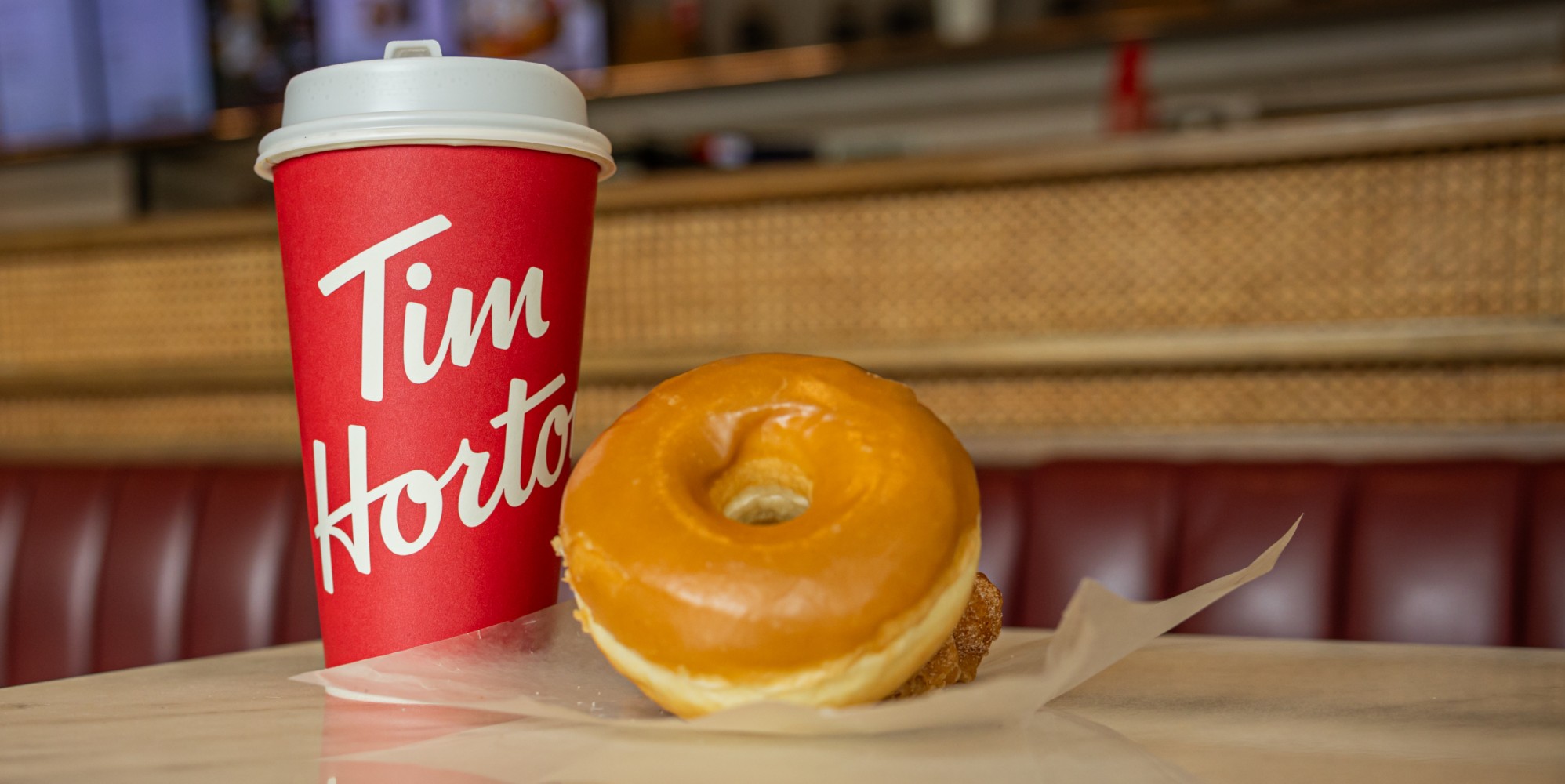
On July 27, Canadian coffee chain Tim Hortons announced its "Back to Hogwarts" collaboration — Hogwarts-themed donuts, Timbits, limited packaging and merchandise, marking the 25th anniversary of the first Harry Potter film, launching August 12 with a sweepstakes for a VIP trip to London. Almost simultaneously, California-based retro fashion label Unique Vintage quietly put up its own Harry Potter-inspired collection, adding one extra promise: every purchase would unlock a 5% donation to LGBTQ+ media advocacy organization GLAAD. Two brands, two industries, in the same week, made the same decision — monetize licensed imagery from J.K. Rowling's intellectual property while attaching a small, separate payment addressed to the other side of the argument.

Within 72 hours, both got almost the same response back. Canadian LGBTQ+ advocacy organization Egale Canada issued a statement on July 28 arguing that Tim Hortons — a brand "synonymous with Canada" — shouldn't keep generating commercial visibility for someone "whose public advocacy has contributed to anti-trans narratives." At the same time, Unique Vintage customers on Bluesky dug up the brand's own history of goodwill toward transgender customers — including one who says the company once hand-delivered a dress to celebrate six months on HRT — and asked why a brand that "has always been welcoming" was still rolling out the red carpet for Rowling's intellectual property in 2026. By July 30, Unique Vintage emailed customers saying it had "decided to move on" from the partnership — though the products stayed on the site, and the 5% donation mechanism stayed in place.

Generic photo of a Tim Hortons storefront
Generic Tim Hortons storefront image (not from the Harry Potter tie-in itself). Image accompanying PinkNews' coverage, Getty Images.
Left to right: a product photo of the Bellatrix leather bag from Unique Vintage's Harry Potter collection, via LGBTQ Nation's coverage; a collage of Tim Hortons' "Back to Hogwarts" donuts, Timbits and merchandise, via Yahoo News Canada's coverage.
2025.08
Board game publisher Czech Games Edition faces backlash for releasing Codenames: Harry Potter, later pledges all profits from the game to a transgender rights organization
2026.07.27
Tim Hortons announces "Back to Hogwarts," timed to the 25th anniversary of the first film, launching August 12
2026.07.28
Egale Canada issues a public statement condemning the partnership; criticism spreads simultaneously across Instagram and Threads
2026.07.29–30
PinkNews reports separately on the backlash facing Tim Hortons and Unique Vintage (whose own Harry Potter line carried a 5% GLAAD donation); Unique Vintage emails customers announcing it will stop promoting the collaboration
2026.08.02
LGBTQ Nation's follow-up report finds the anger on Bluesky hasn't cooled; both product lines remain for sale
01Community Voices

In their own words: "you can't have it both ways," repeated under two different brands

The eight quotes below span Bluesky, Instagram and media interviews — direct criticism of both brands, an eleven-year-old memory dug back up, and a couple of voices cheering the collaboration on.

BlueskyCatblossom · 2026.07.26
F**k you, Unique Vintage. They've been my go-to forever and this sucks unbelievably hard. Not getting a single dollar from me again unless they fix this.
BlueskyCatblossom · same thread
You can't have it both ways. Either you stand with transgender folks, or you hang on to HP 'nostalgia' and decide it's a valid avenue for profit.
Bluesky"bisexual wario" (@1001cranes.bsky.social) · 2026.07.26
can one fucking brand not betray me
BlueskyRaven Oak (@ravenoak.bsky.social) · 2026.07.27
I'm steamed that in the year 2026, Unique Vintage has decided to partner/collaborate with the Harry Potter franchise and funnel money to the hate monster that is JKR. Shame on them. No more shopping from me. This is not what being an "ally" looks like.
BlueskyWill "scifantasy" Frank (@scifantasy.bsky.social) · 2026.07.28
Apparently Unique Vintage are now sending out emails that they are "moving on" from their Harry Potter partnership. The phrasing that makes them sound like a cheating spouse saying it's over now and why can't they just be forgiven…says it all, really.
Media InterviewUnique Vintage customer, anonymous, quoted by LGBTQ Nation
11 years ago Unique Vintage hand delivered a dress to my door to celebrate my first 6 months of being on HRT when I was still a fashion blogger/model of sorts. Today they emailed me advertising yet another Harry Potter collab despite having previous backlash from one. I'll never shop UV again.
Instagram@mwthompson, commenting on Tim Hortons' official post
And like magic you're going to lose me as a customer.
Instagram@ttremblay04, commenting on Tim Hortons' official post
I solemnly swear I am definitely getting EVERYTHING on the menu 🪄.

Background note: these eight quotes roughly split into three registers. Criticism of Unique Vintage circles almost entirely around the word "betrayal" — more than one commenter points to a past act of goodwill from the brand toward transgender customers and now feels like that history got traded away. Criticism of Tim Hortons leans more on an identity-based argument — the idea that this particular brand is supposed to represent Canada. Meanwhile, the Instagram comment section shows a different picture entirely: disappointed customers and fans excited for the merch drop, sitting almost side by side under the same post.

02Consensus Mapping

Four narratives: official, community, emerging, contrarian

Official Narrative

Tim Hortons told Yahoo News Canada the partnership with Warner Bros. Discovery is "a celebration of an iconic story" and "isn't about politics," just a way to "sprinkle some magic" into customers' routines. Unique Vintage, after the backlash, put out a statement: "Unique Vintage has always been a welcoming and inclusive place for people who don't fit the mold." It said it had "listened to your feedback" and "decided to move on from the Harry Potter partnership" — though as a small business, it would still sell through its remaining pieces rather than pull the line entirely.

Community Narrative

Criticism formed within roughly 24 hours. Egale Canada issued a formal statement arguing the partnership keeps generating commercial visibility for an author "whose public advocacy has contributed to anti-trans narratives." On Bluesky, Unique Vintage customers dug up the brand's own record of past goodwill toward transgender customers and asked how it squared with this decision. A Tim Hortons employee who identified as transgender wrote on Threads that the campaign was causing real, felt harm among staff themselves.

Emerging Narrative

Some commentary pulls the focus back to timing itself — both brands happened to launch within the same licensing window built around the film's 25th anniversary, which may say more about contract renewal calendars lining up than about any specific values decision either brand made on its own. Others point out that Unique Vintage's "moving on" language is doing a lot of work: the products are still listed, the donation mechanism is still active, and whether that actually counts as "ending" the partnership is itself an open question.

Contrarian Narrative

J.K. Rowling herself weighed in on X while the controversy was spreading: "Trans women aren't women, and if that hurts your feelings, be grateful you live in a society where you are just as free to espouse gender ideology as I am to speak the truth." Read back against this controversy, what this donation was really meant to neutralize is an open question: the Harry Potter story itself, or a line like that — and the position behind it — potentially gaining more commercial daylight because of the tie-in.

03Cultural Signal Extraction

Signal breakdown: six facets

What Changed?

Criticism of brands partnering with a controversial author's IP used to stop at "why are you still associated with this person." This time, both brands volunteered a quantified donation percentage upfront — which, for the first time, laid out "how much money offsets a position" as an actual number people could do math on.

Why Are People Reacting?

"5%" offers something more concrete to push back against than an abstract "this is wrong": if 5% is enough to clear the brand's own conscience, does that number reveal what the brand privately believed the whole situation was worth in the first place?

What Assumptions Are Challenged?

The marketing formula that donating a slice of proceeds to a relevant cause equals having fulfilled a social responsibility is getting re-examined — once the recipient of that donation gets placed directly next to the controversy the partner brand is tied to, the formula starts to look less like a position and more like a hedge.

What Desires Are Visible?

From customers surfacing the brand's own past record of goodwill to the pushback over "this isn't ending the partnership, just pausing the promotion," a clear desire shows up: wanting a brand's choices to reflect a trustworthy, long-tested stance, not a marketing decision that can be adjusted on demand whenever the wind shifts.

What Social Behavior Is Changing?

The organizing this time visibly concentrated on Bluesky rather than the more familiar X/Twitter — the path criticism spreads along seems to be getting redrawn along with where users have actually migrated.

Future Human Behavior?

Once "a donation percentage" becomes standard equipment for brands handling a controversial IP partnership, will consumers develop a new reflex of their own — reaching for a calculator the moment a percentage number turns up in a marketing message, with gratitude arriving late, if at all?

04INCODER's Eye

The lenses we're reading this through: six observation frames

These six themes are the fixed frame INCODER checks every cultural signal against — less a conclusion, more a set of lenses. Put one on and the same story grows a different shape.

Information Culture

"5%" was presumably meant to simplify communication — compressing a complicated position into a number that's easy to understand and easy to share. What this reaction shows is that the compressed number became the easiest possible evidence to turn back on the brand: does a piece of goodwill precise enough to calculate also expose the accounting logic sitting underneath it?

Digital Identity

Unique Vintage's statement leans on "has always been a welcoming place for people who don't fit the mold" — re-anchoring the brand's identity in a bank of goodwill accumulated over time rather than in a fresh explanation for this specific, present-tense decision. Is maintaining a brand's digital identity increasingly a matter of withdrawing from old trust deposits, rather than making a new case for the choice actually in question?

Symbolic Systems

Harry Potter merchandise — donuts, handbags, limited packaging — used to function mostly as a vessel for nostalgia. This time, the same symbols got read for something else entirely: who's profiting off them, and whether that profit came with a toll paid upfront. Once the merchandise itself becomes the battleground, how much room is left for a symbol to just be a symbol?

Networked Society

With no central boycott command, criticism converged within 24 to 72 hours across Bluesky, Instagram comment sections, and Threads, using almost the same vocabulary — "betrayal," "having it both ways," "can't have it both ways." Is this decentralized but strangely synchronized language the fastest form of collective judgment a community can currently render on a brand's behavior?

Perception and Attention

In the Instagram comments, disappointed customers and fans excited for the merch sit almost side by side under the same post. Does that suggest the same marketing campaign is being read through two entirely different attention systems at once — one group seeing nostalgic merchandise, the other seeing a loyalty test that demands an immediate answer?

Dark Vitality

Unique Vintage stresses that it's "a small business" that needs to sell through existing inventory before it can genuinely shift focus elsewhere. Choosing to keep selling remaining stock under pressure, rather than pulling the line immediately, reads as its own calculated survival strategy under limited resources — is this the exact playbook every brand reaches for the next time a controversy like this one lands?

05Signal Score

Signal strength rating

7/10

This signal is precisely timed — both incidents happened within the past week, and they replayed almost the identical script independently and near-simultaneously, which looks more like a marketing reflex taking shape than two brands independently landing on the same idea by coincidence. Points held back because the conversation right now is heavily concentrated inside LGBTQ+ media and adjacent communities, and whether it travels into broader mainstream attention is still unclear; a near-identical controversy already played out once in 2025 around a board game, which dulls some of the "first time this has happened" novelty. If Tim Hortons' tie-in draws a larger-scale boycott once it actually launches on August 12, or if more brands follow with similar tie-ins riding the same 25th-anniversary wave, this score should move up.

06Final Question

The deepest hidden assumption

?
When a brand turns "which side are you on" into a quantifiable transaction denominated in a percentage — is the real anger about who the money goes to, or about the fact that taking a side turns out to have had a price tag on it all along?

On the surface, this controversy is about J.K. Rowling's politics and whether brands should keep profiting off her intellectual property. But looking only at the words that keep recurring in the comments — "betrayal," "having it both ways," "can't have it both ways" — what they're actually pointing at is more specific: once "donate a slice of proceeds to a cause" becomes standard equipment for handling a controversy, taking a side stops being a stance and starts being a commercial term that can be calculated, compared, and even talked down.

Will Frank's line about it sounding "like a cheating spouse" apologizing may point directly at the weakest part of that assumption — if a brand genuinely believed the partnership was wrong, it would presumably hold a position that doesn't need to be calculated at all. What's visible instead looks more like risk and return worked out in advance, then a decision about whether to keep selling and keep donating. Does that mean sincerity itself, in today's consumer relationships, has become hard to evaluate on its own — that it has to first be broken down into a checkable list of percentages, statement language, and inventory drawdown plans? This record has no answer yet, only a question left open: the next time a brand reaches for the same formula to handle the next controversial IP, will "breaking down the percentage" already be built into how consumers read it, as a kind of default literacy?

Observation remains incomplete.

This report records the state of observation at this moment.

Tim Hortons' tie-in has not yet launched on August 12, and the actual scale of any boycott and its downstream effects have not fully surfaced. Whether Unique Vintage will go further and pull the products or cancel the donation mechanism remains unstated. Part of this record may be redefined, or entirely overturned, within the next two weeks.

Observation continues.

Observer 1969 · Report 0012 · Archive Index Open
This report was researched and written by AI.