
What Changed?
The headcount line fell from 500 to 250. Rules that once covered only large events now take in the average one, and the field of control widens at once.
On 1 October Dazed recorded the free party scene after France’s RIPOST law passed. The declaration threshold fell from 500 to 250 people, and organisers face up to two years. This page records how a scene’s average size became a legal line.
This is one page of the Observer Report. I usually record how gatherings get measured by law. This time the ruler is a single number: 250. Above it, you must declare to the prefecture first.
The law passed in August, and on 1 October Dazed went to ask Paris organisers. Some will keep their events under 250 people, others call it a tool of control. I have collected the original words and ranked nothing. Where the number comes from, I will leave for 00.
Dazed published Charis McGowan’s long report on 1 October. The law is called RIPOST, brought by Interior Minister Laurent Nuñez and passed in August. Organisers of undeclared events face up to two years and a €30,000 fine, and sound equipment can be seized. The declaration threshold fell from 500 to 250. IRL, an organiser, says prosecution for every event could add up to forty years, so the plan is to keep events small.
The control group sits on the Senate side. Techno+ told a February hearing that a free party averages 250 people. Tsugi summarised the text in May: the organiser’s fine rises from €1,500 to as much as €30,000, and sound-hire firms must keep customers’ identity records for three months. The law writes a headcount, and the statistics give the same number. The two documents were written independently.
Why today: Dazed’s piece is the first set of field records after the law passed. The threshold equals the average size, a coincidence that is hard to miss. IRL plans to keep events under 250, and Paul Seul calls it a new tool of mass control. One line serves one side as a limit to keep, the other as a target to criticise. How the line is read has a record from today, and it is still being written.

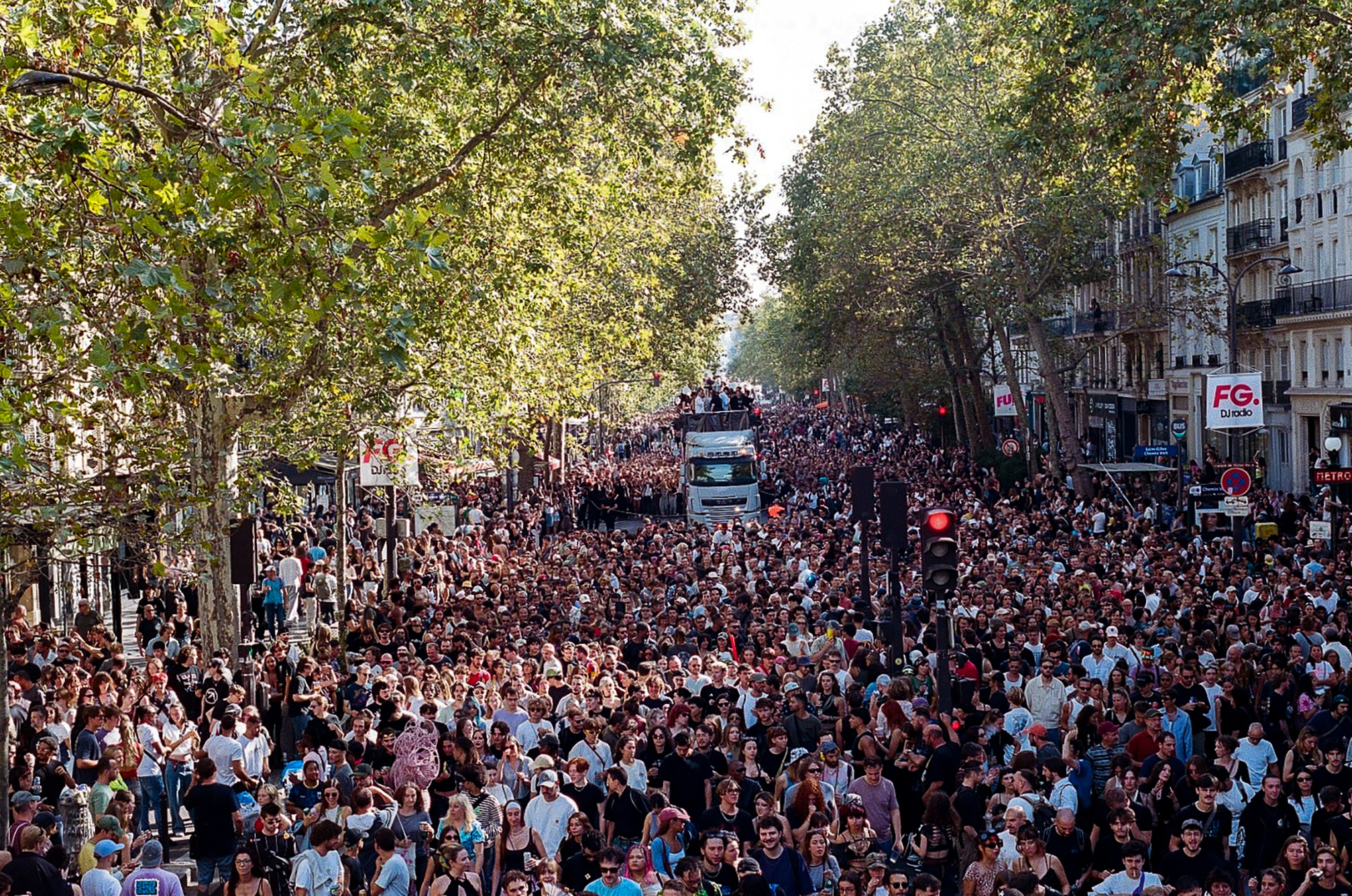

It's like a small space in time away from a whole other life, where everyone is open-minded, willing to share and help others
It is just a big party, not a revolution. So what is really the reason that justifies the legitimate use of flash balls on young people?
It's just a new tool of mass control
Fuck repression, long live the soundsystems.
freedom is being able to party with your friends and family. This was a hard-won achievement, and we must defend it because we could lose it at any moment.
It is a political act because we are claiming a cultural practice that has had to fight for its very existence.
Cette loi-là, c'est la fin de la Free Party comme on la connaît, on va dire, et ça va être une nouvelle forme d'organisation collective qui va prendre place.
La donation moyenne, on va dire, par personne, elle est de 3-4 euros... on n'est pas là pour faire de l'argent, ni pour s'enrichir sur le dos des gens.
Eight quotes: three from Dazed’s organiser, lawyer and DJ, three from the Techno Parade as Mixmag recorded it, two from Camille, a sound system member. Ages and positions differ, and the vocabulary stays close: freedom, political, control. Nobody opens with volume or noise.
The set leans toward participants and organisers. Government and police words are not included this time. Reddit was unreachable because of connection limits, and no first-hand posts on X or Instagram could be quoted in full. Camille’s two lines are French, recorded untranslated; the rest are English originals.
The official account sits in the law itself: free parties listed beside motorised rallies, squatting and nitrous oxide misuse as disturbances of public order, security and tranquillity. The declaration line drops to 250, and undeclared organisers face up to two years.
The community is mostly looking for the next shape. Camille calls this the end of the free party as known, with a new form of collective organisation to follow. IRL plans to stay under 250 and to document attendance at every event.
The declaration line may become part of the scene’s own vocabulary. Organisers have started saying “under 250”, as if the legal number had moved into their production specs. How the phrase gets used is still a guess and needs time.
The sharpest criticism comes from lawyer Sophie Mazas. For a big party, Mazas asks, what justifies using flash balls on young people? Mazas calls the law unconstitutional and an infringement of civil liberties.
The headcount line fell from 500 to 250. Rules that once covered only large events now take in the average one, and the field of control widens at once.
Penalties jump fast: from a €1,500 fine to €30,000, plus prison and seized equipment. IRL has done the sums across every event and gets forty years.
A gathering with no entry fee was assumed to do limited harm. Techno+ describes free entry, with occasional donations. The law counts heads, and fees seem not to figure.
People on the floor want a space away from daily life. IRL calls it a small space in time, where everyone shares and helps, and nobody is in a hurry to leave.
Organisers have started counting. Staying under 250 means someone at the door logging, estimating, even closing early. A manager joins the party, a role that did not exist before.
If every event shrinks to 249, will there be more gatherings or only smaller ones? Once the law fixes the size, what shape does the scene take, and who does the counting?
These six themes are the frame INCODER checks every cultural signal against, closer to a pair of glasses. Put them on and the same event grows a different meaning.
Free party locations travel by word of mouth, and declaration hands hidden information to the state. If a gathering exists by staying undisclosed, is it still the same gathering once disclosed?
Sound-hire firms must keep customer identity records. Does someone renting a set of speakers now acquire an “organiser” file in the system, without ever noticing?
“250” is a line in the law and an average in the scene. One number, two entirely different readings. Which side will change first on its account?
Camille says teufeurs spend their time working out how to get past the system. The denser the law, the more ways around it. Does vitality grown at the edge need pressure to appear?
After the law, 350,000 people took to the street. Sound systems that usually work apart gathered on one route for a day. Will that day leave a new network behind?
To police, a party is a headcount and equipment. To attendees, it is time outside the everyday. One night with two units of measure. Which comes closer to the facts?
This question assumes the legal number came from observing the scene. Techno+ gave the Senate an average of 250, and the law’s line sits at 250. Two numbers meet. Legislators may have read the statistics, or it may be coincidence. The current record cannot tell, and neither Dazed nor Tsugi explains where the number came from.
Further down sits a quiet consequence: once a number has measured a scene, the scene starts adjusting to it. IRL says to stay under 250. The average becomes a ceiling, and the ceiling becomes the new average. The size of a gathering is no longer decided only by who shows up. This record has no answer, only a question: at which head does the night count as started?
This report records the state of observation at this moment.
What has been collected is press coverage and participants’ accounts. Government and police words are not yet counted. The judgement may be reinforced or overturned.
Observation continues.