
What Changed?
Gucci's reference point shifted from one designer's hand to a cast of "types": rappers, nonnas, counterfeit dealers, hotel aristocrats. The set itself became a working store you could actually browse.
On 25 September, Demna staged Gucci's Spring/Summer 2027 show in Milan, calling it his first "complete personal vision" for the house and folding rappers, nonnas, counterfeit dealers and hotel aristocrats onto one rack — a story, he said, about belonging. Three days later, the most repeated word on the TheFashionSpot forum was "vulgar."
This is one page of the observer report. I've been tracking a specific gap for a while now: the distance between what a brand's statement says and what the forum actually argues about underneath it. That gap is usually quiet. Not this week. Demna wrote Gucci a long manifesto. The forum's first reply was two words.
On 25 September, Demna staged what he called his first "complete personal vision" for Gucci, in Milan. He framed it as belonging — as a question of who gets to redefine a house's image. Three days later, the most repeated word on the TheFashionSpot forum was "vulgar." Same show, two languages, both sincere.
On 25 September, Demna presented Gucci Spring/Summer 2027 in Milan, calling it the first "complete personal vision" of his tenure. The set became a working boutique: tracksuited rappers, floral-dressed nonnas, and counterfeit dealers in sunglasses all landed on the same rack. He said Gucci has always lived "between Florence and Hollywood."
This isn't his first manifesto for the house. Last season he talked about the edges of taste; this season he drew those edges as people. Gucci to a 60-year-old Italian man, and Gucci to a 25-year-old French girl, are "completely different things," he said — yet both had to fit the same show, the same rack.
The convergence lands on 27-28 September. nss magazine says the show brought back Gucci's "innate vitalism"; AnOther says it's "selling a dream." TheFashionSpot's forum built a different consensus: "vulgar," "screams DSquared2," "his final season." The manifesto and the verdict landed at the same time.
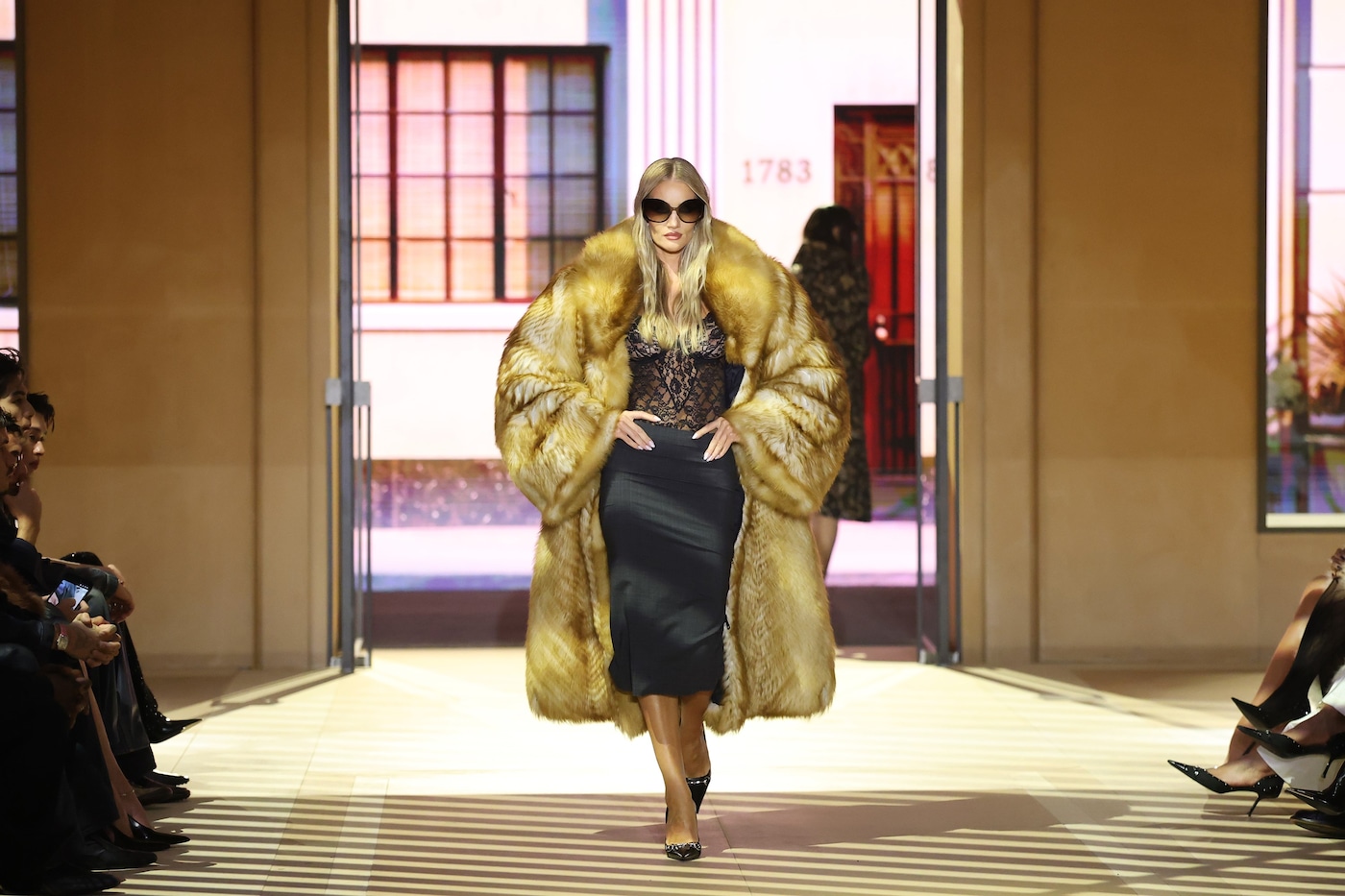
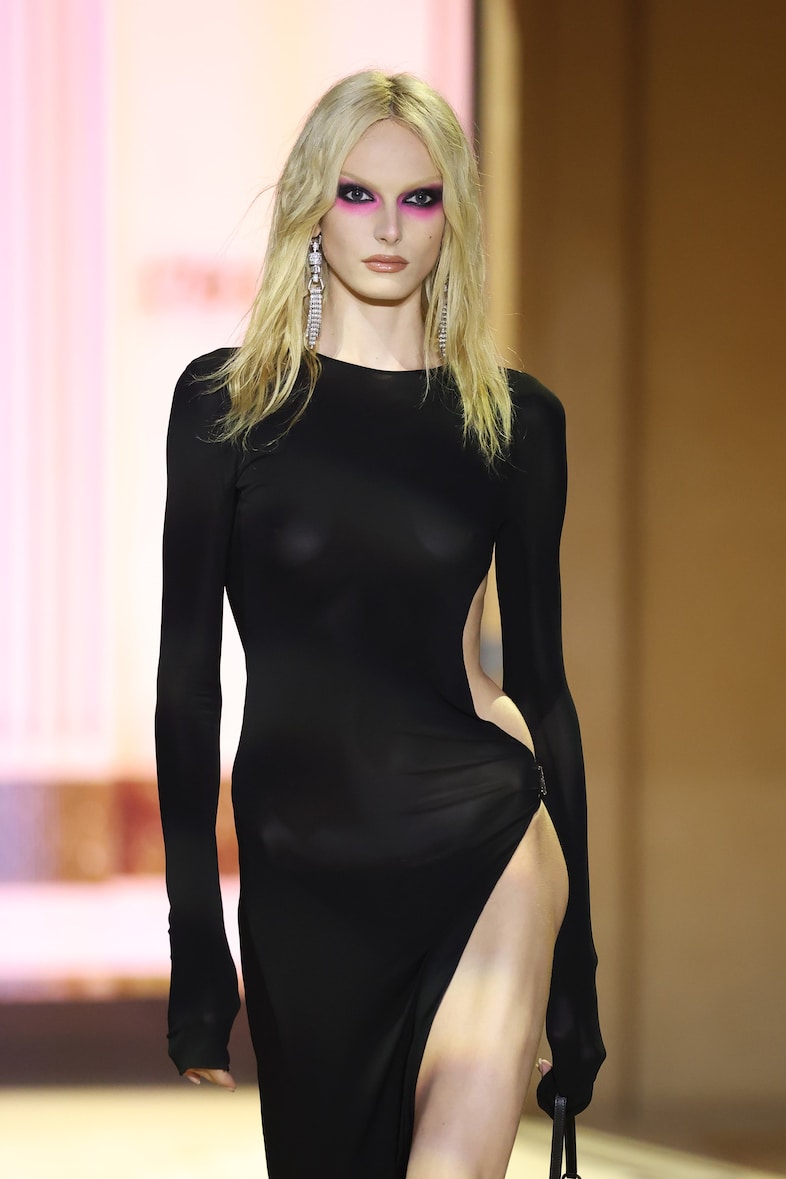
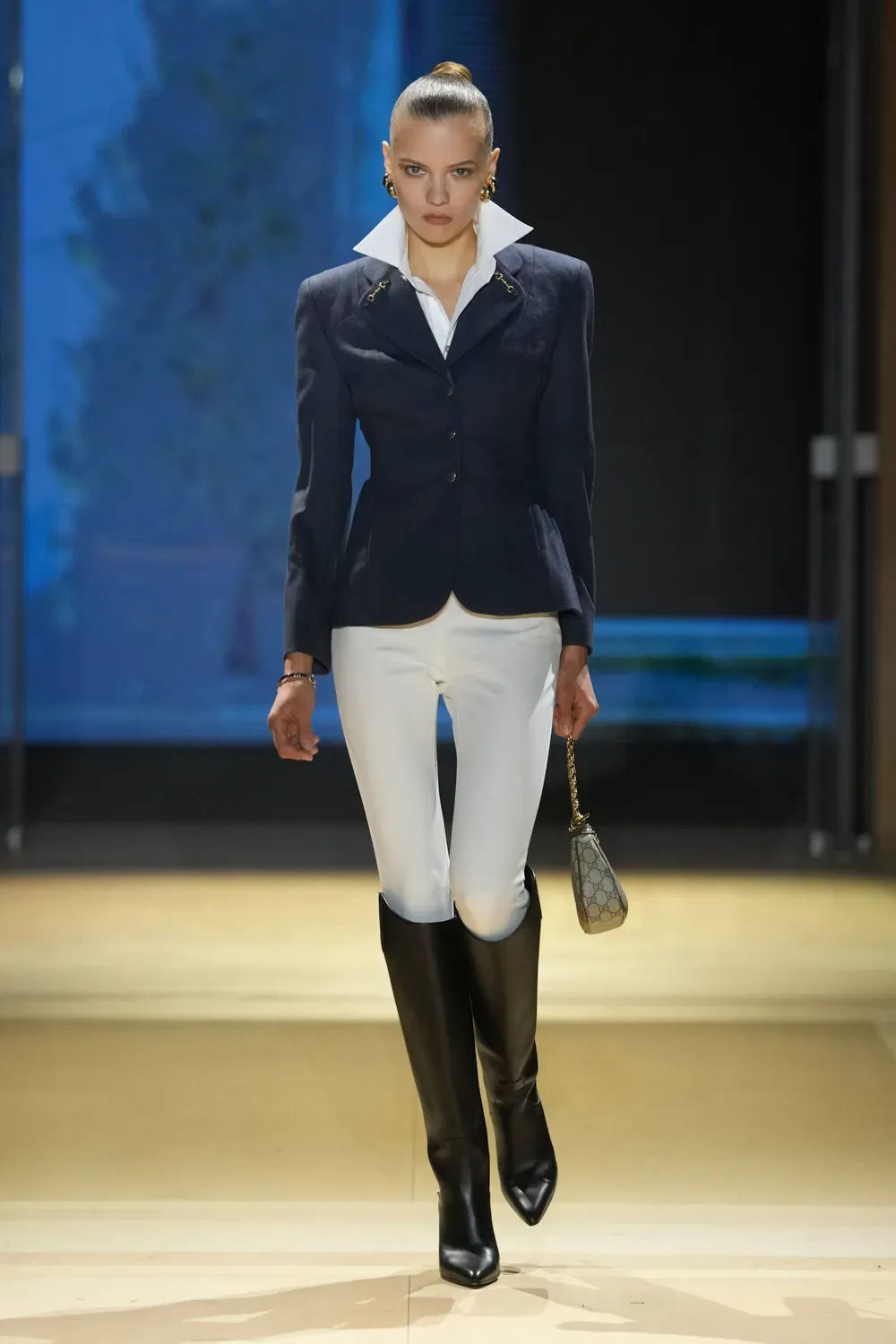
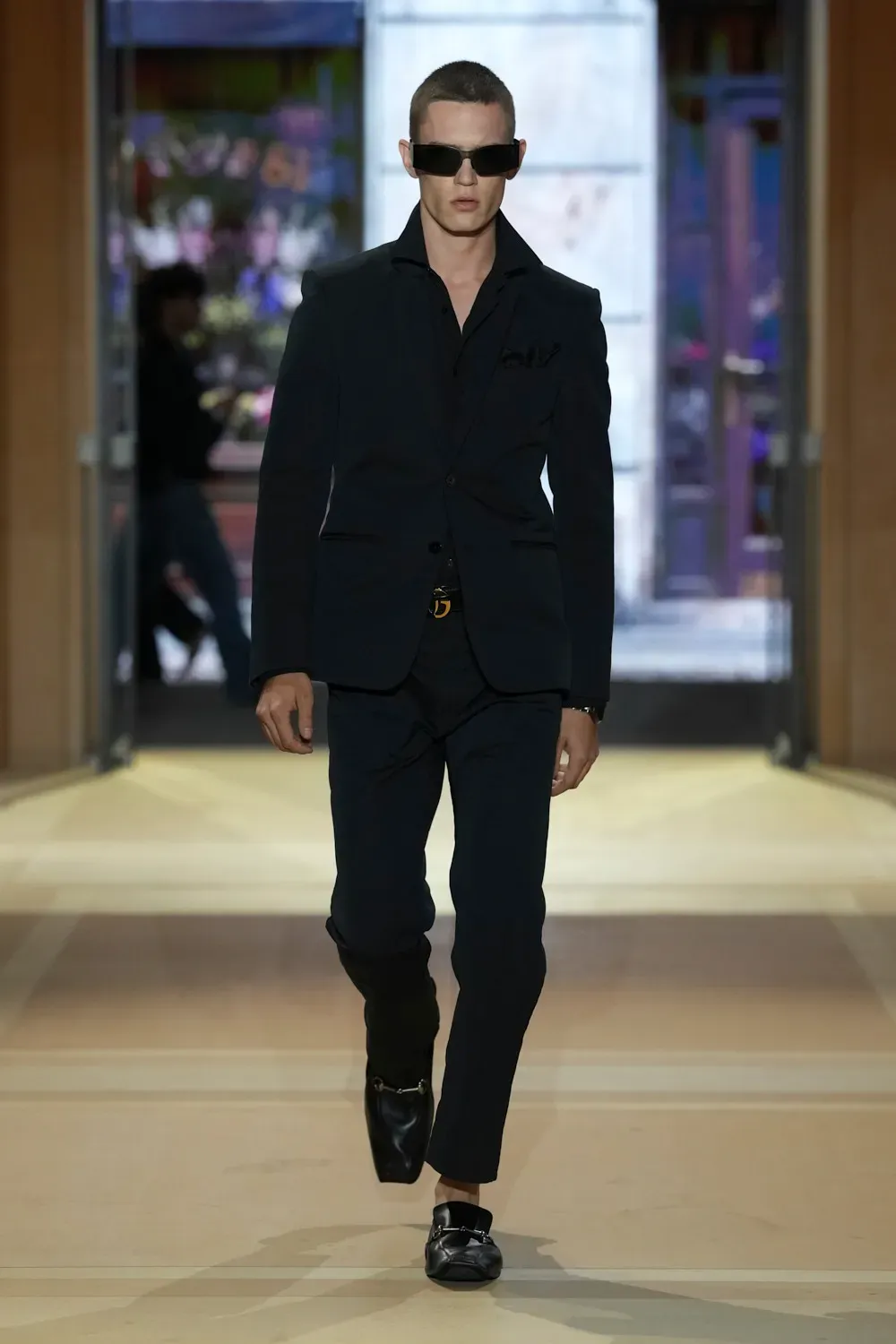
The quotes below come in two groups. The first are Demna's own words, from his Dazed and AnOther interviews. The second are unedited member posts from TheFashionSpot's "Gucci S/S 2027 Milan" thread.
Gucci moves easily between aristocracy and pop culture.
What Gucci means, let's say, to a 60-year-old Italian man is completely different than what it means to a 25-year-old French girl.
A tragedy. Haven't seen a collection so vulgar in a while...Just pure vulgarity, paired with an absolute lack of vision. Just grotesque.
What a pile of nothingness.
If this is his complete vision, he can keep it.
The manifesto is so pretentious.
What a complete tragic letdown. I think this will be his final season.
Demna's words are "belonging," "desire," "reimagining" — full sentences, internally consistent, closer to a curatorial essay. The forum's words are "vulgar," "garbage," "keep it" — short, mostly unexplained, in no mood to hand the essay an exit.
Neither side is lying. One is describing what happened on the runway; the other is describing what it felt like afterward. This record can't settle which read is more accurate — only that both documents were written the same week, about a show that doesn't look like the same show twice.
Demna says Gucci "belongs to the desire for a more glamorous world, and the audacity to remake that world in your own image." He frames the show as an invitation, not a provocation.
Thefrenchy calls the whole show "grotesque"; RobAllen4599 predicts "his final season." No one on the forum is discussing belonging — they're discussing how much longer they can take it.
nss magazine reads the same show as the return of Gucci's "innate vitalism," praising the restored attitude and character. Critics and the forum, looking at the same photographs, reach for opposite adjectives.
LadyJunon's line — "the manifesto is so pretentious" — cuts deepest, because it doesn't reject the clothes. It rejects the way Demna explained them. Even his own instructions became the show's biggest problem.
Gucci's reference point shifted from one designer's hand to a cast of "types": rappers, nonnas, counterfeit dealers, hotel aristocrats. The set itself became a working store you could actually browse.
"Vulgar" spread fast because it compresses an abstract argument about taste into a verdict anyone can grasp instantly. You don't need fashion history to know exactly what that word means.
A runway manifesto used to be treated as the key to reading the work. This time, the forum set the key aside, looked only at the clothes, and arrived somewhere else entirely.
What Demna may want is to be remembered as the one with a point of view — whether people liked it seems secondary. RobAllen4599's "final season" line, oddly, helps make that happen too.
Forums used to wait for the trade press to set the tone before piling on. This time the forum formed consensus first, and nss magazine's positive review now reads like a dispatch from somewhere else.
If critics and forums keep producing two sets of adjectives every season, does "was this show good" still have a shared answer worth arguing about?
A manifesto runs to hundreds of words; "vulgar" is one. When a single word can summarize an entire show, who still has patience for the manifesto?
Demna talks about "belonging" with real feeling. The forum reads it as a man defending his own taste. He set out to define a house — does he end up defining himself first?
A nonna's floral print, a counterfeit dealer's sunglasses — these signs used to grow on their own, on the street. Once they're on a boutique rack, do they still say what they used to say?
"Vulgar" is an insult on the forum and "vitalism" in nss magazine's review. Same trait, different venue, a different way of staying alive. Is that its own kind of survival strategy?
The forum didn't wait for the trade press to set a direction this time — it built its own consensus first. Next season, will the trade press still be the one calling it?
Demna spends his effort explaining what it means. The forum answers only with whether it looks good. If attention stays fixed on the image, will the two ever meet?
Lay out the assumption first. The whole manifesto presumes the audience will read the show through the designer's own account — "this means belonging," "this means the edge of taste" — and that presumption requires the audience to accept that language to begin with. The forum's reaction shows they don't have to accept it at all. They can skip straight to whether the clothes look good.
If interpretive authority was never really in the speaker's hands, then every brand manifesto may just be one reading among many, not the answer. This record has no conclusion yet — only a question: next time, will a designer still assume that saying something makes the audience hear it?
This report records the state of observation at this moment.
Neither side has publicly answered the other yet. No institution has formally weighed in on the gap between critics and the forum. How the conversation shifts once Paris Fashion Week opens is still unknown. What's written here may be reinforced, or overturned.
Observation continues.