
What Changed?
A small correlational study got rewritten by headlines into "TikTok is ruining your relationship."
On 13 September, a peer-reviewed study found that a partner actively following and liking attractive strangers on TikTok predicts lower relationship trust and satisfaction. Eleven days later, Dazed argued that posting a good-looking selfie of your own can actually be good for you. Same act, opposite verdict, depending on which side of the screen you're standing on. This page records how that line got drawn.
What I usually track is how something private between two people turns into public data for an algorithm to read. This time the angle flipped: watching how a partner watches someone else's selfie. Same act, different position, opposite verdict. That's the gap I want on record.
One study says following and liking a good-looking stranger on TikTok chips away at a couple's trust. The same week, another piece says posting a good photo of yourself can actually be healthy. Nobody did anything wrong here, and yet they land on opposite sides. What I want to note is that who's scrolling matters more than what gets scrolled.
On 13 September, a psychology journal published new research. Lead author Alexandra Black surveyed 65 couples, 130 people total. The finding was blunt: a partner actively following and liking attractive strangers on TikTok predicts lower trust and satisfaction between the two; passively scrolling past them didn't.
Eleven days later, Dazed ran a piece on the other side of the same word. Psychiatrist Sarah Oreck said posting a good photo of yourself isn't inherently a problem — what matters is why you post it, and whether you get hooked on the likes afterward. Eleven days apart, both pieces are really about the same selfie.
Put the two documents side by side, and the contradiction shows. The poster gets told this is self-affirmation. The viewer gets told this is a warning sign. Same photo, different position, opposite verdict. That gap landed on the table this same week, from both science and the press — worth recording now.
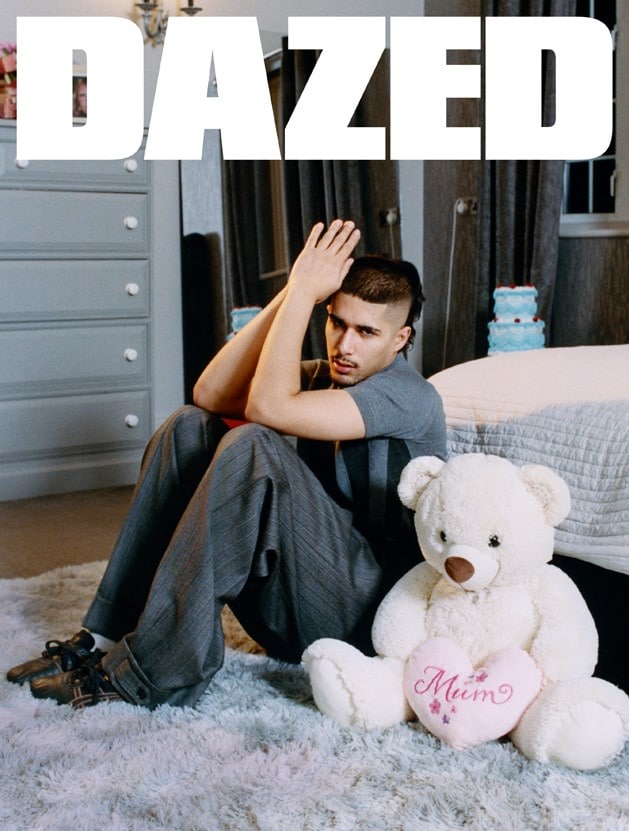


All six quotes below are verbatim, unedited. All six come from the same Lipstick Alley forum thread, on whether posting a thirst trap while in a relationship is a problem.
If you wanna thirst trap, do you, but it's embarrassing to see people who post obvious thirst traps and try to add some faux insightful ass caption.
I do think it stems from low self esteem, because if you're truly confident then you'll have respect for yourself to not post degrading photos.
the most insecure ones thirst trap. They don't have too much else going for them and SM has made people crave validation.
Insecure people seeking external validation to feel desirable/attractive post thirst trapping photos. It's a very sad life to be honest.
Definitely insecure women... that's why fuckbois stay winning. They are attracted to the scent of low self esteem like sharks to blood.
Why yall hanging with insecure folks? Not good for you spiritually
All six lines come from the same forum thread, on the same question: what to make of posting a thirst trap while in a relationship. The tone is nearly uniform — low self-esteem, craving validation, needing outside approval. Nobody steps in to complicate it.
That uniformity is itself a signal. Once "posting a selfie means you're insecure" becomes a forum's default answer, what's actually being argued has quietly shifted. The real question becomes who gets to stand outside the thread and rule on someone else's self-esteem.
Study author Black says what actually protects trust is a partner simply not being tempted by an attractive stranger — being seen matters less than that.
Forum comments flatly brand anyone posting a thirst trap as insecure: Normal girl writes that the most insecure ones post, because they don't have much else going for them.
Dazed, citing a psychiatrist, argues posting itself isn't the symptom — dependency on the likes is. The focus quietly shifts from the act to the motive behind it.
The study surveyed only 65 couples, mostly heterosexual, using self-reported correlational data — a distance apart from the flat causal tone of the headlines covering it.
A small correlational study got rewritten by headlines into "TikTok is ruining your relationship."
Everyone has checked who their partner liked; this study just dressed that habit up as science.
The forum's snap judgment — posting a selfie means low self-esteem — gets quietly undercut by the same week's psychiatrist.
Some want to be seen; others want proof they're still wanted. Both desires live inside the same single act.
Checking who a partner liked is shifting from "paranoid" to a habit a published paper now backs.
If even a like history can be read as a trust metric, what intimate behavior gets quantified next?
These six themes are the standing frameworks INCODER checks every cultural signal against, more like a set of glasses. Put a different pair on, and the same event grows a different meaning.
A study of just 65 couples got compressed by headlines into one flat claim. Does information lose everything but its loudest half in transit?
The poster calls it self-affirmation; the viewer gets read as a warning sign. Does one photo's digital identity ever carry just a single answer?
"Thirst trap" started as a half-joking piece of internet slang. Now it's asked to carry a scientific measure of relationship trust. Can the word hold that weight?
Following a stranger online might just be a way of checking you can still be drawn to something. Does that checking count as a survival instinct?
Checking a partner's like history is turning into surveillance with a paper behind it. Does intimacy need its own terms of service now?
Same act — the poster gets praised, the viewer gets blamed. Is the direction of attention the real basis for the verdict?
Start with the assumption itself. Underneath this whole judgment sits an unspoken rule: how you present yourself is your own business, but how someone else reads another person's self-presentation gets treated as something the relationship is accountable for. Same photo, read from a different position — the logic doesn't line up.
If that holds, what actually needs managing in a relationship may have already shifted target: from what got posted to who watched, for how long, and whose likes got pressed. Is trust quietly being redefined as behavioral data that can be logged and measured? This record doesn't have an answer yet.
This report records the state of observation at this moment.
The scale and representativeness of the study's sample haven't been tested by a larger replication; direct community reaction to the study itself is still building; whether "checking a partner's likes" gets formally named as a behavior pattern remains open. What is judged here may be reinforced, or overturned.
Observation continues.