“I already have the short end of the stick” A Twitch streamer held his first show at New York Fashion Week; close to 800,000 watched live, and the argument was about whether he should be there at all
8pm, 12 September 2026, Cipriani in New York’s Financial District. Kai Cenat — 24, the most-subscribed streamer on Twitch, over 21 million followers — sent his brand VIVET down a runway for the first time. Three acts, opening with the first “Beginner Hoodie” he sewed himself and closing on floor-length fur and leather trousers. Alton Mason walked; so did his streaming friends Duke Dennis, RayAsianBoy and BruceDropEmOff. Lauryn Hill and Law Roach sat in the front row. The whole thing was livestreamed; USA Today put the Twitch audience alone at close to 800,000. As the last look came off the runway, 21 pieces went on sale. For the next two days the loudest question online had little to do with the clothes. On 14 September, Dazed printed it as a headline: does he deserve to be at New York Fashion Week? This page records that question, and why it was the one asked.
// recurring focus: internet vernacular, parasocial performance, fandom-to-mainstream cultural migration, algorithmic authenticity; the audience as a credential; the gate that opens for the front row and closes for the runway; who is permitted to convert attention into authorship
This is one page of the observer reports. What I keep watching is the same event in different costumes: a language, an identity or a crowd that grew up online arrives at the door of mainstream culture, and something happens at the door. Sometimes it opens. Often it opens halfway — take a front-row seat, post the story, be the promotional muscle. It rarely opens wide enough to let you walk the runway yourself.
This week’s sample is Kai Cenat. On 12 September his brand VIVET showed for the first time at New York Fashion Week. He stopped streaming for nine months to get there, went to Italy to learn pattern-making and leather, filmed the whole process, wrote it into a journal, then printed the journal as the invitation. The show was livestreamed to something close to 800,000 people at once. And when it ended, the biggest argument landed on a very old question: whether he had the right to be standing there.
I took the title from something he said in a vlog before the show — “I already have the short end of the stick.” He knew the doubt was coming and he named the reason himself: too many people walk into clothing, put their name on it, get paid and leave. What this page wants to record is the shape of that doubt. Almost none of it was about garments. It was about the route — one that skips school and internships and grows straight out of the audience — and what a route like that counts for inside this system.
— OBSERVER 127 · Observation Archive
00Why This Topic Today
Why today: four days after the show, what people are still arguing about has come loose from the 21 garments
Facts first. In October 2025 Kai Cenat stopped streaming. On 6 December he posted a video on his YouTube channel “kai’s mind” revealing the name and logo of VIVET (Latin; his gloss is “he, she, or it will live forever”). The next day, at the Streamer Awards, he announced he wanted to be a fashion designer. On 13 January 2026 came a 23-minute film, I Quit, with his mother, with the stylist Law Roach, with footage of him learning to sew and then learning fabric in Italy. On 20 January he sat at Louis Vuitton and 424 during Paris men’s week with the VIVET journal in his hands. On 6 July he returned to Twitch; the comeback stream passed a million viewers across platforms. On 29 August the NYFW show was announced, and billboards carrying nothing but the logo appeared around New York.
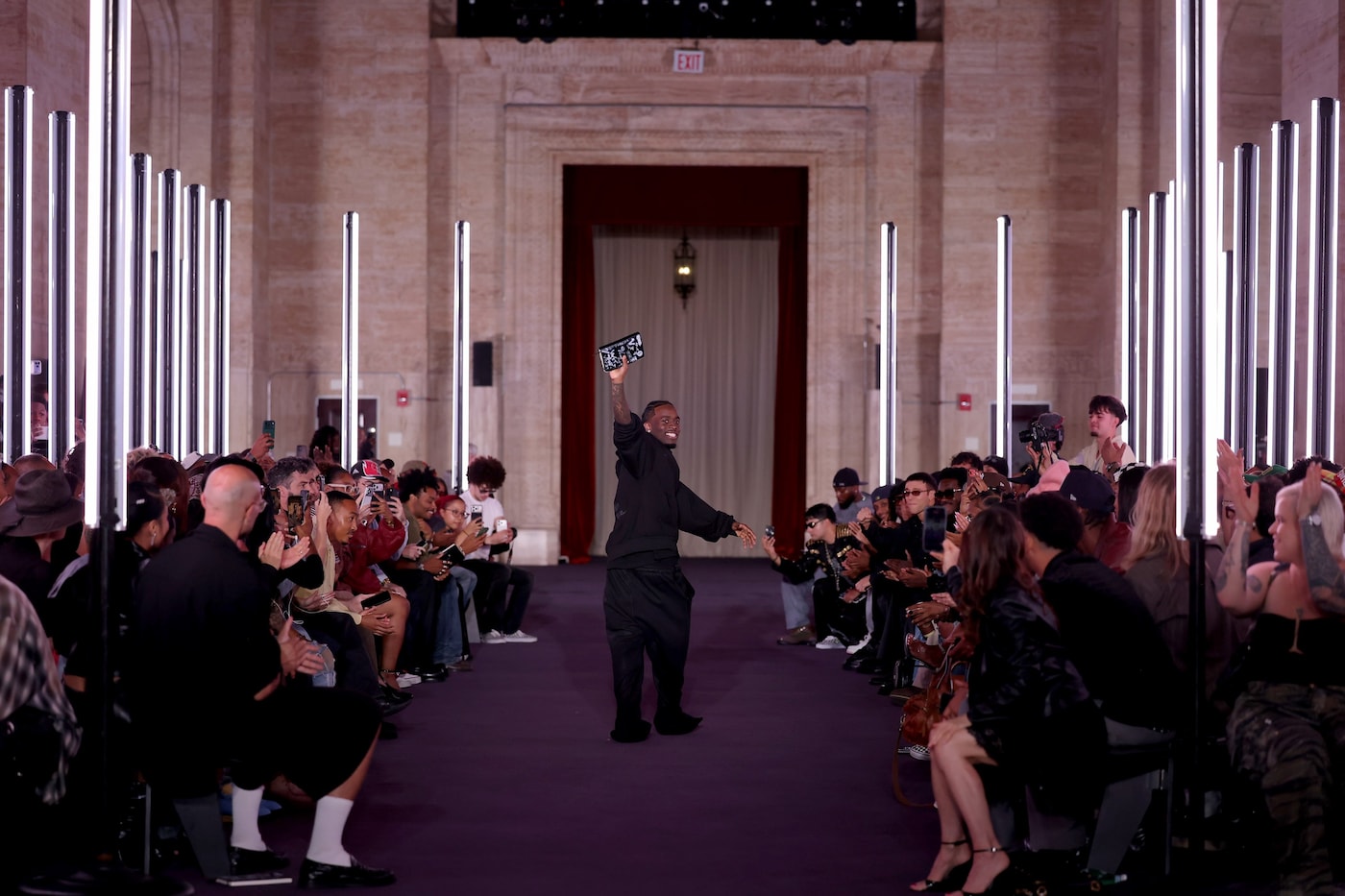
Then the show. 12 September, Cipriani, three acts. Act one was his early work — the Beginner Hoodie, sweatpants, rough on purpose. Act two was heavy leather, overcoats, denim, structured boots. Act three was tighter tailoring; his line to GQ was that “Act three [is] ultimately where you outshine your past self and you shed into this new life and new beginnings.” Half the cast was his streaming circle — Duke Dennis, RayAsianBoy, BruceDropEmOff — and half was fashion’s: Alton Mason, the first Black male model to walk for Chanel, closed in a floor-sweeping fur coat. Lauryn Hill, Law Roach and Jaden Smith were in the front row. Everything was livestreamed. Dazed counted over 180,000 watching the stream; USA Today counted close to 800,000 on Twitch alone. Both numbers are recorded here. Which is concurrent and which is cumulative reach, neither source says.
Then the prices, because they are one of the few parts of this argument that touched the objects. Twenty-one pieces, on sale the moment the show ended. The journal at $20, the Beginner Hoodie at $160, sweatpants at $140. A Moto Top at $220 and an Electrician Boot at $320 in the middle. At the top, a leather button-down at $800, leather trousers at $995 and a crackled-leather raglan jacket at $1,195. And one object that belongs to no existing category: a $550 “Streaming Backpack”, which is a replacement shell for the TVU One, the cellular-bonding pack IRL streamers wear to hold a signal outdoors. On the New York Times Popcast he said it was one of the first things he drew in the journal, in his first month of making clothes, and that he wanted people to see it and think: “Whoa, he’s connected something from his world and plugged it into our world.”
Then the shape of the reaction. The two most-circulated Instagram lines were “Feels like he watched a couple of Rick shows and called it a day” and “Money will never buy a unique vision”; on X someone called it “YEEZY Season cosplay with influencer pricing”. Business of Fashion called him Gen Z’s answer to Virgil Abloh. Sophie Wilson, writing for Dazed on 14 September, described the pattern: most of the criticism picks apart his credentials rather than the clothes, and asks whether he should be there rather than what is there. She added a line worth keeping — fashion has spent years courting influencers and streamers as front-row guests and promotional muscle; “maybe the discomfort starts when they stop amplifying someone else’s brand and start building their own.” This page is filed today because, four days on, the clothes have receded and the question is still on the table.
VIVET Collection 1, 12 September 2026, Cipriani, New York. Photography Thomas Concordia / Getty Images, as published by Dazed.
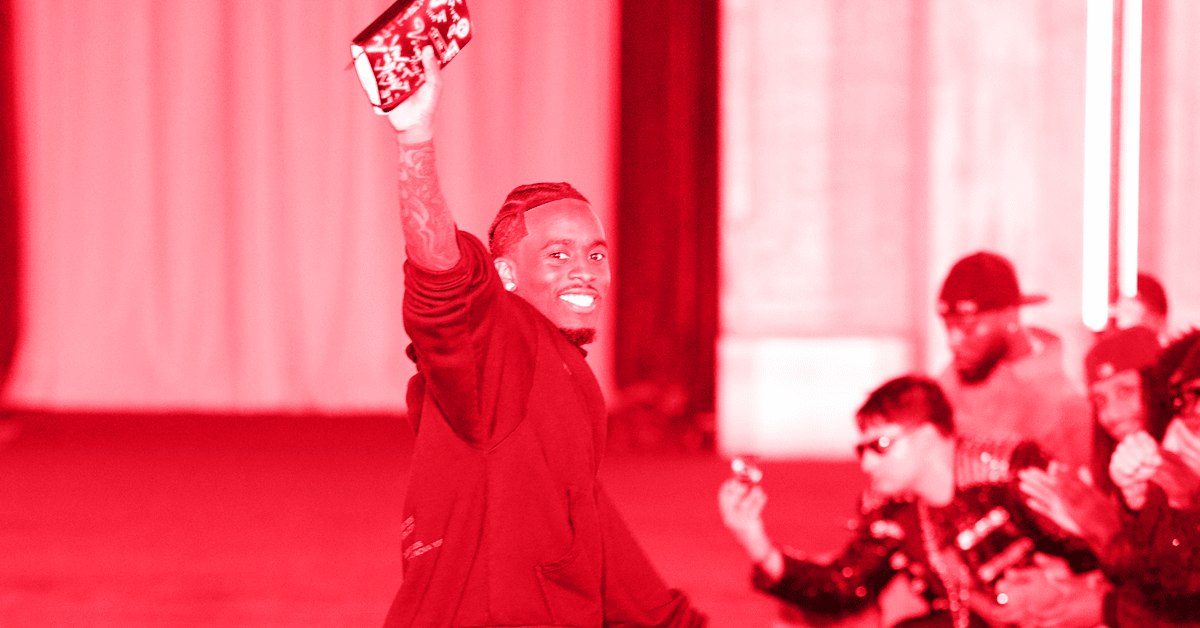
Left: Getty Images show photograph, as published by TheGrio. Centre: Dexerto’s overview of Collection 1 and its prices. Right: Complex’s coverage image. Placed together for one reason: none of the three can answer “should he be there”, and that was the question asked most this week.
2025.10
Kai Cenat stops streaming. No public reason at the time; his subscriber count stays near the top of Twitch throughout the hiatus
2025.12.06–07
YouTube video reveals the VIVET name and logo; the next day at the Streamer Awards he announces he wants to become a fashion designer
2026.01.13–20
I Quit goes up: learning to sew, Italian fabric, Law Roach as mentor. A week later he is in Paris men’s week with the journal
2026.07.06
Returns to Twitch; comeback stream passes a million viewers across platforms. Announces that select orders will ship with the VIVET journal
2026.08.29–09.10
NYFW show announced; replica journals sent as invitations; logo-only billboards around New York; a short film of sweat, stone and religious objects released days before
2026.09.12–14
Three-act show at Cipriani, livestreamed, see-now-buy-now. Within 48 hours Instagram, X and Threads converge on a single question; Dazed prints it as a headline on the 14th
01Community Voices
Verbatim: eight statements, from the person who walked, the people who watched, and the people who felt skipped
All eight are reproduced verbatim, unedited. One is Kai Cenat himself, speaking to KidSuper’s Colm Dillane in a pre-show vlog (as quoted by TheGrio); two are anonymous Instagram comments quoted by Dazed; four are posts from named accounts on X (Twitter), 13–14 September; one is from the fashion critic Ayọ̀ Òjó (Fashion Roadman) on Instagram. One feature to note first: of the eight, only two are actually about what the clothes look like. The other six are about who he is and how he got in.
YouTube vlog · in conversation with Colm DillaneKai Cenat
I already have the short end of the stick. One, because I’m a creator and I’m a streamer. So, everybody, not everybody, but some people who really have a passion for fashion, they’re doubting me. They’re doubting me, which I don’t blame them for because a lot of people have came into the clothing world and just slapped their name on the brand, got paid, and just left.
Instagram · comment (as quoted by Dazed)Anonymous comment A
Feels like he watched a couple of Rick shows and called it a day.
Instagram · comment (as quoted by Dazed)Anonymous comment B
Money will never buy a unique vision.
X (Twitter) · 14 Sept 2026@westdayever
Every new VIVET pic makes it worse 😭 this is literally YEEZY Season cosplay with influencer pricing……
A lot of people who went to fashion school feel entitled to opportunities just because of a degree. Kai created his own platform, lane and audience separate to the industry and is utilising it.
X (Twitter) · 13 Sept 2026 (post truncated at source)@NizzyHypeTalks
Unpopular opinion: Kai Cenat Vivet fashion show exposed how much impact the people wearing clothes is vs the people who made it. Kai is LARGER than the fashion world and recruited/had so many big names in attendance because of it. To the point where his brand was the talk of…
X (Twitter) · 13 Sept 2026@rianphin
vivet looks like a lot of first shows, especially in ny. i think people are mad it’s such a big show with celebrity presence
X (Twitter) · 13 Sept 2026Louis Pisano
everybody’s being very weird about Kai Cenat & Vivet. Not liking it is one thing but I don’t think it warrants this level of dramatics. Also something something something about Black people in fashion that are overly preoccupied with gatekeeping
Context. Start with Cenat’s own statement. Before the show he laid out the case against himself — too many people come in, put their name on it, get paid, leave — and then said he did not blame the doubters. The statement sits in an odd place: it is a defence and a self-declaration at once. He lists “creator” and “streamer” as his first disadvantage, which is an admission that in this room, origin gets read before work.
The two Instagram lines and @westdayever’s post are the part of the criticism that actually touched fabric: Rick Owens, Yeezy Season. Their point is that the references are too visible. @rianphin offers a flat counterweight — a lot of first shows look like this, especially in New York; what people may be angry about is the size, the celebrities filling the front row. These two readings do not contradict each other. They measure the same object on different rulers: one for originality, one for how big a newcomer is supposed to be.
Òjó and @NizzyHypeTalks each move the question from clothes to route. Òjó says a degree is not a credential and that Cenat built his own lane. Nizzy is blunter: the show exposed that the people wearing the clothes carry more weight than the people who made them. The second claim has been quietly understood in fashion for a long time; this week a streamer performed it in front of 800,000 people. Pisano’s post closes the set by treating the temperature of the argument as the thing worth observing: disliking it is one matter, this much drama is another. In passing he touches something this record leaves unpacked and simply notes — part of the gatekeeping conversation here is a conversation inside Black fashion.
02Consensus Mapping
Four narratives: official, community, emerging, contrarian
Official Narrative
The brand’s side speaks of process and sincerity. Cenat explained the three-act structure to GQ: act one is his roughest starting point, act three is where you “outshine your past self”. The invitation said the brand was born of “manifestation, knowledge acquisition, discipline, teamwork and having faith”. After the show he told press that whether it succeeds or fails, he wants people to know he actually tried, actually committed, actually learned how it works and was actually part of the whole process. Business of Fashion supplied the most elevated version: the line owes aesthetic debts to Demna and Ye, but the community at the project’s core makes him “Gen-Z’s answer to Virgil Abloh”. All three sources are saying one thing: the process is part of the work.
Community Narrative
The community splits into layers that barely speak to each other. The loudest layer is about references: Rick, Yeezy, “money will never buy a unique vision”. The second is about price: a $1,195 leather jacket, a $550 streaming backpack, the phrase “influencer pricing” recurring. The third comes from people who studied fashion; on Threads, someone called a NYFW debut less than a year after the announcement “a slap in the face”. The fourth defends him: Òjó on degrees, @rianphin on what first shows look like. A fifth is small but recorded: @taeseru wrote that “vivet does not look bad. it’s getting weird and a tad bit #antiblack”. Across all five, almost nobody is discussing how the 21 garments wear.
Emerging Narrative
The reading now surfacing is the one Dazed proposed: the argument is measuring the angle of a door. For over a decade fashion has invited bloggers, influencers and streamers in — sit in the front row, go live, amplify us. At that position the door was open. What differs this time is that the same person walked from the audience onto the runway, and at that position the door appears to tighten. Wilson’s observation: a musician launching a clothing line barely raises an eyebrow now; a streamer doing the same still provokes a different kind of suspicion. If the reading holds, what to watch next is whether the line moves — whether the next person who walks straight from a stream onto an official schedule is measured with the same ruler, or a new one.
Contrarian Narrative
The coldest voice comes from streaming itself, and it is largely indifferent to fashion’s question. Watching VIVET on stream, xQc called runway shows a “waste of time” — “you don’t even know what the clothes are” — and compared the look of the fabric to “one-ply toilet paper”, adding “I’m not being a hater. I’ve been saying this for years.” That voice removes the premise of the whole argument: if the runway as a format has no meaning, then who deserves to stand on it is not worth fighting over. A second cold angle is @NizzyHypeTalks’s truncated post — the show proved that the people wearing clothes matter more than the people making them. On first reading it defends Cenat; on second reading it explains exactly why some people are angry. This record does not rule on either. It notes only that both voices come from outside the system.
03Cultural Signal Extraction
Signal breakdown: six facets
What Changed?
For the first time an audience count appeared at fashion week as part of the work itself. An influencer’s audience used to be a promotional resource bolted onto someone else’s brand. Here the audience is the foundation: the show is streamed, the models are streamers, the backpack is for streamers, the journal is for viewers to buy. Matilda Djerf staged a one-off NYFW show in 2023, but she was an influencer with a fashion background running a direct-to-consumer business. Someone with no fashion background at all moving the audience into the official schedule is new on the route. The clothes, by most accounts, are not.
Why Are People Reacting?
Because what got skipped is a whole set of rituals considered necessary: school, internships, years of unnamed work, resources accumulated slowly. For many people those rituals are sunk cost. The “slap in the face” line on Threads is about this — someone reaching the end in under a year makes the people still on the road see their own price again. There is also a very physical reason the reaction is this large: the show was large. @rianphin put it plainly — had this been a small first show, most people would not be angry.
What Assumptions Are Challenged?
“A designer is someone who sews” — Dazed points out most major houses’ clothes are made by teams. “Credentials come before work” — Òjó asks why a degree equals a right. “Influencers belong in the front row” — this time someone from the front row staged the show. “Criticising the clothes is criticising the clothes” — this week’s criticism was mostly about the route. Of the four, the last is the least openly admitted, and six of the eight verbatim statements demonstrate it directly.
What Desires Are Visible?
On the surface, the wish to have effort seen — Cenat said “I actually tried” three times in one sentence. Beneath that, the wish for a fair entrance: people who studied want the degree to be worth something; people who did not want the audience to be worth something. Quieter still: the wish to confirm that the system one belongs to still has a door. Gatekeeping angers people and reassures them at once — it proves the gate exists. Pisano’s “this level of dramatics” may be the volume that reassurance makes when it feels threatened.
What Social Behavior Is Changing?
Learning is becoming a public performance. Cenat filmed the sewing lessons, the Italian pattern rooms and the conversations with Law Roach, cut them into videos, wrote them into a journal, printed the journal as the invitation, then sold the journal for $20. This inverts the old model of ten silent years in a studio: the process is consumed first, the work arrives after. @NizzyHypeTalks said the show exposed that the wearers outweigh the makers. Put another way: the person who shows the process is seen before the person who finishes it.
Future Human Behavior?
If an audience count can be exchanged directly for a slot on an official schedule, who is next — another streamer, a TikTok account, a Discord server? If “watch me learn” is sellable content, will schools start streaming? If criticism keeps migrating from the work to the route, what does fashion criticism become — a form of identity vetting? And if the $550 streaming backpack is actually worn out on the street by IRL streamers, does the signal pack become the next piece of workwear fashion absorbs? This page has no answer yet.
04INCODER’s Eye
The lenses we read this through: six observation frames
These six themes are the frames INCODER checks every cultural signal against. They work more like a pair of glasses — put them on and the same trend grows a different meaning.
Information Culture
There is a line in the Dazed piece that is rarely quoted: online, everything has to be “instantly iconic or the worst thing fashion has ever seen” to cut through. The two poles this show received — “Gen-Z’s answer to Virgil Abloh” and “Yeezy cosplay” — sit at either end, and the clothes as they actually are fall in the middle, where nobody stays. When the volume of a review depends on its distance from the centre, does an ordinary first show still have any chance of being described plainly?
Digital Identity
Cenat runs three accounts: the main channel, “kai’s mind”, and a “hidden” Instagram called kc3hidd3n. Each carries a different self — the performing one, the thinking one, the private one — and the whole VIVET apprenticeship was routed through the second and third. It is a deliberately layered publicness: what he chose to let the audience see was the self still learning. When a person’s in-progress version is itself the content, which identity counts as the designer on the day the work is finished?
Symbolic Systems
The $550 backpack is, functionally, a shell for the TVU One signal pack. It takes a pure piece of working equipment — something IRL streamers wear on their backs and viewers almost never notice — and makes it a visible object. The path resembles the one construction boots and fishermen’s jackets took into fashion, except that this time the labour being absorbed is streaming itself. When a transmitter is remade in leather, which kind of work is it saying deserves to be worn on the body?
Dark Vitality
Cenat’s whole system grew outside fashion: Twitch, AMP, Streamer University, a circle of streamers who walk in each other’s shows. He moved that system intact into Cipriani — his models, his audience, his sales channel. Òjó’s phrase was that he “created his own lane”. Can a survival strategy built on assembling infrastructure at the edge and then carrying it into the main room persist inside a system that runs on gatekeeping? Or does the moment of entry begin turning it into another gatekeeper?
Networked Society
The production chain of this show passed through almost none of fashion’s traditional nodes: no school, no house internship, no buyers, no showroom. What it had was Law Roach’s mentorship, meetings with Demna (recorded in the journal), Italian factories, and a live audience of 800,000. It is a decentralised network in which every node is joined by the same person. When cultural production no longer needs institutional nodes, the remaining question is who judges quality. Do 800,000 people watching count as a jury?
Perception and Attention
@NizzyHypeTalks’s line deserves a second reading: the show exposed that the people wearing clothes carry more weight than the people who made them. What it describes is the direction of attention — in a show, where the eye lands decides what is remembered. This week what was remembered was Cenat, Lauryn Hill, Alton Mason’s fur coat; the details of 21 garments were described by almost no one. When attention has been allocated before the show begins, how much room to be seen is left for the objects on the runway?
05Signal Score
Signal strength
7/10
Seven. Points for: the event has a fixed date, venue, cast and price list, all checkable; the subject publicly predicted the argument before the show, on video, in his own words; the community response converged on a single question within 48 hours and was recorded by Dazed, TheGrio and Complex, three outlets with different audiences; at least five named accounts can be quoted verbatim; Business of Fashion and Dazed supplied institutional readings at opposite ends, giving a measurable spectrum. Points off, equally clear: the viewership exists in two versions (180,000 and 800,000) and neither source explains its method; “does he deserve it” has direct precedents in fashion (bloggers in the front row, Djerf’s show, celebrity lines), so what is new here is scale and route; whether it is a structural break remains unproven; there are no sales figures and no commitment to a second season, so the brand’s persistence is unknown; the main contrarian source, xQc, rejects the runway format itself rather than this show; and the “slap in the face” voices on Threads have not been obtained as named verbatim text. Conditions for a higher score: VIVET returns for a second season on the official schedule; another streamer or creator with no fashion background enters one of the four major weeks by the same route; the CFDA or any fashion week takes a stated position on creator-led brands; or sales and return figures appear that let the show be re-evaluated through the clothes themselves.
06Final Question
The deepest hidden assumption
?
Fashion spent more than a decade learning to treat the audience as a resource: sit in the front row, go live, amplify us. This week a streamer brought the same audience in and stood on the runway instead. If the door is open at “front row” and closed at “runway”, what is it actually regulating — the quality of the clothes, or who is permitted to convert attention into authorship?
Lay out the assumption first. When most people read “a streamer held a show at New York Fashion Week”, the instinctive frame is qualification: has he trained, can he sew, are the clothes good enough. The frame is natural, and Cenat accepted it himself — he went to Italy, learned pattern-making, filmed all of it, and in effect argued his case in the language of qualification. But spread the eight verbatim statements out and the heat is almost never on qualification. It is on scale: the show was too big, too many celebrities, prices too high, all of it too fast. @rianphin’s “a lot of first shows look like this” stings because it points at something specific — had fifty people watched this show, the same clothes would probably have been let through gently.
There is a rule here that is seldom spoken aloud. For over a decade fashion’s posture toward the audience has been roughly: welcome, watch, share us, and the author’s seat has its own entrance. Dazed’s line — “maybe the discomfort starts when they stop amplifying someone else’s brand and start building their own” — is describing exactly that boundary. At the audience end the door has stayed open and kept widening. At the author end, this week, its response looks like tightening. Òjó described what Cenat did as creating his own lane; the other side of that image is that the existing lane had a long queue in it, and standing in the queue was understood to be part of the credential.
The suspense sits with the $550 backpack. It is the shell of a signal transmitter, made for a group of people entirely outside fashion’s field of view — IRL streamers — to wear while working. If it is actually worn out, then this week’s argument about route gains a physical version: a garment designed for streaming labour appearing on the street, on people who do not watch fashion week. This record cannot yet say which way the door will move. It notes only that on the second weekend of September 2026, someone who grew out of the audience walked a show on the official schedule with 800,000 people watching, and the first question the system asked him had nothing to do with any garment he made.
Observation remains incomplete.
This report records the state of observation at this moment.
No second VIVET season has been promised; sales and return figures are not public; no second person has yet walked the same route. The judgements here may be reinforced, or overturned.