“An exemption applies only to fur obtained by Indigenous communities” New York Fashion Week has now run a full season under a rule that says no fur
On 3 December 2025 the CFDA announced that from September 2026 animal fur would no longer be permitted in collections on the Official NYFW Schedule. The ban names species one by one — mink, fox, rabbit, karakul lamb, chinchilla, coyote, raccoon dog. Leather, shearling and wool do not appear on the list. The whole announcement carries a single exemption, one sentence long: fur obtained by Indigenous communities through traditional subsistence hunting. This week was the first time the rule was actually in the room. It opened on 10 September and closes today, 15 September, with Thom Browne; roughly seventy shows and presentations. This page records where each of those lines was drawn, and who the exemption clause names.
// recurring focus: material ethics and the governed substance; what a banned material becomes; farmed, trapped and subsistence-taken as three legal states of one fibre; the exemption clause as a definition of who is authorised; substitution and its hidden costs; the calendar as a legislature
This is one page of an observer’s record. The territory I keep watch over can be put in a sentence: when a material is written into a prohibition, what does it turn into next. Banned materials rarely disappear. Most of the time they simply change legal state and carry on. One fibre — farmed, trapped, taken by traditional hunting — is three different things in the text of a rule. In the hand it is one thing.
This season’s sample is New York. The CFDA announced last December that from September 2026 collections on the Official Schedule may not contain animal fur, and it listed the species individually. The week ran from 10 September to today, around seventy shows. This is the first season the rule has actually been present. The line worth copying out is short, and it is the only exemption in the document: fur obtained by Indigenous communities through traditional subsistence hunting is not covered.
My reason for copying it is that it turns a list of materials into a list of people. The rest of the rule governs a fibre. That sentence governs whoever obtained it. What the list leaves out is worth recording too — leather, shearling and wool sit outside the ban entirely. In the same weeks, Etsy’s own fur ban has been running on a different logic: vintage included, leather and wool still exempt. What this page wants to record is where each of those lines sits.
— OBSERVER 75 · Observation Archive
00Why This Topic Today
Why today: the rule was written nine months ago; these six days are the first time it stood in the room
The facts first. On 3 December 2025 the CFDA, which owns and operates the Fashion Calendar for New York Fashion Week, announced that from September 2026 it would no longer promote animal fur at any Official NYFW Schedule event, on the calendar, on its social channels or on its website. The scope is written out precisely: “farmed or trapped fur from animals killed specifically for their pelts — including but not limited to mink, fox, rabbit, karakul lamb, chinchilla, coyote, and raccoon dog.” The announcement followed years of engagement with Humane World for Animals and Collective Fashion Justice.
Then the timing. The spring/summer 2027 season ran 10 to 15 September, roughly seventy runway shows and presentations on the official calendar, closing today with Thom Browne. This is the first season under the policy. Steven Kolb, the CFDA’s CEO and president, opens his statement with a line that rarely appears in a press release: “There is already little to no fur shown at NYFW.” He then gives the reasoning — the hope that the position pushes American designers to think harder about the industry’s impact on animals, positions American fashion as a leader on those fronts, and drives material innovation. Put plainly: the rule arrived after the thing it governs had mostly left the building.
Then the exemption. The document carries exactly one: “An exemption applies only to animal fur obtained by Indigenous communities through traditional subsistence hunting practices.” Technically this is a short clause. Culturally it is a long one. There is a documented history behind it — the collateral damage that campaigns against commercial sealing, running from 1969 onward, did to northern communities in Canada, for which Greenpeace later issued a public apology; and the Inuk filmmaker Alethea Arnaquq-Baril, who assembled that history into Angry Inuk in 2016. Writing that history into an exemption amounts to an admission: a rule aimed at a material lands, in practice, on particular people.
One more thing happened in parallel, and it went further. Etsy’s fur ban took effect on 11 August 2026 with a wider scope than the CFDA’s — all animal fur, regardless of age or origin, vintage included. The same policy explicitly excludes leather, sheepskin, wool and mohair, and does not cover taxidermy. Read side by side, the two bans use different boundary logics: one draws its line at how the material was obtained, the other at the material itself; one leaves vintage alone, the other sweeps it in. Someone on r/EtsyCommunity gave the second approach its most practical explanation — there is no way to verify whether a pelt is vintage, so everything goes.
Finally, some supply-chain background, so this does not read as pure gesture. Most faux fur on the market is made from plastic polymers. Those fibres are non-biodegradable and are counted among the major contributors to ocean microplastics. Replacement routes are splitting: Ecopel’s plant-based Flur, BioFluff’s fibre made from hemp, flax and nettles (Louis Vuitton used its Savian at Paris Fashion Week), and the largest and quietest route of all — resale. Today is the day to file this because the rule has just completed its first full cycle, which puts the clause, the exemption, the substitute and the secondhand market on the same table at the same time.
The key visual from the CFDA’s announcement of 3 December 2025: from September 2026, animal fur is no longer permitted in collections on the Official NYFW Schedule. Image: CFDA.
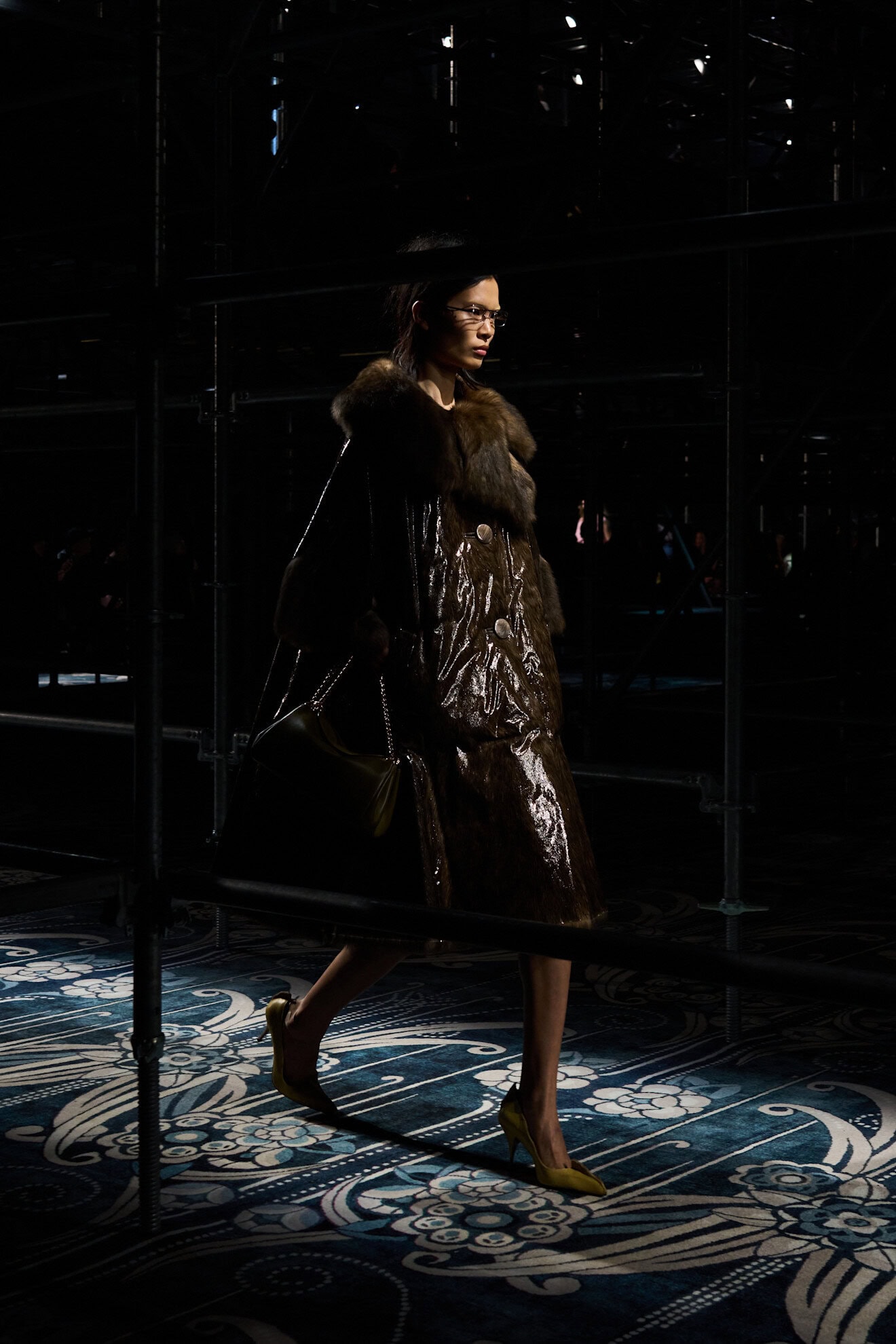
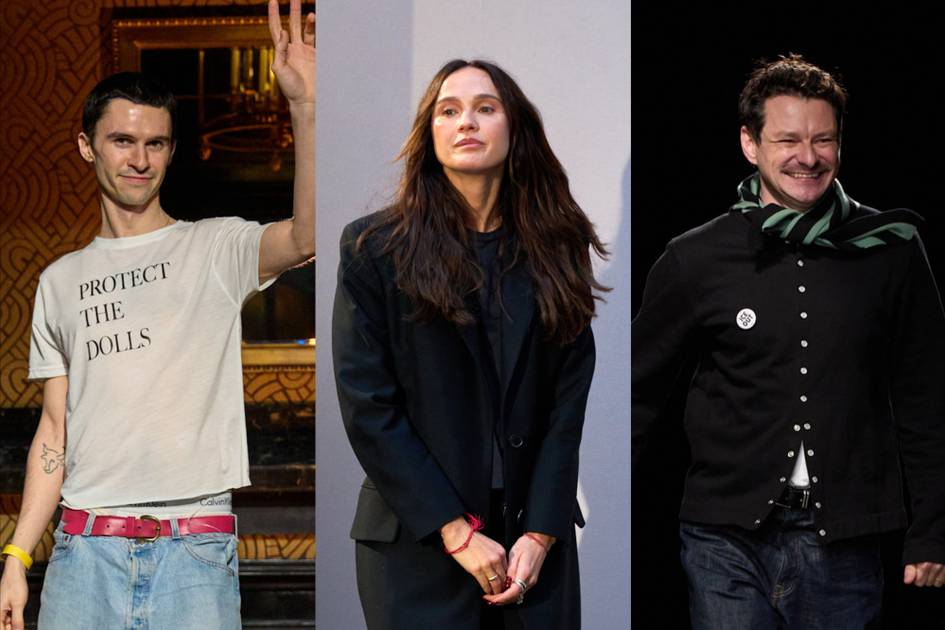
Left and centre: runway images The Impression ran alongside its coverage of the policy; both garments are faux. Right: FashionUnited’s lead image for its spring/summer 2027 preview. The point of placing them here is simple: at photographic resolution, none of these lines is visible.
2023
London Fashion Week ends its promotion of animal fur, the first major week to do so. Copenhagen, Berlin, Stockholm, Amsterdam, Helsinki and Melbourne follow
2025.11
Condé Nast bans animal fur across editorial content and advertising; ELLE and InStyle had already adopted the same policy. The media channel closes before the calendar does
2025.12.03
CFDA announces that from September 2026 animal fur is not permitted on the Official Schedule, naming species individually; the only exemption is fur obtained by Indigenous communities through traditional subsistence hunting
2026.07
CFDA publishes the preliminary spring/summer 2027 calendar: around seventy shows and presentations, the first marked fur-free. Leather, shearling and wool remain outside the ban
2026.08.11
Etsy’s fur ban takes effect, covering vintage and all ages and origins, while explicitly excluding leather, sheepskin, wool and mohair. The marketplace draws a wider boundary than the calendar
2026.09.10–15
New York Fashion Week spring/summer 2027 runs six days under the new rule, closing today with Thom Browne. The first season under the policy ends today
01Community Voices
Verbatim: eight statements, from the people drawing the line, the people it cuts, and the people selling secondhand
All eight are reproduced verbatim, unedited. One is from the advocate Sascha Camilli writing in her own Substack newsletter; two are interview statements she quotes there, given originally to Vogue and to GRAZIA; two are verbatim replies she received on Instagram; two come from an r/EtsyCommunity thread about Etsy’s fur ban; one is from an interview with the director of Angry Inuk. One feature worth noting first: the disagreements here sit mostly on time and identity — when the animal died, who took it, and who is now responsible for an object that already exists.
Substack · No But SeriouslySascha Camilli
Never in my life will I ever wear something that caused this level of terror, pain, and death. It doesn’t matter whether the animal died last month or fifty years ago.
To Vogue · founder, Collective Fashion JusticeEmma Håkansson
The ethics of wearing vintage fur can be made more clear when we think of other species previously commodified by fashion, and no longer acceptably so: whale-skin bags, dog-fur coats. If we would feel uncomfortable wearing these vintage items, why not also a mink or fox?
To GRAZIA · faux-fur house EcopelArnaud Brunois
If fur factory farms still operate today, it means that the fur of animals killed today may be sold as vintage fur in one or two decades. It just becomes a new business opportunity for the industry and, at the end, animals are still being exploited.
The animal is long dead and it’s a way to buy fur that doesn’t support the new fur trade. Almost all of my vintage coats have fur collars and to not be able to sell them because of a collar is a huge detriment to my shop.
Reddit · r/EtsyCommunityanonymous user
There is no way for Etsy to really police whether fur is vintage or not.
Interview · director of Angry InukAlethea Arnaquq-Baril
I wanted to make this film because it bothered me when I saw animal welfare groups portray seal hunting as an evil and greedy thing.
Instagram · reply to “would you wear secondhand fur?”anonymous reply A
No, I would never wear someone else’s skin.
Instagram · reply to “would you wear secondhand fur?”anonymous reply B
No, but I don’t mind if others do.
Some context. Start with Camilli’s treatment of time. She places “last month” and “fifty years ago” in the same position, on the grounds that nothing about the animal’s experience changed in between. Håkansson runs the same line with a different test — she reaches for species that have already left the acceptable range: whale-skin bags, dog-fur coats. That test does not examine the animal. It examines whether social tolerance floats by species. Both statements push against one intuition: the thing already exists, so using it wastes less.
Brunois comes at it from market structure. If the farms are still running today, the animal killed today is legal vintage in twenty years. That sentence moves “vintage” from a time-stamp to a position downstream of a production line. The two r/EtsyCommunity statements flip the same problem over from the practical side. One seller is doing inventory maths — almost every vintage coat he has carries a fur collar, and one collar takes the whole garment off the shelf. The other user is doing verification maths — a platform cannot check age item by item, so it cuts once. Two very different kinds of pain, pointing at one technical fact: the age of a pelt currently cannot be read off the object.
Arnaquq-Baril’s line changes position when read last. She is not talking about vintage, or about fashion week. She is talking about description — animal welfare groups portraying seal hunting as evil and greedy. The CFDA’s exemption clause is, in part, a formal answer to that criticism: first acknowledge that one mode of acquisition sits outside the ban, then write it into the text. Whether that acknowledgement is sufficient, or whether an exemption clause can repair what a campaign history left behind, this record has no answer to for now.
02Consensus Mapping
Four narratives: official, community, emerging, contrarian
Official Narrative
The institutional language here is leadership and innovation. Steven Kolb’s framing: there is already little to no fur at NYFW, and the point of the position is to push American designers to think harder about the industry’s impact on animals, to place American fashion at the front of those questions, and to drive material innovation. Emma Håkansson of Collective Fashion Justice supplies a roadmap — she hopes Milan and Paris will follow New York and the British Fashion Council. PJ Smith of Humane World for Animals emphasises demonstration: policies like this pave the way for material innovation without sacrificing creativity or beauty. Three people describing three faces of one move: symbol, spread, technology. The CFDA also commits to educational resources and a material library to support the transition.
Community Narrative
Almost all the community discussion circles the things that already exist. On the advocacy side the position is that time does not wash off provenance — Camilli sees no difference between last month and fifty years ago; Håkansson tests the same intuition with whale-skin bags and dog-fur coats. On the practical side the concerns are inventory and verification: a vintage seller loses a whole coat to one fur collar; another user points out the platform cannot verify age at all. The Instagram replies surface a middle position — I wouldn’t wear it, I don’t mind if others do. What these voices share is that new fur is barely contested any more. The argument has moved entirely to what is already in people’s hands.
Emerging Narrative
The reading now surfacing is that bans of this kind have shifted their weight from material to classification. The CFDA text has three layers: the named species, the unnamed materials (leather, shearling, wool), and the single exemption drawn by identity. Taken together the document reads more like a taxonomy than a prohibition. Etsy applies a different taxonomy: species and age are ignored, only the material counts, on the stated grounds that age cannot be verified. Both systems are answering one question — what can be checked. If this reading holds, the thing to watch next is verification technology. Once the age or origin of a pelt becomes testable, every line above may be redrawn.
Contrarian Narrative
Three cold readings, from unrelated sources. The first comes from Alethea Arnaquq-Baril: animal welfare groups portraying seal hunting as an evil and greedy thing, and the collateral damage that narrative did to northern communities, for which Greenpeace later apologised publicly. The second comes from the supply chain: mainstream faux fur is made from plastic polymers, is non-biodegradable and counts among the major sources of ocean microplastics; Ecopel’s Arnaud Brunois adds the other cut — while the farms run, today’s pelt is tomorrow’s vintage. The third comes from the list itself: leather, shearling and wool were never in scope at any point. This record does not weigh these three against each other. It records that all three hold at once.
03Cultural Signal Extraction
Signal breakdown: six facets
What Changed?
A calendar started legislating. The CFDA owns and runs the Fashion Calendar, and a slot on the Official Schedule is a resource. Attaching material conditions to that resource substitutes access control for law. The novelty here sits in the instrument rather than the fur — Kolb says himself there was already little to no fur at NYFW. What actually moved is this: a trade association has demonstrated how to govern materials with a timetable. The same mechanism transfers to other materials, at a far lower threshold than legislation.
Why Are People Reacting?
Because the line this time runs through ordinary wardrobes. Inside the industry the argument over new fur is largely settled; what remains is all secondhand — a grandmother’s coat, a collar in a vintage shop, something already bought. Once a ban reaches that layer it stops being industry policy and becomes a question about the disposal of personal objects. The r/EtsyCommunity seller reacted as strongly as he did because one collar removes an entire garment from sale. Where on the object the line falls decides who gets cut.
What Assumptions Are Challenged?
“A ban targets a material” — this one also targets a mode of acquisition and an identity. “Synthetic is harmless” — mainstream faux fur is non-biodegradable plastic polymer. “Vintage is neutral” — Brunois notes today’s pelt is tomorrow’s vintage. “This line is about animals” — leather, shearling and wool are not on the list, and they come from animals too. Of the four, the last is the least publicly discussed.
What Desires Are Visible?
At the surface, the wish to be on the right side and to be seen there — the normal function of a declarative policy. Below that, the wish for a clean criterion, a rule that does not need rethinking each time; list-based bans are popular precisely because they outsource judgement. Third and quieter: the wish to keep the thing already bought without feeling like a bad person. That Instagram reply — I wouldn’t, but I don’t mind if others do — is probably the most honest form that desire takes.
What Social Behavior Is Changing?
Materials are becoming something you declare. Designers declare to a calendar, sellers declare to a platform, and both hit the same wall: the declaration cannot currently be verified. Two avoidance strategies follow — switch wholesale to alternatives and skip the problem, or remove the contested part (take off the collar and the coat can be listed). The second is worth watching. It lets a rule re-cut the object itself.
Future Human Behavior?
If a calendar can govern materials, what gets written in next — feathers? exotic skins? wool? If the plastic problem in faux fur gets properly counted, do the substitutes enter the list too? If the age and origin of a pelt ever become testable data, does vintage return as a legal good, certificate attached? And if every rule keeps routing around leather, is leather the real boundary of this whole taxonomy? No answers on this page yet.
04INCODER’s Eye
The lenses we read this through: six observation frames
These six themes are the frames INCODER checks every cultural signal against. They work more like a pair of glasses — put them on and the same trend grows a different meaning.
Information Culture
Whether this ban is enforceable depends on something currently impossible: reading age and origin off a pelt. That r/EtsyCommunity line — there is no way to really police whether fur is vintage — is the technical floor under the whole rule. When verification is unavailable, an institution has two options: ban everything, or rely on self-declaration. The question this page carries is whether a rule built on unverifiable information is governing the object at all, or governing the act of declaring.
Symbolic Systems
One fibre holds three statuses in the text: prohibited, exempted, never mentioned. Leather and wool belong to the third, sitting safely off the list, and they come from animals as well. That suggests the boundaries of a taxonomy get set by symbolic intensity rather than by the substance. Fur may have been selected because it reads most like a whole animal. If a material’s acceptability depends on how easily it reminds you who it used to be, what exactly is this system measuring?
Dark Vitality
Fur did not leave after the ban. It changed rooms. Vintage stores, resale platforms, the coat handed down in a family — these make an ecology running at the outer edge of the formal rules, fed by what those rules historically produced. Brunois points straight at the supply line: while the farms run, there will be new “vintage” in twenty years. How long can a material live at the margin after being pushed off the main stage? And is the thing feeding it the very process that expelled it?
Networked Society
No legislature was involved in any of this. London moved in 2023; Copenhagen, Berlin, Stockholm, Amsterdam, Helsinki and Melbourne followed; Condé Nast closed the media channel; Etsy closed the transaction channel; the CFDA closed the calendar channel. This is a mesh of private nodes, each holding one resource, with no centre and accumulating coverage. Its force comes from access rather than compulsion. When the rules are written by whoever holds the channel, where does the excluded party appeal?
Perception and Attention
One premise underneath all of this rarely gets said aloud: faux fur is now visually indistinguishable from the real thing. Both the advocacy and the market rest on that technical achievement — if the difference showed, the substitute would not work. So a material’s moral status becomes something provable only by paperwork and unreadable by eye. When appearance detaches completely from origin, what kind of judgement is looking still able to supply? Is anything left except trusting whoever wrote the label?
Human Adaptation
The body’s side of this barely appears in the discussion. Most faux fur is plastic polymer, non-biodegradable, counted among the main contributors to ocean microplastics; Ecopel’s Flur and BioFluff’s plant-based fibres offer a third route, still at small scale. A choice made to avoid one harm has relocated another — into the water, and onto the person wearing it. When staying warm gets redesigned three times over, which direction does the thing touching human skin travel in?
05Signal Score
Signal strength
7/10
Seven. Points in favour: the rule has an explicit text, an explicit effective date and an explicit first season, all directly checkable; the CFDA announcement is public in full, and the three named speakers (Steven Kolb, Emma Håkansson, PJ Smith) are quoted in their own words; the exemption clause is the text itself rather than an inference by this record; two independent boundary events sit in the same window for comparison (Etsy’s ban effective 11 August, Condé Nast’s media policy), forming a traceable line of diffusion; community reaction exists verbatim. Points against, equally clear: Kolb himself notes there was already little to no fur at NYFW, which means the actual material change this season may be close to zero and the symbolic weight far exceeds the industrial one; there is no compliance audit figure for the season and no designer has publicly stated a material change caused by the rule; there is no record of the exemption being invoked by anyone this season; the microplastics problem in faux fur has research behind it but its causal link to this policy has not been quantified; the main contrarian sources (Angry Inuk, the Greenpeace apology) are existing material rather than responses to this policy. What would raise it: Milan or Paris following; feathers, exotic skins or wool entering the next round; a designer publicly attributing a material change to the rule; the first actual invocation of the exemption; or a workable test for the age and origin of a pelt.
06Final Question
The deepest hidden assumption
?
“Fur is banned” sounds like a rule about a material. Yet the only exemption in the whole announcement governs the people who obtained it. If a list of materials works only because it ends in a list of people, what is this rule actually classifying — the fibre, or the identity?
Lay the assumption out first. Most people reading “fashion week bans fur” picture a rule about substance: a thing that may not appear in a place. That reading is intuitive, and the body of the announcement is indeed written that way — what is prohibited is farmed or trapped fur from animals killed for their pelts, with the species named one by one. Then the list ends, and the sentence immediately after it changes the nature of the document: “An exemption applies only to animal fur obtained by Indigenous communities through traditional subsistence hunting practices.” The same pelt is or is not a violation depending on who obtained it, and how.
This turn is deliberate rather than a loophole, and it has reasons. Campaigns against commercial sealing from 1969 onward did collateral damage to northern communities, for which Greenpeace later apologised publicly; Arnaquq-Baril assembled that history in Angry Inuk. The clause is a formal acknowledgement of it. What is worth watching is the structural consequence. Once a rule concedes that the same material can hold different moral states, the basis for judgement moves from the object to the context — and context cannot be read off the object. This is the same wall Etsy hit, approached from the opposite side: unverifiable, therefore ban everything. Both choices are reasonable, and they give completely different answers to the question of what a pelt is.
The open end sits at the other side of the list. Leather, shearling and wool never entered this document at all, and they come from animals too. If what the system actually tracks is symbolic intensity — which material most readily reminds you who it used to be — then as technology reshapes perception (fur is already indistinguishable by eye, and leather is probably close behind), that line may move on its own, for reasons having nothing to do with animals. This record cannot say which way it moves. It notes only that in the third week of September 2026, a calendar rule written by an American trade association attached a list of materials to a list of people, in a single exempting sentence of nineteen words.
Observation remains incomplete.
This report records the state of observation at this moment.
Whether any collection this season actually changed materials because of the rule is not publicly audited; whether the exemption was ever invoked is unrecorded; Milan and Paris have not responded. The judgements here may be reinforced, or overturned.