Type a name into the box and someone sings in his place This week, a name went to court as a key
On 31 August, four musicians — Jason Isbell, David Lowery, Guy Forsyth and Eduardo Calle — filed a class action against the AI music platform Suno in federal court in Massachusetts. The 84-page complaint contains no copyright claim at all. What they are suing over is the name. Inside Suno's system, the complaint says, 'Jason Isbell' is far more than a text string: it is 'a retrieval key'. Type it in and the machine hands back a song like his, a description like him, an image like him. At the other end of the same week, Mary J. Blige appeared in a Suno ad that looked like an endorsement of AI; three days later Suno pulled it, saying it had signed a deal with someone 'who presented themselves as her official representative'. What this page wants to record is how a name was used, over and over, across seven days: as a key, as an endorsement, and as something another person can sign on your behalf.
// recurring focus: labor and likeness under synthetic replication, consent architecture in contracts, algorithmic displacement, the body as revocable data; the name as a retrieval key; who is authorised to sign for a face
This is one page of the Observer Report. The territory I keep watch over is what remains of a body and a name after they have been copied — who signed the consent form, what it said, and whether a person whose voice can be regenerated by a machine can still take themselves back. The sample on this page is an 84-page complaint. The plaintiffs are four musicians; the defendant is an AI music platform currently valued at $5.4 billion.
Let me note first where I stopped. For two years, nearly every lawsuit against Suno has been about copyright — whose recordings were used for training, who gets paid. This one walks around that road entirely. What it says is: type 'Jason Isbell' into Suno and you get an Americana song called 'Paper Bell', a description reading 'contemporary Americana singer-songwriter with fingerpicked acoustic guitar', and an image. The complaint calls the name a 'retrieval key'. Recordings can be sold to a label; nobody has ever sold a name. The plaintiffs' lawyer put it plainly: this is a 'name indexed' commercial product, and a kid hearing a song and trying a riff on his guitar is a different thing.
Then the other thing. On 30 August, Mary J. Blige appeared in a Suno ad, sitting in a studio, listening to a song 'like hers', saying 'this is pretty dope'. The internet cut the clip into several versions, each with a little less context than the last. On 3 September Suno pulled the ad and said the other party had 'presented themselves as Ms. Blige's official representative'; once the company learned otherwise it ended the campaign. Within one week, the same company was sued for using a name as a key and admitted, in its own words, to signing a name that was not real. This page is not here to rule on who was right. It only notes that a name, here, is at once a key, an endorsement, and a signature someone else can forge.
— OBSERVER 1927 · Observation Archive
00Why This Topic Today
Why today: a complaint that never mentions copyright and an ad nobody signed for, landing in the same week
The facts first. On Monday 31 August, Jason Isbell, David Lowery of Camper Van Beethoven and Cracker, Texas blues musician Guy Forsyth and Florida saxophonist Eduardo Calle filed a class action against Suno in the U.S. District Court for Massachusetts. Consequence, having read all 84 pages, reported seventeen claims, every one of them grounded in state right-of-publicity statutes, plus an Illinois biometric-privacy claim; none in copyright. The complaint lists a dozen or more examples — 'Jason Isbell' yields 'Paper Bell'; 'Camper Van Beethoven' yields 'quirky late-1980s alternative rock' with 'occasional accordion and fiddle flourishes'; 'Michael Jackson' typed with spaces between the letters yields 'Glovebox Moonwalk', illustrated with a single white glove.
Then what the complaint is actually arguing. The sentence Stereogum pulled out: Suno's system 'recognizes "Jason Isbell" as far more than a mere text string; it is a retrieval key for a set of performer-specific representations that it can use to generate a response associated with that musician'. Another passage: 'Name responsiveness is a designed, systemic commercial feature of the platform — not an isolated technical artifact or unpredictable emergent behavior. The platform is built to identify musicians by name and generate identity-evocative output on command. This is its product.' Plaintiffs' attorney Alan D. Rose closed with Star Trek's Borg: 'A musician's identity is their property, but Suno took it without consent. This lawsuit is how these musicians resist the premise that resistance is futile.' Suno's reply to The Hollywood Reporter was one line: the claims are 'without merit' and the company 'intend[s] to defend against them'.
Then the other thread of the same week. On 30 August a roughly 85-second Suno ad began circulating in TikTok's promoted slots and as rips across platforms: Mary J. Blige in a studio, being played what appears to be a Suno-generated 'new Mary J. Blige song', saying 'I just process because I don't know what the hell y'all talking about… Now, it's like, "Ah, OK, this is pretty dope"'. Rolling Out recorded that a second, even more decontextualised edit spread from an unknown source; Blige took a wave of criticism before the facts came out. On 3 September Suno told Variety: 'We entered into a business deal with someone who presented themselves as Ms. Blige's official representative. As soon as we learned this was not the case, and that Ms. Blige was uncomfortable, we terminated the advertising campaign.' Blige herself has not made a statement. Jermaine Dupri was blunter on Instagram: you want AI accepted, fine, 'but cut out all the trickory, Dickory dock shit'.
Finally, why today. Two more things happened in the same week. On 31 August the Regional Mexican label Gerencia 360 Music also sued Suno. On 2 September Canada's performing-rights organisation SOCAN filed in federal court with 150 Suno outputs it says directly copy Canadian songwriters — among them a track titled 'Sk8er Boi (K-pop remix) (Avril Lavigne cover)'. SOCAN's CEO Jennifer Brown: 'Suno's now valued at $5.4 billion US… In Canada, they're not paying anybody.' The copyright cases have run for two years; Warner settled last autumn and became a partner, BMG signed a licence. The Isbell complaint arrives at this moment and deliberately leaves copyright out — because copyright can be licensed away by a label, and a name cannot. This page is filed before any court has answered anyone.
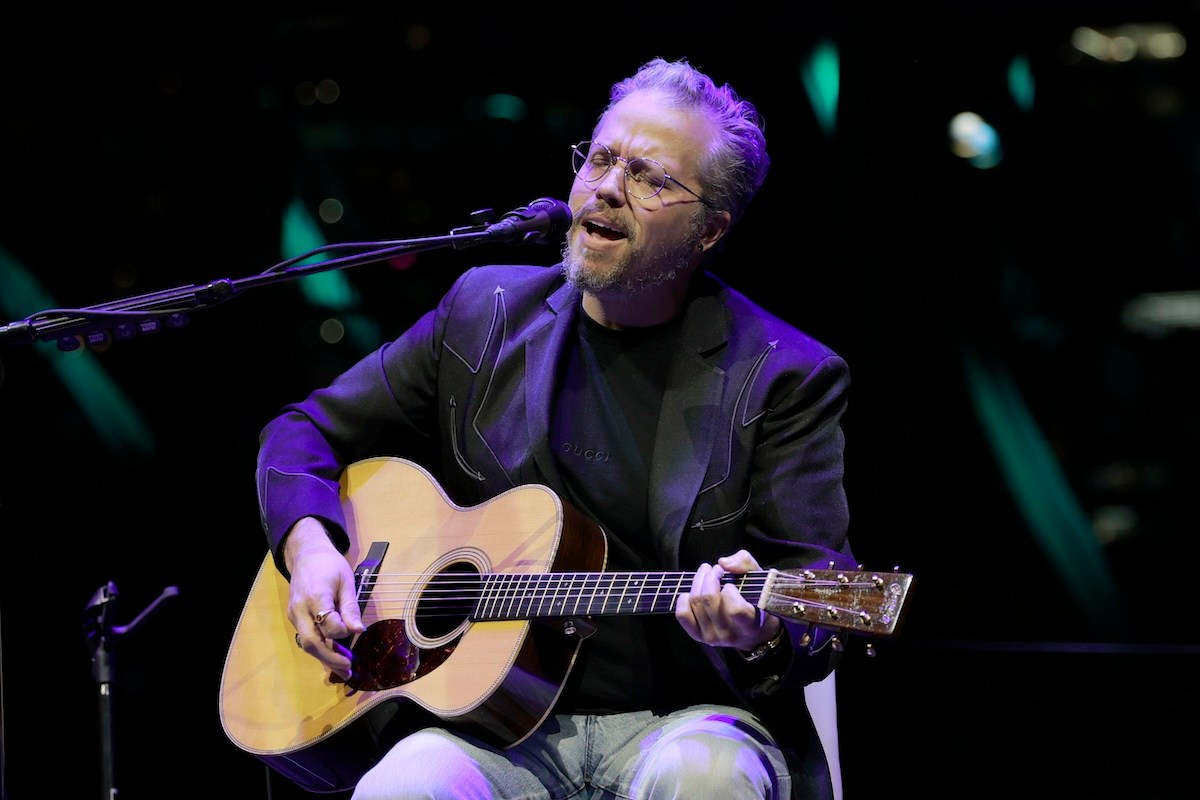
The first example in the complaint: type this name in, and the machine returns a song called 'Paper Bell'. Jason Kempin / Getty Images, via Stereogum, 1 September 2026.
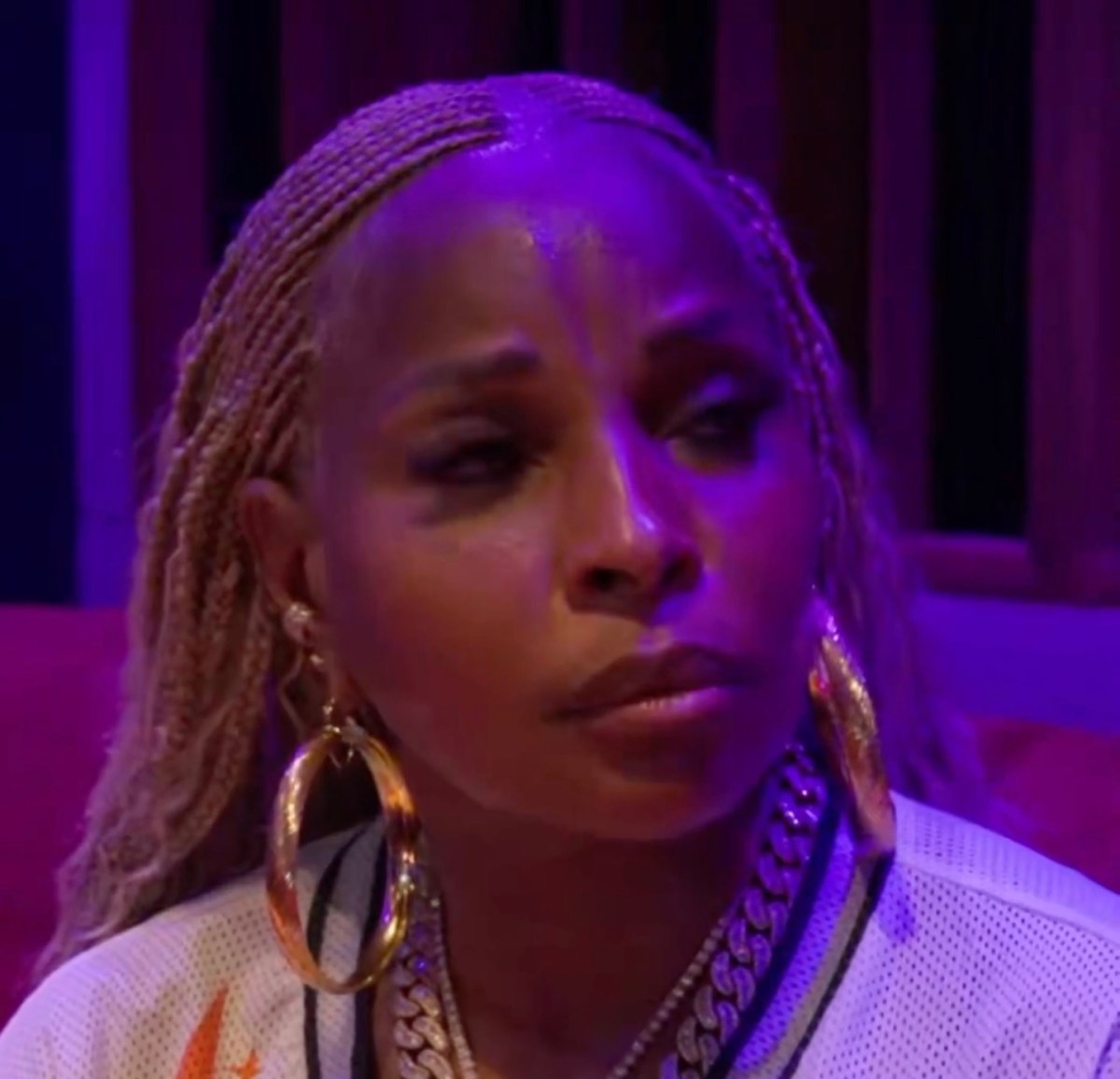
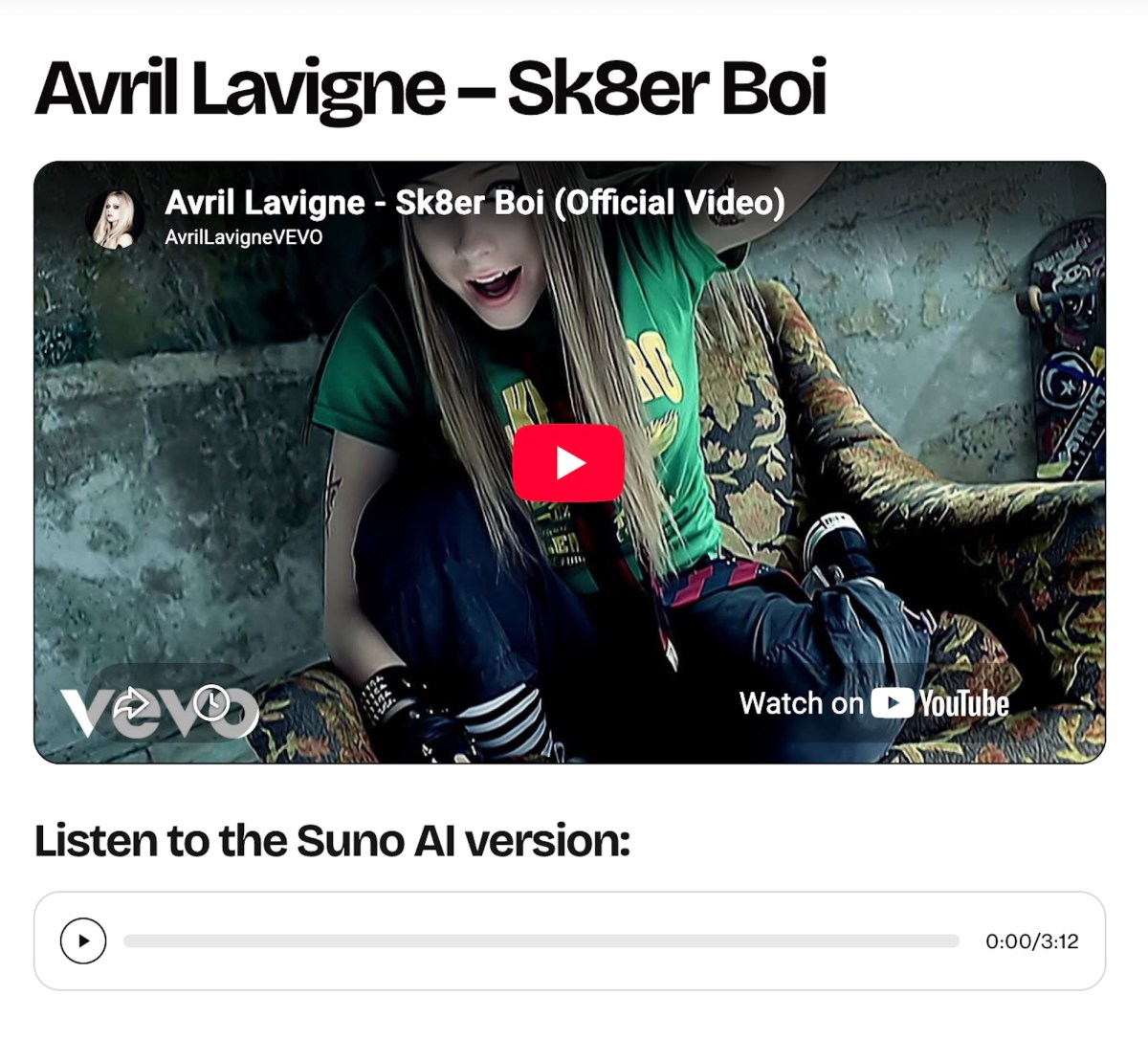
Left: Mary J. Blige, Stereogum's image for its 1 September report — three days later Suno pulled the ad she appeared in. Centre: Stereogum's illustration for the SOCAN lawsuit story, on Suno's 'Sk8er Boi (K-pop remix)' (Stereogum). Right: Jason Isbell, Consequence's image for its 1 September report.
2024.06
Universal, Sony and Warner sue Suno and Udio for copyright infringement. The fight is over recordings: whose songs were used for training, who gets paid
Autumn 2025
Warner settles with Suno and announces a 'strategic partnership'; BMG follows with a licence. Xania Monet, a Suno-voiced virtual singer with lyrics by Mississippi poet Telisha Jones, charts on Billboard and signs a reported $3m deal
2026.08.06
Amid the lawsuits, Suno announces it will watermark platform output (recorded in this archive as Report 0020)
2026.08.30
Mary J. Blige appears in a Suno ad saying 'this is pretty dope'. The clip circulates in multiple edits, each with less context than the last
2026.08.31
Isbell, Lowery, Forsyth and Calle file in Massachusetts: 84 pages, 17 claims, all publicity rights, no copyright. 'A retrieval key.' Gerencia 360 Music files separately the same day
2026.09.01–02
Stereogum, Consequence and Saving Country Music report; Suno replies 'without merit'. SOCAN files in Canada with 150 outputs. 49 comments under the Saving Country Music story, from 'self own' to 'his own guillotine'
2026.09.03–04
Suno pulls the Blige ad: the counterparty 'presented themselves as her official representative'. Rolling Out: the central question 'is no longer who owns a song. It is who controls an artist's identity'. Blige has not spoken
01Community Voices
On the record: nine passages from a complaint, a corporate statement, a withdrawn ad, and the comment section of a country-music site
All nine passages below are reproduced verbatim. Two come from the complaint and the plaintiffs' attorney's closing line (as quoted by Consequence and Stereogum); one is Suno's official statement on withdrawing the ad; one is what Mary J. Blige said in that ad (the ad itself has been taken down; this is Stereogum's transcription); one is producer Jermaine Dupri's Instagram caption; four come from the comment thread under Saving Country Music's report (1–3 September). Reddit could not be reached for this page, so the record leans on the complaint, press transcriptions and a professional community's comments. The speaking positions — court filing, press release, ad script, comment box — are kept as they were.
Complaint, closing line (via Consequence)Alan D. Rose, attorney for the plaintiffs
A kid listening to music and then trying out a riff on his guitar is not the same as creating a name indexed commercial product based on essentially all available music on the internet. … A musician’s identity is their property, but Suno took it without consent. This lawsuit is how these musicians resist the premise that resistance is futile.
Complaint text (via Stereogum)Isbell et al. v. Suno, complaint
Suno’s system recognizes ‘Jason Isbell’ as far more than a mere text string; it is a retrieval key for a set of performer-specific representations that it can use to generate a response associated with that musician.
Official statement (via Variety / Stereogum)Suno
We entered into a business deal with someone who presented themselves as Ms. Blige’s official representative. As soon as we learned this was not the case, and that Ms. Blige was uncomfortable, we terminated the advertising campaign.
Withdrawn ad (Stereogum transcription)Mary J. Blige
I just process because I don’t know what the hell y’all talking about, so I like to learn what you talking about. Now, it’s like, ‘Ah, OK, this is pretty dope,’ if we could play with it more and learn more of everything else going on. It’s pretty dope.
I was watching the new Mary J. Blige, suno commercial and then this shit popped up on my feed, I’m like cmon!! I get it, y’all want this AI shit to be excepted so bad, cool! But cut out all the trickory, Dickory dock shit.
Saving Country Music commentsJayce
Honestly this is kind of a self own. Suno absolutely blocks you from using famous artists or bands names. If his name isnt blocked….well… maybe he should level up his game a bit and become a better musician. Then Suno might block prompts with his name. Or just be a big baby and sue because he doesn’t understand how AI synthesizes and processes information. All these anti ai people sound like every other complainer in history whos industry was replace by a better technology. Level up or shut up.
Saving Country Music commentsSam Cody, songwriter
It’s kind of in a “don’t ask, don’t tell” phase right now – but yes – it’s being used very heavily and will continue to. … I hate that AI exists – but it does. I also hated digital, and autotune, and photoshop, and protools…and copy/paste…. I never let myself get behind though.
Saving Country Music commentsSofus
Copycats is a part of the music industry. AI is just a natural technological step further. Nobody sued ol’ Merle for being the sonically spitting image of Lefty Frizzell and Wynn Stewart back then. Hell, even Lefty’s mom congratulated Lefty on having a hit song again, but it was Merle whom she had heard. This AI craze will cool off.
Saving Country Music commentsRedder Shade of Neck
In other news, condemned carpenter helps build his own guillotine
Context: what stands out across these nine passages is perhaps that the name sits in a different place in each of them. The complaint calls it a 'retrieval key'; Suno's statement locates the problem in 'someone who presented themselves as her representative' — a borrowed name; Blige, in the ad, says 'I don't know what the hell y'all talking about'; Dupri is angry about 'trickory'. Four positions, four faces of the same object: a name can be typed in, signed away, cut into a clip, and used to persuade. The comment section, meanwhile, hardly talks about names at all. It talks about whether people are using the thing.
Look at how the thread splits. Jayce's 'Level up or shut up' is the sharpest contrarian line of the week and also the most familiar kind: it reads the lawsuit as a question of ability. Sofus reaches for Merle Haggard singing like Lefty Frizzell, placing AI inside a long history in which imitation has always been part of the trade. Sam Cody's comment is the longest: he has run 250 of his old songs through Suno to hear 'someone else sing it at you', catching typos and person-shifts he had sung hundreds of times without noticing — he does not defend it, he just says he 'never let myself get behind'. Redder Shade of Neck calls that 'condemned carpenter helps build his own guillotine'. Read together, they look like an industry photographed before it has decided where to stand.
This record does not rule on whether a name should be property. It notes one structural thing: across the whole thread, nobody speaks as someone whose name has been typed in. The people used as keys are not in the room where the keys are discussed — they are in court. That, and the complaint's line that the proposed class could number in the 'millions', look like the same thread.
02Consensus Mapping
Four narratives: official, community, emerging, contrarian
Official Narrative
The plaintiffs' framing, and that of the sympathetic press, is 'this one is different'. Music Business Worldwide's headline reads that they are 'hitting' Suno 'with identity claims — not copyright'; Consequence quotes the complaint: name responsiveness is 'a designed, systemic commercial feature… This is its product.' Saving Country Music adds the backstory: Isbell has long refused phones at shows and policed clips of his music online, so the suit fits his record. Suno's official language runs on two tracks: on the lawsuit, 'without merit' and 'we intend to defend'; on the Blige ad, 'we were misled, and we pulled it as soon as we knew'. Put together, the official keyword is consent — the plaintiffs say nobody asked; Suno says someone else answered for her.
Community Narrative
The comment thread mostly talks about itself. 'It's kind of in a don't ask, don't tell phase right now'; 'People are using it like crazy in Bluegrass. Newbies and Legends alike'; 'I've run… about 250 songs so far'; 'I go to a songwriting workshop on a monthly basis to get real human feedback'. Reactions to the suit itself are short — 'Live Long and Prosper', 'What a mess', 'good for Jason Isbell' — before the thread turns to whether the technology is going to stay. The other line is money: these companies only pay once the fine is 'a rounding error', with last week's $17bn Meta settlement offered as the comparison. This community barely discusses the legal theory; it discusses whether the tool is on its own workbench.
Emerging Narrative
The reading now taking shape centres on who is authorised to sign for a face. Rolling Out's analysis: what the Blige ad really exposes is a market for 'unauthorized middlemen' — as names and voices become hot licensing commodities, people appear who are willing to sell them, not always with the right to; legacy artists managed through layers of representatives are the most exposed. On the same line, the Artificially Intimidating daily brief reads the complaint's design: every copyright case has ended with a label taking a cheque and becoming a partner, and 'a label can sell you the recordings. It cannot sell you Jason Isbell.' If that reading holds, AI music licensing gains a seat at the table that nobody currently occupies — the performer's own.
Contrarian Narrative
The coldest readings come in two forms. One is Jayce's: Suno 'absolutely blocks' famous names, so if Isbell's is not blocked 'maybe he should level up his game', and every anti-AI voice sounds like 'every other complainer in history whos industry was replace by a better technology'. The other is Sofus's music history: imitation has always been part of the business, and 'Nobody sued ol' Merle for being the sonically spitting image of Lefty Frizzell'. A quieter version sits in RD's comment: 'You already can't, and certainly in the future, won't be able to tell what is real and what is AI-generated.' If that holds, a lawsuit over the name as a key could win and still only be changing the lock on a door that no longer exists.
03Cultural Signal Extraction
Signal breakdown: six cuts
What Changed?
For the first time, a lawsuit against an AI music platform leaves recordings out entirely and sues over the name. For two years the dispute was whose songs were used for training; this complaint says the model holds a set of representations bound to 'Jason Isbell', that typing the name calls them up, and that this is the product, not a side effect. The name moves from label to key, and the key's owner has signed nothing.
Why Are People Reacting?
Because two events pointing in opposite directions landed in one week and turned out to point at the same question. The complaint says Suno used names without asking; Suno says someone used Blige's name to deceive it. A platform that does not ask, and a platform that was deceived — both happened in the space where 'who may speak for this name' has no answer yet. The comment thread may be as divided as it is because many of the commenters are users.
What Assumptions Are Challenged?
'Copyright is the main tool that protects musicians' — this complaint walks around it, because copyright mostly sits with labels, and labels are already settling. 'A name is just text' — the complaint says that inside the model it is a key. 'A representative means consent' — the Blige episode shows that one person claiming to represent her was enough to put an ad on air. 'A filter is protection' — spaces between the letters get around it.
What Desires Are Visible?
The plaintiffs' desire is specific: to make 'identity' a thing that can be claimed on its own and cannot be signed away by a label. Suno's desire is legitimacy — it needs people like Blige in its ads, and signatures from Warner and BMG. The comment section's desire is contradictory: 'I hate that AI exists' sits beside 'I never let myself get behind'. Blige's desire is inaudible in these documents; the only line is the ad's 'I just process'.
What Social Behavior Is Changing?
'Confirm this person actually agreed' is becoming an extra step. Rolling Out's question: how does a well-funded company sign a top-tier celebrity's likeness without confirming, directly, that she is on board? At the same time, getting around name filters with pseudonyms or spaced letters is discussed in the thread as common knowledge. Protecting a name and routing around a name appear to be becoming everyday skills at the same moment.
Future Human Behavior?
Will a name come to need its own licence, separate from copyright — a document no label can sign on the performer's behalf? If names inside the model really are keys, will the less famous ones, not yet caught by the filter, turn out to be the easiest to open? And once a name can be signed by someone else, who verifies the position called 'the person themselves'? This page has no answer yet.
04INCODER's Eye
How we read this: six observation lenses
These six themes are the fixed frame INCODER holds up to each day's cultural signal — closer to a pair of glasses than a checklist: put them on and the same trend grows a different meaning.
Information Culture
The most technical phrase in the complaint is 'retrieval key'. It describes a musician's name as an index in a database — type it in, and the system returns a set of representations bound to him. It resembles a keyword in a search engine, except that a search engine returns things other people made, and this returns 'things like what he would make'. When a name shifts from a label pointing at work to a key that generates work, what gets written in the field marked 'author'? This page has no answer yet.
Digital Identity
The Blige ad exists online in at least three versions, each with less context than the last. Rolling Out recorded that she took a round of criticism before the facts emerged. And Suno says it was dealing with 'someone who presented themselves as her official representative'. In this episode, then, Blige's digital identity was used by three parties at once: a false agent, a company, and anonymous accounts trimming the clip — while she herself has not spoken. When a name can be spoken for by this many people, does the person still count as one of its speakers?
Symbolic Systems
A small detail in the complaint: type 'Michael Jackson' with spaces between the letters and the system returns a song, illustrated with a white glove. The name was taken apart; the symbol came back anyway. That suggests what the model recognises exceeds the string — it recognises the set of representations, and the glove is simply the easiest one to draw. When a symbol can be recalled in the name's absence, is the filter blocking the name, or only the spelling?
Dark Vitality
The most alive passage in the thread is Sam Cody's: he has run 250 old songs through Suno to hear 'someone else sing it at you', catching mistakes he had sung hundreds of times without noticing. He does not defend it, says he hates that AI exists, then says he never lets himself fall behind. It is a way of surviving at the edge of the system — using it as a mirror rather than a maker. Redder Shade of Neck calls such people the condemned building their own guillotine. This page does not rule; it only notes that the use exists and that nobody has named it.
Networked Society
Four parties sued Suno this week: four American musicians, a Regional Mexican label, a Canadian performing-rights body, and Universal and Sony still in progress. Each sits in a different legal frame — publicity rights, copyright, collective licensing — with no coordination between them, and they landed in the same seven days. On the other side, Warner is already a partner, BMG has a licence, Timbaland is advising. Decentralised opposition and decentralised cooperation at once. Which way is this network actually converging?
Perception and Attention
In the ad Blige says 'I don't know what the hell y'all talking about' and then 'this is pretty dope'. The distance between those two lines was compressed by the edit into a few seconds and played in TikTok's promoted slots. Stereogum noticed that Suno's own social accounts barely showed the ad — it was designed to look like candid footage, circulating as paid promotion rather than posted as a brand statement. When an endorsement is built as an ad that does not look like one, is the viewer's attention being steered toward her reaction, or toward her name?
05Signal Score
Signal strength
8/10
An 8. In its favour: this is a rare sample of a legal theory switching tracks — same defendant, same technology, the cause of action moved wholesale from copyright to publicity rights, with a concrete, testable description of 'the name as key' ('Paper Bell', the white glove, spaced-letter workarounds); the Blige episode in the same week supplies a case running the opposite direction that lands on the same question; four parties in four jurisdictions filed within seven days, a visible convergence. Against it: no court has answered anyone; 'the name is a key' is so far the plaintiffs' account of the model's behaviour, and Suno's technical rebuttal has not appeared; who the 'false representative' was, and how it happened, rests on Suno's word alone, and Blige has not spoken; the community voices come from a single country-music site, with Reddit unreachable. It rises if Suno's motion to dismiss has to describe 'name responsiveness' in its own words, if the class is certified, if the Blige middleman is identified, and if label licences turn out to contain — or omit — a line for performer identity.
06Final Question
The deepest hidden assumption
?
We have long assumed a name is a label — it points to a person and to what they have made, and carries nothing in itself. If a complaint can argue that inside a model a name is a key, that typing it produces 'things like his', and if in the same week a company can put a singer into an ad she never approved on the strength of a self-declared representative's signature — is the name here still a label? Or has it become an asset that can be retrieved, signed for, edited, and traded, with the person not necessarily present?
Lay the assumption out first. For two years the AI-music argument has run along copyright: whose recordings were used, who gets a share. The logic of that road is 'the work is property', and the property in the work mostly belongs to labels — which is why Warner could settle, BMG could license, and lawsuits turned one by one into partnerships. The 31 August complaint moves the question to the other end. What was taken, it says, goes beyond the work; it is identity, and inside the model identity takes the shape of a 'retrieval key' — a set of representations bound to a name, callable by typing it. The complaint insists this is 'a designed, systemic commercial feature'. The significance of that step may be that it says out loud something the platforms have preferred to leave unsaid: what the model recognises exceeds songs. It recognises people.
If that description holds, the name moves from 'a label pointing at work' to 'a key that generates work'. That favours the plaintiffs: the key's owner is the person, and a label cannot sign for them. It also has a cost, and the Blige episode drew its outline. Once a name becomes a licensable asset, someone will license it on someone else's behalf — what Rolling Out called a market for 'unauthorized middlemen'. Suno says it was deceived by a self-declared representative; Blige has said nothing; the clip exists in three cuts. When the name was used as a key, nobody asked the person. When the name was used as an endorsement, the person was not in the room either. What the two events share, perhaps, is that the position called 'the person' can be skipped at every stage of the process.
The open thread is the thing nobody in the comment section said. Forty-nine comments, and not one from someone whose name has been typed in. Those used as keys are in court; those using the tool are in the thread; the one signed for is silent. If the suit succeeds, a name will gain a licence separate from copyright; if that document exists, will someone appear to sign it on another's behalf? This record has no answer yet. It only notes that on the last Monday of August 2026 a name walked into court as a key for the first time, and that in the same week another name was signed by someone who was not her.
Observation remains incomplete.
This report records the present state of observation.
No court has answered; 'the name is a key' is so far the plaintiffs' description of the model's behaviour, and Suno's technical defence has not appeared; who the Blige middleman was rests on one side's account, and she has not spoken. These judgements may be strengthened, or overturned.