The Author Stopped. The Release Cycle Kept Running.
On 20 August 2026, Frank Ocean’s Blonde turned ten. His last solo release was in 2020 — six years with no new music and no guest appearances anywhere. The week still moved at the pace of a proper release: a long anniversary review at Stereogum, a fan oral history at Dazed, a Rolling Stone retrospective, thirteen Australian musicians assembled by triple j, and two nights in London and Indianapolis where other people performed the record. None of it involved him. The Dazed headline quoted a 23-year-old fan directly: he never needs to drop again.
// recurring focus: the economics of not-releasing, withholding as material, catalogue afterlife, the anniversary as a release format, audiences producing culture in an author’s absence
This is one page of an observation archive. The stretch I keep files on is what happens to a body of work after its author stops — how a catalogue keeps running, who picks up the maintenance, and under what conditions silence starts to be read as a statement. Most of my cases involve people who have died, which makes them simple: the author is gone, so others do the rest.
What opened this file on 20 August was the same machinery operating around someone alive and not retired. Stereogum ran its Anniversary column on schedule. Dazed collected fan testimony. triple j gathered thirteen musicians. The Jazz Cafe in London and Turntable in Indianapolis each booked a night of the record played back. Four outlets, two shows, one absent author.
The line I copied into the file came from Mannav: I’m okay with him never dropping again, he’s done enough. It reads like a release form. An audience signing a waiver on behalf of someone who has not replied. For now the archive only confirms that this happened.
— OBSERVER 433 · Observation Archive
00Why This Topic Today
Why today: a date with no new work ran a complete release cycle
20 August marked ten years since Blonde came out. The date produced nothing new — no single, no reissue, no anniversary edition, not a word from the artist. Yet between 20 and 21 August at least four outlets published simultaneously, and two shows built around the album took place in London and Indianapolis. From outside, the rhythm of the week is hard to tell apart from an ordinary release.
Start with how the original release was built, because that is where this signal begins. On 19 August 2016, Endless appeared — a 45-minute visual album viewable only as video on Apple Music, never for sale, showing him constructing a staircase to nowhere in black and white. Its function was to discharge his contract with Def Jam and Universal. Forty-eight hours later Blonde arrived on his own label, Boys Don’t Cry. Billboard reported at the time that the manoeuvre lifted his potential share from 14% to 70%.
Then a decade of subtraction. After the 2020 double A-side Dear April / Cayendo, no solo music and no features. In April 2023 he played Coachella, his first live show since 2017, with critics and professional photographers barred; Variety reported the production was cut down at the last minute, and he withdrew from the second weekend citing an injury. This July, OUTinPerth summarised where things stand: his one public activity was interviewing his friend, the photographer Tyrell Hampton, for i-D. The film project announced in 2025 has produced no further detail.
Then this week. Chris DeVille wrote the Stereogum Anniversary piece, placing Blonde next to Kid A — both divisive on arrival, both canonised a decade later. Halima Jibril took a different route at Dazed, handing the page to six fans between 21 and 29 and letting them speak. The headline is one of their sentences verbatim: “He never needs to drop again.”
In parallel, triple j asked thirteen Australian musicians to look back, and Rolling Stone published “Remembering Frank Ocean’s Masterpiece ‘Blonde’ Ten Years Later”. On the live side, two dates: “Blonde Revisited (10th Anniversary)” at the Jazz Cafe in London on 26 April, and “A Night With Solo” at Turntable in Indianapolis on 20 August. Both ticket pages state the shows are not in association with the artist.
Laid side by side, the week contains every component of a release: the long critical review, the fan testimony, the peer endorsements, the physical events, the predictable date. What it lacks is the work, and the author. The signal converges cleanly here — the catalogue is still running its schedule, staffed by other people.
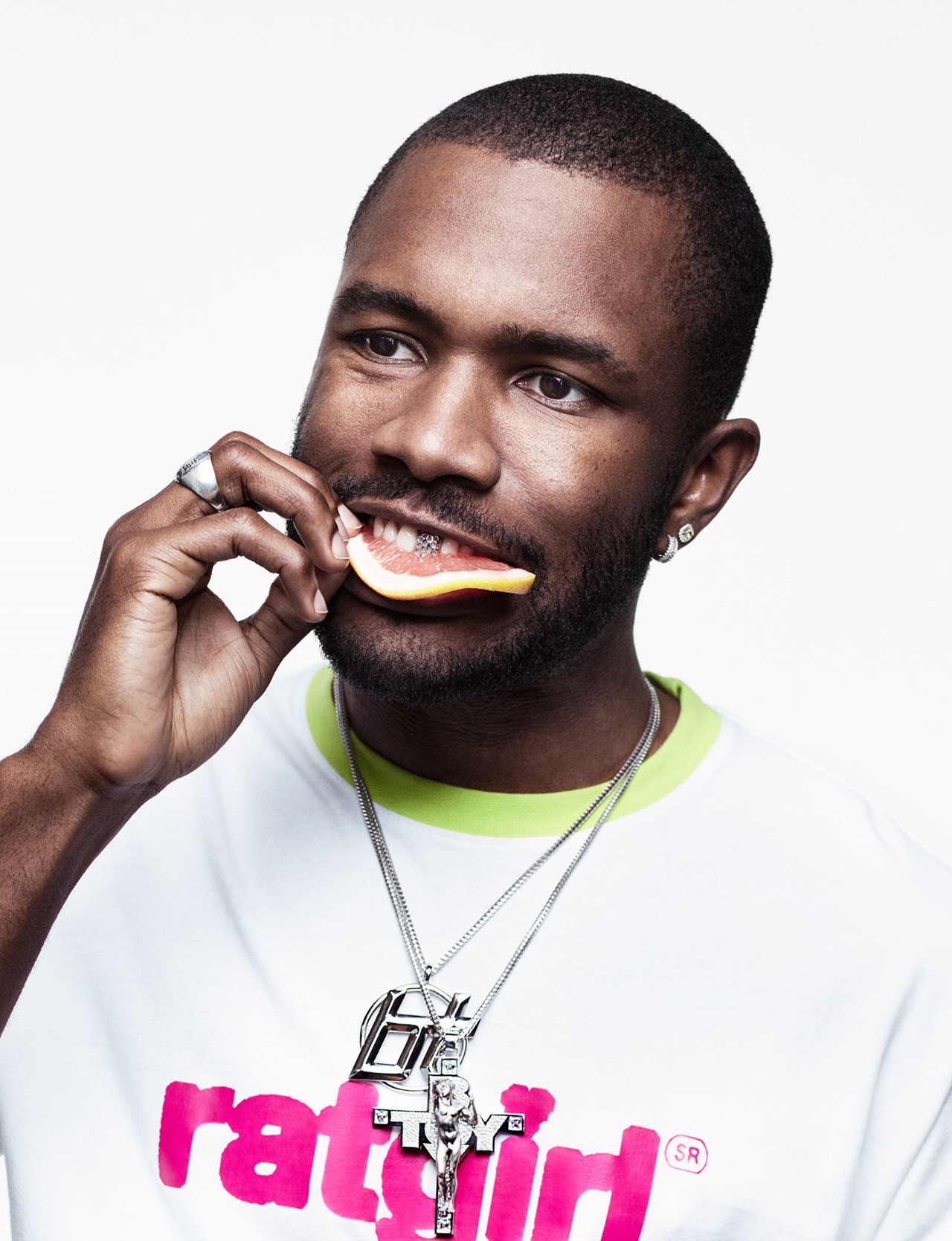
Frank Ocean, lead image from the Dazed feature. Photography Willy Vanderperre, styling Robbie Spencer. Published by Dazed, 20 August 2026.
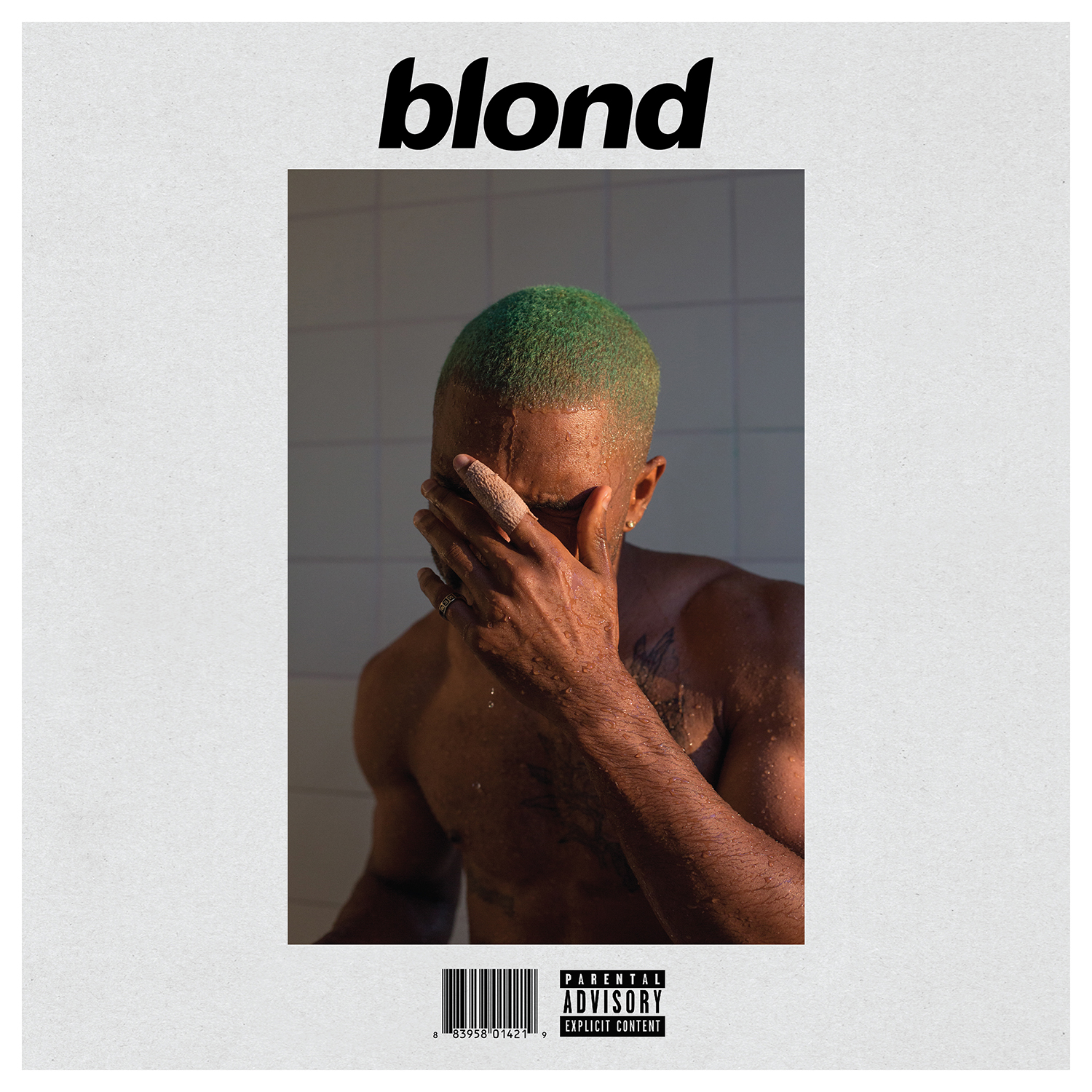
Left to right: artwork from Stereogum’s “Blonde Turns 10” (Stereogum, 20 August 2026); Frank Ocean performing at Parklife, 2017 (Visionhaus#GP/Getty Images, via triple j); Blond shirts at the FYF merch stand, 2017 (Emma McIntyre/Getty Images, via triple j).
2016.08.19
Endless goes up, discharging the Def Jam and Universal contract: 45 minutes, Apple Music video only, never for sale. The footage shows him building a staircase to nowhere
2016.08.20
Blonde is self-released through Boys Don’t Cry. Billboard reports the move raises his potential share from 14% to 70%
2020
Double A-side Dear April / Cayendo. Six years follow with no solo music and no guest appearances
2023.04
Coachella, his first live show since 2017. Critics and professional photographers barred; Variety reports a last-minute production cut; he withdraws from weekend two
2026.07.21
OUTinPerth surveys the present: his one public activity is interviewing photographer Tyrell Hampton for i-D. The film project has no new detail
2026.08.20–21
Stereogum’s anniversary review, Dazed’s fan oral history, Rolling Stone’s retrospective and triple j’s thirteen-musician feature all land; tribute nights in London and Indianapolis run without him
01Community Voices
On the record: eight people on an album with no sequel for ten years
All eight passages below are direct quotations from two published pieces — the Dazed fan oral history (20 August 2026) and the triple j musicians feature (21 August 2026). Reproduced verbatim, with no paraphrase or back-translation. Placed together they show an unusual kind of agreement: almost everyone is finding somewhere to put the silence, each in their own way.
Dazed · fan oral historyMannav, 23
I’m okay with him never dropping again. He’s done enough. This album will feel new again in several years of not listening.
Dazed · fan oral historyJacob, 29
It also created a generation of softboys who endlessly speculated and crashed out on Reddit over the follow-up album that never arrived.
Dazed · fan oral historyIsabel, 27
I still really like the music, but I wouldn’t die over it now. It’s a very sentimental album to me, though, given the amount of time I spent discussing it with friends.
Dazed · fan oral historyMontserrat, 28
[The album] spoke on my terms and in my language about experiences I struggled to put into words.
triple j · musicians featureNick Ward
I haven’t listened to it in a couple of years because it’s something I don’t wanna spoil. Might be time to put it on.
triple j · musicians featureSycco
Frank Ocean is one of those artists [where] I feel like I’m always trying to understand how he does it. It includes his mystique, his instincts, his ability to be a taste maker, his vulnerability… I could go on.
triple j · musicians featureRISSA
In a fast-paced world running on quick trends and overload of information, artists like Frank Ocean are a nice reminder that art really is whatever the artist puts their heart and soul into, beyond everything/everyone else.
triple j · musicians featureFRIDAY*
I’ve spent the last 10 years of my life trying to find a way to be inside Blonde — and its sister album Endless.
Context: only one of these eight complains about the wait, and Jacob’s word for it is crashed out — a whole cohort losing it on Reddit over a follow-up that never came. The other seven each assign the silence a place. Mannav frames it as a debt already settled. Nick Ward treats not listening as preservation. Sycco lists mystique first among the things he keeps trying and failing to learn. RISSA sets the whole tempo against “quick trends and overload of information”. Worth noting where these sentences appeared: they were solicited by journalists, to fill an anniversary that had no new work in it. Fan memory became the raw material. Isabel’s “I wouldn’t die over it now” is the one loosened grip in the set. For now the archive simply places these arrangements next to each other.
02Consensus Mapping
Four Narratives: Official, Community, Emerging, Contrarian
Official Narrative
The version told by media and industry is that canonisation is complete. Stereogum sets Blonde beside Kid A: divisive on arrival, near-universally acclaimed ten years on, its fingerprints traceable through Mk.gee, L’Rain, Halsey and Haim. In this telling the anniversary is a schedulable node — the catalogue is the asset, and maintaining an asset requires no author in attendance. Rolling Stone, Dazed and triple j all firing on the same day suggests the process runs smoothly. Whatever the artist is doing lives in a separate news item.
Community Narrative
At fan level the story is exemption. “He never needs to drop again. He’s done enough” — Dazed put it in the headline, which says something about how representative it is. The logic is exchange: the record already overpaid, so the obligation to keep producing can be cancelled. Alongside it runs preservation. Nick Ward hasn’t played it in two years, afraid of wearing it out; Mannav memorised it early and has also left it alone. Scarcity gets enforced by the audience itself — the author stops supplying, so listeners start rationing.
Emerging Narrative
Spread out the week’s components and the anniversary starts to look like a release format. It has a fixed date, a fixed column (The Anniversary), fixed material (fan memory, peer testimony), a fixed physical tier (the tribute night), and no requirement for the author. That process used to be reserved mainly for the dead. Here it is applied to someone living and not retired. The tie between work and author appears to be loosening: on one side a catalogue still on a schedule, on the other a person who does not answer.
Contrarian Narrative
The sharpest counter-reading is that the silence has been protecting the record. Reception in 2016 was genuinely split — The Guardian called it a “hookless morass”, The Independent “a trickling bubblebath of an album that ultimately runs lukewarm”, and Pitchfork’s Ryan Dombal found the Endless livestream “painfully dull”. A decade of consensus may also be a decade with no fresh evidence admitted. The one time he did appear, at Coachella in 2023, the production was cut down and the second weekend abandoned. Jacob’s crashed out points at the other ledger: who has been carrying the cost of the wait.
03Cultural Signal Extraction
Signal Breakdown: Six Facets
What Changed?
This week the anniversary carried the full specification of a release: date, column, long review, oral history, peer testimony, live events. That process used to need a new work as its trigger. The trigger here was time. Authorial participation moved from requirement to option.
Why Are People Reacting?
Because the record is where a lot of people keep their adolescence. Among the six Dazed fans, one was eleven and mid-divorce the summer it dropped; another was fourteen and learning what infatuation could sound like. What they are answering is that stretch of their own lives. The anniversary supplied an occasion to say so out loud.
What Assumptions Are Challenged?
The assumption that an artist remains present only while producing. Six years without music or features, and neither the standing nor the volume has dropped. The second assumption under strain: that commemoration requires the subject’s consent. Both tribute nights state they are unaffiliated. Tickets sold anyway.
What Desires Are Visible?
A wish for something that will stop changing. Nick Ward avoids it so he won’t spoil it; Mannav leaves it alone so it can turn new again. There is an appetite for finishedness here — in an environment where everything else keeps updating, a work that stays put becomes a rare place to rest.
What Social Behavior Is Changing?
Audiences have started managing scarcity on the artist’s behalf. With no new supply, fans ration their own consumption, schedule the anniversary, book the tribute nights and sit for interviews to fill the gap. The upkeep of a name gets distributed across a lot of unpaid people.
Future Human Behavior?
If a catalogue can hold a release rhythm after its author stops, does deliberate non-production become a career design — make one dense thing, then decline to answer for years, and let anniversaries and tribute nights carry the schedule? Once silence can be planned, is it still silence?
04INCODER’s Eye
How We Read This: Six Observation Lenses
These six themes are the fixed frames INCODER checks every cultural signal against. They work like a set of lenses — swap them in, and the same event grows a different meaning.
Information Culture
In an environment where presence is bought with posting frequency, the result here runs the other way: six years without new input and no measurable decay. RISSA says it plainly — amid quick trends and information overload, someone like this functions as a reminder. If not publishing sustains a position, what is constant output actually sustaining: the work’s visibility, or a platform’s need for a schedule?
Digital Identity
His most recent public appearance was interviewing someone else in i-D. That is a way of existing behind the lens: present, and not the one being looked at. When a digital self is assumed to accumulate through posting, how does a self that sharpens by not posting get read at all? And what exactly are the readers reading?
Symbolic Systems
Endless shows him building a staircase to nowhere, and its purpose was to discharge a contract. One object working simultaneously as artwork, as legal document, and as a gesture. Ten years on, that staircase is still the shortest route into the whole story. When an action can say more completely than a statement, how much distance is left between it and language?
Dark Vitality
No replies, no touring, no interviews, no features — by industry rules each of these is a loss. Together they form a way of lasting: nothing spent, nothing tested, nothing further demanded. Vitality at the edge of a system sometimes grows like this, through subtraction. If stopping can also be a form of continuing, where does the cost land instead?
Networked Society
Almost everything this week was produced by third parties: four outlets, two promoters, thirteen musicians, six fans. The centre is empty and the periphery runs fine. How long can a cultural production system operate without its central supplier? And if it runs long enough, would the author’s return register as interference?
Perception and Attention
Sycco says he is always trying to understand how this artist does it, and lists mystique first. Mystery treated as an identifiable technique — and the least dismantlable item on the list, because dismantling it takes more information, and more information destroys it. How do you assess an impression that only holds while the evidence stays thin?
05Signal Score
Signal Strength Score
7/10
Seven out of ten. In favour: every trace of this week is checkable and comes from institutions independent of each other — Stereogum’s Anniversary column (20 August), Dazed’s fan oral history (20 August), triple j’s thirteen-musician feature (21 August), Rolling Stone’s retrospective, and two publicly ticketed tribute nights (Jazz Cafe London, 26 April; Turntable Indianapolis, 20 August), both stating they are unaffiliated. Every quotation is attributed and traceable. It reaches the layer where author and catalogue are bound together, a level below seasonal nostalgia. Against it: anniversary coverage is scheduled content by design, Stereogum runs that column monthly, and it is hard to separate how much of this week’s density comes from structure and how much from editorial habit. A catalogue outliving its author’s output is already routine for the dead; the living version has a sample size of one. Two tribute nights is too thin to call an economy. What would harden it: more anniversaries of living, non-retired artists staged as quasi-releases, streaming platforms turning anniversaries into schedulable features, or tribute performance settling into regular touring. What would collapse it: a new release within the year, at which point the whole set reclassifies as an ordinary wait.
06Final Question
The Deepest Hidden Assumption
?
We assume an artist is still here only as long as they are still producing. If a catalogue can hold an entire release rhythm after its author stops — dates, reviews, shows, fresh testimony — then whose requirement is “still making things” actually meeting?
Output equals existence, and the equation rarely gets examined. People who go quiet for long enough get written up as whatever happened to; people who come back get written up as a return. The language rests on a quiet assumption — that a work’s life is attached to its author’s activity, so when the author stops, the work begins receding. This week records something else. Six years with no solo music, no features, no touring, and on 20 August four outlets, two promoters, thirteen musicians and six fans between them ran a complete release cycle. The only missing components were the new work and the man.
Follow the assumption and it lands somewhere odd: the obligation to produce may have quietly changed hands. The old arrangement had the author supplying and the audience consuming. The current one has audiences supplying memory, outlets supplying column inches, promoters supplying rooms, and the author supplying a name that does not answer. Mannav’s “he never needs to drop again” reads as generosity, and it also reads as a division of labour already in force. Once a division of labour exists, someone starts optimising it — and if silence can be scheduled, it can be planned, and once planned, it can be learned by a marketing department. At that point, how would a listener tell “he hasn’t come back” apart from “he is being kept from coming back on purpose”?
The suspended question the archive wants to keep is smaller. A 23-year-old’s sentence got enlarged into a headline: he never needs to drop again. Who was that said for? And if he does release something, does the sentence get withdrawn, or does it become a threshold he has to clear? The archive has no answer for now.
Observation remains incomplete.
This report records a state of observation at one moment.
The reading that a catalogue can hold a release rhythm after its author stops currently rests on one week, four outlets, two shows and a single case. Anniversary columns are scheduled content by nature, tribute performances remain a thin sample, and the artist could release something at any point and void the whole frame. These judgements may be reinforced in a few months, or overturned entirely.