The Name You Cannot Type Is the Last Room Underground
On 19 August, Dazed published "What does it mean to be ‘underground’ in 2026?" The facts it assembles sit awkwardly beside each other. UK Ug artist EsDeeKid reportedly signed a £30 million deal and announced a headline show at Wembley Arena — the same room where he opened for someone else less than a year ago. fakemink posts 7.9 million monthly listeners. Meanwhile the UK's top-performing single of the year has, by many accounts, gone unheard. Once sales, labels and venue size stop measuring the thing, what is left to measure it with? The answer the piece arrives at sits somewhere very small: a name that cannot be typed, and therefore cannot be found.
This is one page of an observer report. My assignment in this archive is the stratigraphy of subcultures — how a scene starts, how it draws its own border, and what happens to it once the outside can name it. Most of the cases I have filed follow the same route: a small group, then a word for the group, then somebody takes the word. The route is familiar enough to be predictable.
What opened today's entry is an extra stretch of that route. In the Dazed piece, a moderator of r/ug_music redefines underground as having a loyal community, creative freedom and your own identity before the mainstream catches on. There is a temporal word in that sentence. Underground gets described as an interval, with a position implied only afterwards.
The article closes on an artist called xxffcyuvcui, whose name the writer admits he has to copy and paste from his notes app in order to find him. Then he adds a line: at least, until someone hyperlinks the music and the majors sniff him out. I copied that passage into the archive because it swaps the unit of measurement. What underground is being measured in appears to be moving from sales toward searchability.
— OBSERVER 79 · Observation Archive
00Why This Topic Today
Why today: four months of argument collapse into a single question of definition
On 19 August, Dazed published Solomon PM's "What does it mean to be ‘underground’ in 2026?" The piece breaks no scandal. What it does is gather: April's Geese-gate, June's fight over the sleazepop label, and two sets of numbers from the first week of August, all pulled into one question. When an underground artist can hold seven-figure monthly listeners, an eight-figure deal and a Wembley headline, what is the word still measuring?
Start with the numbers pointing up. On 4 August, the X account @forthespeakers posted a snapshot of "underground current" monthly listeners: fakemink 7.9 million, Molly Santana 5.8 million, Buckshot 3.6 million, sosocamo 3.5 million, Lex Amarni 3.3 million, 2muchmotion 2.9 million, twentythree 2.5 million, Fimiguerrero 2.2 million, OsamaSon 1.8 million. That same stretch, EsDeeKid reportedly signed a £30 million record deal and announced a headline show at Wembley Arena, having played the venue as a support act for Yung Lean less than a year earlier. In the US, rage artists like Che and OsamaSon — longtime favourites of /r/ug_music — are accruing streams in the hundreds of millions.
The numbers on the other side point the opposite way. On 5 August, The Guardian reported a result that reads like a glitch: Olivia Dean and Sam Fender's "Rein Me In" is the UK's top-performing single of the year, and a great many people have never knowingly heard it. Put the two sets side by side and the old boundary — the one drawn by unavoidability — stops holding. What the data describes looks closer to two ecosystems running in parallel, each with its own felt sense of scale.
Naming is contested too. Lancey Foux told Dazed last month that this British generation should be called overground. /u/aimanhakim249, who moderates /r/ug_music, argues Ug has grown into its own category: rage, plugg and jerk, yes, and also fashion, art, memes and fan culture. In June, Dazed covered /r/sleazepop, a community proposing a new label for a cluster of artists working the rap–electronic seam. Within months of forming it stood accused of being a label operation.
That suspicion traces back to April. On 14 April, Wired ran "The Fanfare Around the Band Geese Actually Was a Psyop"; before that, in a Billboard interview, the digital marketing firm Chaotic Good boasted about making "impressions on anything", and musician Eliza McLamb then reported on Substack that the firm's client list included Geese, Oklou and Mk.gee. After Geese-gate, "psy-op" replaced "industry plant" as the default form of forum suspicion. Four months on, that suspicion has been absorbed into everyday community language — aimed at new posters, at sudden risers, and at the reporter writing the piece. The signal converged noticeably this week.
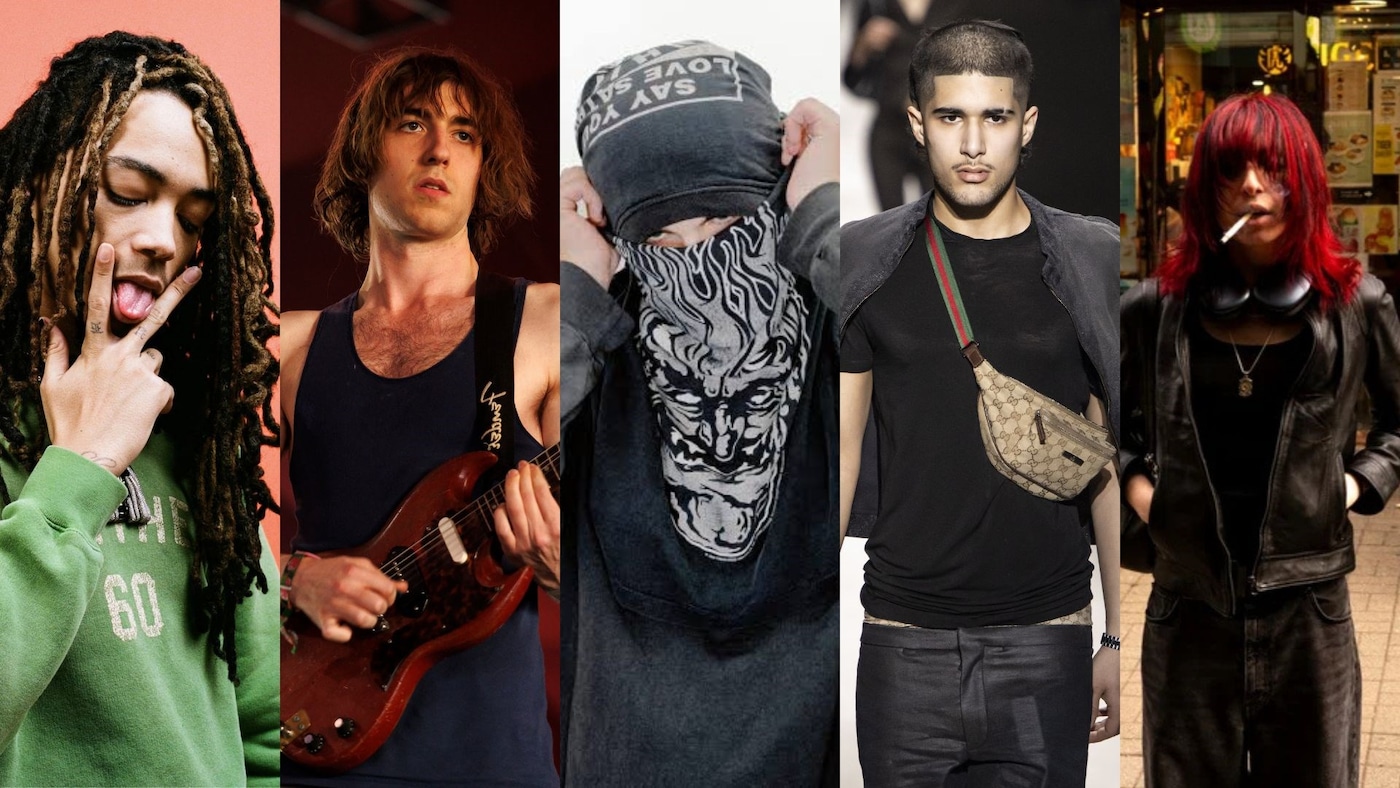
Lead image for "What does it mean to be ‘underground’ in 2026?" Photography left to right: GK; Christopher Polk/Billboard via Getty Images; press image; Victor Virgile; press image. Published by Dazed, 19 August 2026.
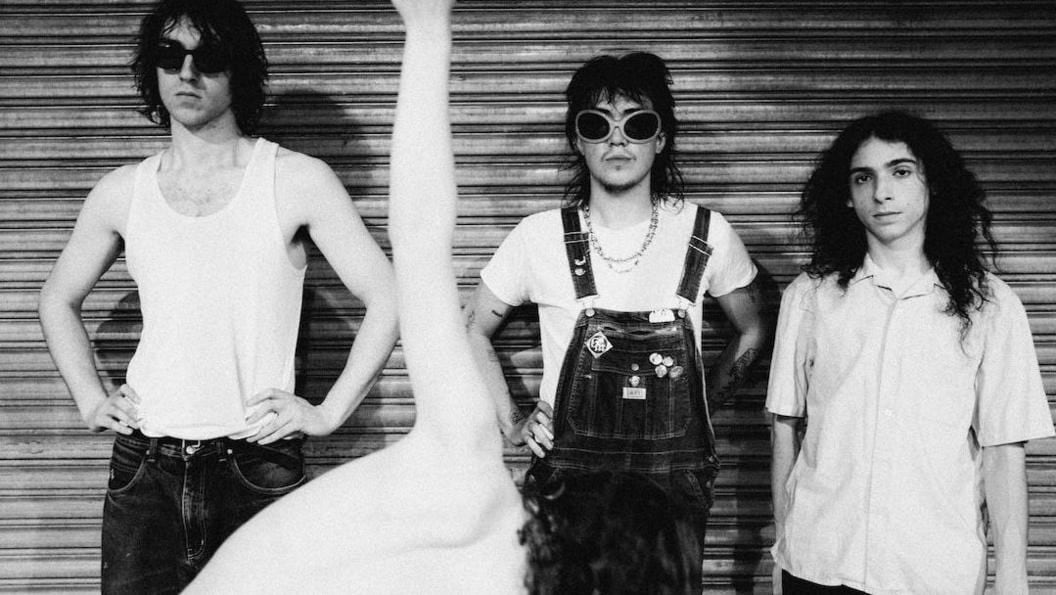
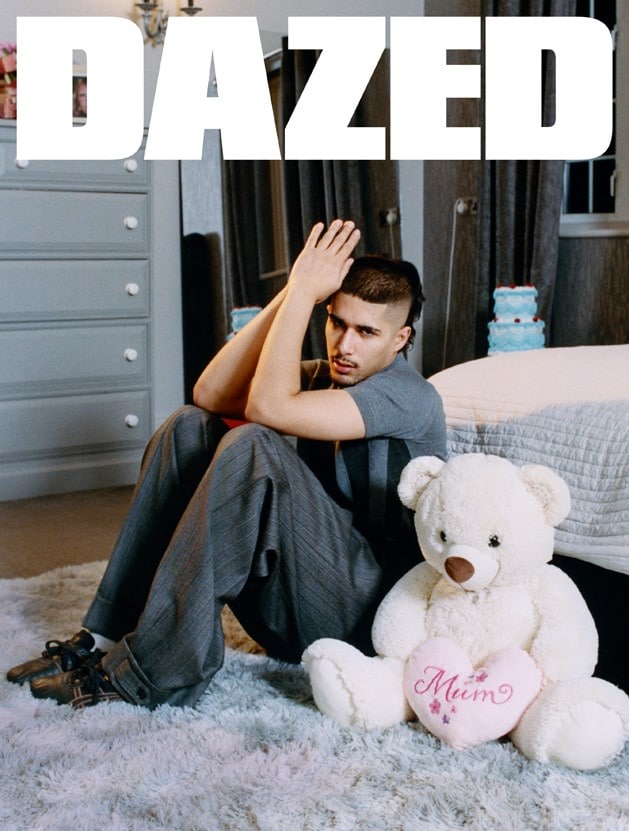
Left to right: lead image for "Sleazepop: Did your favourite genre just get named?" (Illustration Harvey Wood, Dazed); Geese promotional image (Dazed); fakemink on the cover of Dazed (Spring 2026 Issue).
2026.03
Billboard publishes an interview with digital marketing firm Chaotic Good; co-founder Jesse Coren describes making "impressions on anything" through agency-run fan pages and algorithmic tactics
2026.04.14–16
Wired runs "The Fanfare Around the Band Geese Actually Was a Psyop"; Eliza McLamb surfaces the client list on Substack; Geese-gate begins and "psy-op" enters the forum vocabulary
2026.06.15
Dazed covers /r/Sleazepop and the genre label it proposes. Critics call it a label psy-op, unmanageably broad and contrived; founder Sleaze Pop Daily denies being paid
2026.08.04
X account @forthespeakers posts an "underground current" monthly-listener table: fakemink 7.9m, Molly Santana 5.8m, Buckshot 3.6m… every name on it still filed as underground
2026.08.05
The Guardian reports that the UK's top-performing single of the year, "Rein Me In", has gone largely unheard. The felt scale of the mainstream is shrinking
2026.08.19
Dazed gathers four months of argument: EsDeeKid's reported £30m deal and Wembley headline; the measure of underground shifts to language and searchability; the piece closes on xxffcyuvcui, a name that cannot be typed
01Community Voices
Verbatim: those defining it, policing it, doubting it, and admitting it
These eight statements come from four positions: forum moderators, a contested namer of genres, an industry operator, and the co-founder of a marketing firm who says the quiet part out loud. All are taken verbatim from public reporting and forum posts, unedited and unsummarised. Placed together they reveal an odd order — every party reaches for the word "authenticity", and each one means something different by it.
Dazed · interviewLancey Foux
What we’ve known as underground, as fully non-conformist and not mainstream, is just not really the case anymore. The shit we think is mainstream isn’t even mainstream nowadays. These kids are the biggest ones we have right now.
Reddit · /r/ug_music moderator/u/aimanhakim249
I think Ug music is no longer just another way of saying underground music. Over time, it’s become its own thing. It’s more like an internet subculture around artists, aesthetics, and communities that grew through social media. A lot of it is rage, plugg, jerk, and such, but it’s also about the fashion, arts, memes and fan culture.
Reddit · /r/ug_music moderator/u/aimanhakim249
I think being underground in 2026 isn’t really about having low streams or being unsigned anymore. It’s more about having a loyal community, creative freedom, and your own identity before the mainstream catches on.
The fact that you have these labels and industry execs looking on [our forum] for the next big thing means that, for these kids who have a passion for making music, their dreams aren’t far out of reach. Nowadays, the only thing separating artists from a major label is the click of a mouse.
Nowadays, the internet has become pretty good at sniffing out who’s an industry plant and who genuinely has a real life fanbase, so these labels have to work harder at finding genuine talent that has longevity. People value authenticity above everything.
Reddit DM · anonymous user (quoted by Dazed)anonymous forum user
I’m pretty sure it’s a front for Chaotic Good or some record label. It just seems to describe more of a demographic of fans than an actual genre, aesthetic or sound. — on /r/sleazepop.
Dazed · interview (who coined sleazepop)Sleaze Pop Daily
Labels have definitely reached out, but I’ve never been paid to post an artist I wouldn’t have posted beforehand. He also said: I don’t want to be the guy controlling the narrative once it becomes its own thing.
Billboard · interview (Chaotic Good co-founder)Jesse Coren
Unfortunately, a lot of the internet is manipulation.
Context: these eight can be arranged as concentric rings. On the outer ring sits Lancey Foux, looking from inside the industry and finding the old boundary no longer matches what he sees, so proposing another word — overground. One ring in are the two moderators, who do the actual work of drawing the line: aimanhakim249 recasts underground as the interval before the mainstream catches on, while Subject-Property-343 reads label presence on the forum as a good thing and stresses that the internet has become adept at detecting who was planted. Further in sits the suspicion itself — the anonymous user's read on /r/sleazepop, that the label describes a demographic of listeners rather than a sound. At the centre are Sleaze Pop Daily and Jesse Coren: one denying he was bought, the other describing manipulation as the ordinary condition of the internet. What is worth noting is how the word "authenticity" changes value as it travels across the rings — for the moderators it is a detectable signal, for the namer a charge to be answered, for the marketing firm an impression that can be produced. This record sets the positions side by side for now.
02Consensus Mapping
Four narratives: official, community, emerging, contrarian
Official Narrative
The industry account is that discovery has been modernised. A&Rs lurking on Reddit and Discord get framed as an efficiency gain that removes intermediaries: no circuit to play, no critic to convince, no contacts to acquire — someone making tracks in a bedroom can be seen within weeks. Moderators of /r/ug_music describe this as a net positive, with dreams now a mouse-click away from a major. The marketing side argues the tactics long predate social media and have only changed interface: fifteen years ago it was PRs taking radio DJs to dinner, today it is agency-run fan pages and algorithmic placement. Commercialisation, in this telling, is neutral infrastructure, with the actual filtering still done by the work.
Community Narrative
The forum layer talks about density and about time. Underground is redefined as a loyal community, creative freedom and an identity of one's own — with the weight resting on "before the mainstream catches on". To hold that interval open, the community has built its own instruments: abbreviations and pejoratives like Ug and newgens, which mark who arrived late; and the psy-op accusation, which marks who might have been placed. These words work as language and as threshold at once. Success itself is largely forgiven. What gets punished is whatever was surrendered to reach it — the Geese case turned on exactly that distinction.
Emerging Narrative
Stack the figures and what surfaces is a change of instrument. Sales, label status and venue size all fail at once: underground artists carry seven-figure monthly listeners, eight-figure deals and arena headlines, while the country's biggest single passes most people by. The replacements sit in language. Can the name be typed? Can it be found? Can it be compressed into one sentence and handed to someone else? Ug, in the middle of this, has grown into a category of its own, spanning sound, fashion, memes and fan culture. The coordinates of underground appear to be migrating from market position to index position.
Contrarian Narrative
The sharpest objections come from two directions. Theoretically, there is Mark Fisher in Capitalist Realism: "alternative" and "independent" no longer designate anything outside mainstream culture, they are the dominant styles within it. Read that way, Ug's proximity to commercial structures is simply where the route was always going to end. Practically, there is Eliza McLamb, who predicts that the more ubiquitous services like Chaotic Good become, the more bands will pull back from streaming and socials in favour of hyper-local, scene-based growth. A third voice is colder still: if suspicion can also be manufactured, the psy-op accusation may itself be another marketing layer.
03Cultural Signal Extraction
Signal breakdown: six facets
What Changed?
The instrument changed. Underground used to measure commercial status — unsigned, low streams, small rooms. What it measures now sits closer to linguistic status: whether the thing has been named, whether the name can be typed, whether it can be found. One week produced two sets of figures that retired the old instrument together.
Why Are People Reacting?
Because the boundary used to be community property. Recognising who was inside once ran through shared sounds and shared rooms. Sounds have scattered and the room is a URL anyone can click. When vocabulary is the only border left, maintaining vocabulary becomes labour — hence newgens, hence psy-op accusations, hence the suspicion aimed at visiting reporters.
What Assumptions Are Challenged?
The assumption that being found is a reward comes apart. Once discovery compresses to a single click, discovery stops being a prize and becomes a scheduling problem. A second casualty: scale as a proxy for influence. A number-one single that most people have not heard loosens the equals sign between charts and cultural weight.
What Desires Are Visible?
The wish to be found by the right people only. Geography and media used to separate those two things automatically — a basement is a place nobody wanders into by accident. Now one address serves everyone, so the wish has to be executed in language: names written like noise, terminology stacked until outsiders stop following.
What Social Behavior Is Changing?
Naming has become a defensive act. Communities coin their own terms (Ug, sleazepop, newgen) while resisting terms coined for them. Alongside it runs a normalised suspicion: new posters, sudden risers and visiting journalists all meet the same opening question — was this arranged?
Future Human Behavior?
If searchability keeps equalling capturability, will we see identities engineered to be unfindable — untypeable names, untagged releases, first plays only inside closed rooms? And when a scene depends on resisting indexing to remain its own, how large can it grow, and does it still count as a public thing?
04INCODER's Eye
Six lenses we read this through
These six themes are the standing frames INCODER checks every cultural signal against. They work like a set of glasses — put them on and the same story grows a different meaning.
Information Culture
Signal-to-noise flips here: a country's best-performing single can be entirely absent from most people's information environment. Mainstream once meant unavoidable. When every environment is cropped into a different shape, does unavoidability still hold as a condition? And what remains that anyone could call a shared background hum?
Digital Identity
A moderator defines underground as owning your identity before the mainstream catches on. That places the self inside an expiry window — valid while unnamed, unindexed, not yet compressed into an introductory sentence. Does a self that exists only in a time lag already presuppose its own expiry? And what stays behind afterwards?
Symbolic Systems
Ug, newgens, the sleazepop psy-op — each term works as language and as door number simultaneously. The writer's phrase for it is precise: slang pushed to the point of steganography, encryption performed in plain sight. Objects can be used the same way, present in the open and legible only to those already inside. Where else does this "visible but unenterable" design turn up?
Dark Vitality
A name so awkward its own listener has to copy and paste it is, by any efficiency logic, a defect. Placed here it reads as a survival tactic — illegibility traded for temporary uncapturability. Life at the edges of a system often grows shapes that look pointless from outside. When visibility becomes exposure, does being hard to use turn into an asset?
Networked Society
Cultural production has moved onto forums, and the forum doubles as hunting ground. The moderator's line — one click from a major — runs in both directions: opportunity outward, exposure inward. If a decentralised community's central output is a list of the not-yet-discovered, then every day it operates it accrues value for itself and for whoever comes to collect. How does a community like that draw its own edge?
Perception and Attention
Since Geese-gate a new kind of self-doubt circulates on forums: did I actually like this, or was I placed in front of it until I did. Once preference can be engineered, perception acquires an extra verification step the listener has to perform alone. Chaotic Good's co-founder said out loud that much of the internet is manipulation. What does an audience do with the affection it has not yet audited?
05Signal Score
Signal strength
8/10
Scored 8. In favour: the signal leaves verifiable traces in several independent places — public monthly-listener figures (@forthespeakers, 4 August), mainstream reporting on the gap between chart position and felt reach (The Guardian, 5 August), a marketing firm describing its own methods in Billboard, and vocabulary shifts readable directly inside the forums (newgens, psy-op accusations). Named or identifiable speakers span artists, moderators, marketing staff and journalists, and they contradict each other, which argues against a single managed narrative. It moves at the level of definition rather than seasonal lineup. Against: EsDeeKid's £30 million figure remains "reportedly" and lacks confirmation from the contract side; "searchability equals capturability" is a serviceable frame, but it currently rests on the closing paragraph of one article and needs more independent cases; the sample of untypeable-name artists is too small to separate trend from anecdote. It would harden if deliberately unindexable release practices multiply — untagged uploads, closed-community premieres, clusters of unenterable artist names — or if streaming platforms adjust indexing logic in response. It should be marked down if this cohort all completes conventional signings and brand deals within six months while the forum vocabulary stops evolving.
06Final Question
The deepest hidden assumption
?
We assume being found is the destination of all creative work, with only timing and scale left to negotiate. What if being searchable has itself become a condition that costs something? Once a typeable name is a takeable name, could hiding turn from evidence of failure into a form of completion?
Exposure functions as an unconditional positive in most cultural conversation. It means the work is heard, the maker can eat, the scene can grow. The impression rests on an assumption rarely inspected — that discovery is scarce, so more discovery is straightforwardly good. Forum behaviour this year offers another set of observations. When A&Rs sit in your community all day reading new posts, and one click can carry a person from a bedroom to a contract table, scarcity changes sides. What becomes scarce is the interval before being found. The moderator's phrase — before the mainstream catches on — has already recast underground as a countdown. And the length of that countdown depends on how easy you are to search.
Follow the assumption down and it arrives somewhere strange: illegibility starts to carry a price. Names written as noise, terminology stacked past comprehension, releases confined to rooms that require an invitation — practices once filed under amateurism or awkwardness begin to read as technical choices. The reverse arrives with it: once unsearchability becomes a style, it can be imitated, and then learned by a marketing department. Chaotic Good's line about manipulation stings precisely because it covers the manufacture of obscurity as readily as the manufacture of heat. The suspense this record wants to keep open is this: if a scene stays its own by making itself hard to index, then on the day somebody finally writes it into a sentence that can be pasted, what exactly gets taken — its secret, or the only proof it was ever there? Solomon PM's last line holds the problem lightly: at least, until someone hyperlinks his music. This record has no answer yet.
Observation remains incomplete.
This report records the state of observation at this moment.
The claim that underground is being measured in searchability rather than sales currently rests on one language, a handful of forums and four months of argument. The deal figure remains unconfirmed at the contract end, examples of deliberately unindexable release practice are still sparse, and the vocabulary itself may be absorbed by commercial structures within a season. These readings may be confirmed in a few months, or overturned entirely.