On August 17, Dazed ran a feature whose headline led with the words "a rare interview." The subject was Tricky — one of the architects of the Bristol sound, and for thirty years the artist most skilled at vanishing from his own success. His new album, Different When It's Silent, is his first under his own name in six years, and it circles his most private wound: the death of his daughter in 2019. Yet across the record his own voice recedes to near-inaudibility; the lead singer is Mitch Sanders, a young man from the same streets. A man who spent three decades practicing absence chose to say the most painful thing through someone else's voice — while the media environment busied itself pricing that absence as "rare."
This is one page of an observer report. My folder collects the archaeological layers of underground scenes — what things were before they got named, packaged and sold, and what remains after. Bristol is the thickest stack in the file: sound system culture, The Wild Bunch, the body of sound the press would later call trip-hop. The curious part: one of that scene's most important figures has spent thirty years rejecting the label on the whole stack. He calls trip-hop a marketing tool. He says a "Bristol sound" never really existed. He says one of Bristol's problems is that "we're so obsessed with the past."
What stopped me this time was a gap in timing. The Dazed feature puts "rare" at the front of its headline — a rare interview, a rare appearance. And the subject of that interview happens to be an album that barely contains his own voice: Different When It's Silent, the first record under the Tricky name in six years, written around his daughter's death, sung by someone else. The lead vocalist, Mitch Sanders, comes from the same community — the same pubs, the same streets, one generation removed.
This archive usually records how scenes become visible. This page wants to record the opposite: how one man systematically avoided being seen, and how that method of not-being-seen became the very reason he is remembered. In 1995 David Bowie wrote a passage about him, and the word he chose was phantom. Thirty years on, the phantom is still here. This time he has handed over even the voice.
— OBSERVER 79 · Observation Archive
00Why This Topic Today
Why today: a "rare interview" lands at the far end of thirty years of absence
Start with the August 17 feature. Writer Emma Garland meets 58-year-old Adrian Thaws — Tricky's legal name — at the Creation Records office in Soho, hand-rolling cigarettes, sitting in a desk chair "the way those who are deeply unsuited to 9-5 desk work do." Asked how he balances staying true to himself with avoiding self-sabotage, he grins: "I'd rather shoot myself in the foot, to be honest with you." The line roughly summarizes the career: he joined the crew that became Massive Attack at 19 and quit in 1995 just as they were taking off (the tipping point involved £2.50 for sausage and chips — "you ain't my mate then, are you?"); Maxinquaye made him canonical overnight, and his response was to never make anything like it again; David Bowie reached out personally and Tricky let the connection lapse; live, he has always performed with his back to the audience, the lights pushed as low as they go.
Then the album. Different When It's Silent came out July 17 on his own False Idols label — the first record under the Tricky name since 2020's Fall to Pieces. He never actually stopped in those six years: Lonely Guest, Theis Thaws, production for Marta Złakowska. All of it under aliases or in collaboration. His own explanation is blunt: release under your own name and "you got to do certain stuff"; release under another name and "I can bring out a side-project with no press, no photographs, no videos, no tour, nothing at all. It's easy." The alias functions here as a kind of infrastructure — a way for a grieving person to keep working without having to appear. This album, too, was conceived as a side project, until manager Alan McGee heard the material and talked him into putting his name back on it.
The vocal configuration deserves the closest look. This is the first Tricky album led by male vocals — for thirty years his music has been mapped almost entirely by women: Martina Topley-Bird, Marta, and more. He explained why to the late theorist Mark Fisher in 2008: those voices channel his mother, who died by suicide when he was four. "I'm her vehicle." This time is different. For the lyrics written to his daughter, his judgment was that "Marta can't sing for me on this one," and he handed them to Mitch Sanders — a young man from Hengrove who shares his pubs and his postcode memories. The album's first line is "make me want to die," a direct callback to "Makes Me Wanna Die" from 1996's Pre-Millennium Tension — sung, this time, by a man. "That is deliberate," he says. "It just changes things." The critical response converged: musicOMH gave four stars and called it his "keenest, most original work in a long while"; Beats Per Minute scored it 77; and Tom Beedham at Exclaim! wrote the single most precise annotation of the whole event — "Tricky has spent three decades dissolving himself into other people's voices, using absence as a way of speaking for him."
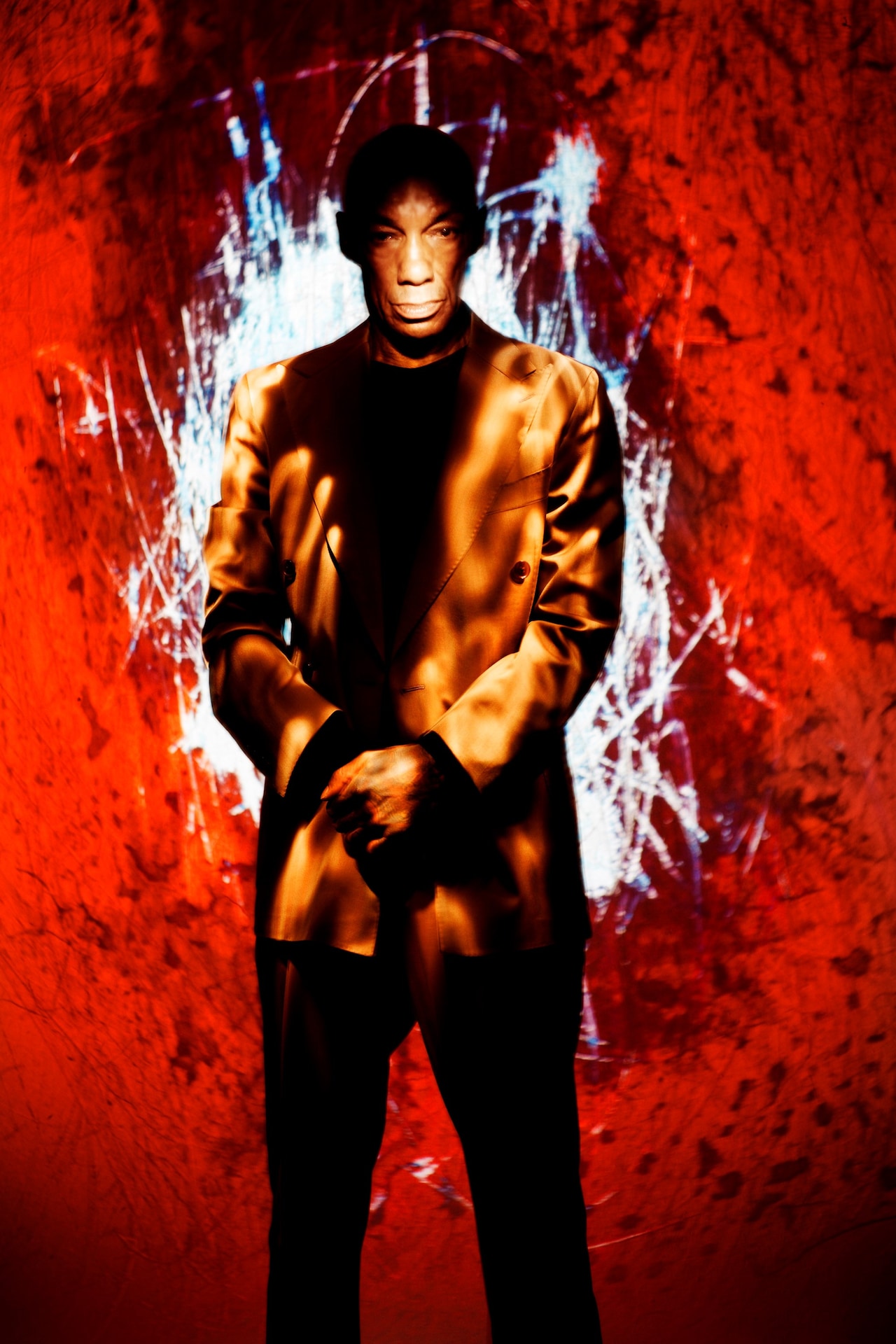
Tricky, 2026. Photography Steve Gullick, published in Dazed (2026-08-17).
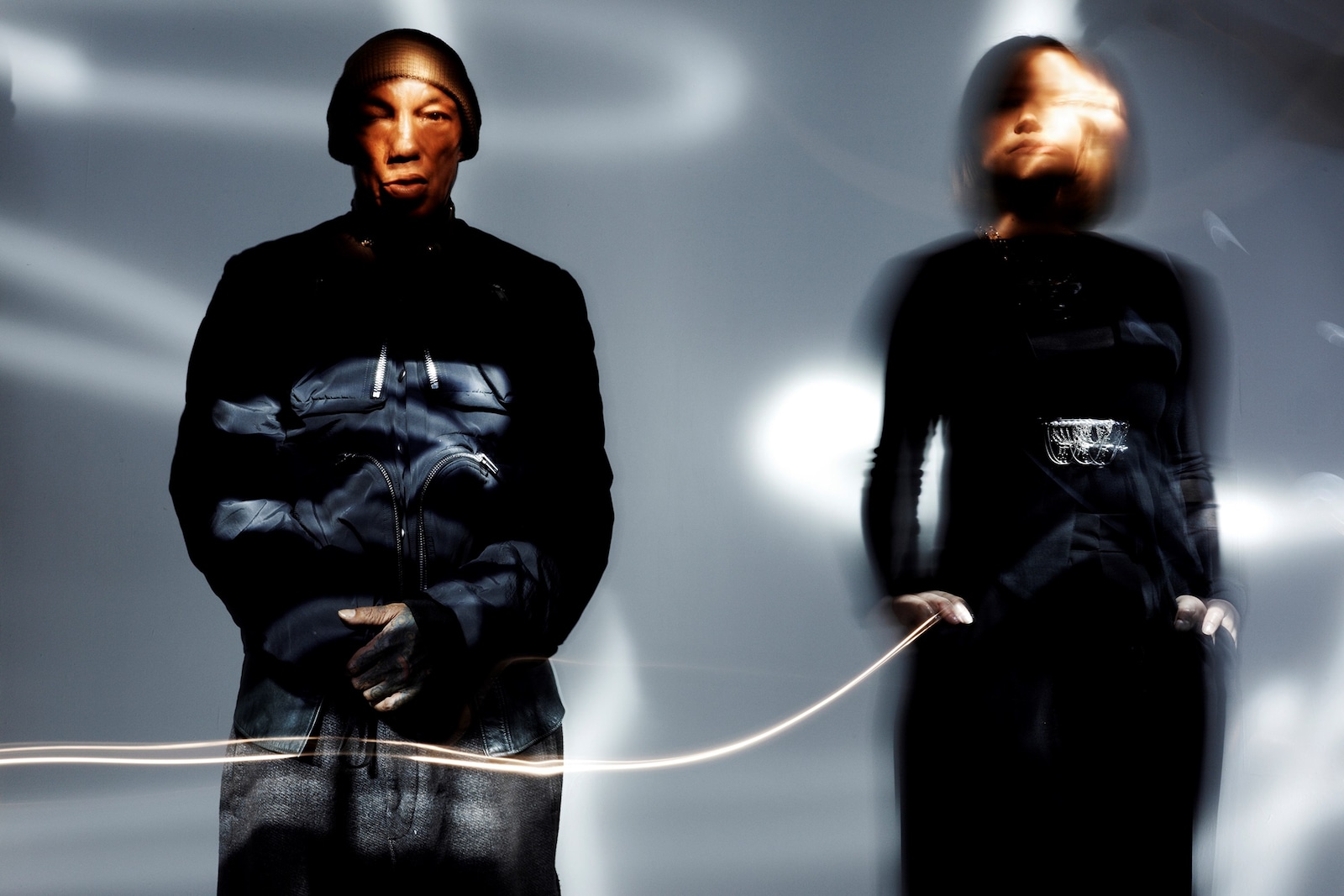
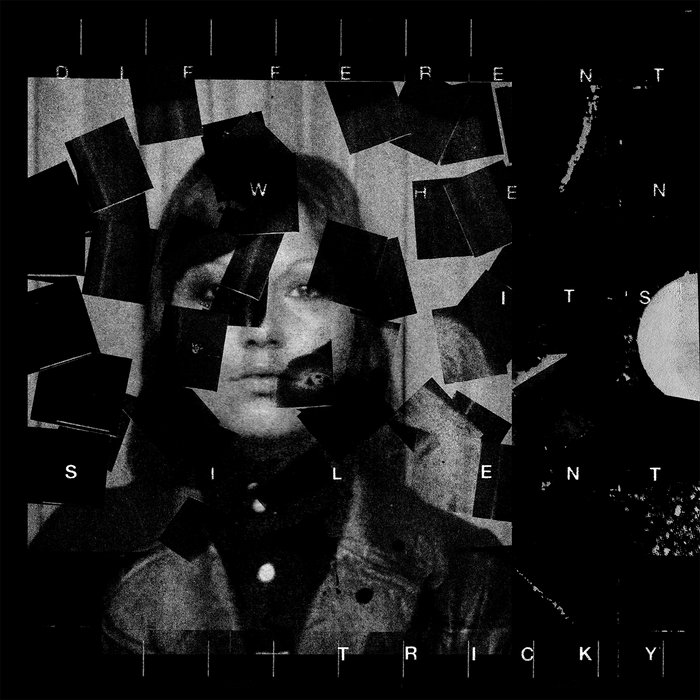
Left to right: Tricky (Steve Gullick, Dazed); the Different When It's Silent cover (False Idols / Bandcamp); Exclaim! review image.
1995
Maxinquaye lands and canonizes him; the same year he quits a rising Massive Attack; David Bowie writes his "phantom" short fiction for Q Magazine — an overture Tricky never answers
2008
He explains to Mark Fisher why women have sung his words for decades: they channel the mother he lost at four — "I'm her vehicle"
2019–2020
His daughter Mina Topley-Bird dies on a psychiatric ward at 24; Fall to Pieces follows a year later — "I was in pieces when I made that album"
2021–2025
He shelters inside aliases and collaborations: Lonely Guest, Theis Thaws, Marta's records — side projects require no press, no photographs, no videos, no tour. "It's easy"
2026.07.17
Different When It's Silent arrives via False Idols: the first male-led Tricky album, fronted by Mitch Sanders, closing with "Out of Place," sung for his daughter
2026.07–08
Reviews converge: four stars from musicOMH, 77 from BPM, "his finest" per Uncut; "Out of Place" — a song he calls "not a radio song at all" — reaches the BBC A-List; on August 17, Dazed publishes "a rare interview"
01Community Voices
On the record: the man himself, the manager, and the phantom's witnesses
The nine passages below span 1995 to 2026, drawn from four rooms: the Dazed interview, the False Idols release interview published on the album's Bandcamp page, Mark Fisher's 2008 conversation for The Wire, and David Bowie's 1995 testimony in Q Magazine. All quotes are verbatim and unedited. Together they assemble one man's thirty years: how he exits, why he stays silent, and how the people around him translate that silence.
Dazed · InterviewTricky
I'd rather shoot myself in the foot, to be honest with you. — asked how he balances staying true to himself with avoiding self-sabotage.
Bandcamp · False Idols interviewTricky
I can bring out a side-project with no press, no photographs, no videos, no tour, nothing at all. It's easy.
Bandcamp · False Idols interviewTricky
I really lost my mind. Nothing looked the same, nothing tasted the same, nothing sounded the same. — on the period after his daughter's death.
Bandcamp · as told by TrickyAlan McGee
Mate, this is a Tricky album. This is the best thing since Maxinquaye. This has got to be a Tricky album.
Dazed · as told by TrickyAlan McGee
You know what I like about you? You're not a celebrity.
Q Magazine · 1995David Bowie
The phantom was known to move as a group of one. Never took prisoners. You'd never catch him snorting vodka at the bar. You'd never catch him period, I'd been told.
The Wire · 2008Tricky (to Mark Fisher)
I'm her vehicle. So I need a woman to sing that. — explaining why women sing his words: channeling the mother he lost at four.
Exclaim! · ReviewTom Beedham
Tricky has spent three decades dissolving himself into other people's voices, using absence as a way of speaking for him.
Dazed · InterviewTricky
Mate, retire from what? You don't retire from music. What are you talking about? — replying to a former manager who advised him to save for retirement.
Context: these nine passages read as one testimony in four voices. Tricky's own five all describe the technology of exit — shooting himself in the foot is the posture, the alias side-project is the method, and retirement fails as a concept because outside music, in his words, "there's nothing else to do." McGee's two lines form the translation layer: he converts "not a celebrity" into a value, then converts an album meant to go out anonymously back into a name. Bowie's 1995 passage might be the earliest observation record on file — even the era's greatest operator of fame found Tricky's uncatchability worth writing down. Beedham's review sentence, thirty years later, works as the annotation to Bowie's sighting: the phantom stayed constant; what changed is that we finally have language to describe him. And the 2008 line — "I'm her vehicle" — sits quietly in the middle, explaining where the whole system began: this machinery for speaking through other people's voices was built, from the start, around an even earlier loss. For now, this record simply lays the four voices side by side.
02Consensus Mapping
Four narratives: official, community, emerging, contrarian
Official Narrative
The media-and-label version is a comeback story: six years of silence, the loss of a daughter, then "the best thing since Maxinquaye" (McGee's phrase, quoted everywhere). The reviews cooperate: four stars from musicOMH, "his finest" per Uncut, a chorus-free track on the BBC A-List. Tricky himself supplies the closing line in the release materials: "Emotionally, I'm saying I'm ready to start my life again. I was emotionally paralysed. Now I'm moving again." The official narrative files six years of absence into a ready-made box labelled "healed, and returning."
Community Narrative
The fan reading is more scattered, and more patient. This community long ago accepted that everyone carries their own underrated Tricky album — Angels, Pre-Millennium Tension, even Blowback, once called "a great pop album nobody liked." His back-to-the-audience live style has divided fans for decades and still does. The distribution path he describes also routes around the algorithm: younger listeners mostly arrive through family — a girl in Russia heard him because her granddad played her the records. The core of the community narrative might be: we never really had him, and that seems to be why we stay.
Emerging Narrative
Lay out the configuration and a new reading appears: absence can operate as a working creative system — the work never actually stopped; it changed exits. The alias is infrastructure that lets a grieving person keep working; the surrogate voice is a technology for saying the unsayable; and "the first male-led album" marks the system's first parameter change in thirty years — the vehicle swapped from a stand-in for the mother to something closer to the boy she left behind. In an era that requires everyone to appear in person, speak in person, and manage a self in public, here is a sample that outsources the entire first person and still reads as unbearably real.
Contrarian Narrative
The coldest reading says: the absence is itself the product. "Rare interview" is a headline format, and scarcity is what it sells — and in this album cycle Tricky has given in-depth interviews to more than one outlet, something Beats Per Minute pointedly notes "was previously a rarity." Thirty years of refusing celebrity has compounded into his most stable brand asset; even Bowie's phantom fiction was an early deposit into that account. Exclaim! leaves a thorn in as well: the closing reconciliation arrives too fast — "less like a resolution than a glimpse of one" — and the album ends before explaining how it got there.
03Cultural Signal Extraction
Breaking down the signal: six cuts
What Changed?
A proxy system that ran for thirty years changed its parameters: female vehicle to male, the mother's stand-in to a figure of the son, alias cover back to the exposure of the real name. The most personal subject paired with the least personal voice — a combination that surfaced occasionally before, now pushed to the structural level of an entire album.
Why Are People Reacting?
Because this sample lands on the era's most sensitive wire: authenticity. In an environment where self-exposure is the default proof of honesty, someone who tells the truth by hiding reads as an anomaly. Part of the critical consensus may be a response to that scarcity — relief that someone, finally, declines to perform presence.
What Assumptions Are Challenged?
The assumption that facing something requires saying it yourself. The mainstream script for grief asks the bereaved to appear, narrate, and be witnessed; this album demonstrates another route — the narration completed through someone else's mouth, with the author absent. Also dented: the assumption that a comeback means returning to the spotlight.
What Desires Are Visible?
The desire to work without being exposed — two things the current cultural contract bundles together, which the alias side-project quietly unbundles. The desire to say the most painful thing while keeping the right to not appear. And on the listener's side: an appetite for grief that hasn't been converted into content.
What Social Behavior Is Changing?
The existence of "rare interview" as a headline format is itself evidence: reduce your appearances below a certain threshold and each one automatically becomes an event. Meanwhile the listener chain he describes — granddad to granddaughter — shows a cultural channel that bypasses recommendation systems entirely, still functioning.
Future Human Behavior?
If outsourcing the first person spreads among creators, does a new division of labor emerge — the author handling structure and emotion, a proxy handling appearance and voice? And as AI agents make speaking through other voices cheap, does Tricky's version — a named human, vetted by neighborhood and community — become the most expensive kind?
04INCODER's Eye
The lenses we read this through: six observation frames
These six themes are the fixed frames INCODER holds up to every cultural signal — something like a set of lenses. Put one on, and the same event grows a different meaning.
Information Culture
The headline puts scarcity ahead of the information itself — you learn this is rare before you learn what it contains. In an environment of continuous output, six years of not speaking under your own name accumulates the highest signal strength in the room. When silence starts carrying more information than speech, is the pricing unit of content itself shifting?
Digital Identity
Tricky's self is scattered across aliases: Lonely Guest, Theis Thaws, Nearly God. Each name fences off a space where he can work without having to be him. The structure oddly mirrors multi-account life online — with the direction reversed: accounts usually multiply exposure, his aliases reduce it. Might identity's function have always included providing a place to not be present?
Symbolic Systems
The same lyric — "make me want to die" — sung by a woman in 1996 and a man in 2026. "It just changes things," he says. The words held still; the vehicle moved. A textbook demonstration that meaning seems to live in the configuration. The album title adds another layer: things are different when it's silent. Within this system, does silence count as a pronunciation?
Dark Vitality
At 17 he chose prison over watching his nan beg a judge. At 19, £2.50 showed him the truth of a friendship. At 58 he calls retirement impossible because "there's nothing else to do." This is a survival logic that runs at the system's edge: no negotiation, no accumulation, no exit plan — only the work. Grief never stopped the machinery; the machinery caught it. Does vitality at the margin come precisely from its refusal to be planned?
Networked Society
Mitch Sanders's credentials come from pubs and postcodes — "we're from the same environment" — a criterion that outweighs a label deal, and one that even Massive Attack fails. Distribution runs on the same principle: granddad to granddaughter, family to family. As algorithms dominate discovery, is this older network — nodes of kinship and neighborhood — turning out to be the most noise-resistant channel left?
Perception and Attention
Back to the audience, lights at minimum — for thirty years he has trained listeners to move attention from face to voice, from person to fog. This album goes further: even the voice retreats, leaving his rasp haunting the background. The listener has to relearn whom to listen to. When attention's default target is systematically withdrawn, does perception grow new ways to focus on its own?
05Signal Score
Signal strength rating
6/10
A 6. In its favor: the signal has unusually long roots — from Bowie's "phantom" in 1995 to the male-voiced proxy of 2026, the same absence-system has thirty years of verifiable records, each node held up by named, verbatim quotes (Bowie, Fisher, McGee, Beedham); "first male-led album" is a structural change, difficult to write off as marketing language. Points off: the event itself remains a single artist's release cycle, and the community side is thin on quantifiable reaction (threads, numbers); "legend returns" is a standing media format that absorbs signals like this easily; the trip-hop revival backdrop has been covered to exhaustion, limiting freshness. What would raise the score: other creators explicitly adopting proxy-voice or no-appearance release as a method, or measurable samples of the "rare interview" scarcity economy. If it stays a one-man exception, the score should come down.
06Final Question
The deepest hidden assumption
?
We have assumed that "real" requires the first person — showing up yourself, speaking yourself, narrating the wound yourself. What if realness actually lives in the configuration? Why does a man who outsourced the first person for thirty years sound more real than an entire generation that shows up in person?
Contemporary authenticity culture rests on a rarely examined premise: presence equals honesty. The granularity of self-exposure has become the pricing unit of trust — the more you show, the more you're believed. The platform economy runs on this formula, and even grief gets slotted into the content calendar: after a loss, the bereaved are expected to appear, narrate, grow, ideally with a timeline attached. Tricky offers a counter-example that has run for thirty years. In his system, the one who speaks and the one who suffers stay separate: the mother's pain carried by Martina and the women after her, the daughter's pain handed to a young man from the same streets, while he himself withdraws to the position of a rasp in the dark. By the formula, this should make the work feel remote. What happened is the opposite — critics and listeners alike received this proxy-built album as among the most real things he has made.
Follow the assumption further and it gets uncomfortable. If realness can be produced through configuration — the right vehicle, the right distance, the right position of absence — then showing up in person may never have been a requirement of truth, only a format the platforms need. And the market has already caught the scent: "rare" now works as a value-word in headlines, absence gets priced as scarcity, withdrawal gets read as a stance. The open thread this record wants to keep: as the value of not-appearing keeps climbing, will absence eventually develop its own performance curriculum — courses in how to disappear correctly, how to manage silence as an asset? At that point the last position that resisted formatting would be absorbed into a format. Or will there always be someone, like the phantom, who can't be bothered with even that? This record holds no answer for now.
Observation remains incomplete.
This report records the present state of observation.
"Absence as a creative system" currently rests on a single artist's thirty years; the quantifiable portion covers only review scores and release records. The reading that "realness lives in configuration" may be confirmed as more proxy-built work appears, or revised the next time a tour or an interview cycle pulls the phantom back into the light.