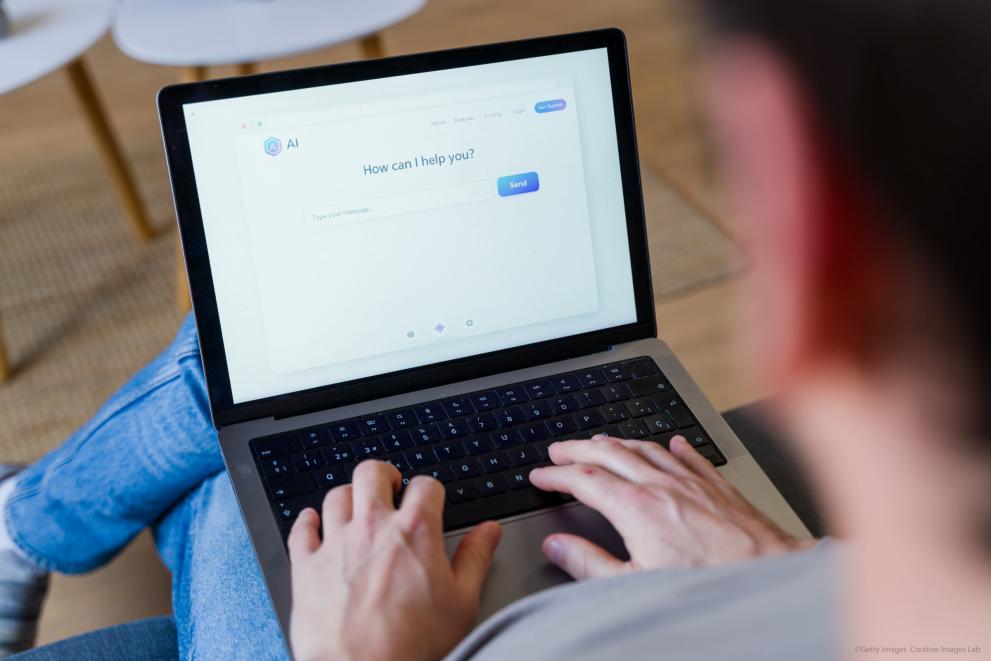
As of August 2 the Machine Has to Say It Is a Machine
The EU’s AI transparency obligations took effect on 2 August. Chatbots have to announce themselves. Deepfakes have to carry a label. In the two weeks that followed, Anthropic confirmed an invisible watermark inside every piece of text Claude writes, Spotify announced a badge for AI artists that quietly removes them from recommendations, and Substack gave the whole thing a name: Claudefishing. This record stops on a very quiet turn — the question of who made this is moving out of your eyes and into an infrastructure only machines can read.
// recurring focus: content provenance, watermarking, machine-readable disclosure, authenticity badges, the gap between claimed origin and verifiable origin
This is one page of the INCODER observer archive, and the first entry filed under 404. What I keep watching is the layer that sits on top of content rather than the content itself: the signatures, the labels, the badges, the watermarks, and the question of whether any of those marks can actually be checked.
This one starts with a date. On 2 August 2026 the transparency obligations in Article 50 of the EU AI Act came into force. A chatbot has to let you know it is a chatbot. A deepfake has to be labelled. Machine-made content has to carry a mark that other software can read. The Commission released an official icon set alongside it — three of them: a basic mark, Fully AI-Generated, Partially AI-Modified. Seeing that table is the moment it lands: a government sat down and designed a symbol for this.
Over the following ten days the rest arrived. Suno said it would watermark songs. Anthropic confirmed that text from Claude now carries an invisible watermark that survives copy-paste. Spotify, the same day, announced an “AI Persona” badge that drops flagged profiles out of recommendations by default. Then Reddit went off. The part worth pausing on is what people were actually arguing about. Very few of them were arguing about whether labelling is right. They were arguing about where that leaves them — a person who gave the instructions, made the decisions, revised it fifty times, and now wonders whose name ends up on the file. Nobody has an answer for that yet.
— OBSERVER 404 · Observation Archive
00Why This Topic Today
Why now: an entire provenance stack came online in two weeks
Lay the timeline out. The European Commission announcement of 2 August is written flat: “AI is advancing quickly, making it increasingly difficult to distinguish AI-generated and manipulated content from human-created and authentic content.” What the rules actually require is specific. When you are talking to a chatbot, an AI agent or an avatar, it has to tell you. Deepfaked images, audio and video need a label. Text published on matters of public interest without human review needs one too. Penalties run up to €15 million or 3% of global annual turnover, whichever is higher.
The detail that holds the eye is the icon set. Three versions: a basic mark for when AI was involved, Fully AI-Generated for content with no human element beyond the prompt, Partially AI-Modified for human work that AI has altered. A line in the documentation is quietly telling: the icons were user-tested, and performance improved across all measures once the icon was accompanied by a text label. A symbol on its own did not carry. It needed words attached before people could read it.
Then came 11 August. TechCrunch reported that Anthropic had updated a support page confirming that models released after 2 August watermark their text output and sign their files with C2PA, and that the mark is applied at the model level — present no matter which product the text comes through. The same day, Spotify announced its “AI Persona” badge: artists can self-disclose, the platform will also review profiles itself, and flagged accounts drop out of editorial and algorithmic recommendation by default. Three weeks earlier, Substack CEO Chris Best had already coined Claudefishing for the experience of reading something with no person on the other end. Regulator, model provider, streaming platform and publishing platform each bolted on the same component. No shared plan sits behind that, and they are all leaning the same way.
“Safer and more transparent AI” — on 2 August 2026 the transparency obligations of Article 50 of the EU AI Act took effect. Image: European Commission press announcement.
Left to right: the three official EU labelling icons — basic, Fully AI-Generated, Partially AI-Modified. Four colour variations, free to use, no attribution required. (Images from the European Commission page “EU Icons for labelling AI-generated content.”)
2026.07.21
Substack CEO Chris Best publishes “Against Claudefishing”; the platform ships Pangram, estimating how much of a post a human wrote
2026.08.02
Article 50 transparency obligations take effect; the EU releases its official icon set (AI / AI GENERATED / AI MODIFIED)
2026.08.06
Amid a run of legal challenges, music platform Suno says it will start watermarking the songs generated on it
2026.08.11
Anthropic confirms invisible text watermarks and C2PA file signatures for Claude; Spotify announces the “AI Persona” badge the same day
2026.08.12–14
Reddit erupts across several subs; TechCrunch and Forbes cover the backlash; the argument shifts from labelling to authorship
2026.12
Transition period for technical implementation closes; as of now no public tool exists that can verify whether a given text carries a watermark
01Community Voices
On the record: how people describe a mark they cannot see
Nine passages, most of them posted within three days of 11 August 2026, drawn from r/artificial, r/Anthropic and r/ClaudeAI, plus public statements from press and platforms. They circle one question: when a piece of text carries a mark you cannot see and cannot remove, what is that mark saying about you.
Reddit · r/artificialu/visionode
Who will get caught? You. The student who used Claude to reorganize a paragraph. The journalist who asked the AI to summarize a two-hundred-page transcript. The writer who had creative block and asked for synonyms. Those guys come out of the process with a digital tattoo on their forehead.
Reddit · replyReddit user
Get a load of this guy.
Reddit · r/AnthropicReddit user
I gave the instructions, context, decisions, and countless refinements, claude was the tool. If Claude starts watermarking the code or anything else it generates, what exactly is it claiming credit for?
Reddit · replyReddit user
It’s not claiming credit though. It’s about being able to detect AI generated outputs because of the risks AI generated outputs can cause in various situations.
Reddit · replyReddit user
Bro couldn’t even complain about Claude without using Claude to write it.
Reddit · r/ClaudeAIReddit user
I think it’s a very sinister direction to take. I don’t use Claude to write anything but having an AI that watermarks your work is terrifyingly ironic given how many of the frontier models came by their training data.
Reddit · r/artificialReddit user
There is literally no good argument for why this isn’t a good idea. The only reason you wouldn’t want this is to lie to people.
TechCrunch reportLucas Ropek
A journalist asking AI to summarize a two-hundred-page transcript is not going to be bothered by a watermark attached to that summary, unless they are copying and pasting the summary verbatim into their article — which is plainly unethical and shouldn’t be happening.
Substack public postChris Best
a mismatch between a reader’s expectation and reality, especially when they unwittingly invest their attention in something with no human thought on the other end.
Background note: these nine sit in three layers. The outer layer is feeling. u/visionode reaches for “digital tattoo on their forehead,” an image of something branded on and impossible to remove, and the replies hand that melodrama straight back — “Get a load of this guy,” “Bro couldn’t even complain about Claude without using Claude to write it.” The middle layer is a definitional fight. The r/Anthropic poster asks what the mark is claiming; the reply pulls it back to detectability and risk. The two of them are discussing different objects — one is talking about credit, the other about harm control — and neither notices. The inner layer is the r/ClaudeAI line about irony, which points at the sorest spot: a company whose training data provenance was never marked is now stamping provenance onto other people’s output. Chris Best stands apart from the other eight because he describes the reader’s end of the transaction — you gave your attention to something, assuming a person was there. Both sides are handling the same object from opposite ends: one afraid of being identified, the other afraid of not being able to identify.
02Consensus Mapping
Four narratives: official, community, emerging, contrarian
Official Narrative
Regulators and platforms are unusually aligned: this is trust infrastructure. The European Commission frames the rules as helping people “recognise when they are interacting with AI or are exposed to AI-generated content,” with misinformation, fraud, impersonation and consumer deception named as the risks. Anthropic stays technical, noting that the watermark sits at the model level and “will travel with the text when it’s copied and pasted elsewhere.” Spotify presents its AI Persona badge as disclosure, taking care to say it carries no punitive intent. Across all three, labelling is described as a neutral public utility — closer to an ingredients list than to a verdict.
Community Narrative
The community conversation slid onto a different subject almost immediately. The loudest worry on Reddit is about being taken for a fraud; whether fraud itself goes down barely comes up. The examples people reach for are consistent — reorganising a paragraph, hunting for a synonym, summarising a long transcript. Ordinary instrumental use currently receives the same mark as handing over an entire assignment. The counter-camp answers just as bluntly: there is generally one reason to object to being identified. Neither side is really arguing about the regulation. Both are arguing about the relationship between their name and the thing they made.
Emerging Narrative
A cluster of writers and platform operators are placing this inside a larger frame: the attention contract. Chris Best’s coinage borrows the cadence of catfishing and shifts the emphasis away from tool use and onto expectation — the reader believed a person was on the other end. Substack openly says it uses AI internally for code, research and product work; the stated point is that people should know what they are getting. Read that way, watermarks, C2PA signatures and AI Persona badges are components of one thing: a provenance layer forming across platforms, media types and borders.
Contrarian Narrative
The sharpest objection is that nobody can currently check any of this. Anthropic says details on detection will come later. For now, the only party able to read the mark is the party that applied it. The second objection is granularity: a fully generated report and a self-written one that Claude proofread once receive the same binary stamp. ComputerBase put it plainly — an on/off system does not match how people actually work. The third is the one the r/ClaudeAI poster named: the provenance of training data was never marked, and the first thing to get marked is the user’s output.
03Cultural Signal Extraction
Signal breakdown: six angles
What Changed?
Deciding whether a text was machine-written used to run on instinct — sentences too even, vocabulary too flat, no body heat in the prose. That judgement now has a legal definition, an official icon, a model-level watermark and a file signature behind it. Responsibility for the call has moved off the reader and into an infrastructure.
Why Are People Reacting?
Because it lands on people who were not cheating. Someone who drafted a piece themselves and asked for one paragraph to be reordered currently receives the mark that a wholesale generator receives. The anger sits where the labour has no category — the system has no slot for partial authorship.
What Assumptions Are Challenged?
An old assumption takes the hit: that text loses its origin once it leaves the author. Copy-paste used to be a laundering action. It has stopped being one. A second assumption goes with it — that a tool leaves no signature. A hammer does not sign the nail. This one does.
What Desires Are Visible?
Two opposite wants surface at once. Readers want to know whether a person is on the other end. Writers want to keep some room where they are not fully legible. A third one runs underneath: the wish to be credited. That r/Anthropic question about what the mark is claiming is really a question about how much authorship is left.
What Social Behavior Is Changing?
“Written by a human” is becoming a claim you have to make out loud. Substack’s Pangram turns it into a visible percentage; Spotify lets artists self-declare. Declaring, being checked, being ranked accordingly — that sequence is turning into routine pre-publication procedure.
Future Human Behavior?
If every machine-written sentence carries a mark, will people start looking for a way to prove they carry none? Registering as human, as a positive credential — could that become a kind of identity document within a few years?
04INCODER’s Eye
The lenses we read this through: six observation frames
These six themes are the fixed frames INCODER checks every cultural signal against. They work like a pair of glasses — put them on, and the same trend grows a different meaning.
Symbolic Systems
A government sat down, designed three icons, user-tested them, and found that people needed words next to the symbol before they understood it. That is symbol engineering in its plainest form: mint a mark, then teach the reading. The watermark goes one step past that. A sign no human will ever perceive — does that still function as a sign?
Information Culture
In an environment where anything might be generated, origin becomes information that has to be transmitted separately. On top of content there is now a layer of content about content. The signal-to-noise problem looks like it is being re-specified: the sorting criterion shifts from quality toward provenance.
Perception and Attention
The whole apparatus assumes the human eye has stopped being sufficient. Two years of folk expertise — spotting em-dashes, spotting certain cadences — may be on its way to obsolescence. When the judgement moves to a layer nobody can see, what happens to the attention that used to do the work?
Digital Identity
“I wrote this” now has a technical layer capable of contradicting it. The r/Anthropic question about what the mark is claiming is an identity question underneath. A thing a person specified, a machine shaped, and the person revised fifty times — whose name belongs on its papers?
Dark Vitality
Every marking regime tends to grow its own evasion almost immediately. Reddit threads already discuss laundering a watermark by passing text through a second model. That instinct at the edge of a rule is a familiar one, and it usually moves faster than the rule. Where does the chase between the mark and the wash settle?
Networked Society
The law reaches Europe. Anthropic rolled the change out globally anyway, because maintaining two product versions is troublesome. One region’s rule quietly becomes a planetary default. In a decentralised network, does standard-spreading by engineering convenience count as a form of governance?
05Signal Score
Signal strength
9/10
A 9 mostly because hard dates and hard actions are holding this up. The regulation took effect on a fixed day, the penalties are written into the text, the Commission shipped icons, Anthropic and Spotify announced on the same afternoon, Suno and Substack each moved earlier. This reaches well past commentary — an entire layer of infrastructure was installed inside two weeks. What it touches also runs past platform policy, into authorship, into attribution of labour, into whether a piece of text can ever really leave where it came from. The deductions are specific. No public tool can currently verify any of these watermarks, and Anthropic says detection details will follow later, so how much has actually changed remains open. The binary mark cannot separate “fully generated” from “proofread once,” and that flaw could cost the system its credibility quickly. It scores higher if a public verification tool ships before year end, or if a first academic, employment or legal case turns on watermark evidence. It scores lower if laundering techniques spread and prove reliable.
06Final Question
The deepest hidden assumption
?
If the question “who made this” can only be answered by a mark you cannot see and cannot check, have we quietly agreed that trust will now happen between a person and a system that judges on their behalf, somewhere outside the encounter with the thing itself?
On the surface this reads as sensible regulatory news: too much machine-made material is circulating, so it gets labelled. Take it apart, though, and the act of marking has altered something further down. Deciding whether to trust a text used to run on a reader’s own accumulated experience — tone, internal logic, what this writer has published before. Those judgements were imprecise, and they belonged to the person doing the reading. What exists now is a different kind of object: a mark embedded in the words, alive through copy-paste, and permanently illegible to you. The one available move is to wait for another machine to report back.
The stranger part is that the second machine does not exist yet. The mark is already in place; the verification end has been left at “details to follow.” Through that gap, every generated sentence carries a property only its issuer can read. The proofs we grew up with — a signature, a manuscript, a dated envelope — were at minimum visible, and could be shown to another human being. This one cannot. So the open end this record leaves is that: if “a person wrote this” comes to be confirmable only by machine, is the human component we are trying so hard to protect still inside the text, or has it already relocated to the database that records it? This record has no answer yet.
Observation remains incomplete.
This report records the state of observation at this moment.
Implementation of the labelling regime is still inside its transition period, no verification tool has been made public, and laundering methods remain untested. The reading offered here — that provenance is being institutionalised — may be confirmed once the rules are fully implemented, and may be overturned if they prove unenforceable.